


Stress Management Dashboard With Wellness Causes And Management Of Stress




Try Before you Buy Download Free Sample Product
 Impress Your
 Audience
 100%
100% Editable
 Save Hours
 of Time


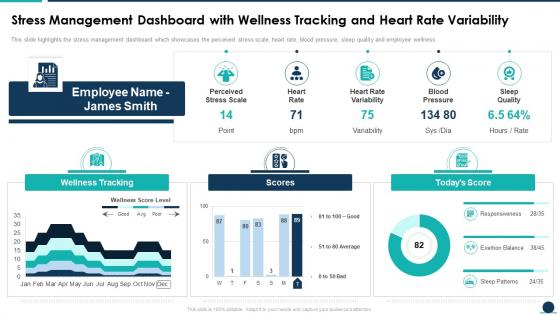
This slide highlights the stress management dashboard which showcases the perceived stress scale, heart rate, blood pressure, sleep quality and employee wellness.
People who downloaded this PowerPoint presentation also viewed the following :
Stress Management Dashboard With Wellness Causes And Management Of Stress with all 7 slides:
Use our Stress Management Dashboard With Wellness Causes And Management Of Stress to effectively help you save your valuable time. They are readymade to fit into any presentation structure.





FAQs for Stress Management Dashboard With Wellness Causes And
Effective stress management techniques for high-pressure professionals include mindfulness meditation, time-blocking strategies, regular physical exercise, breathing exercises, and strategic delegation. These approaches streamline mental clarity and operational efficiency by reducing cortisol levels, enhancing focus, and improving decision-making capabilities, with many executives finding that consistent implementation ultimately delivers better work performance and sustainable productivity.
Visual aids enhance stress management understanding by transforming abstract concepts into concrete, relatable information through infographics, charts, diagrams, and interactive elements. These tools help audiences visualize stress triggers, coping mechanisms, and physiological responses, while enabling presenters to demonstrate techniques like breathing exercises or mindfulness practices, ultimately delivering more engaging and memorable learning experiences.
Mindfulness plays a crucial role in stress management by enhancing present-moment awareness, reducing anxiety responses, and improving emotional regulation during high-pressure situations like presentations. Through techniques such as breathing exercises, body awareness, and focused attention, professionals can incorporate mindfulness by practicing pre-presentation meditation, using grounding techniques during delivery, and maintaining audience connection, ultimately delivering more confident and engaging presentations.
Stress management strategies adapt to demographic needs through targeted approaches, with students benefiting from time management and study techniques, professionals utilizing workplace wellness programs and boundary-setting methods, and retirees focusing on social engagement and purposeful activities. These tailored interventions address specific stressors within each group, ultimately delivering more effective outcomes and sustainable stress reduction across diverse populations.
Chronic stress creates psychological effects including anxiety disorders, depression, cognitive impairment, memory problems, and reduced decision-making capacity. These impacts can be effectively communicated through visual presentations using infographics showing stress-response cycles, before-and-after scenarios demonstrating cognitive decline, and case studies from high-pressure industries like healthcare and finance, ultimately helping organizations recognize and address workplace stress patterns.
Workplace environments significantly influence stress levels through factors like workload management, communication patterns, physical space design, leadership styles, and organizational culture. Professional presentations can propose solutions including flexible work arrangements, wellness programs, improved ergonomics, regular feedback systems, and stress reduction workshops, ultimately delivering enhanced productivity, reduced absenteeism, and improved employee retention across diverse industries.
Interactive elements for stress management presentations include live polling on stress levels, guided breathing exercises, small group discussions, real-time Q&A sessions, and hands-on stress assessment tools. These techniques enhance audience participation by creating personalized experiences, encouraging peer sharing, and enabling immediate practice of stress reduction methods, with many organizations finding that interactive approaches significantly improve retention and practical application of stress management strategies.
Storytelling illustrates stress management strategies by creating relatable scenarios, demonstrating real-world applications of techniques like mindfulness and time management, and showing measurable outcomes through character journeys. Through narrative examples from healthcare workers managing burnout or executives balancing workloads, presentations deliver emotional engagement and practical insights, ultimately enabling audiences to visualize implementation and sustained behavioral change.
Self-care is fundamental to stress management because it helps individuals maintain physical health, emotional balance, and mental resilience through proactive wellness practices. Visual representations in slide decks can include wellness wheel diagrams showing interconnected self-care categories, before-and-after infographics demonstrating stress reduction outcomes, and timeline graphics illustrating daily self-care routines, ultimately delivering clearer communication of wellness strategies and enhanced audience engagement.
Technology assists individuals in managing stress through meditation apps, biometric monitoring, cognitive behavioral therapy platforms, sleep tracking tools, and breathing exercise guides. These digital solutions streamline stress reduction by providing real-time feedback, personalized interventions, and accessible coping strategies, with many healthcare organizations and corporate wellness programs finding that integrated stress management technology ultimately delivers improved employee productivity, reduced healthcare costs, and enhanced overall well-being.
Common misconceptions include believing stress is always harmful, that stress management requires extensive time commitments, that one-size-fits-all solutions work universally, and that eliminating stress entirely is possible or desirable. Educational materials must address these myths by demonstrating how moderate stress enhances performance, showcasing quick micro-techniques, emphasizing personalized approaches, and ultimately delivering realistic frameworks that help organizations build resilient, high-performing teams.
Shifting corporate culture requires implementing flexible work arrangements, promoting open communication about mental health, providing stress management resources, and training managers to recognize burnout signs. Through wellness programs, regular check-ins, and work-life balance initiatives, organizations streamline employee support while enhancing productivity, with many companies finding that proactive stress management ultimately delivers higher retention and competitive advantage.
Stress triggers physiological responses including elevated cortisol levels, increased heart rate, muscle tension, compromised immune function, and disrupted sleep patterns. These effects can be visualized through body system diagrams, before-and-after comparison charts, and stress timeline infographics that demonstrate progression from acute to chronic stress, with many healthcare organizations and corporate wellness programs finding that visual presentations significantly enhance employee understanding and engagement with stress management initiatives.
Physical activity reduces stress by lowering cortisol levels, releasing endorphins, improving sleep quality, and enhancing mental clarity through increased blood flow to the brain. These physiological benefits can be effectively depicted through before-and-after infographics, stress hormone comparison charts, and visual timelines showing exercise's immediate and long-term stress-reduction impacts, ultimately delivering compelling presentations that demonstrate measurable wellness outcomes.
Stress management integrates into personal development through mindfulness practices, time management systems, goal-setting frameworks, and regular self-assessment protocols. These techniques enhance productivity, emotional resilience, and decision-making capabilities, with many professionals finding that structured approaches like meditation schedules, priority matrices, and stress monitoring ultimately deliver improved performance and sustainable career growth.
-
They guys always go the extra mile to meet the expectations of their customers. Almost a year has been associated with them.
-
Attractive design and informative presentation.