


Structure Of Shared Service Model Followed In Hr




Try Before you Buy Download Free Sample Product
 Impress Your
 Audience
 100%
100% Editable
 Save Hours
 of Time


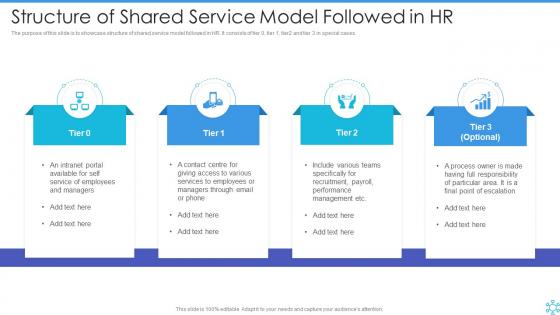
The purpose of this slide is to showcase structure of shared service model followed in HR. It consists of tier 0, tier 1, tier2 and tier 3 in special cases.
People who downloaded this PowerPoint presentation also viewed the following :
Structure Of Shared Service Model Followed In Hr with all 6 slides:
Use our Structure Of Shared Service Model Followed In Hr to effectively help you save your valuable time. They are readymade to fit into any presentation structure.





FAQs for Structure Of Shared Service Model
So first thing - map out what you're already doing, then figure out which stuff makes sense to centralize based on how often it happens. You'll need a solid service catalog so people actually know what HR does (shocking how many don't). Self-service portals will be your best friend here, trust me on that one. Standardized processes are key, but good luck getting people to change - change management is gonna be rough but necessary. Make sure your tech can handle it all. Oh and track everything with data analytics so you can prove it's working when your boss inevitably questions the ROI. SLAs help set realistic expectations too.
So basically shared services just means putting all your routine HR stuff - payroll, benefits, onboarding - under one team instead of spreading it across departments. Way less duplicate work that way. These specialists get really good at their specific processes, so everything moves faster. Your other HR people can actually focus on strategy instead of drowning in paperwork (which honestly sounds way more interesting anyway). Everything becomes more standardized too. I'd start by figuring out what transactional tasks are eating up most of your time - that's probably where you'll see the biggest wins first.
Ugh, honestly the biggest pain will be your employees freaking out about losing their go-to HR person. People really hate change. Your tech systems probably won't sync up smoothly either - that's always a mess. Each department's gonna insist they're totally unique and need special treatment (they don't). Don't expect immediate cost savings, and service might get worse during the switch. Oh, and communicate constantly about what's happening. Seriously, over-communicate. Also make sure your tech actually works before you launch everything.
Honestly, get yourself a good HRIS system first - it'll handle payroll, benefits, time tracking, all that stuff automatically. Self-service portals are huge too because then employees stop bugging HR about every little thing (trust me on this one). Cloud platforms work great since your team can log in from wherever. Oh, and don't just jump into buying software though. Map out what you're doing now, then figure out which tools actually fix your biggest headaches. Some systems look fancy but are total overkill for what you need.
Track cost per transaction and time-to-fill metrics - those are your main ones. Employee satisfaction scores matter too, obviously. First-call resolution for HR stuff is huge because nobody wants to get transferred three times just to ask about their vacation days. SLA compliance shows if you're hitting deadlines, and error rates tell you if speed is killing quality. The tricky part? You can't just optimize for efficiency and forget about employee experience. Survey people regularly to see if they actually like the shared services setup. Sometimes what looks great on paper feels terrible to use.
So shared services basically puts all your HR stuff in one place. Your employees get way more consistent help instead of bouncing between departments with totally different processes. Response times get faster too. The cool part is you can actually afford better tech and specialists when you're not spreading resources so thin - honestly wish more companies figured this out sooner. People end up with those self-service portals that actually work, plus clearer paths when they need to escalate something. Just don't let it get too robotic, you know? Keep some of that human element while you're streamlining everything.
So shared services basically takes all the boring HR stuff - payroll, benefits, basic employee questions - and dumps it on one centralized team that handles multiple departments. Your regular HR people get to stop doing paperwork hell and can actually focus on the strategic stuff like workforce planning and talent development. Pretty sweet deal if you ask me. You do lose some of that personal touch with employees though. But honestly? Most HR folks I know would kill to spend less time processing vacation requests and more time on real business partnership work.
Honestly, start with mapping out what you're already doing - most companies skip this and wonder why everything's a mess later. Figure out which stuff can be centralized and what needs to stay local. Good HRIS is worth every penny, trust me. Self-service portals cut down on those annoying "how do I request PTO again?" calls. The tricky part? People get weird when HR suddenly feels far away. Try a pilot group first before going all-in. Track both your efficiency numbers and whether employees actually like the changes, because what's the point if everyone hates it?
Honestly, you've got to nail the governance stuff right from the start or you'll regret it later. Set up role-based access so random people can't peek at sensitive employee info. GDPR and SOX compliance isn't optional - trust me on that one. I'd start by mapping out your current data flows first, then spot the risky areas. Regular audits will save your butt because they catch problems early. Your shared services team needs solid compliance training too. Even bulletproof systems don't work if people mess up the basics.
You really need your leadership team on board for this, or it's gonna flop. Executives have to sell the "why" to everyone - and I mean really sell it, because people will fight this change hard. They need to put money behind the right tech and staff too. Here's the thing though - without a C-level person who actually cares about making it work, your middle managers will just ignore the whole thing or complain until it gets killed. I've seen it happen. Make sure at least one exec is genuinely committed long-term, not just giving lip service to the idea.
So basically you take all the hiring stuff and put one team in charge instead of having every department wing it on their own. Way more consistent that way. Your hiring managers can stop pretending they know how to interview and just focus on their actual work. The dedicated team gets really good at sourcing and all that recruitment tech - honestly wish more companies would figure this out sooner. Plus you'll actually have decent data on what's working. I'd start by looking at which recruiting tasks are currently burning the most time across your different teams.
Honestly, shared services can be pretty solid for D&I stuff. You'll get actual specialists working on it full-time instead of Karen from HR squeezing it between her other million tasks. Plus the data piece is clutch - finally seeing organization-wide patterns instead of guessing from random spreadsheets. Main downside is losing that local flavor, which matters more than people think. But if your shared team has diverse voices and actually talks to regional folks regularly, you can make it work. I've seen it done well when they don't just sit in corporate HQ making decisions in a bubble.
Honestly, shared services is way more flexible than people think. Start by mapping what you're doing now - boring, repetitive stuff that's the same across departments is your goldmine. Smaller companies usually just centralize payroll and benefits (makes sense), but bigger orgs can go all-out with recruitment, employee relations, the works. Culture things though? Keep those local - nobody wants corporate telling them how to do team happy hours. I'd definitely start small with high-volume transactional work first. Don't try to boil the ocean right away. Figure out what actually needs standardizing versus what benefits from that personal touch.
Start with cross-functional training - your HR people can't just know their one thing anymore, they need the whole picture. Tech training is massive since everything's integrated now. Soft skills matter way more than people think, especially customer service stuff. I see companies mess this up all the time. Standardize your processes so everyone's doing things the same way. Change management skills are clutch too because this stuff never stops evolving. Honestly, just audit what gaps you have first, then set up rotating training that hits both technical and people skills.
Honestly, you've gotta set up different ways for people to give you feedback - some folks love filling out surveys while others will only speak up during meetings (classic introverts vs extroverts, right?). Mix it up with pulse surveys, focus groups, maybe quarterly reviews where you actually dig deep. Here's the thing though - when someone gives you a suggestion, circle back and show them what you did with it. Even if you couldn't implement their idea, explain why. Track your service numbers alongside the feedback so you can spot trends. I'd start monthly and see how it goes.
-
“As you have innovative ideas and they are all customizable, this saves a huge chunk of your time to prepare well-read presentations.”
-
Professionally designed slides with color coordinated themes and icons. Perfect for enhancing the style of the presentations.