

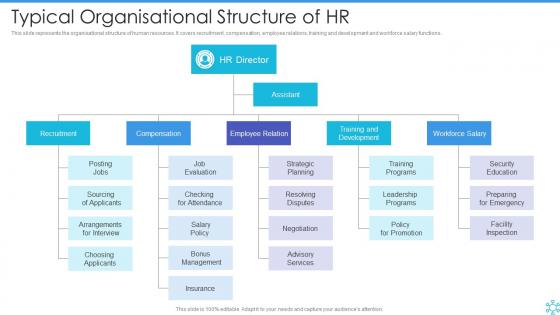
Typical Organisational Structure Of Hr




Try Before you Buy Download Free Sample Product
 Impress Your
 Audience
 100%
100% Editable
 Save Hours
 of Time


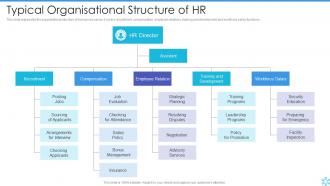
This slide represents the organisational structure of human resources. It covers recruitment, compensation, employee relations, training and development and workforce salary functions.
People who downloaded this PowerPoint presentation also viewed the following :
Typical Organisational Structure Of Hr with all 6 slides:
Use our Typical Organisational Structure Of Hr to effectively help you save your valuable time. They are readymade to fit into any presentation structure.





FAQs for Typical Organisational
You'll definitely want talent acquisition, employee relations, comp & benefits, and learning & development as your core pieces. HR operations handles all the admin stuff too. But honestly? The game-changer is having an HRBP function - those business partners who actually connect HR to what's happening on the ground. I've seen companies fail without that bridge. Map your current headaches first, then build around solving those. Don't let these areas become separate kingdoms though. Oh, and someone needs to own compliance and data analytics or you're screwed later.
Honestly, your HR setup makes a huge difference in how people feel at work. Too many layers? Good luck getting help - it's like screaming into a black hole. Clear roles and reasonable team sizes though? That's where the magic happens. People actually get what they need without jumping through hoops. Don't just copy some other company's structure either, that never works. Figure out what's frustrating your employees right now. Then see if tweaking how HR is organized could fix those headaches. Match it to your actual company, not some textbook example.
So basically centralized HR is one team doing everything for the whole company. Decentralized means different departments handle their own HR stuff. One central team keeps policies consistent and processes smooth, but honestly they can be pretty out of touch with what's actually happening day-to-day. It's like they're managing from way up high, you know? Decentralized gets you quicker responses since they're right there with you. But then policies might be all over the place between teams. Really depends on your company size and whether you need tight control or more flexibility.
Look, your HR setup needs to match what you're actually trying to do as a business. Scaling like crazy? Get dedicated recruiters. More worried about people jumping ship? Put money into development roles instead. Honestly, I've seen too many companies just copy what other orgs do without thinking it through. You want some HR folks working directly with different teams - they'll get the real problems that way. But keep certain stuff centralized so you're not doing payroll seven different ways or whatever. Bottom line: every HR person should tie back to something your business actually cares about. Otherwise you're just adding layers that'll annoy everyone.
Honestly, HR teams are getting way more specialized now. You've got people doing HR analytics, managing digital employee experiences, handling automation - roles that didn't even exist a few years back. Cloud systems let teams spread out more and stay lean since employees can handle their own time-off requests and benefits stuff. The tricky part? Finding people who actually get both HR basics AND the tech side. I'd start by looking at what your team's still doing manually - that's usually where the biggest restructuring opportunities are hiding. It's pretty crazy how fast this shift happened, but companies that adapt are seeing real results.
Honestly, ditch the whole "one HR person per office" thing - it's so outdated. Instead, build function-based teams that work globally. Like having dedicated remote onboarding specialists, virtual culture managers, recruiting teams that span time zones. Way more efficient than regional generalists trying to do everything. You'll also need new roles for digital employee experience and remote compliance stuff. Oh, and this might sound obvious but hire HR people who actually *get* async communication and digital tools. They become your internal remote work evangelists. Create those centers of excellence that can support everyone, no matter where they're working from.
Look, flat structures are great for speed and getting face time with leadership. But career progression gets murky and managers get swamped. Hierarchical setups? Clear ladder to climb, people actually know their expertise areas. Downside is everything takes forever and communication becomes this weird telephone game. Most companies I've seen just pick something in between anyway. Really depends on size - tiny startup can swing flat, but once you hit like 50+ people you probably need more layers. I'd figure out what's actually broken first, then see which setup fixes those specific headaches. Don't overthink it too much.
Honestly, just map out what HR stuff you're already doing, then figure out what's missing as you grow. Write role descriptions that focus on actual results, not just random tasks - otherwise people will step all over each other. I've watched companies where literally everyone claims they "do recruiting" but no one actually owns it. Total disaster. Try using a RACI matrix for the big processes like hiring and reviews - sounds fancy but it just clarifies who's doing what vs who needs a heads up. Oh, and definitely schedule regular check-ins to tweak things. Roles are gonna shift whether you plan for it or not.
So you want to track both day-to-day stuff and bigger picture metrics. Response times for employee requests matter a lot. Cost per HR person, how many employees each HR rep handles - that kind of thing. Employee satisfaction with HR services is honestly make-or-break. Also look at how long it takes to fill open positions and your compliance audit results since those show if your structure actually works. Don't go crazy measuring everything though. Pick maybe 4-5 metrics that match what your company cares about most. Benchmark where you're at now, then check back every quarter or so.
Honestly, you've got to stop those HR teams from living in completely separate worlds. Get recruiting, comp, and L&D in a room together regularly - but make them actually talk about real problems, not just boring status stuff. I swear, half the time recruiting doesn't even know what L&D is planning. Give them joint projects they have to figure out together, like mapping out the whole employee journey or launching something new. Oh, and definitely reach out to other HR leaders yourself - your team notices when you're actually collaborating instead of just preaching it.
Ugh, employee pushback is gonna be your biggest headache. Nobody likes their routine getting flipped upside down, and don't even get me started on how fast office gossip spreads when people see org charts changing. You'll also hit skill gaps if you're moving to shared services or whatever new model you pick. Communication is huge here - like, over-communicate everything. Tell people WHY you're doing this about ten times more than feels necessary. Oh, and somehow you gotta keep all your normal HR stuff running while you're basically rebuilding the whole thing. Honestly? Have your change plan locked down before you touch anything.
Honestly, I'd check it at least once a year, but it really depends on what's happening with your company. Growing super fast or adding new teams? Maybe every 6 months makes more sense. Watch for red flags like decisions taking forever to make or your HR people juggling way too much stuff. Also unclear reporting lines - that's always a mess. Don't let it get to the breaking point though. I actually set quarterly reminders just to ask myself: "Is this setup still working for everyone?" Sounds nerdy but it saves headaches later.
Yeah, absolutely build D&I right into your HR structure from the start. Map out where those touchpoints already exist - talent acquisition, employee relations, etc. Then figure out if you need a dedicated D&I person or if you can weave those responsibilities into existing roles. I'm honestly tired of seeing companies try to slap this on later when their culture's already set. Bad move. Your structure needs to actually enable diverse voices in decisions, not just check boxes. Create clear accountability too - someone's gotta own this stuff or it just becomes another initiative that fades away.
Honestly, don't treat recruiting like some separate help desk - that's where most companies screw up. Map your recruiters directly to specific business units so they actually get what each department needs. Build real relationships with hiring managers instead of just waiting for job reqs to land on their desk. Get them in workforce planning meetings early on. I've watched too many places keep TA totally siloed and it's such a waste. Your recruiters should feel like strategic partners, not order-takers. Start with your biggest hiring areas first and track quality of hire - time to fill is pretty meaningless if you're bringing in the wrong people anyway.
So basically, agile HR means pushing decisions down to lower levels instead of waiting forever for approvals. Cross-functional teams can pivot fast when markets change - hiring, pay, policies, whatever needs adjusting. Netflix does this really well, honestly they're kind of the poster child for not getting bogged down in corporate BS. You want clear authority at different levels and quick feedback loops with other departments. The trick is baking flexibility into your processes upfront. That way when things go sideways (and they will), your people ops can actually keep up instead of scrambling to catch up later.
-
Easy to edit slides with easy to understand instructions.
-
I was never satisfied with my own presentation design but SlideTeam has solved that problem for me. Thank you SlideTeam!