Types Of Organizational Structures And Org Charts Powerpoint Presentation Slides

Rating:
100%
Slide 1 of 46
Favourites Favourites

Try Before you Buy Download Free Sample Product

Audience Impress Your
Audience
Editable 100%
Editable
Time Save Hours
of Time
The Biggest Sale is ending soon in
0
0
:
0
0
:
0
0
Rating:
100%
Introducing Types Of Organizational Structures And Org Charts Powerpoint Presentation Slides. Design a visually-grabbing business presentation using this 100% editable complete PPT template deck. Gain access to 46 professionally-built PowerPoint slides. Customize text, background, colors, font, patterns, orientation, and shapes as desired. Change the PowerPoint presentation into various file formats like PDF, PNG, and JPG as and when convenient. Use Google Slides to view this presentation. It is also compatible with standard and widescreen display aspect ratios.

People who downloaded this PowerPoint presentation also viewed the following :

Content of this Powerpoint Presentation


Slide 1: This slide introduces Types Of Organizational Structures & Org Charts. Mention your Company name.
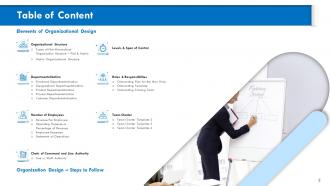
Slide 2: This slide displays Table of Content of the presentation.
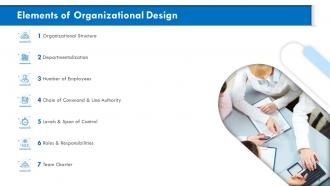
Slide 3: This slide depicts Elements of Organizational Design.
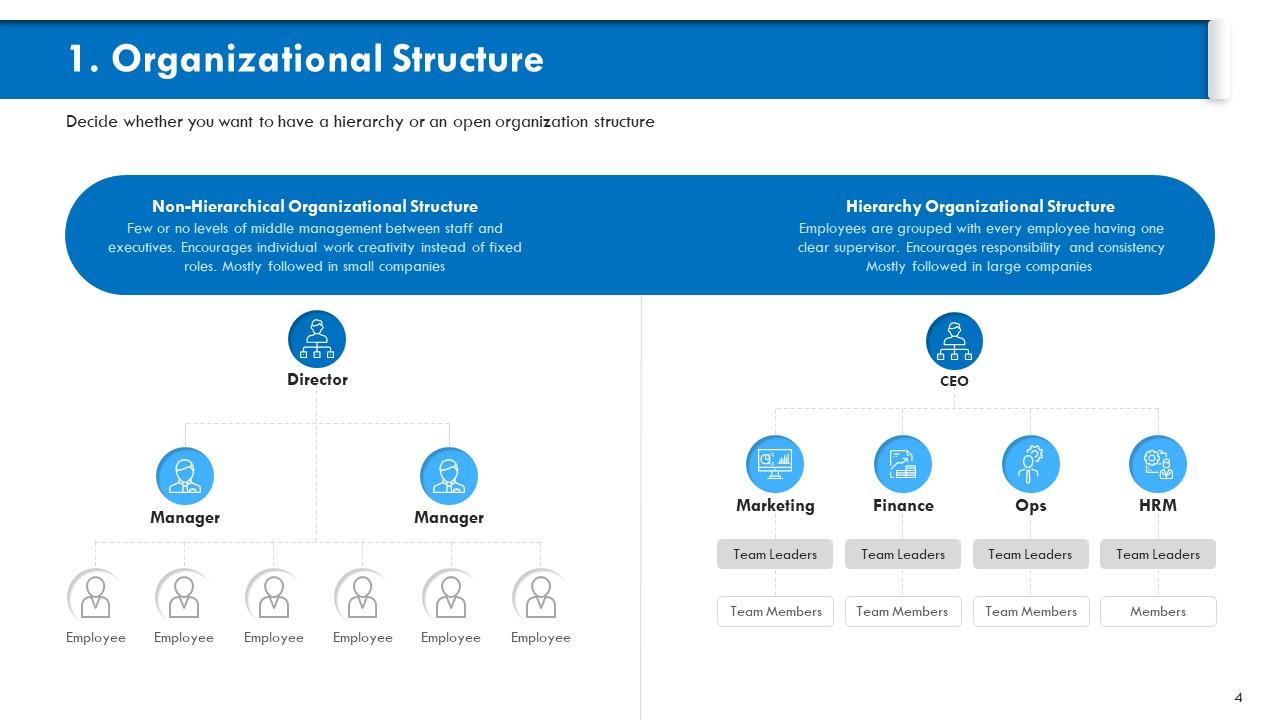
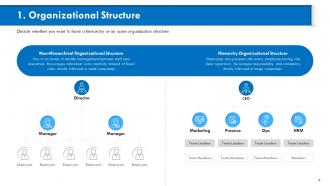
Slide 4: This slide showcases Organizational Structure.
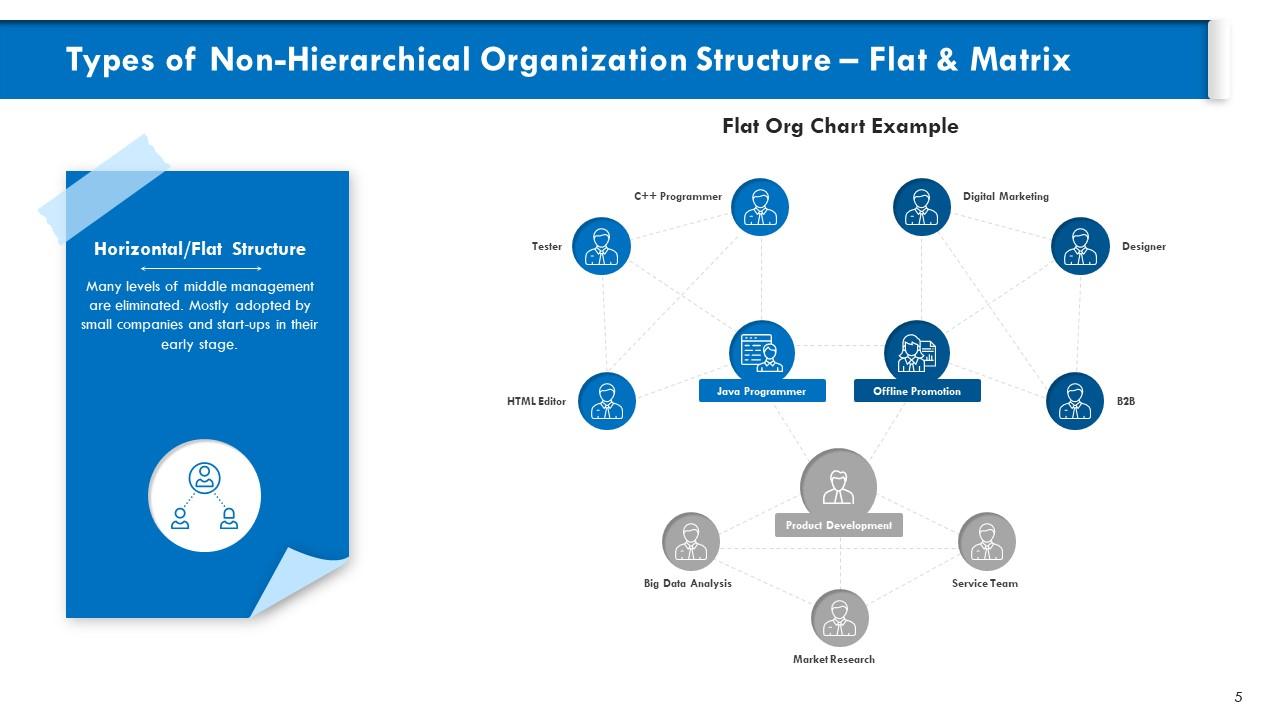
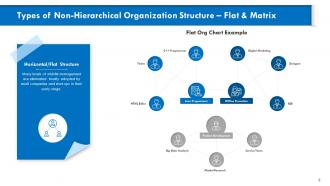
Slide 5: This slide shows Types of Non-Hierarchical Organization Structure – Flat & Matrix containing- Digital Marketing, Designer, B2B, Service Team, Big Data Analysis, Market Research, C++ Programmer, Tester, HTML Editor, etc.
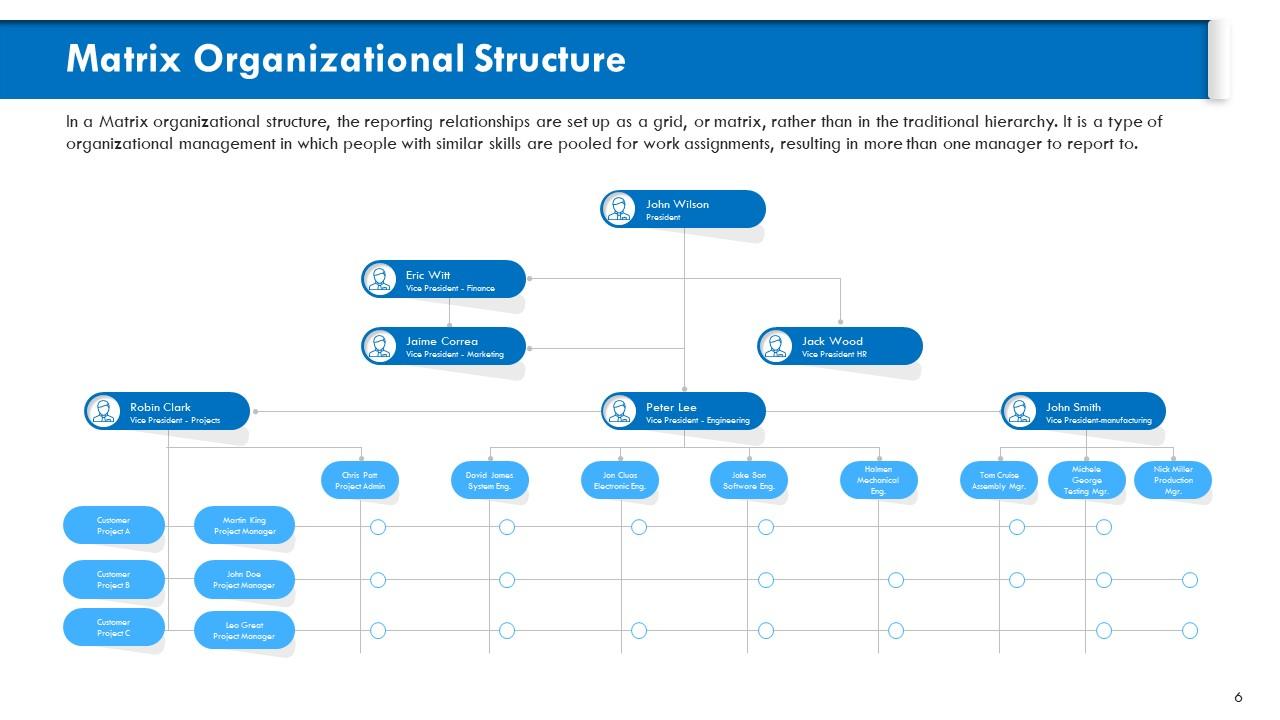
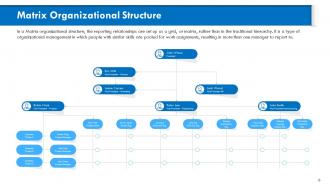
Slide 6: This slide displays Matrix Organizational Structure. In a Matrix organizational structure, the reporting relationships are set up as a grid, or matrix, rather than in the traditional hierarchy. It is a type of organizational management in which people with similar skills are pooled for work assignments, resulting in more than one manager to report to.
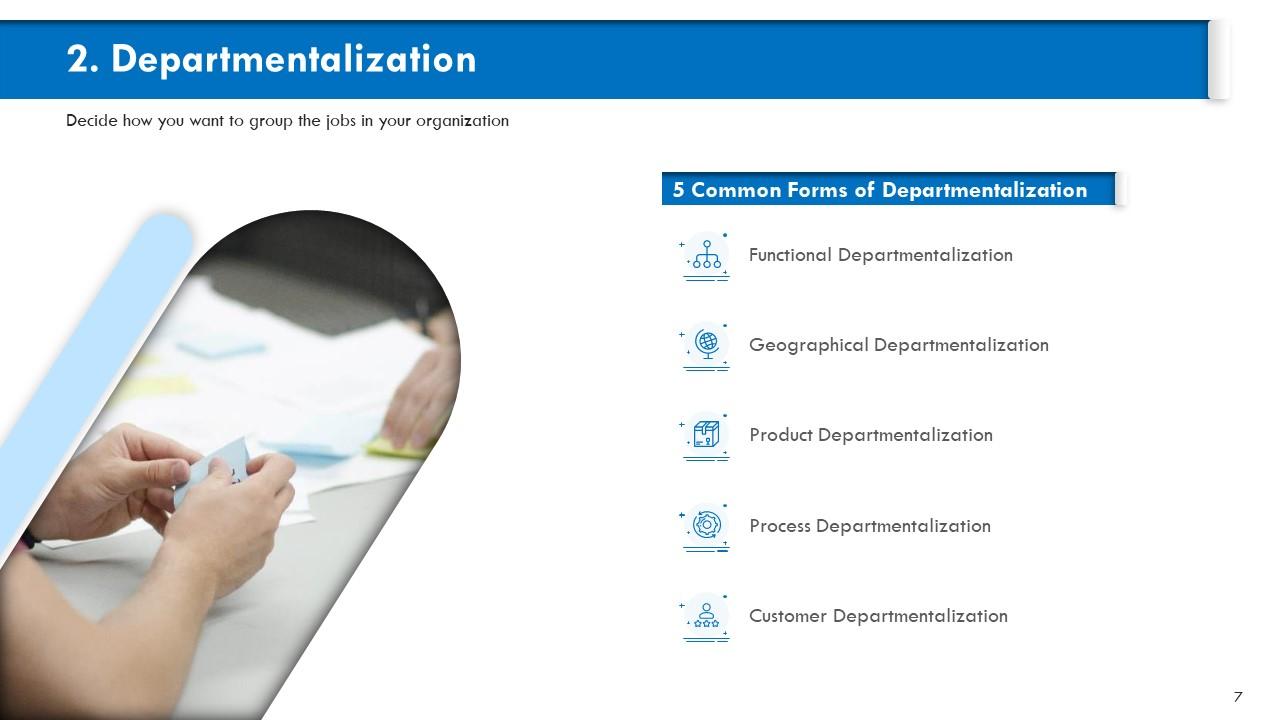
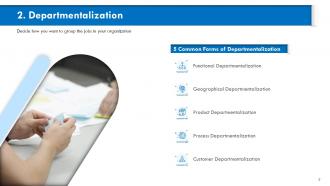
Slide 7: This slide showcases Common Forms of Departmentalization.
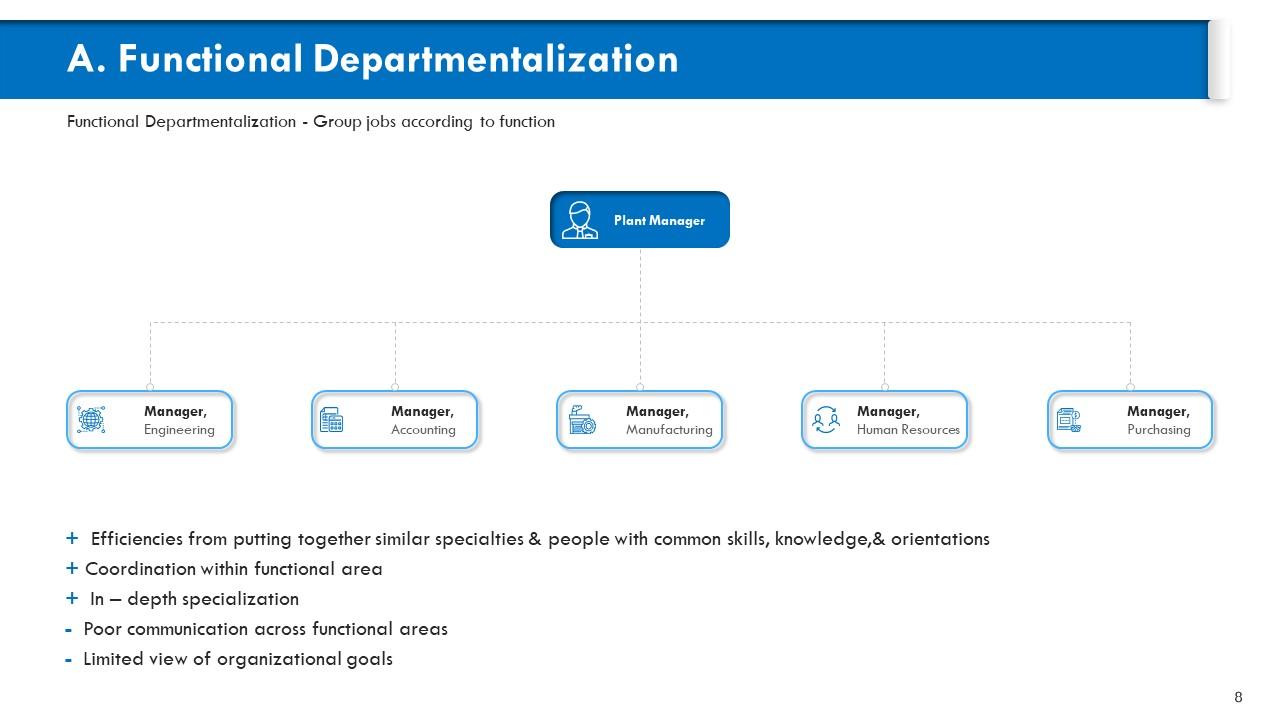
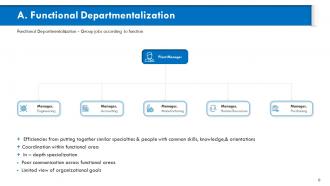
Slide 8: This slide represents Functional Departmentalization - Group jobs according to function.
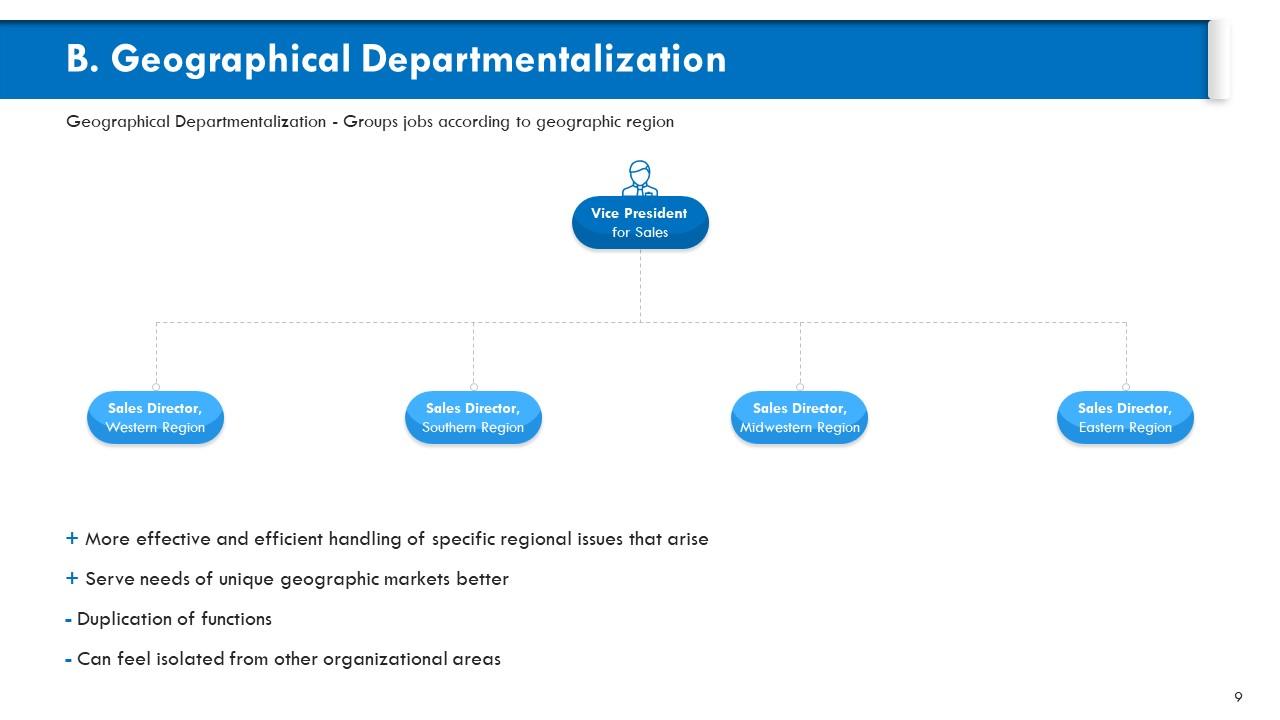
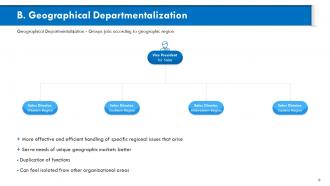
Slide 9: This slide displays Geographical Departmentalization - Groups jobs according to geographic region.
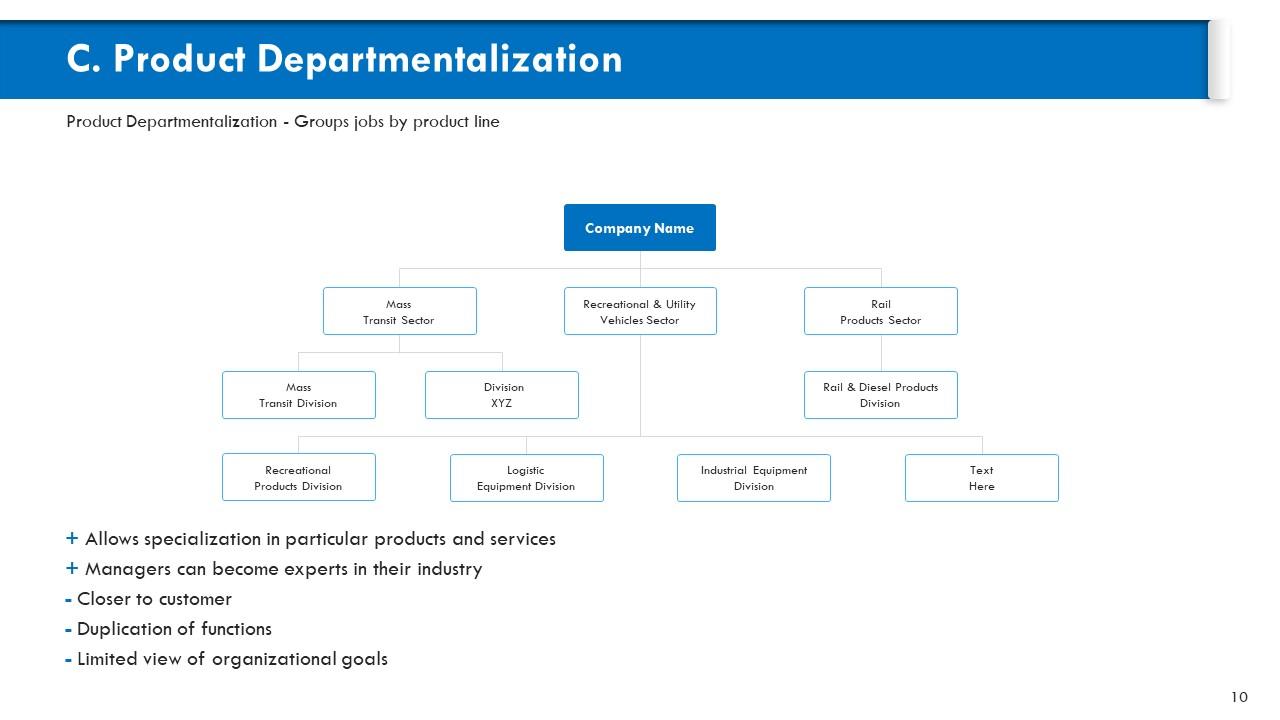
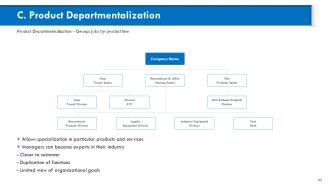
Slide 10: This slide displays Product Departmentalization - Groups jobs by product line
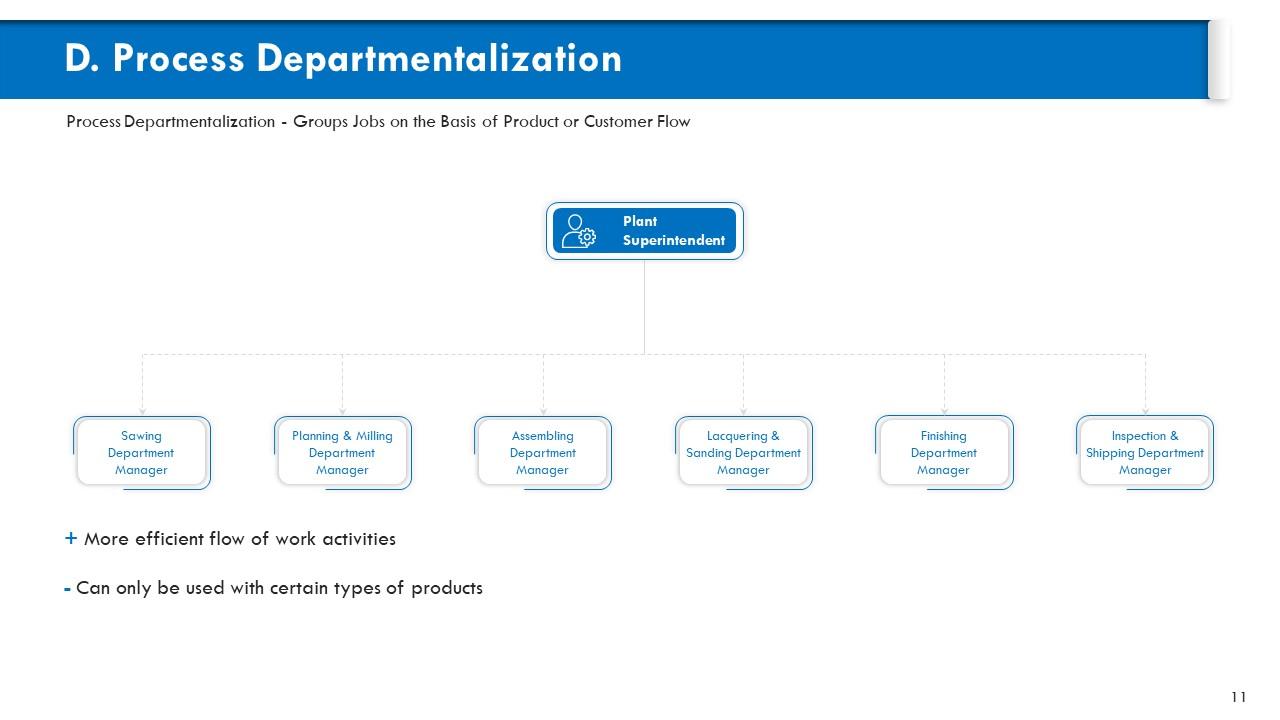
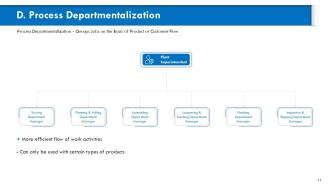
Slide 11: This slide shows Process Departmentalization - Groups Jobs on the Basis of Product or Customer Flow
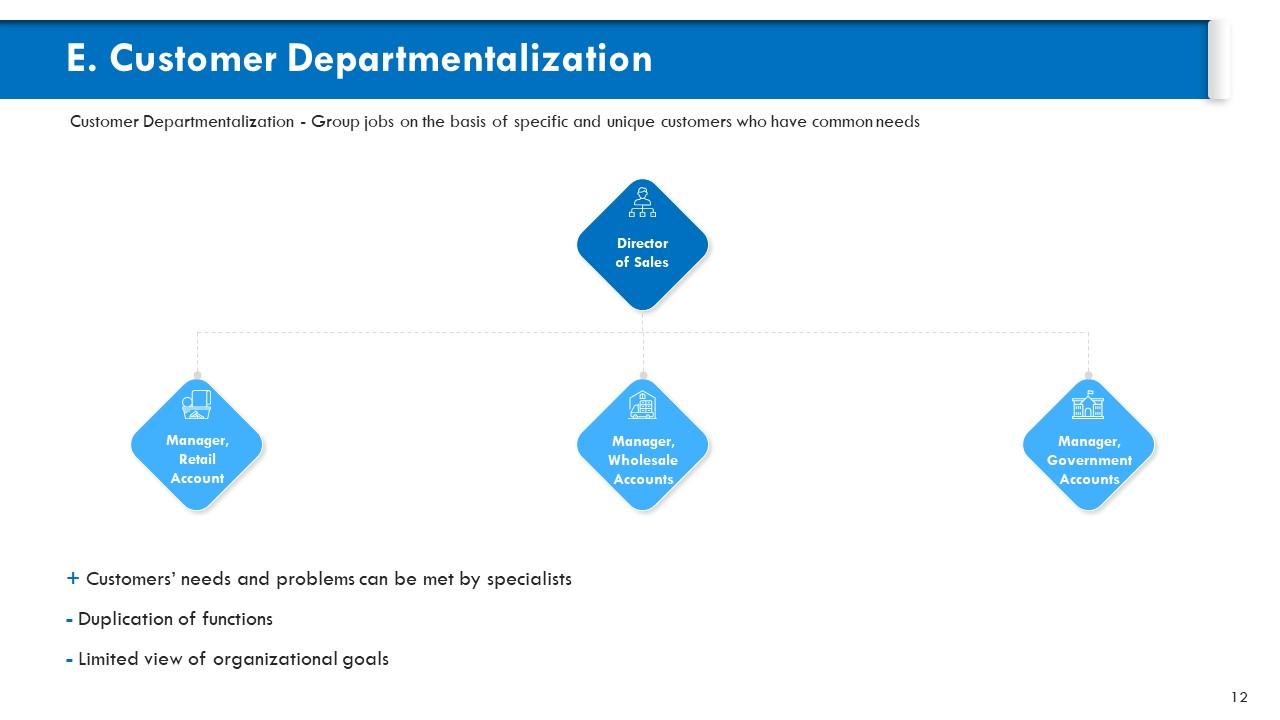
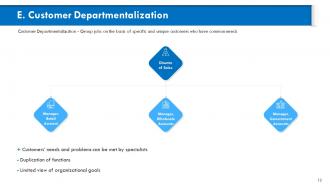
Slide 12: This slide depicts Customer Departmentalization - Group jobs on the basis of specific and unique customers who have common needs
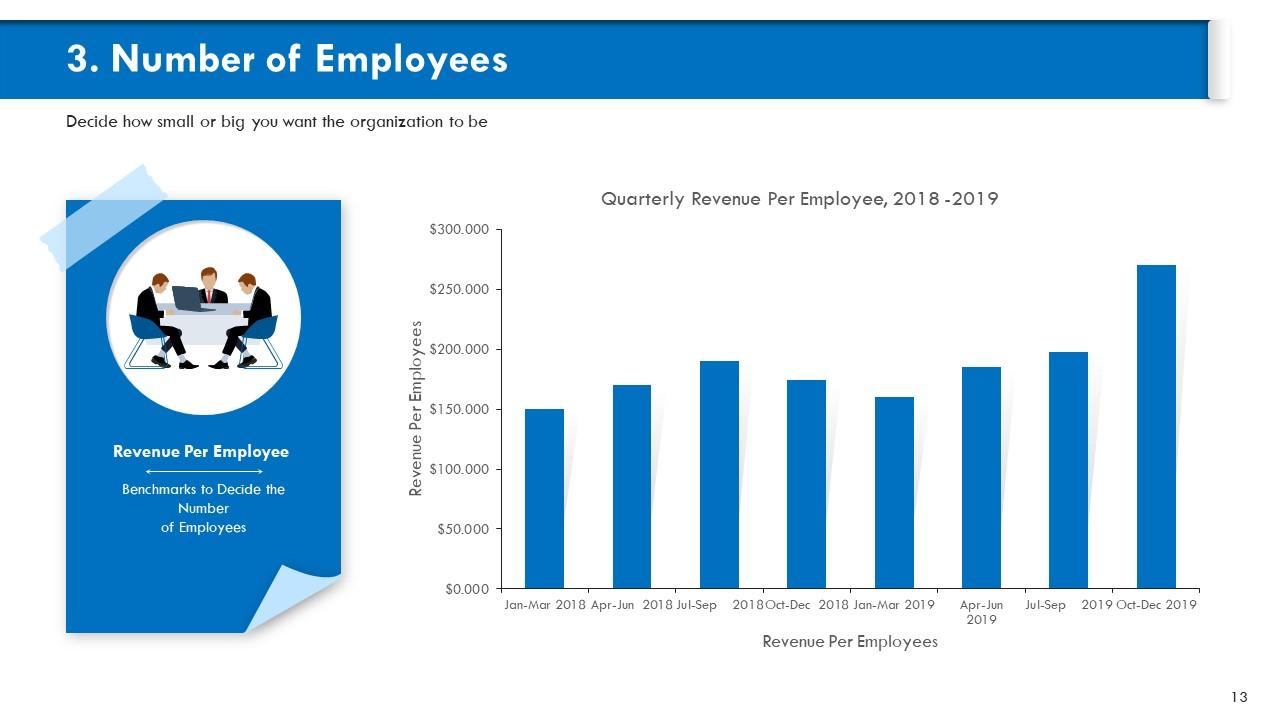
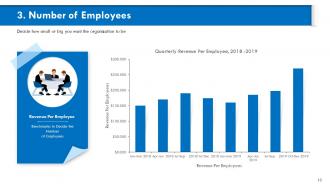
Slide 13: This slide showcases Benchmarks to Decide the Number of Employees
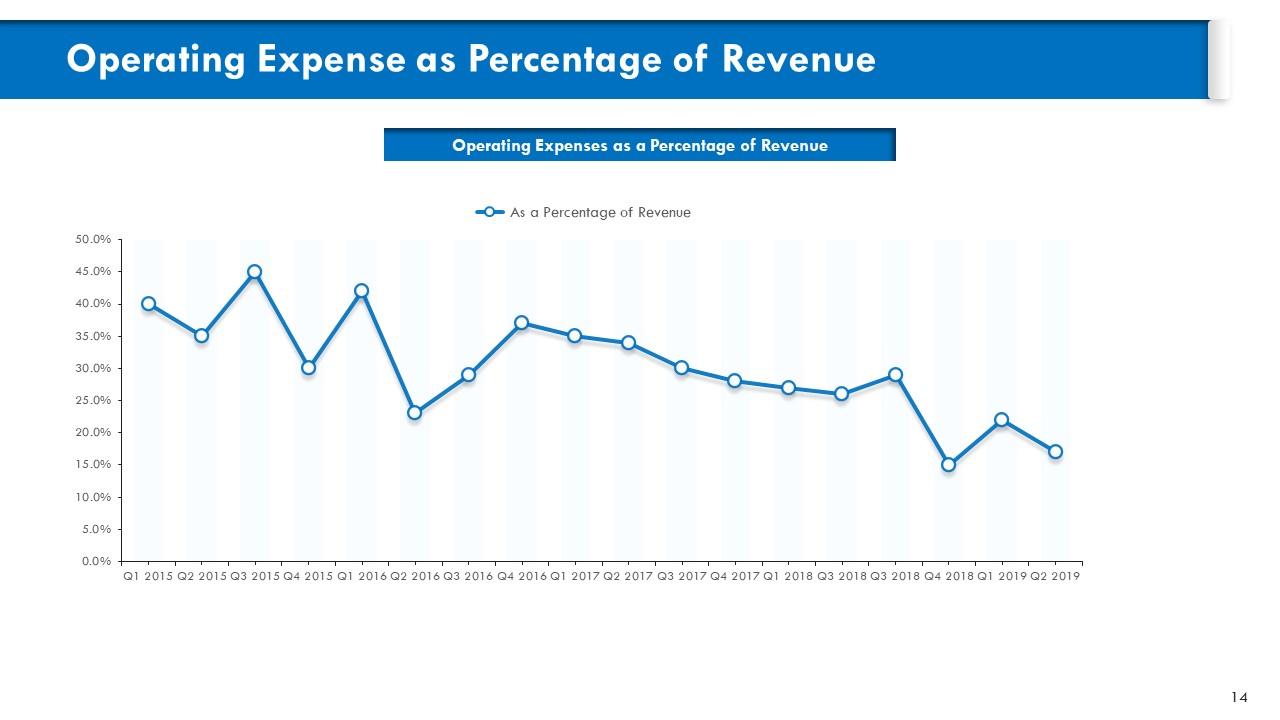
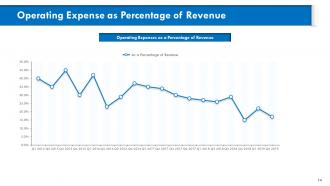
Slide 14: This slide depicts Operating Expense as Percentage of Revenue.
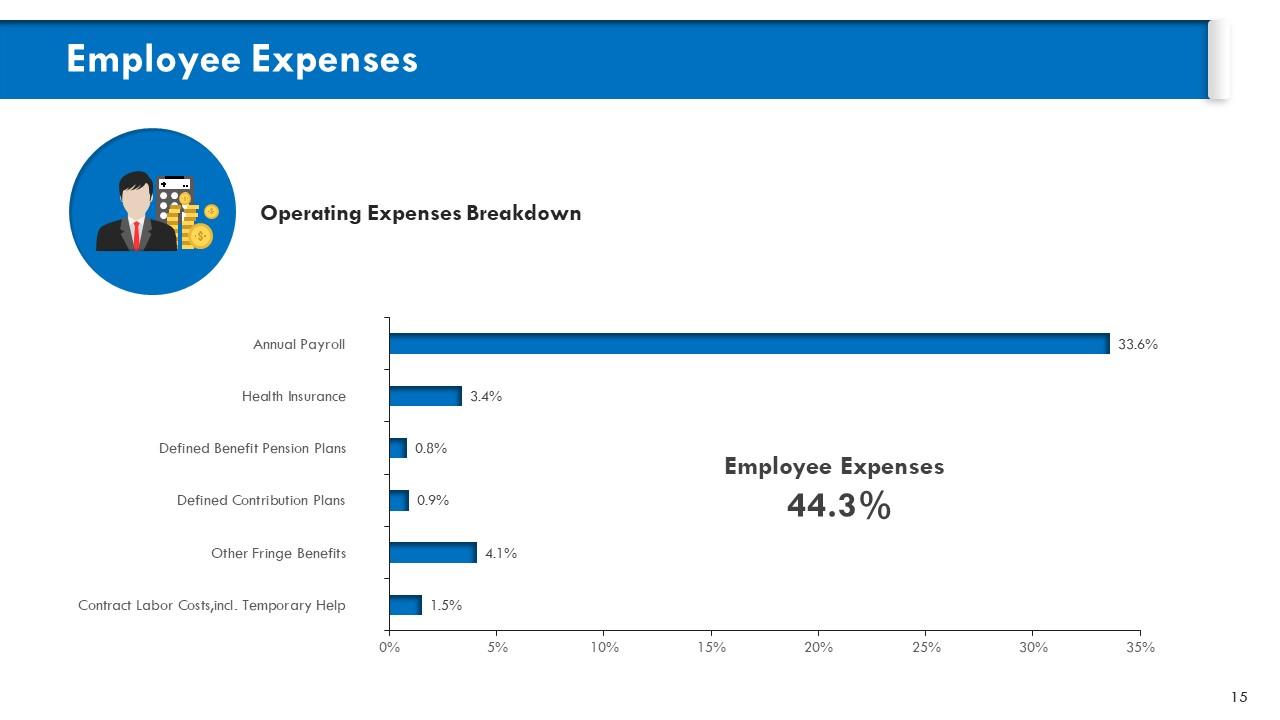
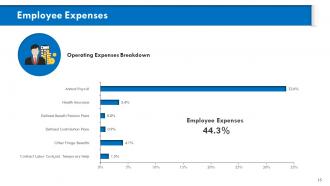
Slide 15: This slide showcases Employee Expenses, Operating Expenses Breakdown, Employee Expenses.
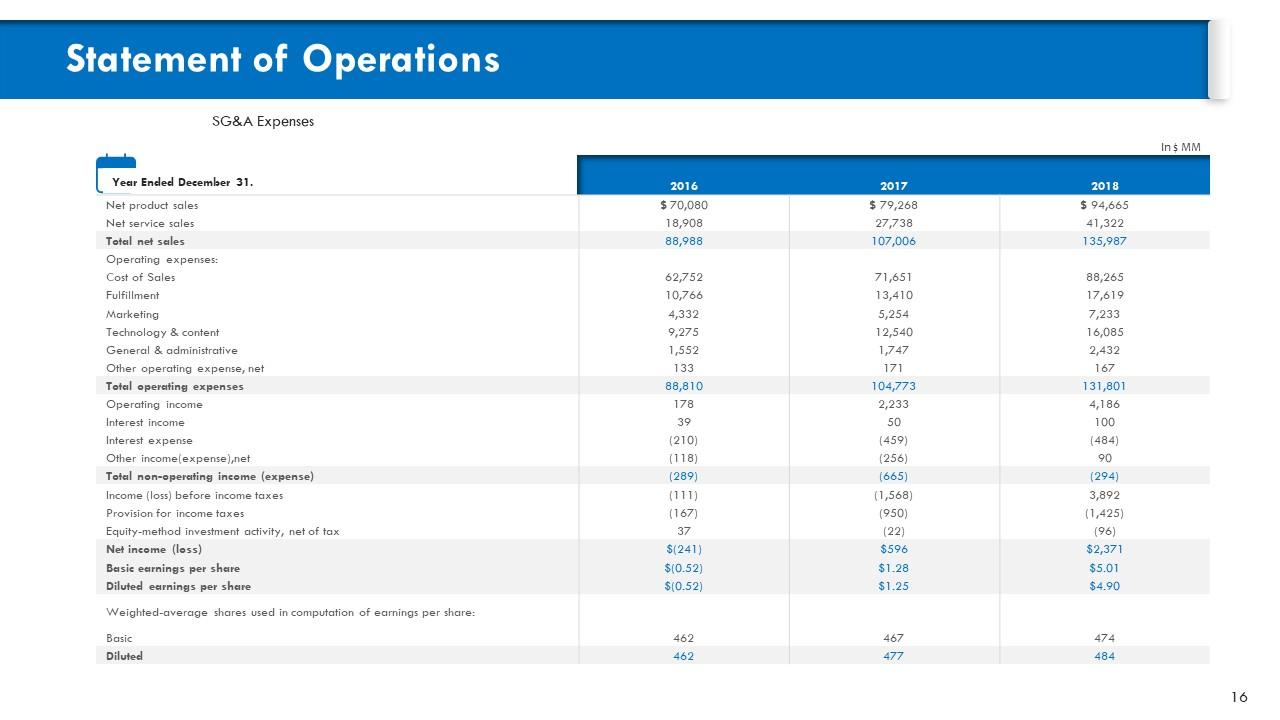
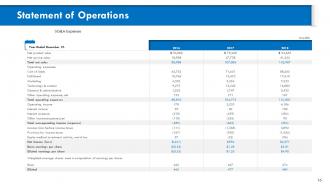
Slide 16: This slide displays Statement of Operations
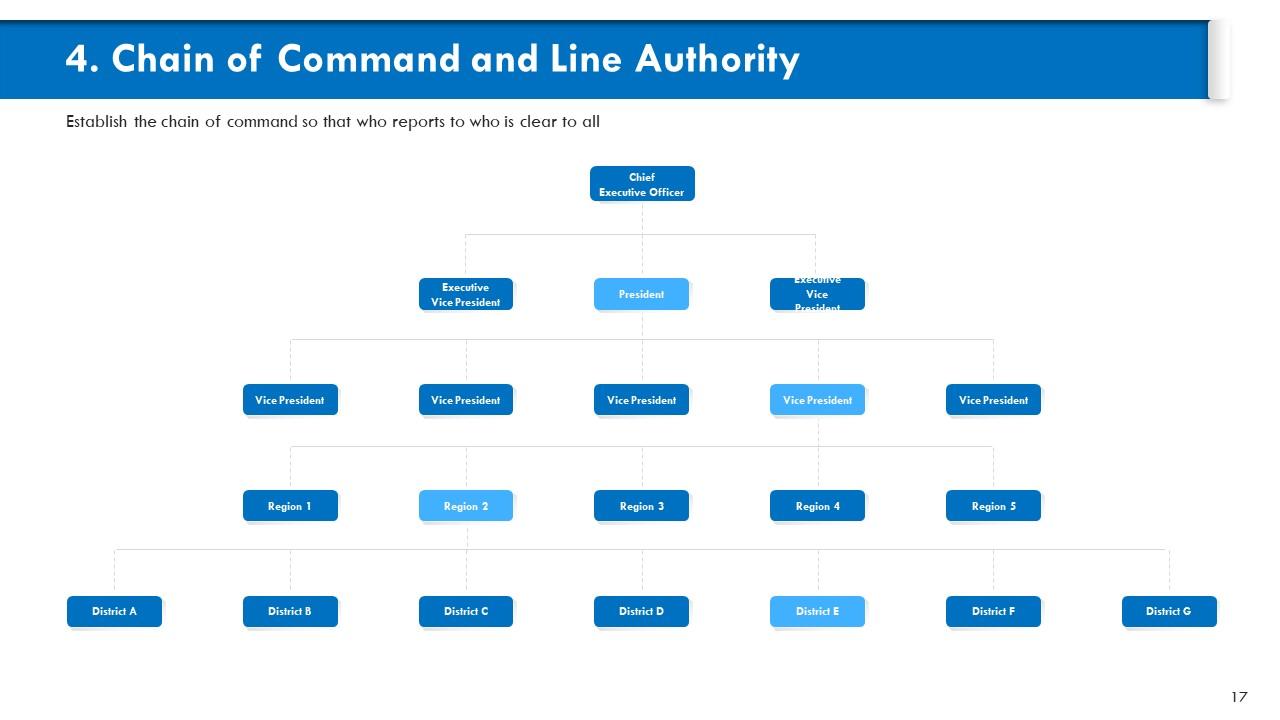
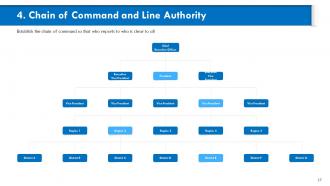
Slide 17: This slide presents Chain of Command and Line Authority
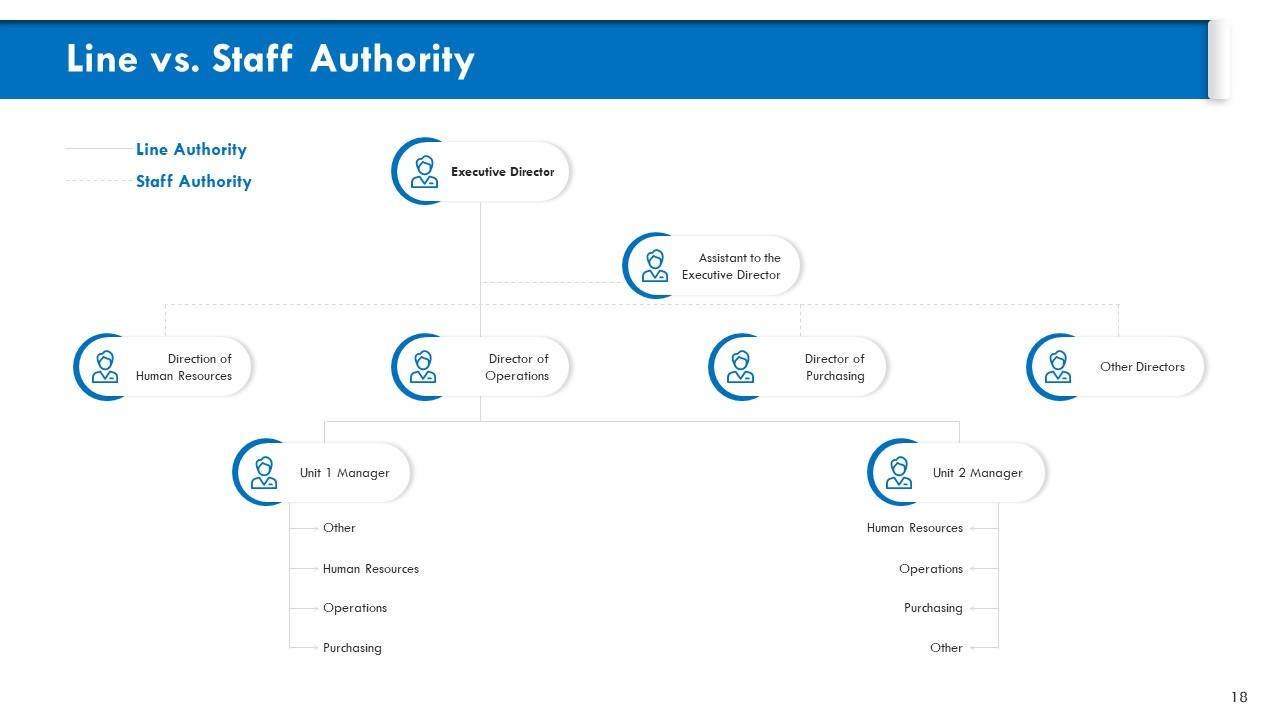
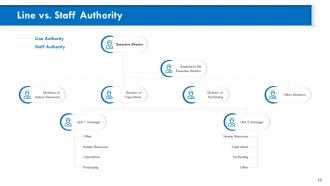
Slide 18: This slide depicts Line vs. Staff Authority.
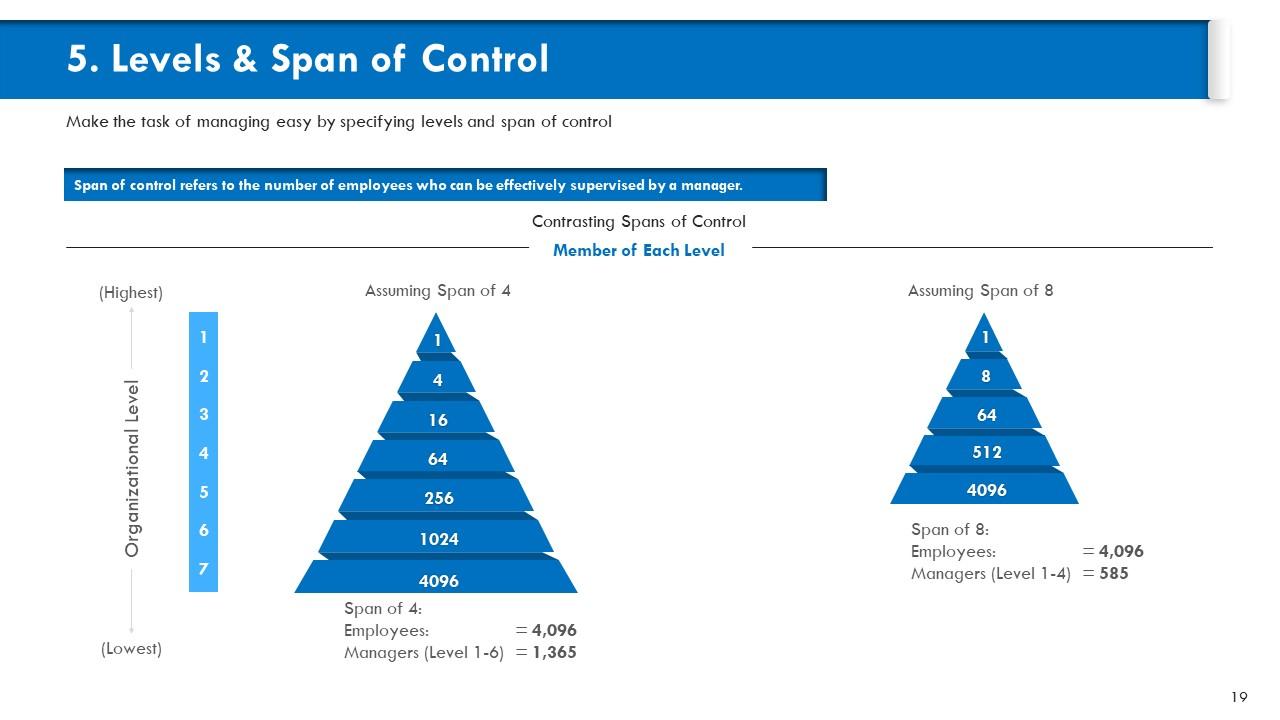
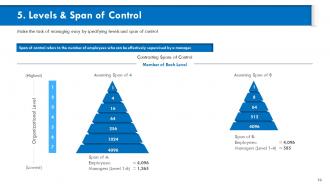
Slide 19: This slide showcases Levels & Span of Control.
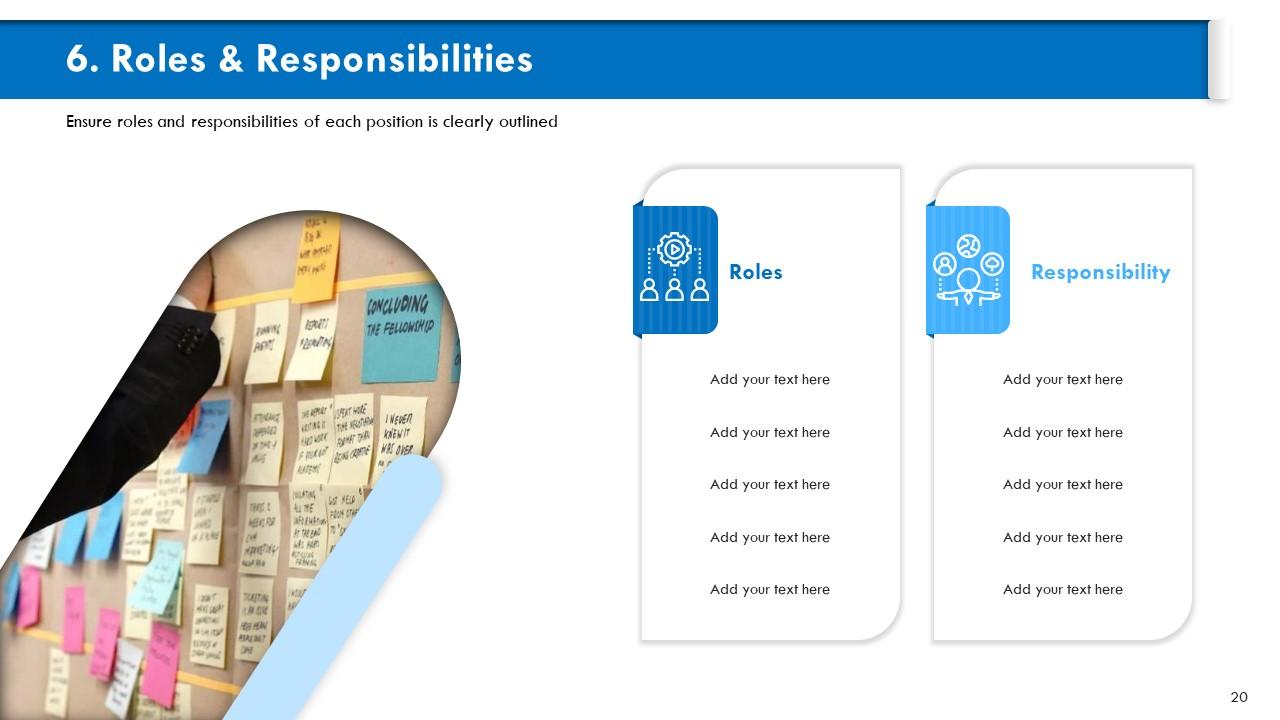
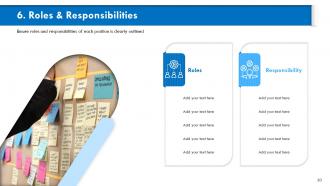
Slide 20: This slide highlights Roles & Responsibilities. Ensure roles and responsibilities of each position is clearly outlined
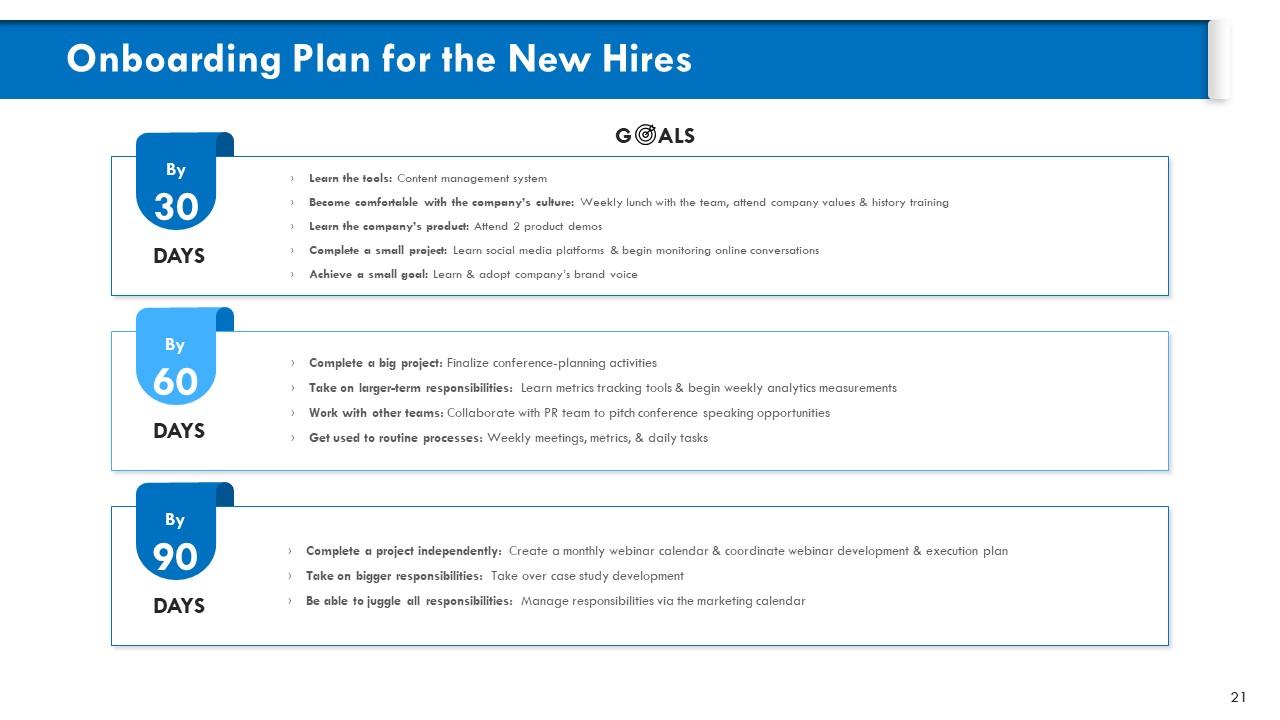
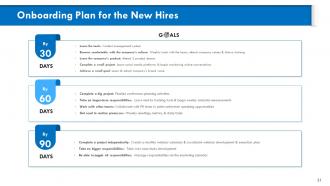
Slide 21: This slide showcases Onboarding Plan for the New Hires.
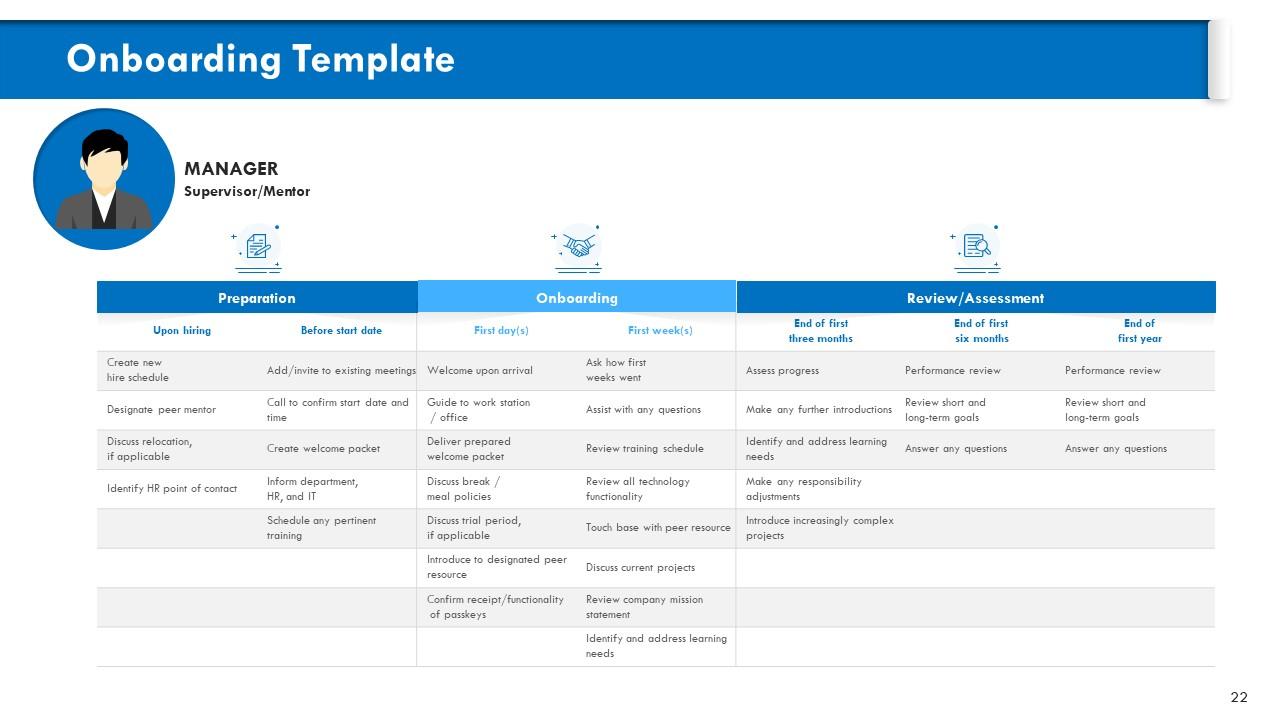
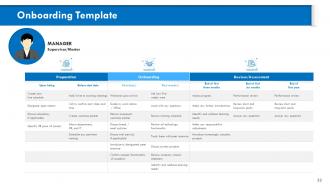
Slide 22: This slide depicts Onboarding Template.
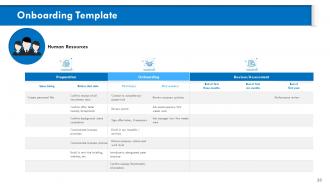
Slide 23: This slide depicts Onboarding Template containing- Human Resources, Preparation, Onboarding, Review/Assessment.
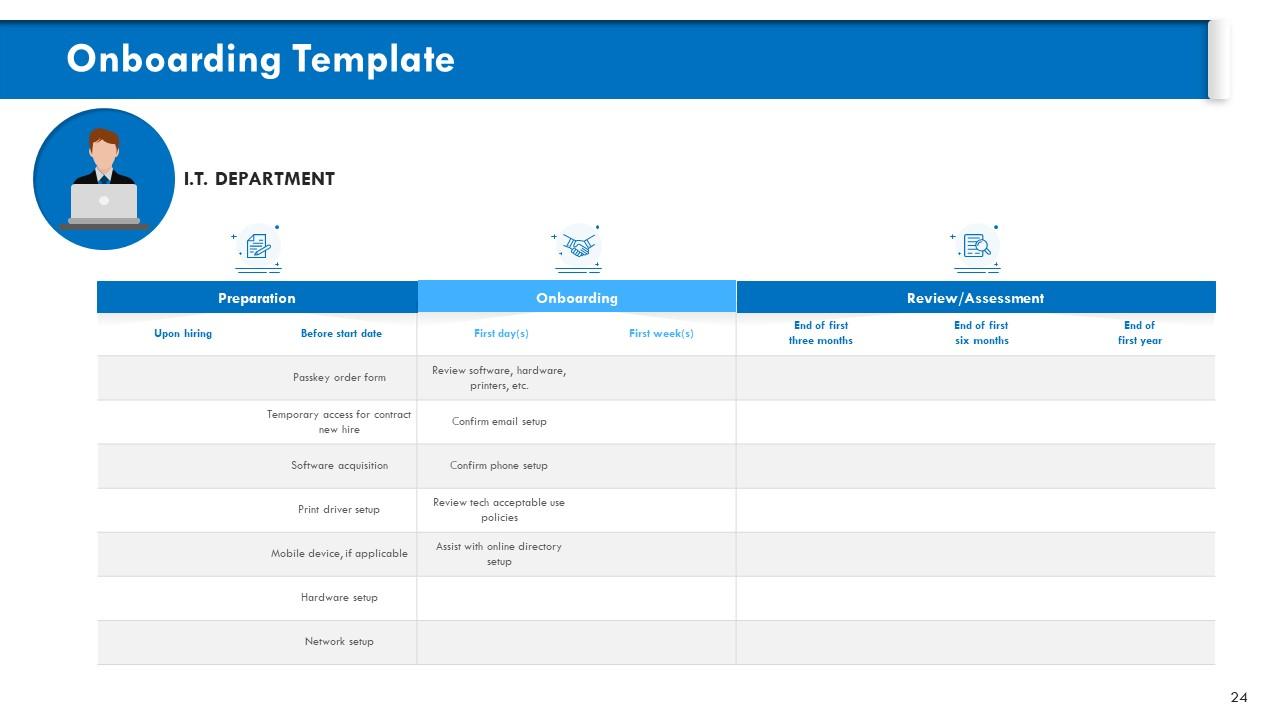
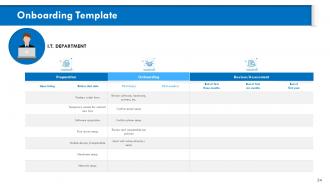
Slide 24: This is Onboarding Template containing- I.T. Department, Preparation, Onboarding, Review/Assessment.
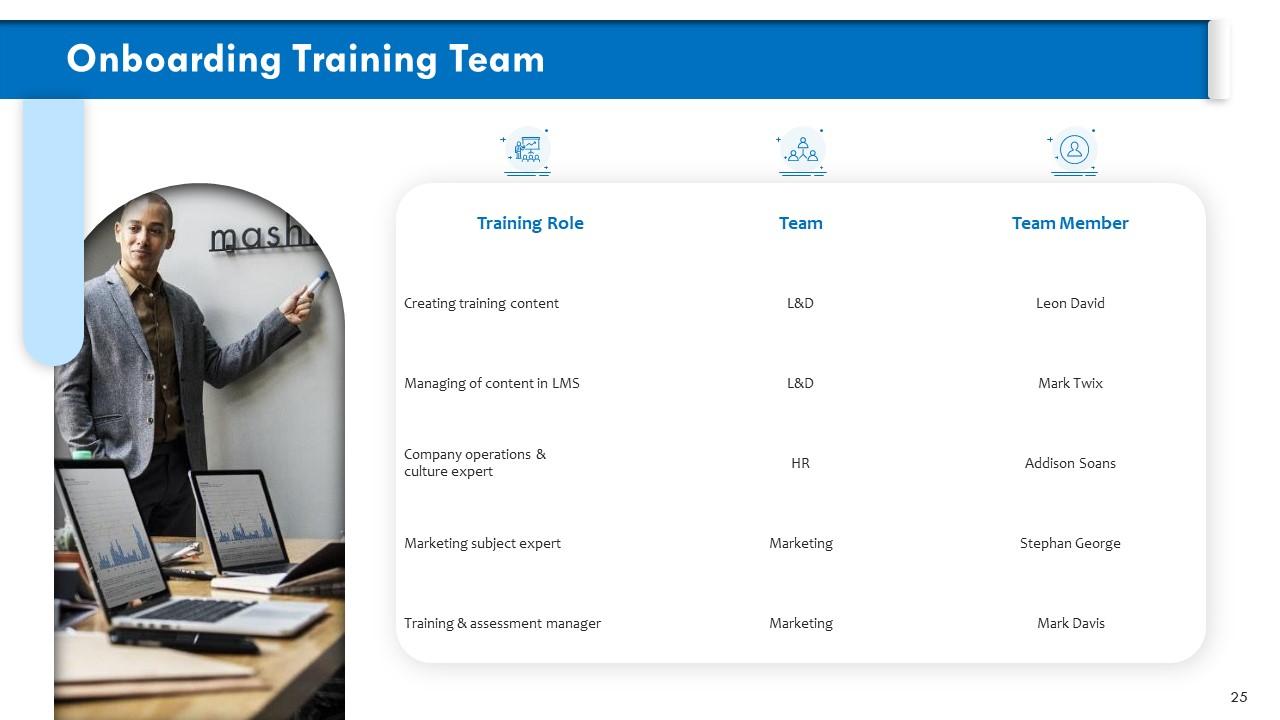
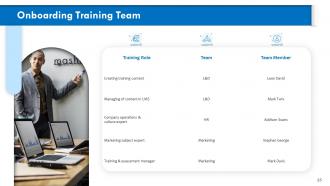
Slide 25: This slide showcases Onboarding Training Team.
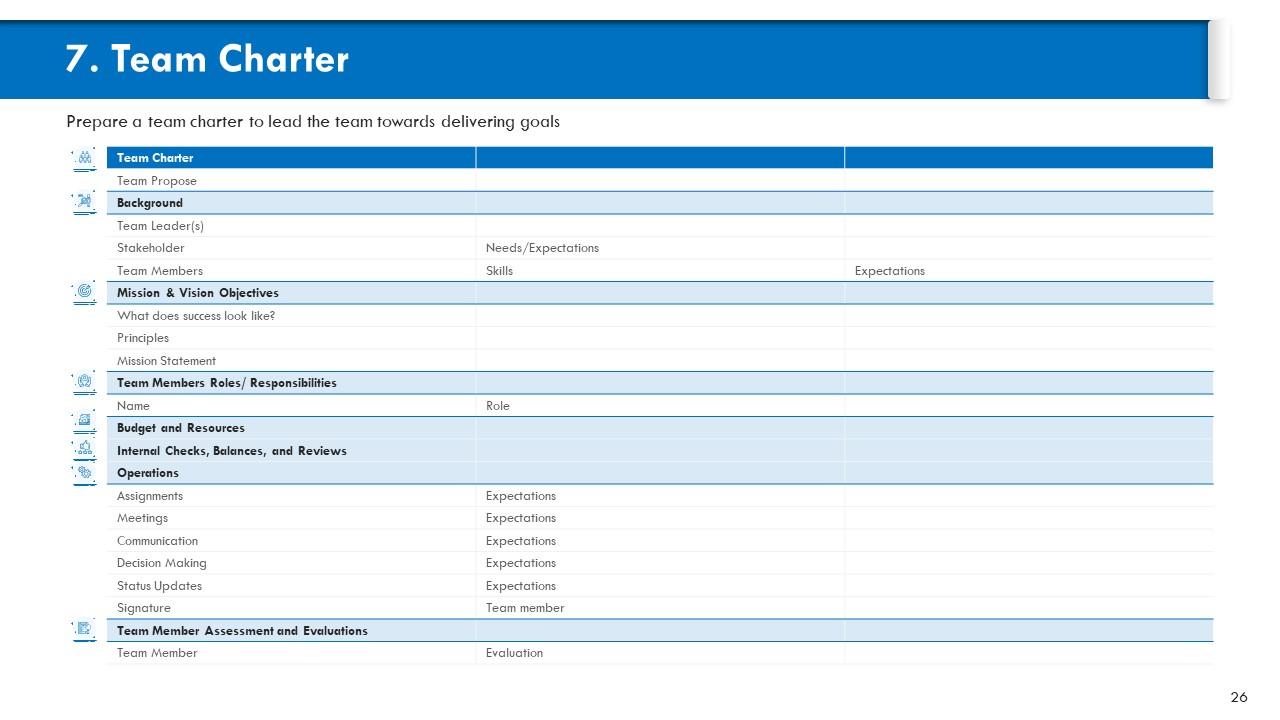
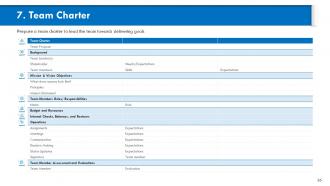
Slide 26: This slide shows Team Charter. Prepare a team charter to lead the team towards delivering goals
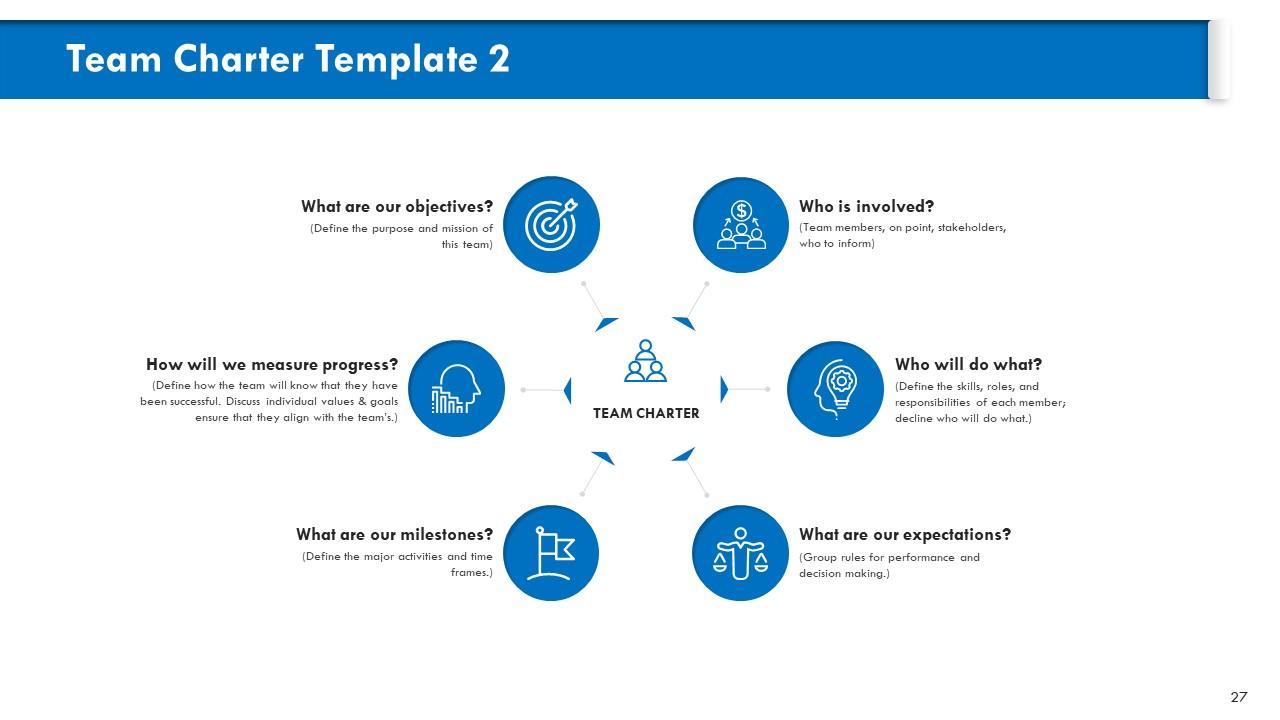
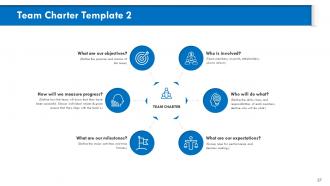
Slide 27: This slide shows Team Charter Template 2
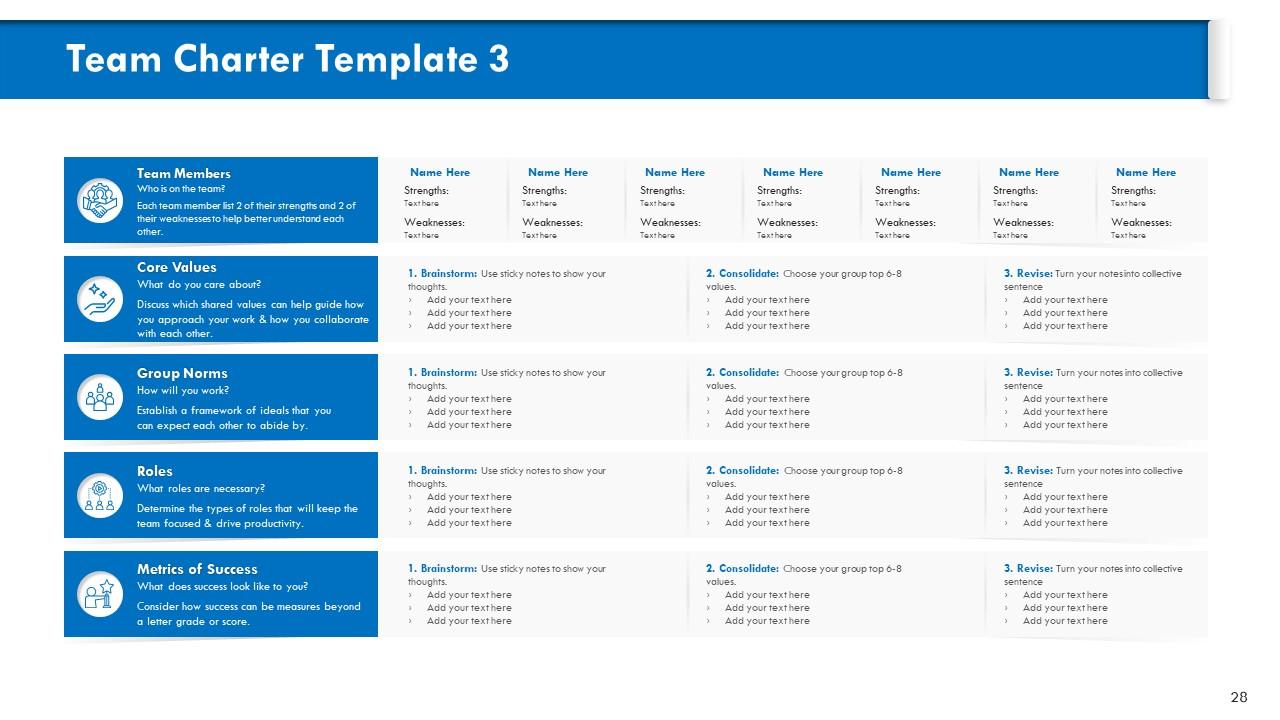
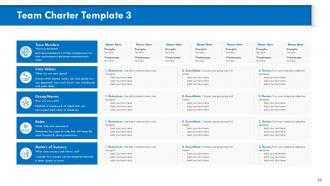
Slide 28: This slide shows Team Charter Template 3. Each team member list 2 of their strengths and 2 of their weaknesses to help better understand each other.
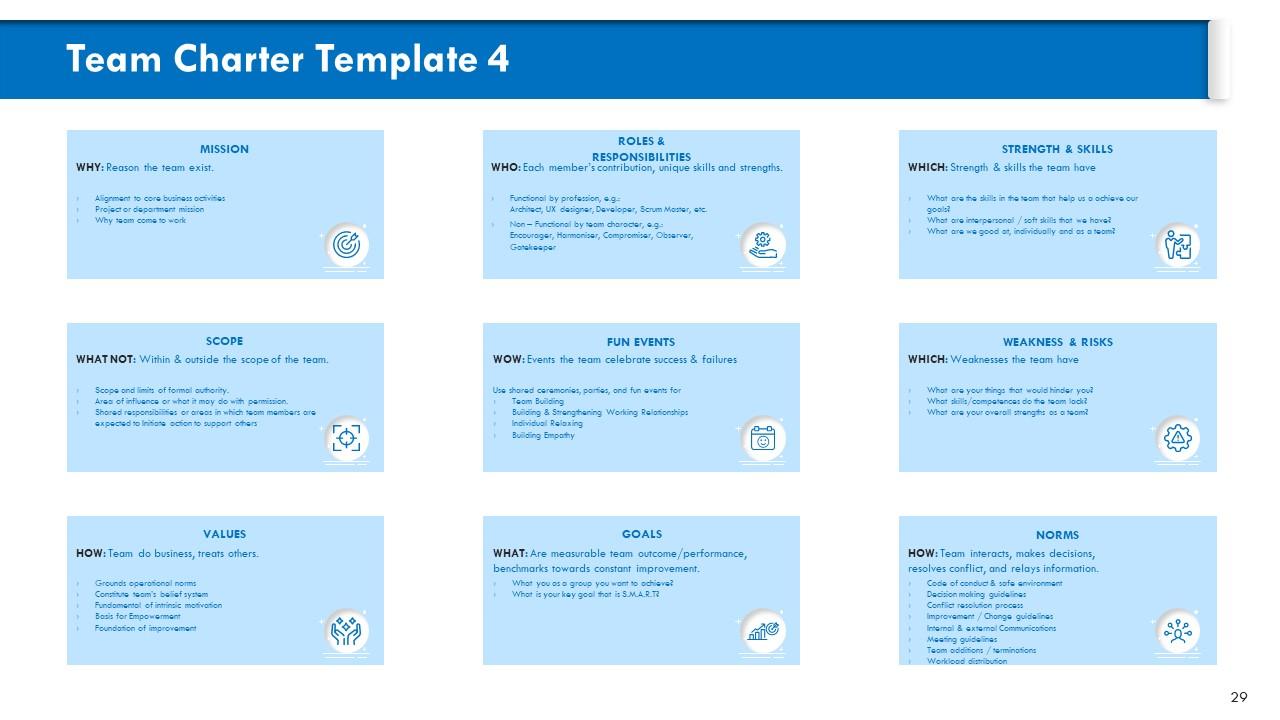
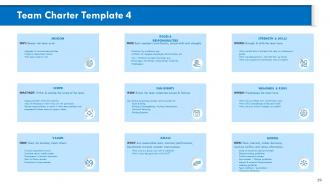
Slide 29: This slide shows Team Charter Template 4.
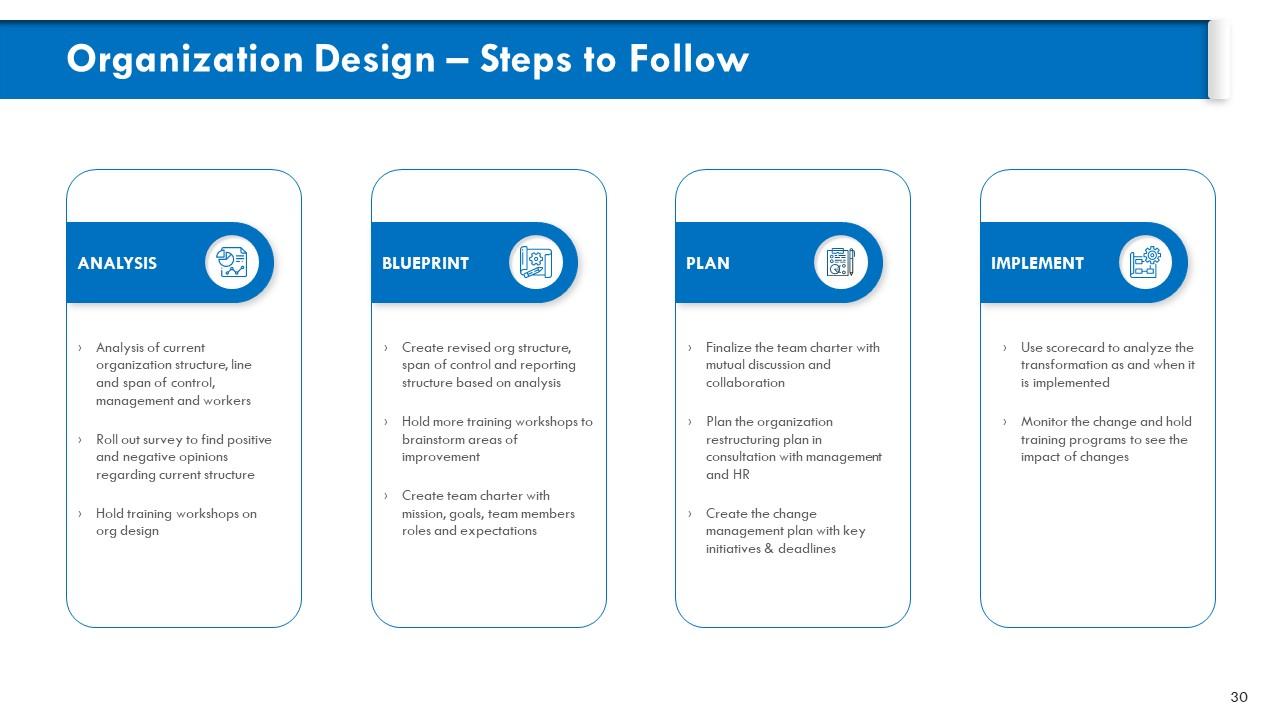
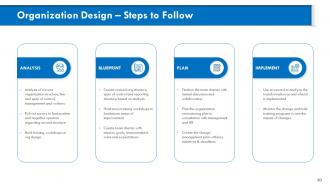
Slide 30: This slide depicts Organization Design – Steps to Follow.
Slide 31: This is Types of Organizational Structure & Org Charts Icons Slide.
Slide 32: This slide is titled Additional Slides.
Slide 33: This slide shows Agenda
Slide 34: This slide displays Company Introduction.
Slide 35: This slide shows Our Mission, Vision and Values.
Slide 36: This slide displays Our Goals.
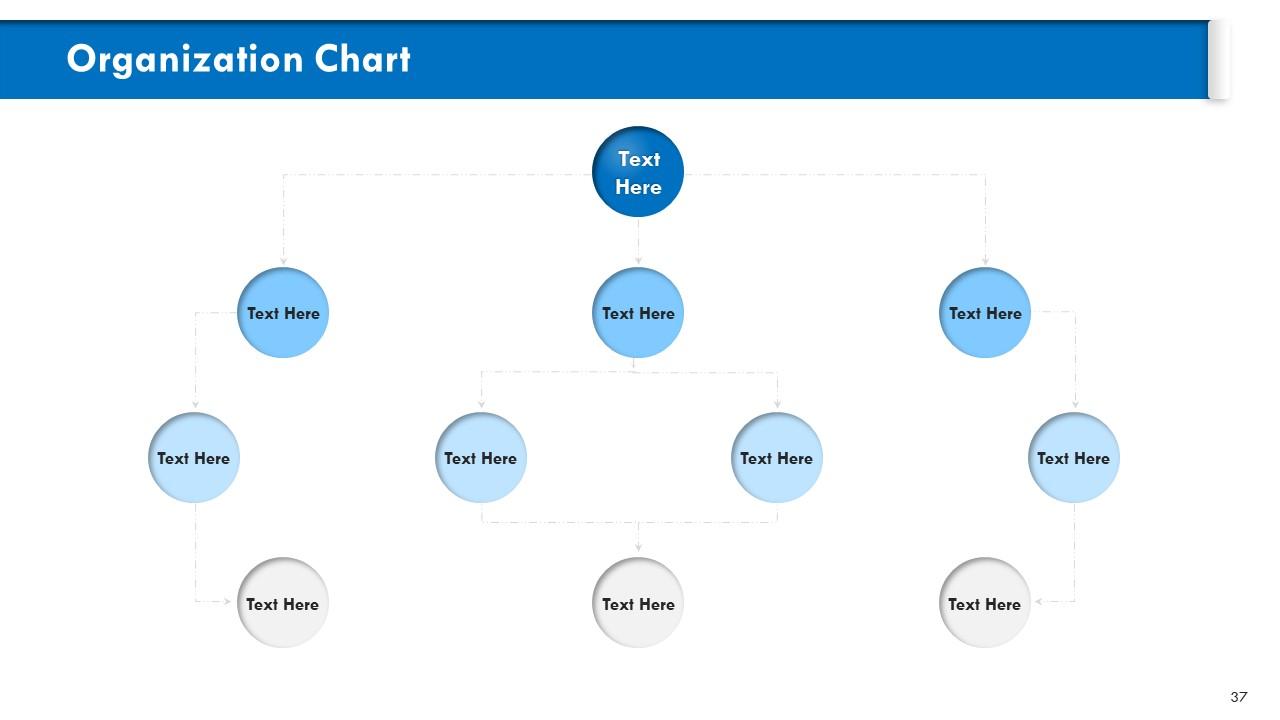
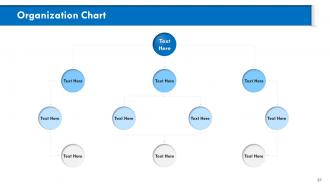
Slide 37: This slide displays Organization Chart
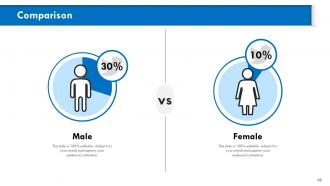
Slide 38: This is Comparison slide.
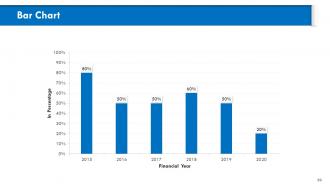
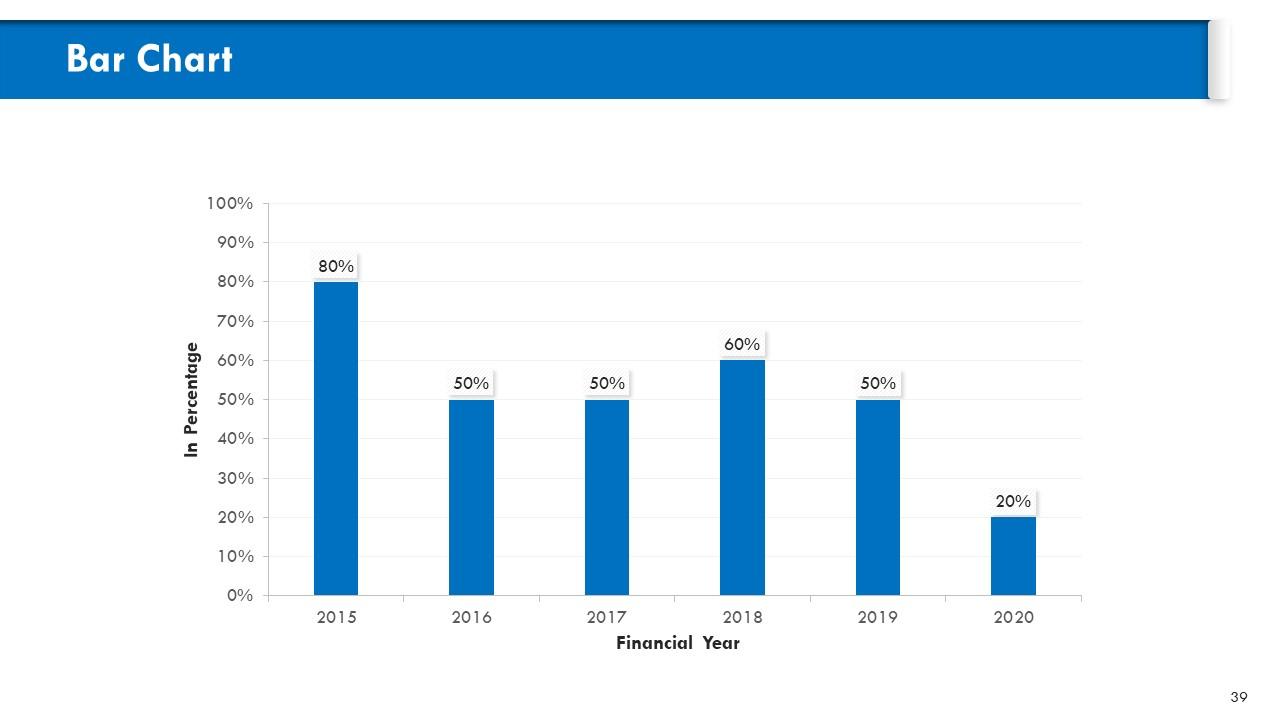
Slide 39: This is Bar Chart template.
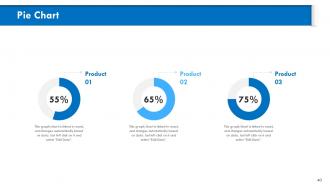
Slide 40: This is Pie Chart template for Comparison of products.
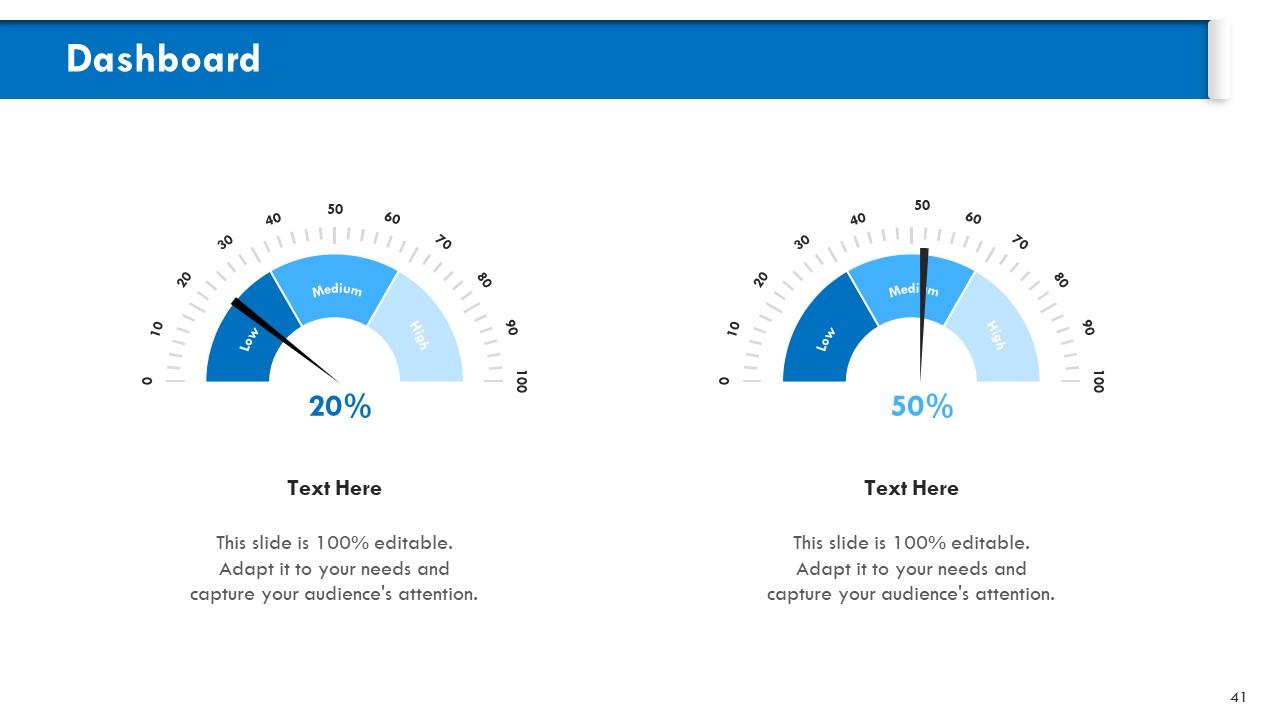
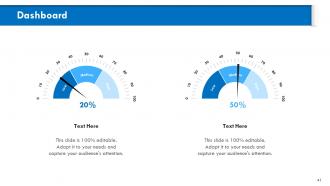
Slide 41: This slide displays Dashboard.
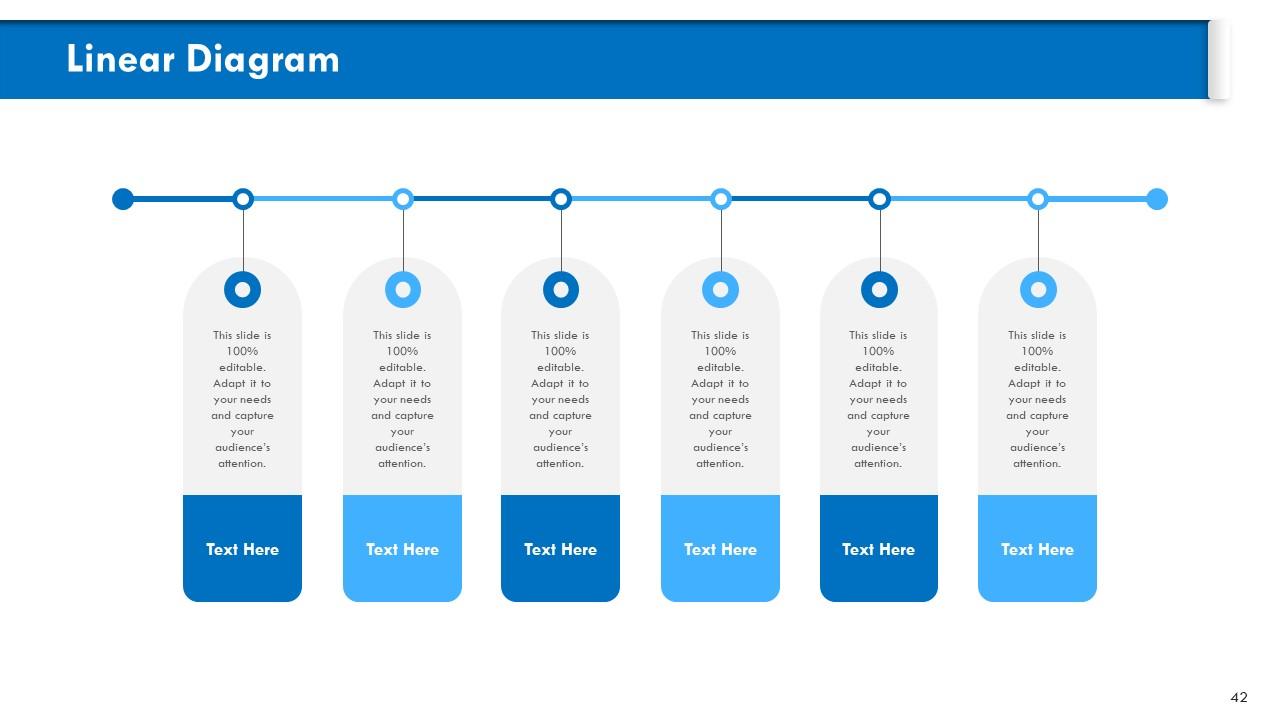
Slide 42: This slide shows Linear Diagram.
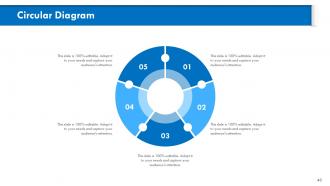
Slide 43: This slide depicts Circular Diagram
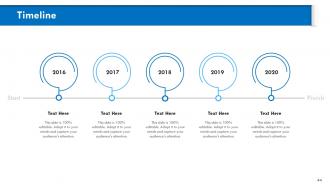
Slide 44: This slide shows Timeline process.
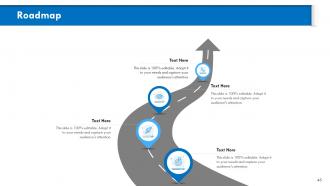
Slide 45: This slide shows Roadmap process.
Slide 46: This is Thank You slide with Contact details.

FAQs for Types Of Organizational Structures And Org Charts

So functional groups people by what they do - marketing together, finance together, etc. You get really specialized teams that way. Divisional splits by product lines or regions instead. Honestly, functional is great for efficiency but getting departments to actually talk to each other? Good luck with that. Divisional structures let each division run like their own little company, which is way faster for decisions. Downside is you're basically paying for the same roles multiple times across divisions. If you've got totally different products or markets, go divisional. Smaller company or specialized service? Functional makes more sense.

So matrix structures mean people report to multiple bosses - like their department head plus a project manager. Sounds chaotic, right? But here's the thing - it forces departments to actually talk to each other. Your marketing guy can't ignore engineering when he's answerable to both the CMO and some product launch lead. Yeah, the org chart looks insane with all those dotted lines everywhere. Short version: it's messier than normal hierarchies but creates way more cross-team collaboration. Just don't let people get confused about who they're supposed to listen to when.

Honestly, flat structures can be amazing for speed - no waiting around for five different approvals, you know? Your team actually feels like they own stuff and departments talk to each other directly instead of playing telephone. But here's the thing - it gets messy fast without clear hierarchy. I've seen companies where everyone's "empowered" but nobody knows who decides what when push comes to shove. Total role confusion nightmare. If you're thinking about flattening things out, maybe test it with a small team first? You really need rock-solid communication systems or you'll just create expensive chaos instead of that agile magic everyone talks about.

Honestly, your company culture is everything here. Got a collaborative vibe where people trust each other? Go flat - fewer managers, more freedom. But traditional places like banks or government agencies? They need those formal reporting lines or chaos happens. I watched one startup try to copy Google's structure and it was painful to watch. People were totally lost without clear hierarchy. So here's what I'd do - figure out how your team actually likes working first. Some groups thrive with autonomy, others need more structure. Don't fight your culture, work with it.

Honestly, hybrid structures are pretty smart - you grab what works from different setups and ditch what doesn't. Maybe you want functional hierarchy but also need matrix flexibility. Or divisional freedom with some centralized stuff (like HR, because nobody wants 5 different HR departments, trust me). Think of it like mixing your favorite parts of different jobs you've had. The trick is knowing what actually fits your company's vibe and size. Just don't mess around with unclear reporting lines. That's how you get people asking "wait, who's my boss again?" instead of getting the benefits you wanted.

Your org structure is gonna make or break any changes you're trying to push through. Rigid hierarchies? Good luck - everything crawls through endless approval layers and gets watered down. Flatter companies move way faster since fewer people can say no. Matrix setups are honestly a nightmare sometimes because everyone reports to like three different managers. Either it works great or becomes complete chaos - there's no in-between. Here's the thing though: don't fight your structure. If you're in a top-down place, work from the top down. Trying grassroots stuff in those environments is just banging your head against the wall.

So first thing - map what you've got now against your actual business goals and spot the gaps. Check how fast decisions get made, if communication flows smoothly, and whether the right people can actually act on stuff that matters. Honestly, I've seen too many places where info just dies in silos or approvals take forever (major red flags). Track things like project completion times and employee engagement before you change anything. Your structure should help your strategy, not work against it. Oh and don't try to fix everything at once - pick one obviously broken area and test changes there first.

Start with who reports to who - crystal clear lines, no confusion. Design it around how work actually flows through your team, not some fancy diagram. Keep managers from being bottlenecks (seriously, nobody needs 6 approval layers). I'd aim for like 5-8 people per manager max, otherwise things get weird. Build in wiggle room since teams change constantly. Oh and don't overthink it initially - just get something basic working then fix what's broken. The fancy stuff can wait until you know what problems you're actually solving.

Dude, going global totally flips your org structure on its head. Time zones, different cultures, regulations - it's chaos if you're not set up right. You'll want more decentralized teams so people can make calls without constantly bugging headquarters. Matrix structures work well since you need both regional and functional people, but honestly they get confusing quick. The trick is balancing global consistency with letting local teams do their thing. Oh and definitely map out where your big decisions happen first - that'll tell you how to structure everything else. Makes the whole process way less painful.

Remote work totally changes how your company is structured - fewer middle managers needed when info flows directly between teams and leadership. The whole "corner office = status" thing dies when everyone's at home anyway. But here's the downside: you lose those random coffee machine conversations that actually spark good ideas. Companies have to work harder now to keep teams collaborating across departments. Oh, and maintaining culture becomes this whole intentional thing instead of just happening naturally. You'll want to figure out what replaces all those informal chats you used to have.

Network structures are perfect when you need flexibility but can't hire everyone full-time. Great for project work, seasonal stuff, or breaking into new markets where you need local connections. Startups use this all the time - they're usually broke anyway, so it makes sense. You keep the important stuff in-house and partner with others for everything else. Just make sure your communication is bulletproof and contracts are tight, since you're basically managing relationships instead of actual employees. Oh, and don't go crazy at first. Test it with one or two partnerships before expanding.

Honestly, the biggest thing is getting rid of all those approval layers - they're creativity killers. Try matrix teams instead of the usual departmental setup. People need room to mess up without asking permission for everything first. That Google 20% time thing? Actually works, even though it sounds like corporate BS. Give your team dedicated hours to tinker with random ideas. Pick one process this week that takes forever to get approved and just... cut out half the steps. See what happens. The goal is making the gap between "I have an idea" and "let's try it" as short as possible.

Honestly, start with decision-making speed and employee satisfaction scores - those tell you the most. Track how well departments actually communicate with each other too. Span of control is clutch (how many people report to each manager). Revenue per employee shows if you're structured efficiently from a money perspective. Time-to-market matters for new products obviously. Turnover by department is huge though - when people keep quitting specific areas, that's your red flag right there. Pick maybe 3-4 metrics that match whatever's driving you crazy organizationally. No point tracking everything if half of it doesn't apply to your actual problems.

So your leadership style and org structure totally feed off each other. Hierarchical companies? You're probably gonna be more directive since everything flows down the chain. Flat orgs need collaborative leaders who trust teams to figure stuff out. Matrix structures are honestly a nightmare - you need someone who's cool with chaos and sharing power. I learned this the hard way at my last job. Mismatched styles just create drama. If you're redoing your structure, your leadership approach might need tweaking too.

Honestly, just start with an LLC - it's way less headache and gives you solid liability protection. VCs might push for C-corp later if you raise serious money, but cross that bridge when you get there. Tax stuff is simpler with an LLC too, which your accountant will thank you for. I know everyone says "talk to a lawyer" but realistically? Most early startups just pick LLC and figure out the fancy restructuring once they're actually making money. You can always change it up - nothing's set in stone. Don't stress too much about this part.

Ratings and Reviews

100% of 100
Write a review
Most Relevant Reviews
  1. 100%

    by Daniel Robinson

    Informative design.

1 Item

per page: