

Subscription revenue model for startups powerpoint presentation slides




Try Before you Buy Download Free Sample Product
 Impress Your
 Audience
 100%
100% Editable
 Save Hours
 of Time


The revenue model provides a graphical view of statistics related to the competitive analysis of the company. The team structure organization chart can help you present all your team members in a synchronized manner. The given PPT presentation talks about the companys framework for generating financial income. It incorporates slides depicting the companys overview covering its background, capabilities, partners, and promoters. By joining hands with this ready made PowerPoint template, you can provide an insight into the market you serve and the value propositions you offer. Check out our professionally designed template on the Subscription Revenue Model for Startups that incorporates bar graphs that can be utilized to depict your companys total subscribers, net sales, income, and region wise subscribers. Also, it employs a template that gives critical insights into your current market status. Not only this, understanding the revenue model and its types has now become easy, thanks to this editable revenue model presentation. You can also shed some light on the working of the subscription revenue model, which starts with selecting the plan. It will also help you display feedback gathered from customers regarding the beta version of the subscription model utilizing the bar graphs and line charts. Talk about the ways to optimize the revenue subscription model for enhancing return on investment. Lastly, it gives you access to editable charts that can be used to display and evaluate the performance of the subscription model. Talk to our expert team for all your queries and get access to the markets best template on Subscription Revenue Model for startups. Book a free demo for yourself and download the template now.
People who downloaded this PowerPoint presentation also viewed the following :
Content of this Powerpoint Presentation
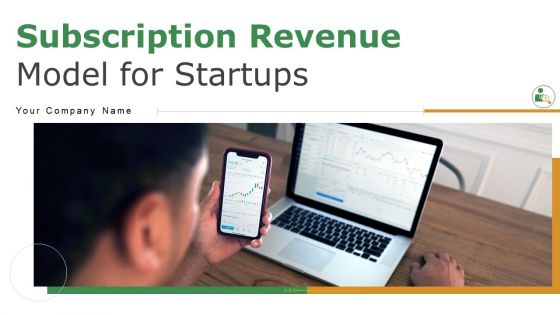
Slide 1: This slide displays the title i.e. 'Subscription Revenue Model for Startups' and your Company Name.
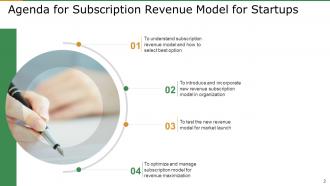
Slide 2: This slide presents the agenda for the project.
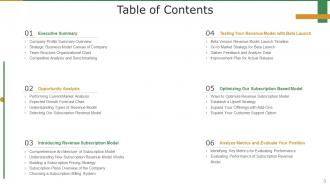
Slide 3: This slide exhibits the table of contents for the project.
Slide 4: This slide shows the title for executive summary.
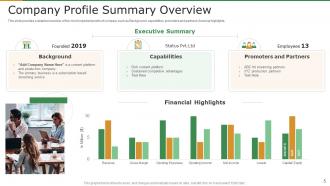
Slide 5: This slide provides a detailed overview of the most important points of company such as Background, capabilities, promoters and partners, financial highlights.
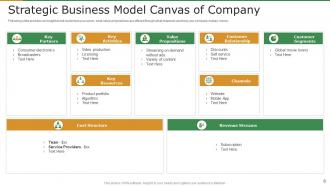
Slide 6: This slide provides an insight about customers your serve, what value propositions are offered though what channels and how your company makes money.
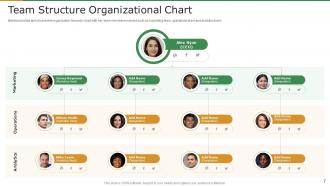
Slide 7: This slide aims to present organization hierarchy chart with key team members involved such as marketing team, operations team and analytics team.
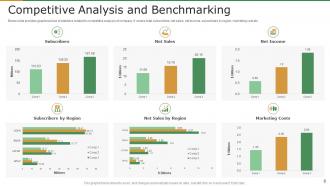
Slide 8: This slide provides graphical view of statistics related to competitive analysis of company.
Slide 9: This slide presents the title for opprotunity analysis.
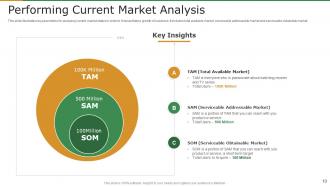
Slide 10: This slide illustrates key parameters for analyzing current market status in order to forecast future growth of business.
Slide 11: This slides depicts expected revenue growth forecast chart for three months to help determine future earnings.
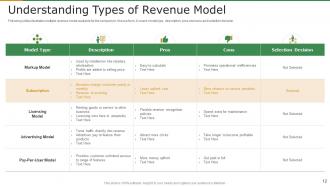
Slide 12: This slides illustrates multiple revenue model available for the company to choose from, it's covers model type, description, pros and cons and selection decision.
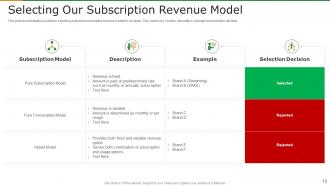
Slide 13: This slide demonstrates a matrix for selecting a relevant subscription revenue model for company. This covers key models, description, example and selection decision.
Slide 14: This slide displays the title for revenue subscription model.
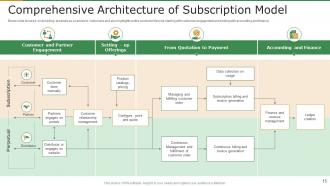
Slide 15: This slide focused on providing products as a service to customers and also highlights entire customer lifecycle.
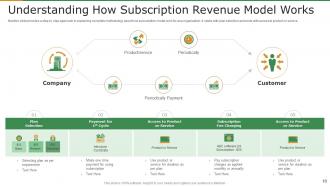
Slide 16: This slide provides a step by step approach in explaining complete methodology about how subscription model work for ana organization.
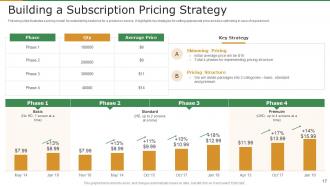
Slide 17: This slide illustrates a pricing model for establishing best price for a product or service.
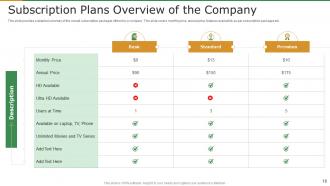
Slide 18: This slide provides a detailed summary of the overall subscription packages offered by a company.
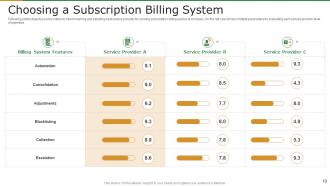
Slide 19: This slides depicts a score matrix for benchmarking and selecting best service provider for running subscription billing service of company.
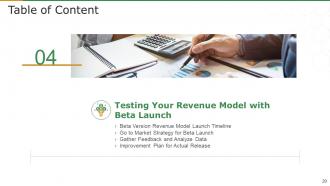
Slide 20: This slide displays the title for testing your revenue model with beta launch.
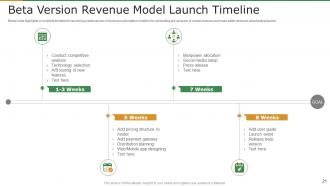
Slide 21: This slide highlights a complete timeline for launching a beta version of revenue subscription model for conducting pre-analysis of model revenue.
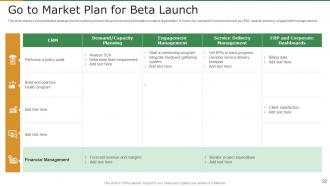
Slide 22: This slide shares a comprehensive strategic plan for building and launching new revenue subscription model of organization.
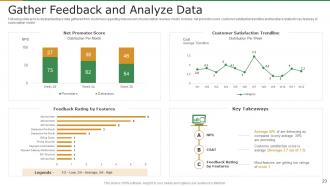
Slide 23: This slide aims to display feedback data gathered from customers regarding beta version of subscription revenue model.
Slide 24: This slide is 100% editable. Adapt it to your needs and capture your audience's attention.
Slide 25: This slide shows the title for optimizing subscription based model.
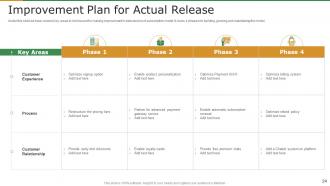
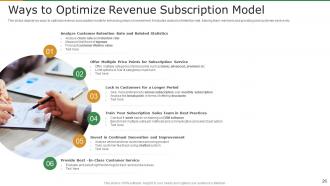
Slide 26: This slides depicts key ways to optimize revenue subscription model for enhancing return on investment.
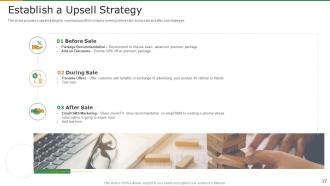
Slide 27: This slides provides a upsell strategy for maximizing profit of company covering before sale, during sale and after sale strategies.
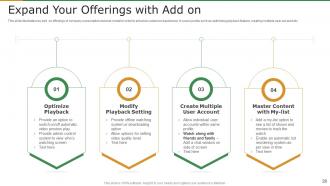
Slide 28: This slide illustrates key add on offerings of company subscription revenue model in order to enhance customer experience.
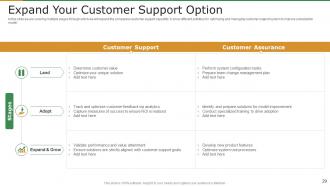
Slide 29: This slide we are covering multiple stages through which we will expand the companies customer support capability.
Slide 30: This slide presents the title for analyzing metrics.
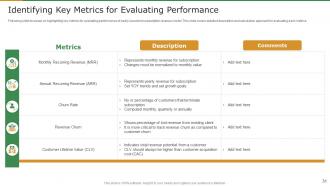
Slide 31: This slide focusses on highlighting key metrics for evaluating performance of newly launched subscription revenue model.
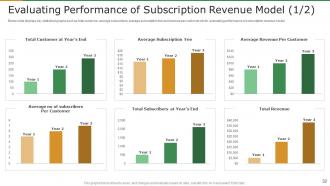
Slide 32: This slide displays key statistical graphs such as total customer, average subscribers, average subscription fee and revenue per customer etc.
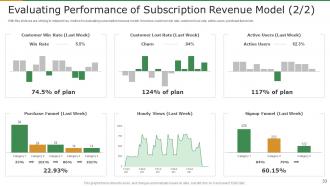
Slide 33: This slide we are striving to interpret key metrics for evaluating subscription revenue model.
Slide 34: This is the icons slide for the project.
Slide 35: This slide displays the title for additional slides.
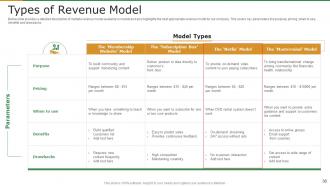
Slide 36: This slide provides a detailed description of multiple revenue model available in market and also highlights the best appropriate revenue model for our company.
Slide 37: This slide shows about the company, target audience and its client's values.
Slide 38: This slide showcases the vision, mission, strategies and goals of your company.
Slide 39: This slide displays details of the team members responsible for the project.
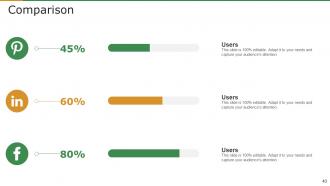
Slide 40: This slide presents the comparison of your products based on selects.
Slide 41: This slide exhibits the venn diagram for your company targets.
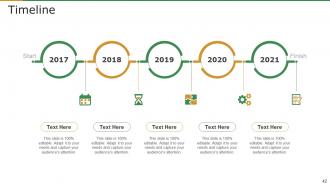
Slide 42: This slide exhibits the yearly timeline of the company.
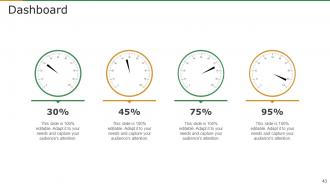
Slide 43: This slide exhibits the dashboard of the project.
Slide 44: This slide exhibits the roadmap of the company.
Slide 45: This is the thank you slide and displays the contact details of the company i.e. office address, contact number, etc.
Subscription revenue model for startups powerpoint presentation slides with all 45 slides:
Use our Subscription Revenue Model For Startups Powerpoint Presentation Slides to effectively help you save your valuable time. They are readymade to fit into any presentation structure.





FAQs for Subscription revenue model for startups
Honestly, the biggest win is having money coming in every month without scrambling for new customers constantly. Your cash flow gets so much more predictable - no more of that crazy up-and-down thing where you're either killing it or broke. Plus customers stick around longer, so you end up making way more per person over time. They're using your stuff regularly too, which means better feedback and stronger relationships. Oh, and you can actually plan ahead instead of just hoping next month works out. I'd start by figuring out what you're already doing that could become an ongoing thing rather than just one-time deals.
Honestly, start by checking what your competitors charge and figure out what makes you different. Test a few price points with small groups - way too many companies just wing it and then can't figure out why customers keep leaving. Run some A/B tests on your pricing page. Ask your current customers if they'd pay more for extra features (you might be surprised). Track your acquisition costs against lifetime value too. Oh, and definitely start on the conservative side - you can always raise prices later once you have real data to back it up.
Dude, keeping customers is everything for subscription businesses. It costs like 5x more to get new people than keep the ones you have. Your existing customers are goldmines too - they'll upgrade their plans and add stuff once they're hooked. If someone cancels after a month but you need six months to break even? That's painful. Really though, most companies obsess over getting new signups when they should focus on not losing people. Good onboarding helps tons, and don't let support tickets sit around forever. Check in with people regularly. It's honestly not rocket science, just basic relationship stuff.
So you'll want to focus on three main things: ARPU (average revenue per user), churn rate, and customer acquisition cost. The basic formula is ARPU divided by churn rate, minus CAC. But here's the thing - that's honestly just the beginning. Don't forget about expansion revenue from upgrades and cross-sells, because that's where subscription companies actually rake it in. Track different customer cohorts over time too. Oh, and measure this stuff monthly at least - subscription metrics change crazy fast and you can't afford to miss trends. Trust me on that one.
Honestly, most people mess up pricing by making it way too complicated. Like, I've watched companies create 8 different tiers and nobody knows what's what anymore - including their own team lol. But here's the thing that really gets overlooked: keeping your current customers around matters way more than chasing new ones. Churn will absolutely destroy you. Also don't forget about proper onboarding (huge mistake) and actually tracking stuff like lifetime value instead of just vanity metrics. Oh, and have clear cancellation rules or people get pissed. Just start with 2-3 simple plans and focus on making existing subscribers happy first.
Look, most companies totally blow this by just dumping features at people instead of showing actual value. Figure out what's genuinely bugging your customers every day - like, what makes them want to throw their phone across the room? Then frame your subscription as the thing that fixes it AND keeps improving. The magic is in the "keeps getting" part - fresh content, updates, community stuff they can't get elsewhere. Honestly, I'd test a few different angles with small groups first because you never know what'll click. Once something hits, go all in on that messaging. Way better than guessing what sounds good.
Oh man, churn rate will absolutely destroy your subscription business if you're not careful. Losing customers faster than gaining them? Your revenue just tanks. Here's the thing - replacing churned customers costs like 5-25x more than keeping current ones (which honestly still blows my mind). You've got to nail the onboarding experience and keep delivering real value. Track when people usually drop off - that data's gold. Proactive support helps a ton too. I'd also set up alerts for at-risk users based on their activity. Regular check-ins work, but don't be annoying about it.
So analytics help you spot who's about to bail before they actually do it. Track how people use your product, payment stuff, engagement - all that tells you who's getting ready to cancel. Then you can get personal with it, maybe throw discounts at the price-sensitive folks or upgrade the heavy users. Honestly, the features you think keep people around probably aren't the ones that actually work - the data will surprise you there. You can also fix pricing and cut down on those annoying failed payments. Start with cohort analysis to see how different groups act over time.
Look at your usage data - that's gold for spotting upgrade chances. When people hit plan limits or go crazy with trial features, that's your moment. I'd send them something like "Damn, you're crushing our basic analytics - ready for the advanced stuff?" Timing is everything though. Catch them right after they've had a success with your product, not randomly on Tuesday. Honestly, cross-selling only works when features actually complement each other. Don't just throw random add-ons at people. Start by figuring out which current users would genuinely benefit from higher tiers, then build personalized paths from there.
Dude, subscription fatigue is absolutely killing conversion rates right now. Everyone's already drowning in Netflix, Spotify, meal kits, whatever else they signed up for last year. The average person has like 12+ subscriptions going! Your prospects are way pickier now because honestly, who isn't hitting their limit on monthly charges? They're analyzing every new signup way harder before they'll commit. You really need to show them exactly what they'd cancel or replace with your service instead. Don't just talk about your amazing features - prove why you're worth ditching something else for.
Dude, most companies just copy that boring "Basic/Pro/Enterprise" thing everyone else does. Instead, try custom pricing based on how people actually use your product, not random feature limits. Survey your current users about what'd make them stick around longer - maybe it's family sharing, pause options, or bundling with other services. I'd honestly look at what your customers value outside your main product too. Could be exclusive stuff, early access, offline features, whatever. The whole point is figuring out what YOUR specific audience cares about, not just following some template everyone uses.
Honestly, subscription packages are a game-changer for cash flow since you can actually predict what's coming in each month. I'd start with tiered options - basic, premium, enterprise - because people naturally gravitate toward the middle option anyway. Annual plans are smart too; offer like 15% off and customers feel they're getting a deal while you get that cash upfront and they're less likely to bail. Monthly works for people testing the waters who might upgrade later. The key thing is figuring out your customer lifetime value first, then build packages that make longer commitments feel worth it. Don't just throw random features together though.
Dude, content quality makes or breaks everything. People will drop your subscription so fast if the stuff you're putting out is meh. You want them thinking "okay yeah, this is actually worth my money" every time they see what you've posted. I've definitely canceled subscriptions when they started phoning it in - haven't we all? Good content keeps people engaged, gets them talking about you to their friends, and honestly makes it way easier to justify your prices when they're deciding whether to renew. The key is figuring out what they genuinely care about, not what you assume they want.
Honestly, just make it stupid easy for customers to tell you what's wrong. Throw feedback widgets in your app, email surveys to people who cancelled (they'll actually respond since they're already mad lol). But here's the thing - most teams are too lazy to just pick up the phone and call subscribers. That's where the gold is though. Check which features keep people around longest and build more of that stuff. Support tickets are basically a roadmap of what's broken. Pick one thing this week and actually look at the responses monthly or you'll forget.
Honestly, start with your cancellation and billing stuff - that's where people get screwed over the most. Your terms need to spell out billing cycles, refunds, and how to actually cancel without making customers hunt through pages of fine print. Different states have weird auto-renewal laws too, so you'll need to check those disclosure rules. Oh and if you're storing payment data, there's privacy regulations to think about plus making sure your signup process works for everyone. Definitely worth having a lawyer look it over first - way less painful than dealing with lawsuits later.
-
Very unique and reliable designs.
-
Innovative and attractive designs.
-
Use of icon with content is very relateable, informative and appealing.
-
Graphics are very appealing to eyes.
-
Good research work and creative work done on every template.
-
Editable templates with innovative design and color combination.
-
Awesomely designed templates, Easy to understand.
-
Professional and unique presentations.