


Income Model Powerpoint Presentation Slides




Try Before you Buy Download Free Sample Product
 Impress Your
 Audience
 100%
100% Editable
 Save Hours
 of Time


Be exact in your assessment of indications with our Income Model Powerpoint Presentation Slides. It facilitates accurate interpretations.
People who downloaded this PowerPoint presentation also viewed the following :
Content of this Powerpoint Presentation
Slide 1: This is an introductory slide on Income Model. State your company name here and begin.
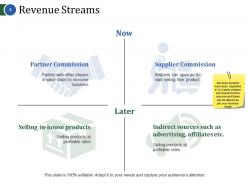
Slide 2: This slide presents Revenue Streams which categorises into- Indirect sources such as advertising, affiliates etc. Selling products at profitable rates Selling in-house products Selling products at profitable rates
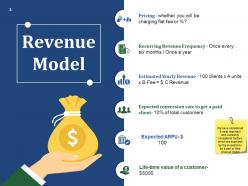
Slide 3: This is a Revenue Model slide showing- Pricing, Recurring revenue frequency, Estimated yearly revenue, Expected conversion rate to get a paid client, Expected ARPU, Lifetime value of a customer.
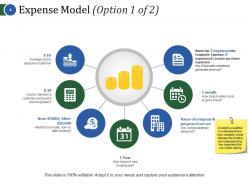
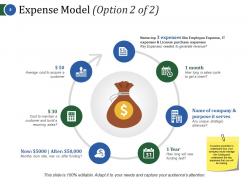
Slide 4: This slide presents Expense Model. Investors would like to understand how your company would manage the funding and understand the key expenses that you will be making.
Slide 5: This is another Expense Model slide.
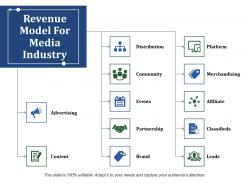
Slide 6: This slide presents Revenue Model For Media Industry which includes- Content, Advertising, Leads, Classifieds, Affiliate, Merchandising, Platform, Partnership, Events, Community, Distribution, Brand.
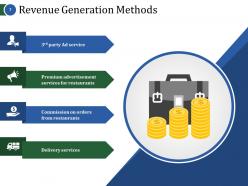
Slide 7: This slide presents Revenue Generation Methods which include- 3rd party Ad service, Premium advertisement services for restaurants, Commission on orders from restaurants, Delivery services.
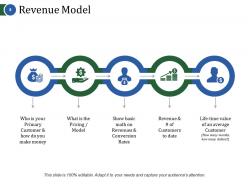
Slide 8: This is a Revenue Model slide which states- What is the Pricing / Model, Revenue and number of customers to date, Who is your Primary Customer and how do you make money, Show basic math on Revenues & Conversion Rates, Life-time value of an average Customer.
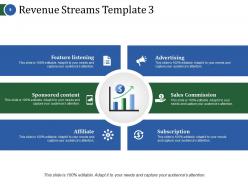
Slide 9: This slide presents Revenue Streams which are as follows- Advertising, Affiliation, Sales Commission, Subscription, Sponsored content, Feature listening.
Slide 10: This is a Coffee Break slide. It can be changed as per need.
Slide 11: This slide is titled Charts & Graph to proceed forward. It can be changed as per need.
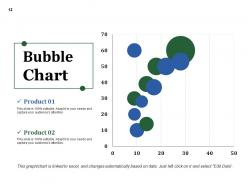
Slide 12: This is a Bubble Chart slide to present product/entity comparison, information etc.
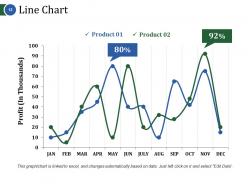
Slide 13: This is a Line Chart slide to show product/entity comparison with graph image.
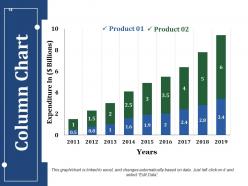
Slide 14: This slide presents Column Chart to show product/entity comparison, specifications etc.
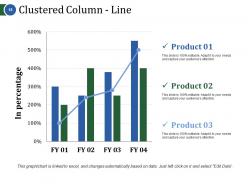
Slide 15: This is a Clustered Column - Line slide to present product/entity, information etc.
Slide 16: This slide is titled Additional Slides to proceed futher. It can be changed as per need.
Slide 17: This is an Our Mission slide. State your mission here.
Slide 18: This is Meet Our Team slide with name, designation and text boxes to fill information.
Slide 19: This is an About Us slide. Add your text here.
Slide 20: This is Our Goal slide. State your goals, aspirations etc. here.
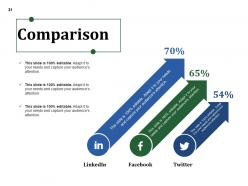
Slide 21: This slide presents Comparison between Facebook, Twitter, LinkedIn.
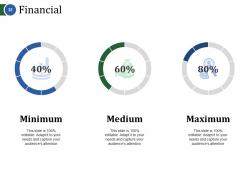
Slide 22: This is a Financial slide showing minimum, medium, maximum. State financial aspects here.
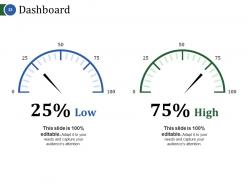
Slide 23: This slide presents Dashboard ranging from low to high.
Slide 24: This is a Quotes slide. Mention your quote, message etc. here.
Slide 25: This is a Timeline slide represented in years. Present company growth, milestones, evolution etc. here.
Slide 26: This is a Venn image slide to present product/ entity, information etc.
Slide 27: This is Our Main Target slide. State your target here.
Slide 28: This is a Silhouettes image slide to present people related information, specifications etc.
Slide 29: This is a Mind Map image slide to present information, specifications etc.
Slide 30: This is a Bulb Or Idea image slide. Present any new information/ data here.
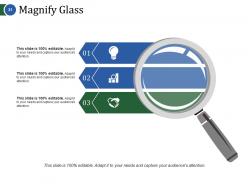
Slide 31: This is Magnify Glass image slide to present information, specifications etc. here.
Slide 32: This is a Thank You slide with Address, street number, city, state, Contact Numbers, Email Address.
Income Model Powerpoint Presentation Slides with all 32 slides:
Give them a feel of the exotic with our Income Model Powerpoint Presentation Slides. They will evoke desires in them.












FAQs for Income Model
So here's what actually matters for income models: figure out if people will genuinely pay for what you're solving first - I've seen way too many founders build cool stuff nobody wants to buy. Pricing comes next - cover your costs, add decent margins, but don't price yourself out. Honestly the recurring revenue thing is huge though. Subscriptions, contracts, whatever - just avoid the one-time sale trap. Makes everything way more predictable and investors eat that up. Oh, and test your pricing before you build the whole thing out. Saves so much headache later.
Honestly? Check what your competitors are doing first - subscriptions, one-time buys, freemium, whatever. Then think about your actual product. Do people use it once or keep coming back? That'll tell you a lot. Also consider your cash flow situation (boring but crucial). Most businesses I know tried like 2-3 different models before landing on something that worked. My buddy's startup went through this exact thing last year. Start with whatever feels right for your industry, but don't get married to it. You'll probably need to switch things up once real customers start giving you feedback.
So here's the thing - you can't build a solid income model without knowing your customer segments first. Different groups value different stuff and pay different amounts, right? Like Netflix has their basic/premium tiers, or how SaaS companies do that basic/pro/enterprise thing. Map out who your customers actually are first, then figure out what each group will pay for. Otherwise you're basically just throwing darts at pricing and probably missing out on money. I mean, some segments might pay way more than you think for premium features while others just want the bare minimum.
Honestly, subscriptions are amazing for steady income but the churn stress will keep you up at night. You're getting predictable money each month plus way higher lifetime value from customers. One-time sales are the opposite - you get all the cash upfront (which feels great) but then you're back to square one hunting for new buyers. It's way simpler to manage one-time purchases though. Customers actually prefer them too since there's no ongoing commitment. Really comes down to whether you can handle the rollercoaster of inconsistent revenue or if you need that reliable monthly cash flow. I'd crunch your acquisition costs first - that'll tell you which makes more sense.
Track revenue growth and CAC first - those are non-negotiable. Your LTV to CAC ratio will tell you if you're actually making smart moves or just burning cash. Monthly recurring revenue matters if you've got subscriptions going. Churn rate and gross margins by income stream are huge too. Honestly, I've seen cash flow conversion be way more revealing than revenue numbers sometimes - revenue can lie but cash doesn't. Pick maybe 4 metrics max that actually match your business model. More than that and you'll just get paralyzed by all the data.
First thing - figure out which revenue streams are tanking the worst. Then look at what else you could realistically offer with your current setup. Like if you're doing subscriptions, maybe try one-time purchases? Or flip it around. Honestly, I'd start small though. Survey your existing customers about what they'd actually pay for right now. Then test new models with just a slice of your audience first. I've watched way too many companies burn through their cash doing massive pivots that totally flopped. Better to validate the demand before you go changing everything, you know?
Honestly, the big ones are pretty obvious - upfront tech costs hit hard, and retraining everyone takes forever. Your customers might not be ready for digital either, which is annoying. Revenue usually dips while people figure out the new systems. Data migration? Total mess if your current stuff isn't organized. Oh, and you'll need completely different metrics since digital works nothing like traditional models. I'd map your customer journey first though - shows you where things are actually broken before you start fixing everything else.
Honestly, pricing can totally make or break your whole business. I've watched way too many startups crash because they priced stuff too low - they just bleed money trying to cover basic costs. But go too high and nobody buys your product, which is equally terrible. You need that sweet spot where you're covering expenses, making decent profit, but customers don't feel ripped off. Calculate what everything actually costs you first (seriously, don't guess). Then just test different prices and see what people will actually pay. Oh, and make sure whatever you pick can scale as you grow.
Honestly, diversifying income streams is a game-changer for scaling. You're not screwed if one revenue source tanks because others pick up the slack. What's cool is they often feed into each other - product customers become consulting clients, that kind of thing. The sweet spot happens when you use what you already have to create new revenue without doubling your overhead. I know a guy who added digital courses to his service business and it totally changed his numbers. Look at your current skills or assets - what else could they turn into? Sometimes the best opportunities are hiding right under your nose.
So first, map out where your money actually comes from and spot the biggest pain points. Tech can automate a ton - subscription models, mobile apps that bring in recurring cash, AI that personalizes stuff for customers. Data shows you which customers are worth the most so you can price smarter. Even boring stuff like automated billing frees up time for actual money-making work. Honestly, chatbots are pretty underrated for this. The whole point is finding tech that either cuts costs or opens up new ways to make money. Don't overthink it though - start with one bottleneck and go from there.
Dude, culture totally changes how people make and view money. Like in Asia, you'll see tons of family businesses where everyone pools their income together. But here in the West? It's all about building your own wealth. Religious stuff matters too - some cultures won't touch anything involving interest payments. Plus social class still determines who gets access to what opportunities, which is kinda messed up if you think about it. Geography and tradition haven't disappeared just because we're all connected now. If you're trying to sell something globally, you better study local customs first or you'll bomb completely.
Start with basic regression analysis - it'll show you what actually moves your revenue numbers. Time series stuff like ARIMA handles the seasonal ups and downs pretty well. Honestly, Monte Carlo simulations are a game changer for stress-testing because, let's face it, we always start too optimistic with projections. Scenario modeling is solid too - build out your best, worst, and realistic cases. Oh, and don't jump straight into the fancy techniques. Get your linear regression baseline down first, then you can layer on the more complex models once that foundation's solid.
Honestly, customer feedback is like a reality check for your revenue model. Ask people about pricing sensitivity and which features they'd actually pay extra for. I've watched companies flip from one-time payments to subscriptions based on this stuff alone. Also figure out which customer types bring in the most lifetime value - that's where you want to focus. Don't just ask generic "how satisfied are you" questions though. Get specific about what they'll pay for. Test any pricing tweaks with small groups first before rolling them out everywhere.
Look at Spotify - they got people hooked on free music then converted them to paid. Netflix jumped on subscriptions before anyone else saw it coming. Warby Parker just said "screw traditional eyewear retail" and went straight to consumers. Tesla's wild because they turned software updates into actual revenue streams. OnlyFans is probably the best example of giving creators direct money-making tools (even if it's... that kind of content). They all spotted places where the old way of doing business wasn't cutting it. Find those gaps and you're golden.
Honestly, social media changes everything about making money from your audience. You can test pricing super fast and get instant feedback on what works. Instagram and TikTok especially let you pivot based on real engagement - like, you'll actually see which posts make people want to buy stuff. The algorithms can screw you over though, not gonna lie. But you can experiment with different revenue streams through stories and regular posts. Trust builds way faster when people see your content regularly. I'd start by tracking which posts get the most interest in your paid stuff, then double down on that content style.
-
Unique design & color.
-
I discovered this website through a google search, the services matched my needs perfectly and the pricing was very reasonable. I was thrilled with the product and the customer service. I will definitely use their slides again for my presentations and recommend them to other colleagues.