


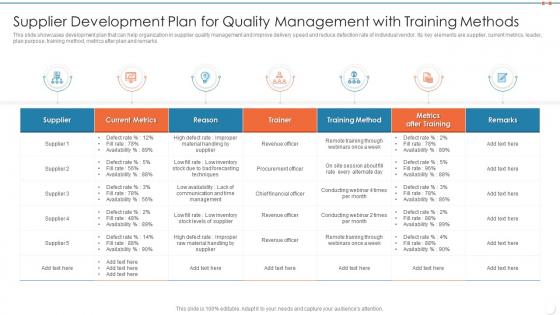
Supplier development plan for quality management with training methods




Try Before you Buy Download Free Sample Product
 Impress Your
 Audience
 100%
100% Editable
 Save Hours
 of Time


Our Supplier Development Plan For Quality Management With Training Methods are topically designed to provide an attractive backdrop to any subject. Use them to look like a presentation pro.
People who downloaded this PowerPoint presentation also viewed the following :
Supplier development plan for quality management with training methods with all 6 slides:
Use our Supplier Development Plan For Quality Management With Training Methods to effectively help you save your valuable time. They are readymade to fit into any presentation structure.





FAQs for Supplier development plan for quality management
Look, supplier development boils down to a few key things. You want better performance, lower costs, and fewer headaches from supply chain issues. Building real partnerships matters way more than just beating them up on price every quarter - though obviously saving money doesn't hurt. Work on getting them to meet higher quality standards and grow their capabilities. They need to scale when you do. More transparency helps too. Honestly, the suppliers who get it become strategic allies instead of just vendors you tolerate. Start with your most critical ones and tackle whatever's causing you the biggest problems first.
Look, supplier development is basically about not putting all your eggs in one basket - super smart move. You're strengthening your whole supply chain by building up multiple suppliers instead of relying on just one. Better relationships mean they'll actually stick around when things get messy. Plus you get better quality and innovation as they improve their game. The trick is treating key suppliers like actual partners, not just vendors you order from. Map out who's critical first, then figure out where you can help them level up. Trust me, it pays off when disruptions hit.
Track both the hard numbers and relationship stuff to see if your supplier development is actually paying off. Quality scores and on-time delivery are obvious ones. Cost reduction percentages matter too. I'd throw in cycle times and defect rates - honestly, those usually tell you way more about real improvements than the fancy reports do. Compliance audits are boring but necessary. Don't skip the softer metrics though - supplier satisfaction scores and how many are hitting those development milestones you set together. My advice? Pick 3-4 that align with your biggest business goals first, then build from there.
Dude, your suppliers know stuff you don't - that's literally why you're paying them. Get them involved early and they'll suggest materials or manufacturing tricks you never thought of. I've seen companies stumble onto brilliant solutions just because their supplier worked with some random industry before. The trick is being open about your roadmap and actual problems instead of treating them like order-takers. Share your challenges. Most suppliers are dying to do more than just fulfill specs, and honestly, they often have the best ideas since they see what works across different clients.
Honestly, you can't do supplier development without good tech anymore. Real-time performance tracking is huge - plus automated onboarding saves so much headache. AI actually helps predict which suppliers might tank before it happens, which is pretty cool. Data analytics catch risks early too. Collaboration portals keep everyone aligned, though good luck getting all your suppliers to adopt new systems (seriously, some of them still fax things). Just make sure whatever you pick plays nice with your current setup. Don't grab flashy tools that'll create more problems than they solve.
Start with a solid supplier audit - check their finances, quality systems, production capacity, and technical skills. Get certifications and ask for facility tours. Sample work tells you everything. Financial statements matter big time because nobody wants a supplier going bankrupt mid-project, right? References from current customers are gold. I'd also look at their management team's background - experience counts. Create a scorecard that weighs what actually matters to your business. Then stick to your minimum standards. Don't settle just because someone seems "good enough" - trust me on that one.
Honestly, the worst part is usually suppliers pushing back on changes - and I get it, nobody likes new hoops to jump through. Plus they're often strapped for resources or you hit those annoying communication gaps where nothing gets through clearly. Start small though. Run pilot programs first to show it actually works before going big. Build relationships early when things are chill, not when you're already stressed about deadlines. Regular check-ins catch problems before they blow up. Oh, and provide actual training instead of just throwing new requirements at them - makes them way more likely to cooperate.
Yeah totally! Work *with* your suppliers instead of just beating them up on price. I'd start with your top 3-5 suppliers and literally ask where they're struggling - sounds weird but it works. Help them with training or share your forecasts better, and they'll get more efficient and pass savings to you. Plus they'll actually prioritize your orders when things get crazy. Oh, and don't just look at unit price - think total cost. My old boss used to say suppliers who feel like partners will bend over backwards for you, and honestly he was right. Small investments in their capabilities usually pay off big time.
Honestly, start with regular check-ins and actually listen to their feedback - most companies are terrible at this part. Set goals together instead of just throwing demands at them. Those quarterly reviews? Make them about more than just scorecards. Talk trends, future stuff, what's working and what isn't. Here's the thing though - track how YOU'RE performing as a customer too, not just what they're doing for you. Try joint problem-solving sessions when issues come up. It's way more partnership than vendor relationship. Also schedule some innovation brainstorming together if you can swing it.
Working with local suppliers is honestly a game-changer for development. You can actually visit their facilities without planning some big trip, which makes relationship building so much easier. Most of these companies are smaller and genuinely excited to grow alongside you - way more collaborative than dealing with massive corporations. When problems come up, you can fix them fast instead of waiting weeks for responses. The shorter supply chains mean quicker iterations too. I'd start by finding suppliers within a couple hours' drive and focus on the ones who seem interested in real partnerships, not just one-off deals.
Honestly, supplier development is where the magic happens for sustainability stuff. Instead of just auditing everyone and crossing your fingers, you're actually building real partnerships. Your suppliers get the tools and training they need to hit environmental targets and improve working conditions. Way more effective than sending endless compliance forms - trust me on that one. Pick your most important suppliers first and figure out what specific improvements you can tackle together. It's like having teammates instead of just vendors you're constantly checking up on.
Oh man, cultural stuff is huge when you're dealing with suppliers. I learned this the hard way honestly. Your communication style needs to match what they're used to - some places want everything super formal and hierarchical, others just want you to cut to the chase. Japan drives me crazy sometimes because what Germany knocks out in one meeting takes like four relationship-building sessions there. Decision-making processes are all over the map too. Do your research on local customs first. Then put someone on your team who actually gets those cultural differences to handle each relationship. Trust me, it's worth the extra effort upfront.
Do a skills assessment first - that'll show you exactly where they're struggling. Focus on three things: technical training for your quality standards, business skills like project management, and communication workshops. Honestly, most companies completely ignore the communication piece and then act shocked when nothing changes! Financial literacy training helps too, especially with smaller suppliers who get crushed by cash flow issues. Don't do cookie-cutter training though - what works for one supplier won't work for another. Tailor everything to their specific gaps.
You know how you usually just send orders and cross your fingers? Instead, try having actual ongoing conversations with your suppliers. Share your performance data and market info with them. They'll give you updates on what they can do, their limitations, plus new ideas they're working on. It's pretty much a back-and-forth thing that never really stops. Honestly, most companies skip this step and then wonder why things go sideways. Your suppliers start understanding what you actually need, catch issues before they blow up, and sometimes suggest fixes you wouldn't have thought of. Set up regular check-ins that aren't just contract stuff - make them real working sessions.
Honestly, three big things are reshaping everything right now. Digital stuff is massive - everyone's rolling out supplier portals and AI analytics to actually work together better. ESG compliance is the other huge one. Your suppliers better have solid environmental and social proof or stakeholders will roast you. After all the chaos we've seen lately, companies aren't just hunting for cheap anymore either. They're building backup plans with multiple suppliers, nearshoring, the whole nine yards. Really think you should audit your current suppliers against these - especially their tech setup and how well they document their sustainability efforts.
-
Professional and unique presentations.
-
Very unique, user-friendly presentation interface.