Swot analysis of the company ppt powerpoint presentation infographics skills
Try Before you Buy Download Free Sample Product
Audience
Editable
of Time
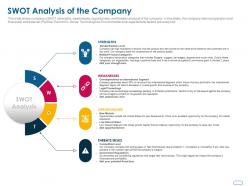
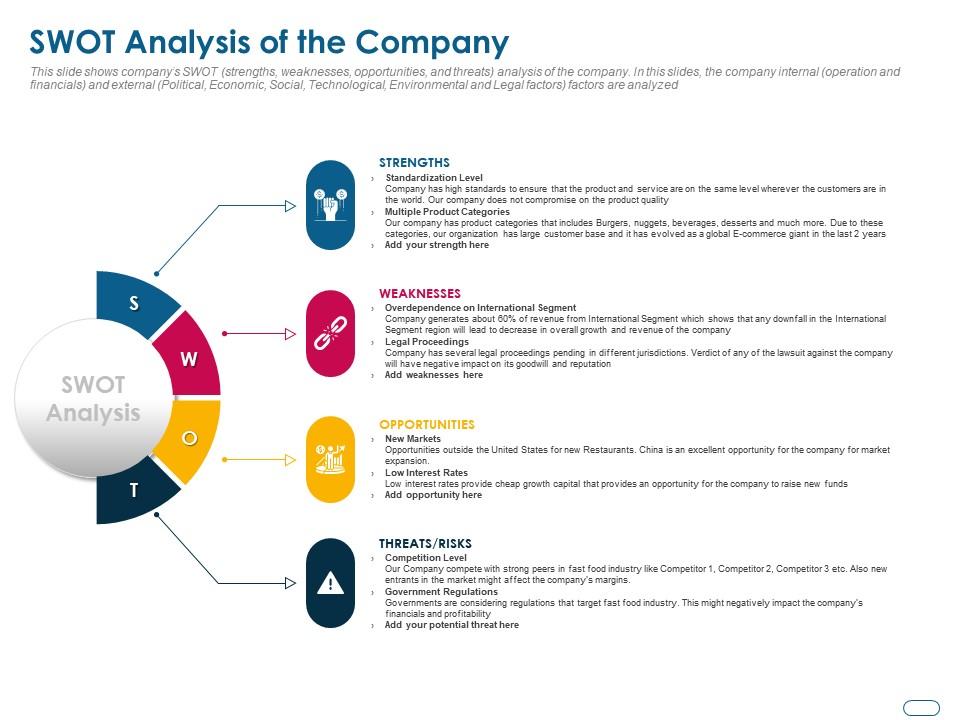
This slide shows companys SWOT strengths, weaknesses, opportunities, and threats analysis of the company. In this slides, the company internal operation and financials and external Political, Economic, Social, Technological, Environmental and Legal factors factors are analyzed
People who downloaded this PowerPoint presentation also viewed the following :
Swot analysis of the company ppt powerpoint presentation infographics skills with all 2 slides:
Use our Swot Analysis Of The Company Ppt Powerpoint Presentation Infographics Skills to effectively help you save your valuable time. They are readymade to fit into any presentation structure.
FAQs for Swot analysis of the company ppt powerpoint
Honestly, start with what you guys actually do better than your competitors - that's your foundation right there. Your talented people are probably your biggest asset. Strong brand reputation, solid financials, and any unique tech you've got all matter too. Location can make or break you sometimes (being in the right spot is underrated). Don't forget about company culture and leadership - those are harder to measure but super important. Patents, loyal customers, efficient processes... basically anything competitors can't just copy overnight. I'd literally make a list of everything that gives you an edge, then figure out what resources make those advantages work.
So basically, SWOT analysis is clutch for finding opportunities - you want to match what you're already good at with what's happening in the market. Look at emerging trends, customer problems, or spots where competitors are dropping the ball. That's where you'll find realistic chances to expand. Your weaknesses can actually point to underserved markets too, which is kind of counterintuitive but makes sense when you think about it. Just be brutally honest about what you can actually pull off. I'd start with maybe 5-10 things in each category and see what patterns jump out.
Don't go with gut feelings - you need actual numbers. Employee turnover rates, customer satisfaction way below industry averages, lost market share, shrinking profit margins. Financial stuff like debt ratios or how fast you move inventory also tells the story. Here's the thing though - the metrics that make you cringe a bit? Those are usually spot-on. Compare against your competitors, not just last year's numbers. Pick maybe 3-5 metrics that actually matter to your bigger goals. Then dig into where you're genuinely behind. Sometimes the data's pretty brutal but that's where you start.
Look, those external threats you spot in your SWOT? You can't just cross your fingers and pray they don't happen. I've seen too many businesses get blindsided that way. Build defenses around them - diversify revenue, shore up customer loyalty, maybe stockpile some cash. The real trick is stress-testing your plans against these threats before you spend money. Like, what happens to your strategy if that new competitor actually shows up? Or if regulations change overnight? It's basically about preparing for the worst while you're planning for the best.
Honestly, I do mine twice a year and it works pretty well. Most businesses should probably aim for every 6 months, though some industries move so fast you might need quarterly check-ins. Don't just stick to a rigid schedule though - if a major competitor launches or the economy takes a weird turn, just do one right away. I learned that the hard way when I waited too long after a big market shift happened. Annual reviews are bare minimum, but they're really not enough anymore. Set a phone reminder or you'll totally forget. The worst thing is having one of those analyses that just sits there doing nothing.
Dude, you definitely want a team for SWOT analysis. Different departments see totally different things - like marketing spots opportunities that finance would never notice. Flying solo makes you way too biased about your own stuff, trust me on that one. External threats especially need multiple eyes because honestly, what scares the sales team might not even register with ops people. Just make sure someone actually runs the meeting properly or you'll end up with everyone talking over each other. Oh, and mix up who you invite - fresh perspectives beat the usual suspects every time.
Yeah totally! Did a SWOT analysis when I was thinking about that job switch last year - actually super helpful. Basically you map out your strengths (skills, experience, who you know), then be honest about weaknesses (what you're missing, need to work on). Opportunities are things like job openings or industry trends. Threats? Competition, economy being weird, skills becoming outdated. The trick is being real about your weak spots - nobody wants to admit they suck at something but it's the only way this works. Once you've got it all written out, you can figure out what to focus on first or which direction makes sense career-wise.
So the intersections are where the magic happens - that's your starting point. Find strengths that can grab opportunities (SO moves) plus strengths that block threats (ST moves). Those become your quick wins and main plays. The weakness stuff? Way trickier, but definitely hit any weakness-threat combos that could really mess you up. Honestly, those scare me the most. Opportunities you can't reach because of weaknesses just go on your longer-term fix-it list. Don't go crazy trying to solve everything though. Pick maybe 2-3 big intersections and build from there.
Dude, tech makes SWOT analysis so much better! Instead of guessing, use analytics tools to pull actual performance data for your strengths/weaknesses. Tools like Miro let everyone jump in with ideas at once - way better than sitting in boring meetings arguing about stuff. For opportunities and threats, AI can scan competitor data and spot market trends you'd totally miss otherwise. Oh, and Google Workspace works too if you're keeping it simple. Just pick one tool for your next session. You'll be shocked how much deeper your insights get when you're not just winging it with hunches.
Honestly, the worst thing you can do is be super vague about everything. Skip stuff like "we have good customer service" and get into actual numbers and real examples instead. Office politics will mess with your head too - try not to let that influence what you're seeing. Oh, and don't just ask the same five people every time. Get different departments involved or you'll miss huge blind spots. One more thing - this isn't something you do once and forget about. I've seen companies treat it like checking a box, then wonder why nothing changes. Keep it real and you'll actually get somewhere with it.
Dude, you'll get way better results if you actually ask people what they think. Your customers see weaknesses you're totally blind to. Employees? They know your real strengths better than the C-suite does half the time. Suppliers might catch external threats you missed completely. Here's the thing though - don't just survey your biggest fans. You need the full picture. Try doing quick interviews with different groups, then compare what they say to your original SWOT. It's honestly wild how much you don't know about your own business until you start asking around.
Okay so SWOT just dumps everything into four categories - strengths, weaknesses, opportunities, threats. Pretty basic stuff. TOWS is where it gets interesting though. It actually matches those categories up to create real strategies. Like, "how do we use our strengths to grab these opportunities?" Way better than staring at random lists wondering what to do next. There's other versions too - SOAR only looks at positives, PEST throws in political stuff (kind of overkill imo). But honestly? TOWS is your best shot if you want something you can actually act on instead of just analyze to death.
Honestly, templates are a game changer for SWOT analysis. You get those four clean quadrants instead of some messy wall of text that nobody wants to read. Each section is super clear - strengths here, weaknesses there, opportunities and threats in their own spots. Color coding helps too, though I'm probably overthinking that part. The 2x2 grid format just works better than anything else I've tried. Your team will actually understand what they're looking at instead of squinting at a confusing mess. Makes the whole thing feel more professional without being complicated.
Look at Netflix - they saw streaming was the future while everyone else was still mailing DVDs. Their SWOT analysis helped them spot that opportunity before it was too late. Starbucks did something similar back in 2008 when they were struggling. They realized they'd expanded way too fast and lost focus on what made their coffee special, so they actually closed a bunch of stores. Pretty bold move, honestly. Even small businesses can use this framework - it's one of those things that seems basic but really makes you think differently when you sit down and map it all out. You'll probably find some blind spots you didn't know existed.
Okay so basically you've gotta flip your whole SWOT analysis for each country. What works here might totally backfire there - like charging premium prices in markets where everyone's super price-sensitive. Research their culture, regulations, all that stuff. It's honestly like rebuilding from zero every single time, which is kind of a pain but whatever. Currency swings and supply chain nightmares? Yeah, those are real threats now. Oh and pick just one market first - don't try to analyze five countries at once or you'll lose your mind.
-
Very unique, user-friendly presentation interface.
-
Enough space for editing and adding your own content.