


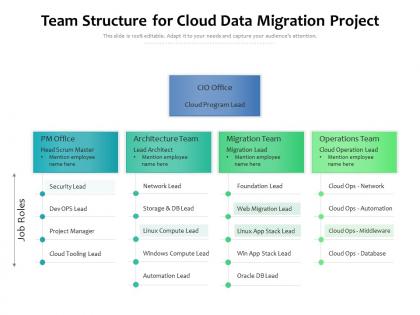
Team structure for cloud data migration project




Try Before you Buy Download Free Sample Product
 Impress Your
 Audience
 100%
100% Editable
 Save Hours
 of Time


Our Team Structure For Cloud Data Migration Project are topically designed to provide an attractive backdrop to any subject. Use them to look like a presentation pro.
People who downloaded this PowerPoint presentation also viewed the following :
Team structure for cloud data migration project with all 2 slides:
Use our Team Structure For Cloud Data Migration Project to effectively help you save your valuable time. They are readymade to fit into any presentation structure.
FAQs for Team structure for cloud
Honestly, start by figuring out who's doing what - roles need to be crystal clear or you'll have chaos. Communication is huge too, like regular check-ins or just knowing who to bug when you're stuck. I've literally watched teams implode because nobody knew who was actually making decisions (such a nightmare). You want the right skill mix obviously, plus someone who can lead without breathing down everyone's neck. Oh, and keep it small - once you hit like 8-10 people it gets weird and clunky. Maybe sketch out your current setup first?
Honestly, team structure can make or break your project. Clear roles mean nobody's stepping on each other's toes or wondering who's supposed to do what. Problem-solving speeds up too since everyone knows the chain of command. But mess up the structure? You'll hit bottlenecks left and right, deadlines will slip, and people get frustrated fast. I always think it's like building a house - you need the right foundation first. Map out who owns which deliverables and decision points before anything else starts. Match your structure to how complex the project actually is, not what sounds impressive on paper.
Dude, your leadership style literally shapes everything about how your team works together. You're the one picking who reports to who, deciding communication flows, creating roles. I've seen teams completely crash when the structure sucks - it's wild how fast things fall apart! Whether you go flat or hierarchical, how much freedom people get, what positions exist... that's all on you. Your team will organize itself around whatever framework you put in place, even if you didn't really think it through. So yeah, be deliberate about those structural choices because they matter way more than you'd think.
Break up those big hierarchies into smaller teams that can actually get stuff done on their own. Each pod should have all the skills they need - no more waiting around for approvals from three different departments (honestly, that's the worst part about most companies). Map out where your teams are constantly waiting on each other and cut those dependencies. You want more communication happening naturally, but way fewer bottlenecks. Focus on what people deliver, not every little task they're doing. Remote work fails when everyone's stuck in endless check-in meetings just to feel connected.
So functional teams are basically grouping people by what they do - marketers with marketers, engineers with engineers, you know the drill. Cross-functional mixes everyone up to tackle specific projects together. The functional thing works well for getting really deep expertise (engineers definitely speak their own language). But yeah, it creates those annoying department silos. Cross-functional breaks that down. Decisions happen way faster when you're not playing telephone between teams. Most places do a bit of both honestly. I'd look at your current projects and see where mixing teams could unstick some bottlenecks.
Honestly, diversity makes teams way stronger. Different backgrounds mean people attack problems from totally different angles - you get way more creative solutions that way. Sure, meetings can get a bit chaotic sometimes, but the end results are so much better. The trick is making sure everyone feels comfortable actually sharing their ideas (otherwise what's the point of having diverse perspectives?). I've seen teams where quiet people had the best insights but never spoke up. Build your processes around getting those different viewpoints out there instead of trying to make everyone think the same way.
Honestly, just start with whatever your team's already using for diagrams. Lucidchart or Visio work fine for basic org charts. Google Drawings too if you're keeping it simple. If you want something more interactive though, Miro is pretty sweet - their templates actually look professional instead of like clipart from 2005. Mural's good too for collaborative stuff. There's fancier options like OrgMapper that sync with HR systems and show real-time changes. Pingboard does similar things. But honestly? Don't overcomplicate it at first. Pick whatever everyone can easily access and update. You can always upgrade later if you need bells and whistles.
Honestly? Check every 3-6 months or after big milestones. Most people drag their feet on this and then can't figure out why everything's falling apart. Red flags include communication mess, nobody knows who owns what, people tripping over each other constantly. Team doubled in size? Priorities totally changed? Time to shuffle things around. Though I learned this the hard way - tiny adjustments usually beat massive shake-ups. Just throw a reminder on your calendar and actually ask your team if the setup's working. They'll tell you straight up what's broken.
Change resistance is probably your biggest headache - plus people getting confused about their new roles. I've watched really good employees totally freak out just because nobody bothered explaining why everything was shifting around. Productivity always tanks temporarily too while everyone scrambles to figure out new workflows. Communication is huge during this mess. Be super clear about expectations and deadlines, and honestly? Over-explain everything. Paint them a picture of what winning looks like in the new setup. People need that roadmap or they'll just stress themselves out guessing.
Honestly, start with whatever team charter or project brief exists - if there even is one lol. Then have that awkward but necessary convo with your manager about what they actually expect from you. I swear people skip this step all the time! Notice which meetings you're making decisions in vs just getting updates. That's huge. Also look at what work keeps landing on your desk naturally. When in doubt? Just ask your teammates how they see your role. Way better than guessing wrong for like three months straight.
Honestly, start with why you restructured in the first place - that'll tell you what to measure. Delivery speed is obvious but don't ignore the softer stuff. How much time are people spending in meetings now? Are decisions happening faster or is everyone still waiting around for approvals? I'd definitely survey the team about role clarity and whether they're actually happier. Oh, and if you were trying to break down silos, see if people can actually cover for each other now. But real talk? Sometimes the best metric is just "does this feel less broken than before." Pick 2-3 things max - you'll drive yourself crazy tracking everything.
Oh man, cultural stuff will mess with your team structure way more than you'd think. Some cultures are all about strict hierarchies - they expect formal reporting lines and get uncomfortable without clear chains of command. Others want flat structures where everyone talks to everyone. Time zones are honestly the easy part compared to this. People from consensus-heavy cultures need tons of discussion before decisions, while others just want someone to decide already. I'd map out what each person expects culturally, then build something hybrid that gives everyone at least some familiar ground to stand on.
Honestly, it depends on your team size and what you're doing. Flat structures are great for quick decisions - no waiting around for approvals up the chain. But then nobody knows who's actually in charge of stuff, which gets messy fast. Hierarchical setups give you clear accountability and career progression. The downside? Everything moves slower because decisions have to climb the ladder. So frustrating sometimes. If you've got under 20 people doing creative work, go flat. Bigger teams or anything regulated? You'll need some hierarchy to avoid chaos. I've seen small teams try hierarchy and it just creates unnecessary red tape.
Honestly, just set your non-negotiables upfront - deadlines, budget, main goals - then let people figure out how to get there. Works way better than breathing down everyone's neck daily. Regular check-ins are clutch though, keeps things on track without being annoying about it. You want boundaries that actually help, not ones that make people feel trapped. Maybe try giving teams some "experiment time" where they can break the usual rules? I've noticed cross-functional groups move faster than going through normal chains of command. Start by figuring out what really needs structure vs. what doesn't.
Honestly, just give people a heads up way before you pull the trigger. Nobody likes getting blindsided with org changes - I've watched that disaster happen too many times. Sit down with anyone who's affected and actually explain why you're doing this. One-on-ones work way better than some generic all-hands announcement. Write up some kind of guide so people know what their new role actually looks like (saves you from a million random questions later). Oh, and schedule check-ins for the first month or so. Things always get weird during transitions, so you'll want to catch problems early.
-
Very unique and reliable designs.
-
Top Quality presentations that are easily editable.
-
Very well designed and informative templates.
-
Excellent template with unique design.