


Technology Modernization Proposal Powerpoint Presentation Slides




Try Before you Buy Download Free Sample Product
 Impress Your
 Audience
 100%
100% Editable
 Save Hours
 of Time


Implementing technologies such as machine learning ML and cloud computing has revolutionized businesses through digital transformation. Our professionally designed Technology Modernization Proposal PowerPoint Presentation assists businesses in optimizing their operations, enhancing customer experiences, and enabling data-driven decision making. By leveraging digital innovation, organizations can achieve increased efficiency, improved business agility, and unlock new value for employees, customers, and shareholders. The Digital innovation PPT proposal begins with sections covering the project context, the need for digital transformation, the services offered, and the total investment required to avail of digital IT transformation services. Furthermore, our Digital Transformation Consulting PPT provides comprehensive information about the roadmap, company overview, case studies, and significant clients. To enhance credibility and establish trust, the Digitalization module includes slides showcasing social proof, terms and conditions, and other relevant information. The template is fully editable, allowing you to customize it to suit your needs. Take advantage of this opportunity to access our Digital Transformation Proposal and embark on your digital transformation journey.
People who downloaded this PowerPoint presentation also viewed the following :
Content of this Powerpoint Presentation
Slide 1: This slide introduces Technology Modernization Proposal. State your company name and begin.
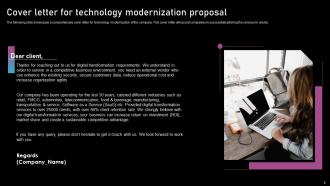
Slide 2: This slide showcases a comprehensive cover letter for technology modernization of the company.
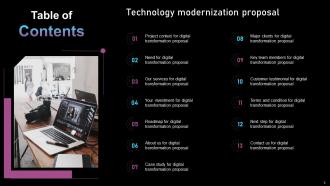
Slide 3: This slide shows Table of Content for the presentation.
Slide 4: This slide showcases the project context for technology modernization proposal.
Slide 5: This slide presents the key benefits of technology modernization.
Slide 6: This slide showcases different services for technology modernization proposal template.
Slide 7: This slide presents different services for technology modernization proposal template.
Slide 8: This slide showcases funding requirement for technology modernization proposal template.
Slide 9: This slide presents a comprehensive timeline for technology modernization proposal template.
Slide 10: This slide showcases the complete overview of technology modernization proposal.
Slide 11: This slide illustrates a case study for technology modernization proposal.
Slide 12: This slide showcases key clients for technology modernization proposal template.
Slide 13: This slide displays the major team members for technology modernization proposal template.
Slide 14: This is aother slide displaying the major team members for technology modernization proposal template.
Slide 15: This slide showcases the different client testimonials for technology modernization proposal template.
Slide 16: This slide presents different terms and conditions for technology modernization proposal template.
Slide 17: This slide depicts various steps for technology modernization proposal template.
Slide 18: This slide presents contact details for technology modernization proposal template.
Slide 19: This slide shows all the icons included in the presentation.
Slide 20: This slide is titled as Additional Slides for moving forward.
Slide 21: This slide showcases Gantt chart for technology modernization proposal template.
Slide 22: This is a Timeline slide. Show data related to time intervals here.
Slide 23: This slide provides 30 60 90 Days Plan with text boxes.
Slide 24: This is Our Vision, Mission & Goal slide.
Slide 25: This is About Us slide to show company specifications etc.
Technology Modernization Proposal Powerpoint Presentation Slides with all 30 slides:
Use our Technology Modernization Proposal Powerpoint Presentation Slides to effectively help you save your valuable time. They are readymade to fit into any presentation structure.
-
Technology Modernization Proposal
-
Cover letter for technology modernization proposal
-
Technology modernization proposal
-
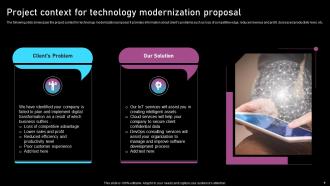
Project context for technology modernization proposal
-
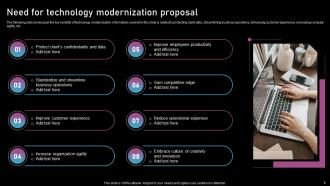
Need for technology modernization proposal
-
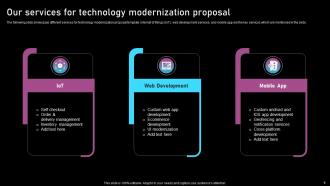
Our services for technology modernization proposal
-
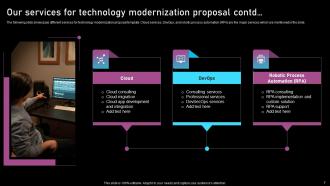
Our services for technology modernization proposal contd
-
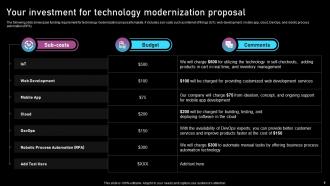
Your investment for technology modernization proposal
-
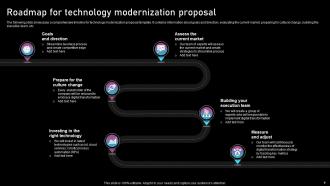
Roadmap for technology modernization proposal
-
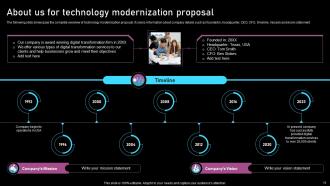
About us for technology modernization proposal
-
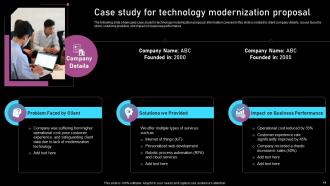
Case study for technology modernization proposal
-
Major clients for technology modernization proposal
-
Key team members for technology modernization proposal 1 2
-
Key team members for technology modernization proposal 2 2
-
Customer testimonial for technology modernization proposal
-
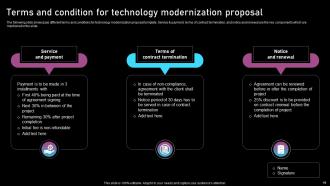
Terms and condition for technology modernization proposal
-
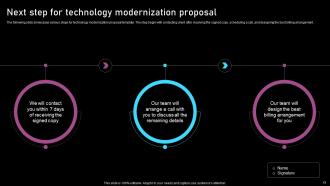
Next step for technology modernization proposal
-
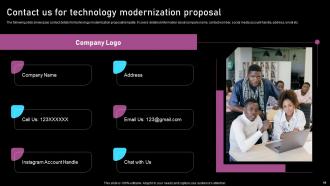
Contact us for technology modernization proposal
-
Icons slide for technology modernization proposal
-
Additional Slides
-
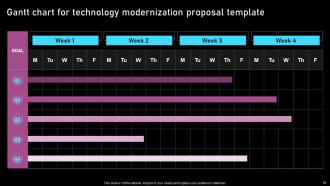
Gantt chart for technology modernization proposal template
-
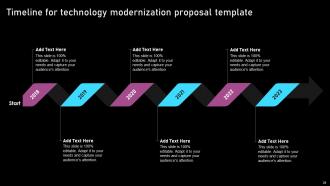
Timeline for technology modernization proposal template
-
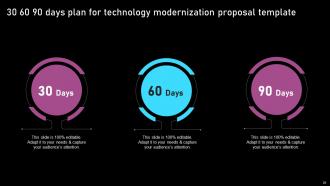
30 60 90 days plan for technology modernization proposal template
-
Our mission for technology modernization proposal
-
About us for technology modernization proposal
-

-

-

-

-

FAQs for Technology Modernization Proposal
Honestly, it's all about not getting left in the dust. Customers want everything fast and seamless now - old systems just can't keep up. Security's a nightmare too since hackers got way smarter. Cloud stuff actually saves money (took me forever to believe that) and you don't need a whole IT team babysitting servers. Remote work broke everything wide open - people realized their systems were trash when everyone went home. Compliance keeps getting more annoying every year. Look, competitors who modernize will eat your lunch. Just figure out what's causing you the biggest headaches first and fix those.
First thing - do a complete tech audit. Map out what systems you actually have right now. Check performance, security holes, and how well stuff talks to each other (spoiler: probably not great). Survey your team about what's driving them crazy day-to-day. Can your current setup handle growth? How do you stack up against competitors? Honestly, this part's kind of tedious but you need the full picture before making any moves. Once you've got all that data, then you can figure out what needs fixing ASAP vs what can wait.
Look, cloud computing is pretty much essential for any modernization project these days. You're moving your old systems there to get better scalability and cut costs on that expensive on-site hardware. Plus it makes adopting stuff like microservices and DevOps way easier than traditional setups - honestly can't imagine doing it any other way now. The cloud gives you access to everything from basic storage to fancy AI tools without the headache of maintaining it yourself. I'd start by figuring out which of your current systems are the biggest pain to scale or keep running.
Dude, start training like 6 months before you actually roll anything out. First figure out what skills your people have now vs what they'll need later. Build from there. Hands-on stuff works way better than boring theory sessions - trust me on this one. Don't just assume you need to hire new people either. Your current team can probably handle it if you train them right. Oh, and find your tech nerds early! They're gold for helping everyone else get up to speed. I've watched so many companies wait until the last second and it's just chaos.
Oh man, brace yourself for cost overruns and data migration disasters. Staff will hate the change - that's just reality. Your old systems probably won't talk to the new stuff, which creates these awful integration messes that drag on forever. Productivity will completely tank while people figure out the new tools. Security gets sketchy during transitions too since you're basically tearing everything apart. Honestly, budget for 20% more time and money than you think. And seriously invest in change management right away - trust me on this one.
Do a quick audit first - figure out what's actually broken vs what just feels outdated. Pick one or two systems that'll make the biggest difference right away. Cloud stuff is usually cheaper and way less hassle than building everything from scratch. Most small businesses I know get stuck overthinking this (totally guilty of that myself). Try a pilot project with something small, get your team used to it, then expand from there. Oh, and don't feel bad about bugging vendors for help - they want you to succeed so you'll buy more stuff later.
Honestly, start with AWS Migration Hub or Azure Migrate to see what you're actually dealing with first. Docker and Kubernetes will blow your mind once you get into containerization - seriously changed how I think about deployments. Jenkins or GitLab handle your CI/CD pipeline pretty smoothly. Terraform's solid for infrastructure-as-code stuff, though the learning curve's a bit steep initially. Oh, and prioritize whatever's gonna move the needle business-wise rather than just picking the shiniest tools. Assessment first, then build from there based on what'll actually matter.
Look, upgrading your tech is honestly a game-changer for how customers feel about dealing with you. Everything gets faster - response times, checkout, whatever. Your interfaces actually make sense now instead of feeling like they're from 2005 (you know what I mean). The data piece is huge too because you finally know what your customers actually want instead of just guessing. Sure, you can automate the boring stuff, but here's the thing - it frees up your team for conversations that matter. Bottom line? People stop hating your processes and might even enjoy using your service.
Go API-first - seriously, it'll save you from tearing apart your whole system. Document everything because this stuff gets wild fast (learned that the hard way). Middleware is clutch for translating between different protocols. Run both systems parallel during transitions so you catch problems early. Oh, and don't try modernizing everything at once - that's asking for trouble. One integration at a time makes debugging way easier. Clear data mapping is non-negotiable too. It's messier than you think but totally doable if you're methodical about it.
Track the obvious stuff first - maintenance costs, processing speed, system uptime. But honestly? The soft metrics are usually where you'll see the real impact. Think employee productivity, customer satisfaction scores, how fast you can roll out new features. Get your baseline numbers before you start anything (this part's annoying but super important). Then check progress every quarter. Don't just measure tech improvements - focus on actual business results. Leadership wants to see dollar savings AND operational wins, so throw together a simple dashboard with both. Makes those budget conversations way easier.
Honestly, AI and IoT are total game-changers for getting your systems up to speed. IoT sensors watch everything 24/7 and catch problems before they blow up your budget. Then AI takes all that messy data and actually makes sense of it - sometimes feels like magic, not gonna lie. You can automate the tedious stuff your team hates doing anyway. Plus it helps predict what customers want before they even know it themselves. My advice? Pick one small process first, show it works, then expand from there. Way less overwhelming that way.
Dude, you gotta ditch that "we've always done it this way" mentality first. Get your team comfortable failing - sounds weird but trust me on this. Tech changes so fast it'll make your head spin, so continuous learning isn't optional anymore. Those department silos? Tear them down because everything's connected now. Oh and make sure leadership actually has your back when you try stuff that doesn't pan out. I've seen too many places where they say they want innovation but then freak out at the first failure. Start small - celebrate when someone tests a new tool, even if it's messy at first.
Honestly, compliance is like having a parent looking over your shoulder during tech upgrades. GDPR, SOX, HIPAA - whatever rules apply to your industry will basically dictate what you can and can't do with data handling and security stuff. You can't just fall in love with some shiny new platform without checking the boring regulatory boxes first. I learned this the hard way at my last job - we almost picked this amazing tool that couldn't do proper audit trails. Get your compliance people involved early when you're shopping around. Trust me, it's way less painful than backtracking later.
You definitely need good partnerships - trying to do everything yourself is expensive and honestly kind of stupid. Find people who are already great at the stuff you're weak at. System integrators, vendors, other companies... whoever has the expertise you're missing. I learned this the hard way on my last project actually. The trick is picking partners who fill your gaps instead of stepping on your toes. Map out what your team rocks at first. Then figure out where you need help. Way faster than building everything from scratch, and you'll avoid a ton of headaches.
First thing - just ask your team what's making them miserable every day. Map out your current setup and figure out what's constantly breaking or bleeding money. ROI is key here: which updates would actually boost revenue or slash costs? I'd hit the systems that connect to everything else first since fixing those helps multiple areas at once. Oh, and don't go crazy trying to modernize everything - that's how projects die. Pick maybe 2-3 wins that aren't super risky and build from there.
-
A fantastic collection of templates. I'll likely use this as my go-to resource for future templates and support.
-
This visual representation is stunning and easy to understand. I like how organized it is and informative it is.