


Theory Of Change Process Strategies Theory Components Engagement Achieve





Try Before you Buy Download Free Sample Product
 Impress Your
 Audience
 100%
100% Editable
 Save Hours
 of Time


Our Theory Of Change Process Strategies Theory Components Engagement Achieve are topically designed to provide an attractive backdrop to any subject. Use them to look like a presentation pro.
People who downloaded this PowerPoint presentation also viewed the following :
Theory Of Change Process Strategies Theory Components Engagement Achieve with all 11 slides:
Use our Theory Of Change Process Strategies Theory Components Engagement Achieve to effectively help you save your valuable time. They are readymade to fit into any presentation structure.

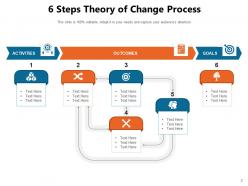
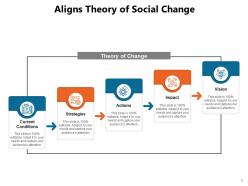


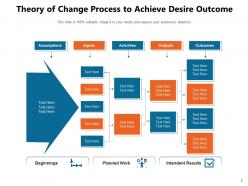
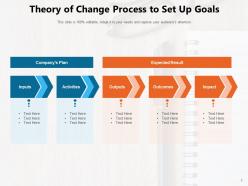
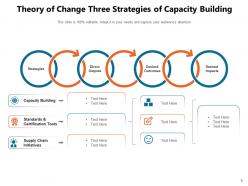
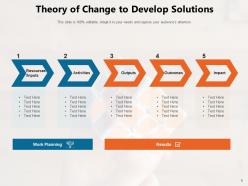


FAQs for Theory Of Change Process Strategies Theory
Key components of a Theory of Change model include long-term goals, outcomes, activities, assumptions, and indicators for measuring progress. These elements work together by mapping causal pathways between interventions and desired impacts, identifying critical assumptions, and establishing measurable milestones, with many organizations finding that this structured approach enhances strategic planning and stakeholder alignment.
Organizations effectively engage stakeholders in Theory of Change development through collaborative workshops, structured interviews, focus groups, and co-design sessions that capture diverse perspectives and expertise. These participatory approaches enable institutions across sectors like healthcare, education, and nonprofits to build shared ownership, validate assumptions, and strengthen strategic alignment, ultimately delivering more robust frameworks and enhanced stakeholder buy-in for sustainable impact.
Theory of Change differs from traditional logic models by emphasizing long-term visioning, stakeholder engagement, and adaptive learning, while logic models focus on linear input-output relationships. Theory of Change incorporates assumptions testing, contextual factors, and iterative refinement throughout implementation, enabling organizations to navigate complex social challenges more strategically, with many nonprofits and development agencies finding enhanced program effectiveness and stakeholder alignment.
A Theory of Change enhances program evaluation by establishing clear causal pathways between activities, outcomes, and long-term impacts, providing evaluators with specific indicators and assumptions to test systematically. This framework enables organizations to measure not just what happened, but why and how change occurred, with nonprofits, government agencies, and foundations finding that structured evaluation approaches deliver more actionable insights, improved accountability, and stronger evidence for strategic decision-making and stakeholder communication.
Evidence plays a foundational role in Theory of Change development by validating assumptions, informing pathway design, identifying effective interventions, and establishing measurable indicators. Through research data, stakeholder feedback, and outcome analysis, organizations can refine their strategic approaches, minimize risks, and demonstrate impact to funders, ultimately delivering more credible and sustainable change initiatives.
Organizations ensure their Theory of Change remains relevant through regular monitoring, stakeholder feedback integration, and systematic program evaluation. By conducting quarterly reviews, engaging beneficiaries and partners in assessment processes, and adapting strategies based on emerging evidence and changing contexts, organizations can maintain alignment with evolving needs, ultimately delivering sustained impact and competitive advantage in their sectors.
Visualization techniques include logic models, flowcharts, impact maps, timeline graphics, and hierarchical diagrams that connect activities to outcomes. These presentation tools enhance stakeholder understanding by illustrating causal pathways, measuring progress milestones, and demonstrating strategic alignment, with many organizations finding that visual Theory of Change frameworks significantly improve buy-in and implementation success.
The iterative process of refining a Theory of Change improves project outcomes by enabling continuous validation of assumptions, real-time adjustment of strategies based on emerging evidence, and enhanced stakeholder alignment through regular feedback loops. Through systematic refinement cycles, organizations can identify implementation gaps earlier, optimize resource allocation more effectively, and strengthen causal pathways, ultimately delivering more impactful results and sustainable change.
Common pitfalls include creating overly linear pathways, focusing solely on activities rather than outcomes, lacking stakeholder input, setting unrealistic timelines, and failing to identify underlying assumptions. Many organizations find that avoiding vague language, ensuring measurable indicators, and regularly testing assumptions against real-world feedback ultimately delivers more robust theories that enhance strategic planning and program effectiveness.
A Theory of Change facilitates communication by providing a shared visual framework that maps connections between activities, outcomes, and long-term goals, ensuring all team members understand their role in the bigger picture. This strategic alignment tool enables clearer discussions about progress, challenges, and resource allocation, with many organizations finding that it reduces miscommunication and enhances collaborative decision-making across departments.
A Theory of Change is most beneficial for nonprofits during strategic planning, grant applications, program design, and impact measurement initiatives. Organizations tackling complex social issues like poverty alleviation, education reform, or healthcare access find that this framework enhances stakeholder alignment, strengthens funding proposals, and enables systematic tracking of outcomes, ultimately delivering greater mission impact and organizational credibility.
A Theory of Change guides resource allocation by mapping direct connections between activities, outcomes, and long-term goals, enabling organizations to prioritize high-impact interventions and eliminate redundant efforts. Through strategic pathway analysis, program managers can allocate budgets, staff, and time more effectively across healthcare initiatives, educational programs, and community development projects, ultimately delivering measurable results while maximizing operational efficiency.
A Theory of Change serves as the foundational framework that informs and enhances strategic planning by mapping causal relationships between activities, outcomes, and long-term goals. While strategic planning focuses on operational execution, Theory of Change provides the underlying logic and assumptions, with many organizations finding that this combination delivers clearer direction, improved resource allocation, and measurable impact across their initiatives.
Cultural considerations can be integrated into Theory of Change development through community engagement, stakeholder consultation, cultural competency assessments, and incorporating local values into program design. Organizations working across diverse contexts find that understanding cultural norms, communication styles, and traditional practices enhances program relevance and sustainability, ultimately delivering more effective outcomes and stronger community buy-in.
**INPUT**: What tools or frameworks can assist in creating a comprehensive Theory of Change? **OUTPUT**: Theory of Change development tools include logic model templates, stakeholder mapping frameworks, outcome measurement systems, visual mapping software, and participatory planning methodologies. These frameworks streamline strategic planning by clarifying assumptions, identifying measurable indicators, and engaging diverse perspectives, with many nonprofits and social enterprises finding that structured approaches ultimately deliver clearer pathways to impact and enhanced organizational alignment. [Word count: 58 words]
-
It saves your time and decrease your efforts in half.
-
Understandable and informative presentation.
-
Great product with highly impressive and engaging designs.
-
Topic best represented with attractive design.
-
Great product with highly impressive and engaging designs.