

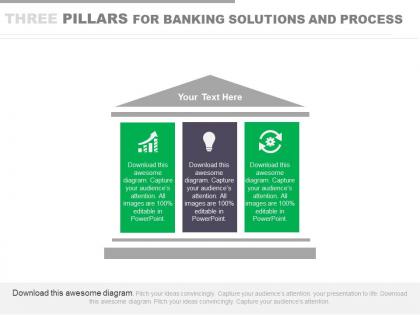
Three pillars for banking solutions and process powerpoint slides




Try Before you Buy Download Free Sample Product
 Impress Your
 Audience
 100%
100% Editable
 Save Hours
 of Time


Our Three Pillars For Banking Solutions And Process Powerpoint Slides have a refreshing effect. They will reactivate the energies of your team.
People who downloaded this PowerPoint presentation also viewed the following :
Three pillars for banking solutions and process powerpoint slides with all 5 slides:
Get folks discussing your abilities with our Three Pillars For Banking Solutions And Process Powerpoint Slides. You will be the current buzz.




FAQs for Three pillars for banking solutions and
So the big things I'm seeing are AI chatbots everywhere, banks embedding finance stuff directly into apps, and crazy personalized experiences based on how you spend. Mobile-first is obviously huge now - I mean, when's the last time you actually went into a bank? Real-time payments are finally happening, plus voice banking through Alexa is getting pretty decent. Open banking APIs are game-changing though - you can literally see all your accounts in one place now. If you're looking at vendors, definitely go for the modular cloud stuff that plays nice with whatever systems you already have.
So your bank could totally use AI for personalized product recommendations - it tracks spending patterns and suggests stuff customers actually want. Chatbots are clutch for handling basic questions around the clock. The fraud detection is honestly where it gets interesting though - way fewer false alarms that piss people off, plus faster loan approvals since it analyzes credit instantly. Oh, and those expense categorization tools? Pretty slick for helping customers budget better. I'd probably start with just chatbots first, see how that goes, then roll out other features once you figure out what your customers respond to.
Dude, your mobile app is everything now. Seriously - people will switch banks over a crappy app faster than you'd think. Make it smooth and intuitive because that's where your customers actually live these days. They want to do transfers, deposit checks, all that stuff without dealing with branches. The convenience thing is massive. Plus you get all this customer data from app usage which is pretty valuable. I know it sounds obvious but so many banks still have terrible apps. Focus on speed and simplicity - that's what keeps people loyal.
So basically fintech companies are just bypassing banks entirely with their apps and digital stuff. They're beating traditional banks at convenience, speed, and keeping costs down. You've probably used Venmo or Robinhood - those budgeting apps that pull all your accounts together? My bank's app is honestly terrible compared to these. Fintechs move way faster since they don't have all that old infrastructure dragging them down. Banks really need to get their digital game together and actually focus on what customers want, or they'll keep losing people to these companies that actually get it.
Definitely start with multi-factor authentication and end-to-end encryption - those two will stop most attacks right there. Real-time fraud monitoring is huge too. I know session timeouts are annoying when you're trying to pay bills, but they're necessary. Device fingerprinting catches weird logins from new devices. You want secure APIs, regular pen testing to find holes before the bad guys do, and strong password rules. Oh, and transaction limits - if someone does get in, at least they can't drain everything at once. Focus on the MFA and encryption first though.
Honestly, just pick one thing first - cross-border payments or trade finance work great since the ROI is obvious. Don't try building this stuff yourself, the tech headaches aren't worth it. Partner with vendors who actually know what they're doing. Make sure whatever you build can actually connect to your current systems (learned this the hard way on another project). Start with a small pilot, track everything obsessively, then expand what actually works. The trick is finding spots where blockchain genuinely fixes problems, not just slapping it on because it sounds cool. Those proof-of-concept phases will save you tons of pain later.
Dude, automated loan processing is seriously worth it. Your approval times drop from days to just a few hours, and you'll cut manual errors by around 80%. Credit decisions stay consistent too since the system uses the same criteria every time - no more random human judgment calls messing things up. Your team gets to ditch the boring data entry stuff and actually work on complicated cases instead. Customers love the faster responses, obviously. Plus you can handle tons more applications without hiring anyone new. I'd figure out where your current process gets stuck most and start automating there first.
So basically, new regulations make banks completely overhaul their systems and processes. It's annoying but also drives innovation - like when PSD2 forced everyone to build open banking APIs and beef up fraud detection. KYC updates are honestly the worst part, such a headache. But you know what? It usually ends up improving security and customer experience in the long run. Banks that get ahead of regulatory trends do way better than ones scrambling to comply at the last minute. The smart ones actually use it as an excuse to modernize their ancient tech stacks.
Start with security - that's non-negotiable. Multi-factor auth, encryption, fraud detection, the works. After that, focus on making it actually usable. Mobile needs to work flawlessly since everyone's on their phones constantly. Users want the basics to just work: checking balances, transfers, bill pay, mobile deposits. Real-time alerts are clutch too - nobody wants surprise charges showing up later. Honestly, I'd skip the fancy stuff at first and nail those core features. Budget tracking integration keeps people coming back. Oh, and don't forget accessible support within the app. I'd audit your current security setup first, then figure out what your users do most often.
So basically you can catch problems way before they blow up by looking at customer patterns and transaction data. Build some predictive models to flag potential defaults and catch fraud as it happens. Banks are literally sitting on goldmines of data they barely use - it's crazy. Set up automated alerts so your risk team doesn't have to manually hunt for issues all day. Honestly, I'd start with fraud detection first since that usually pays off the fastest. Way better than those old-school risk assessment methods that miss half the red flags anyway.
So banks need to hit three main things: accessibility, affordability, and going digital. Mobile banking is huge - literally everyone has a phone even if they don't have bank access, which is kinda crazy when you think about it. They should set up agent networks in underserved areas and offer those basic accounts with no fees. Simplified KYC processes help too, plus financial literacy programs. But honestly? The smartest move is partnering with local organizations that communities already trust. Those partnerships are gold because they've got credibility you can't just buy.
Look, when banks actually customize stuff for each person, it makes a huge difference. Instead of shoving everyone into the same boring products, they're using your spending patterns and goals to suggest things that actually matter to you. Makes people feel seen, you know? Plus they can predict what you'll need before you even realize it - like offering a savings account right when you're hitting those financial milestones. I mean, think about it - wouldn't you rather have your bank recommend relevant stuff instead of random credit cards you'll never use? It's all about making each experience feel personal.
Oof, data silos are gonna be your worst nightmare - all your customer info is probably spread across like 5 different systems that don't play nice together. Legacy integration is brutal too, honestly feels like connecting a typewriter to an iPhone sometimes. Your interfaces between mobile/web/branch won't match up, which customers hate. Real-time sync is another headache since nobody wants outdated account info when they switch channels. Oh and don't forget training your staff - they need to help people who might start something on mobile then finish in-branch. Definitely audit your data setup first though, that's where most of these projects completely tank.
Dude, cloud stuff is a total game-changer for banks stuck on those dinosaur systems. Your teams can actually build cool features instead of nursing ancient servers back to life every week. Disaster recovery becomes way less of a nightmare, and honestly? The money you'll save on hardware is insane. Peak traffic hits and you just scale up instantly - none of that "sorry, our servers crashed" nonsense customers hate. Start with something low-risk first though, like maybe internal tools or whatever. Once you see how smooth it runs, you'll wonder why you waited so long to ditch the legacy headache.
Honestly, banks are sitting on a goldmine with customer complaints. Like that whole mobile check deposit thing? That literally came from people griping about waiting in line forever. Focus groups help them test stuff before rolling it out to everyone. They'll dig through sentiment data to figure out what to build first - surveys, social media rants, call center logs, you name it. The trick is actually doing something with all that feedback instead of just letting it collect dust. Track satisfaction scores after launching new features and you'll know if you nailed it or not.
-
Amazing product with appealing content and design.
-
Visually stunning presentation, love the content.