


Three pillars for finance management powerpoint graphics




Try Before you Buy Download Free Sample Product
 Impress Your
 Audience
 100%
100% Editable
 Save Hours
 of Time


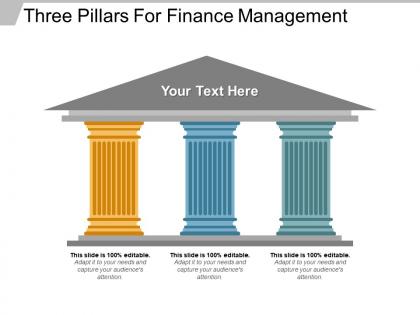
Design the best methods to meet the requirements of financial management with the help of Three pillars for finance management PowerPoint graphics created by SlideTeam. This PPT template helps you to explain how your company strategizes the financial goals. The different slides in the PowerPoint can also be utilized to mention the aspects of Financial Management like planning, organizing, conducting and regulating the financial activities. You can explain here the general management principles of the enterprise. SlideTeam has designed this PowerPoint presentation for your goals in a way that is self-explanatory and very easy to understand. Hence, the presenter will work hassle-free in order to explain the management goals to the audience. This PowerPoint graphic will help you create the best policies to be dispensed among your team and consequently achieving your goals. Download this amazing PPT slide as it is a crucial part of proper financial planning.
People who downloaded this PowerPoint presentation also viewed the following :
Three pillars for finance management powerpoint graphics with all 5 slides:
Fasten your grip with our Three Pillars For Finance Management Powerpoint Graphics. Get the controls firmly in hand.


FAQs for Three pillars for finance
Track your spending first - you'll be shocked where money actually goes. Build up 3-6 months expenses for emergencies (boring but trust me). Crush high-interest debt while still putting something toward investments regularly. Insurance is one of those things you hope you never need but... yeah, get it. Honestly the game-changer is automating everything - savings, investments, whatever. You set it once and don't have to think about it constantly. I used to be terrible at remembering to transfer money to savings. Budget, save, manage debt - sounds simple but it really does work when you stick with it.
Honestly, just tracking where your money goes is like 80% of the solution. I swear those little expenses add up so fast - like my daily coffee habit that I pretended wasn't a big deal. Once you see the patterns, you can actually build emergency funds instead of just crossing your fingers there's cash left at month-end. Try the 50/30/20 thing or zero-based budgeting, whatever clicks for you. Even a basic spending tracker works. Start small though - track everything for just one week first. You'll probably be shocked at what you find.
Look, financial literacy is basically your safety net for not screwing up with money. You learn about compound interest and budgeting, then suddenly you're not panicking every time an unexpected bill shows up. I wish someone had told me this in my twenties honestly. It helps you catch scams too - like those "invest in my crypto course" things everywhere now. Plus you'll actually understand what investment options exist beyond keeping cash in a shoebox. Just grab a personal finance book or find some free course online. Trust me, it's worth the time.
Dude, budgeting apps are game-changers for tracking where your money actually goes. Accounting software handles all the boring invoice stuff automatically, and those dashboard tools show your cash flow in ways that actually make sense. I'm kicking myself for not using this stuff earlier - would've saved me so many late nights with spreadsheets! The best part? Way fewer dumb mistakes since everything's automated. Oh, and you get notifications when something looks weird. Just pick one tool that fixes your biggest headache first, then add more later.
Dude, the worst mistakes I see people make? Not having any emergency savings and letting their spending creep up every time they get a raise. High-interest debt will absolutely destroy you if you ignore it. Most people also think they can just throw everything into their company stock or whatever crypto's hot right now - terrible idea. Diversify that shit. Oh, and retirement costs way more than you'd expect, like genuinely scary amounts. The thing that really gets me though is people saving with zero plan. Just throwing money at random goals. Track your spending for a month first - you'll probably hate what you discover, but it's the only way to figure out where you're actually bleeding money.
So basically, interest rates control how much borrowing costs and what your savings earn. Low rates? Great for mortgages and car loans, but your savings account becomes a joke. When they're high, loans suck but at least your emergency fund isn't just sitting there doing nothing. I always tell people to watch rate trends before big purchases - like, don't refinance when rates are climbing, you know? Also compare what you're paying on debt vs. earning on investments. Honestly, just check current rates before any major money moves. It's such an easy step most people skip.
Okay so first thing - write down ALL your debts with the balances and interest rates. You can't tackle what you don't know, right? Then pick either snowball (smallest debt first) or avalanche (highest interest first). Personally I'm team snowball because those quick wins actually keep you going, even though avalanche is technically better math-wise. Oh and if you've got crazy high credit card rates, maybe look into a personal loan to consolidate - could save you tons. Just don't rack up more debt while you're doing this!
Honestly, just spread your money around different stuff - stocks, bonds, real estate, maybe some commodities. Mix up your stock picks too: tech, healthcare, finance, big companies and smaller ones. Don't go all-in on just US markets either, throw some international funds in there. I totally screwed this up when I first started investing lol. Index funds are perfect if you're new since they do the diversifying for you. That 60/40 stock-to-bond thing is solid, but tweak it based on how much risk you can handle.
Look, emergency funds are total game changers. When my washing machine flooded my apartment last year, I was SO grateful I had money saved up instead of panicking about how to pay for repairs. You'll want like 3-6 months of expenses stashed away - covers job loss, medical stuff, car breaking down, whatever. Even $500 makes a huge difference though, so don't stress if that feels overwhelming right now. Without it? You're stuck using credit cards and digging yourself into debt hell. Start wherever you can. Honestly wish someone had drilled this into my head earlier!
Look, cash flow shows you when money actually lands in your account vs just existing on paper. Those timing gaps between earning and collecting? They'll bite you. I learned this the hard way when payroll was due but my biggest client was paying late - nightmare scenario. Track it weekly so you can spot patterns instead of scrambling. You'll see seasonal dips coming, negotiate better payment terms, and avoid those expensive emergency loans that kill your margins. Honestly, most small business stress comes from not knowing what's actually coming in next week.
Dude, you need both short and long-term goals or you're basically just throwing money around hoping it works out. Quick wins like saving $1,000 for emergencies? That stuff actually motivates you to keep going. Then you've got the big picture stuff - retirement, buying a house, whatever. The short-term goals give you those little victories while the long ones keep you focused on actually building wealth instead of just surviving month to month. I'd honestly pick something you can knock out in like 3-6 months first. Gets the momentum going, you know?
Look, inflation is basically eating away at your money every year - what costs $100 now will probably cost like $130 in 10 years. Super fun, right? So when you're setting savings goals, you've gotta think about that 2-3% annual hit. Don't just aim to preserve your cash, beat inflation with your investments. Planning for retirement or big purchases? Calculate what stuff will actually cost then, not today's prices. I'd honestly check if your current savings rate can even keep up - might be a wake-up call.
Dude, seriously start now if you haven't already. Automation is everything - I can't stress this enough. First thing: grab that full employer 401k match because who turns down free money? Then max out your IRA if you can swing it. Diversification isn't sexy but it works - spread your money across stocks, bonds, different sectors. Don't be that person who puts everything in one stock they heard about on Reddit. You'll want to replace like 70-80% of what you're making now. Automatic contributions are clutch. Once it's set up, you literally forget about it.
Break down your spending into categories - housing, food, entertainment, whatever makes sense for you. Check your bank app first since most do this automatically now (seriously saves so much time vs spreadsheets). I'd review weekly instead of monthly, keeps you way more on top of things. You'll start noticing patterns like weekend splurges or those sneaky subscriptions you totally forgot about. Don't stress about being perfect with it though. Just set up some spending alerts for each category so you know when you're going overboard before it's too late.
Honestly, start with downloading Mint or YNAB to track your spending for like a month - that's what actually opened my eyes. Khan Academy has free courses if you're into structured learning. Dave Ramsey's "Total Money Makeover" is decent, though he can be pretty intense about the whole thing. I actually love the Planet Money podcast since they break down confusing stuff really well. Oh, and check if your bank does those free workshops - I went to one expecting it to suck but learned tons. Pick whatever fits how your brain works best, you know?
-
Visually stunning presentation, love the content.
-
Visually stunning presentation, love the content.