Banking Powerpoint Presentation Slides

Rating:
94%
Slide 1 of 44
Favourites Favourites

Try Before you Buy Download Free Sample Product

Audience Impress Your
Audience
Editable 100%
Editable
Time Save Hours
of Time
The Biggest Sale is ending soon in
0
0
:
0
0
:
0
0
Rating:
94%
Presenting this set of slides with name - Banking Powerpoint Presentation Slides. This PPT deck displays forty-four slides with in-depth research. Our topic oriented Banking Powerpoint Presentation Slides presentation deck is a helpful tool to plan, prepare, document and analyze the topic with a clear approach. It showcases of all kind of editable templates infographics for an inclusive and comprehensive Banking Powerpoint Presentation Slides. Edit the color, text, font style at your ease. Add or delete content if needed. Download PowerPoint templates in both widescreen and standard screen. The presentation is fully supported by Google Slides. It can be easily converted into JPG or PDF format.

People who downloaded this PowerPoint presentation also viewed the following :

Content of this Powerpoint Presentation


Slide 1: This slide introduces Banking. State Your Company Name and begin.
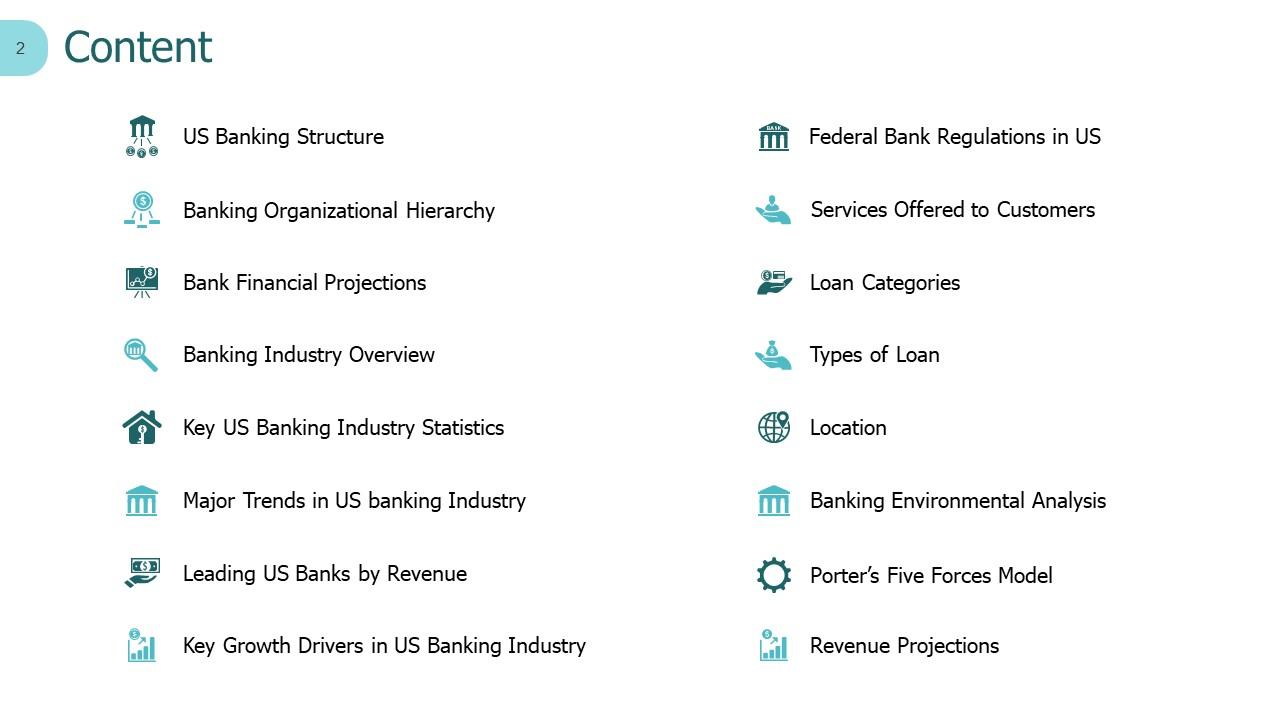
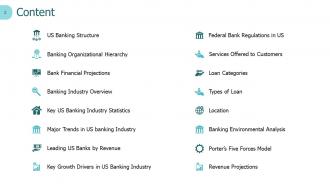
Slide 2: This slide shows Content of the presentation.
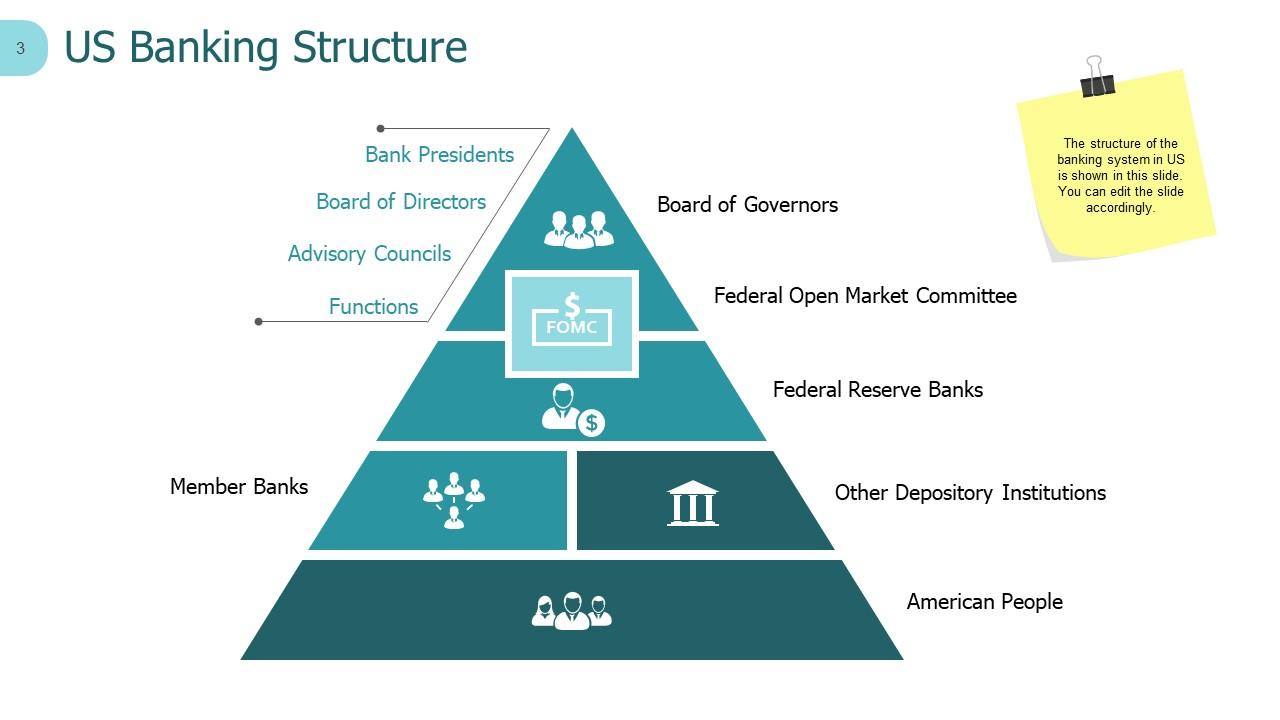
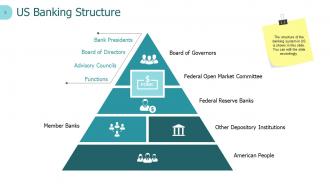
Slide 3: This slide presents US Banking Structure with related diagram.
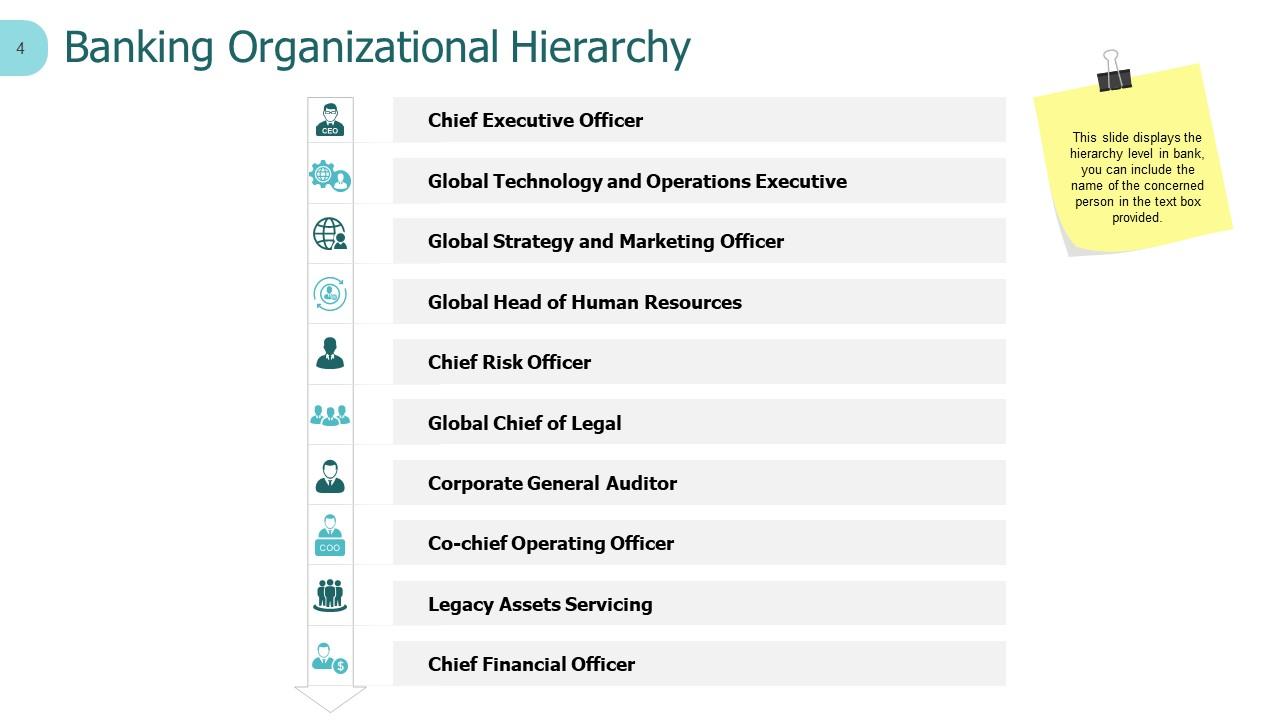
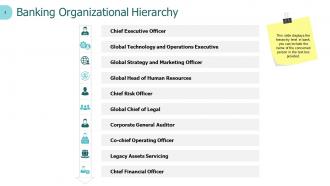
Slide 4: This slide displays Banking Organizational Hierarchy with designations.
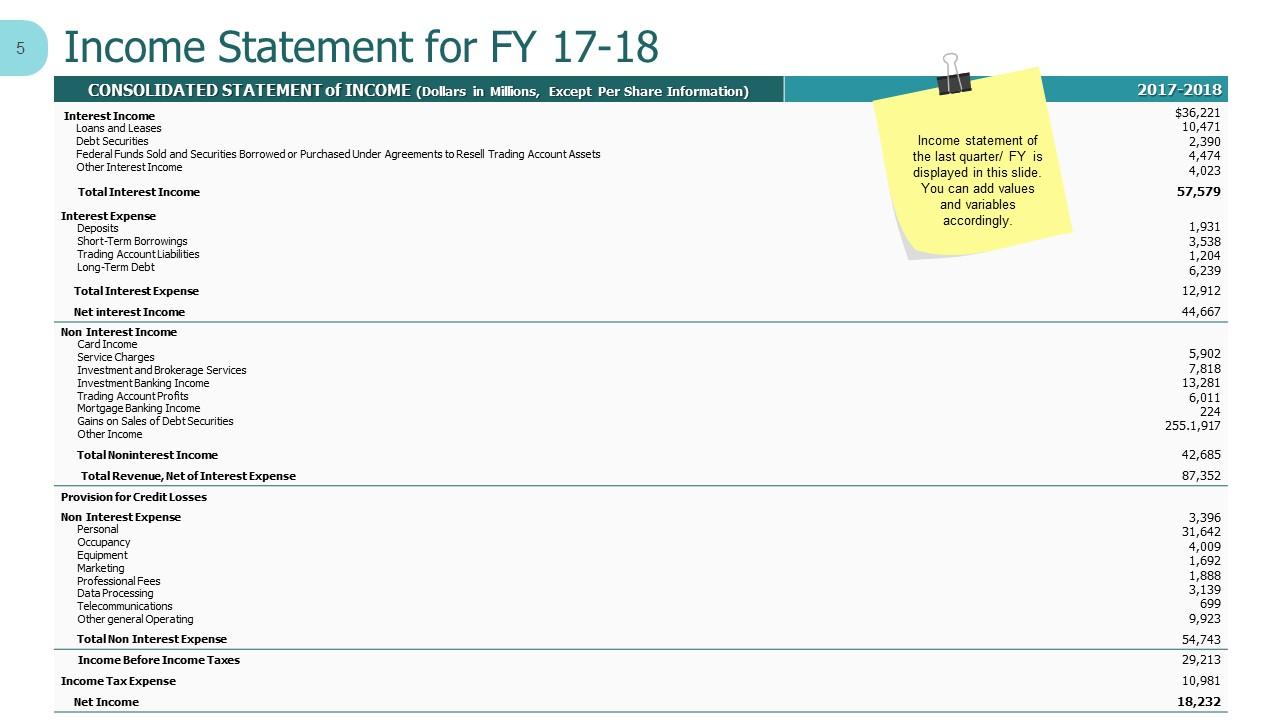
Slide 5: This slide represents Income statement for FY 17-18. You can add values and variables accordingly.
Slide 6: This slide showcases Balance Sheet for FY 17-18.
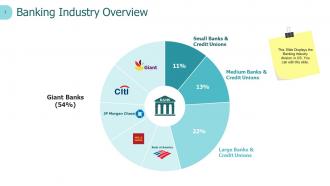
Slide 7: This slide shows Banking Industry Overview with the help of donut pie chart.
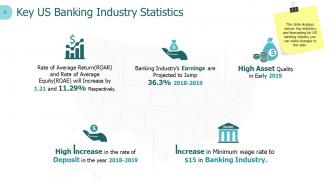
Slide 8: This slide presents Key US Banking Industry Statistics.
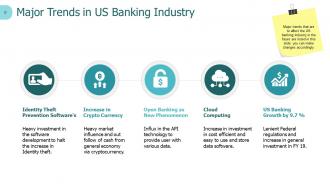
Slide 9: This slide displays Major Trends in US Banking Industry.
Slide 10: This slide represents Leading US Banks by Revenue in graphical form.
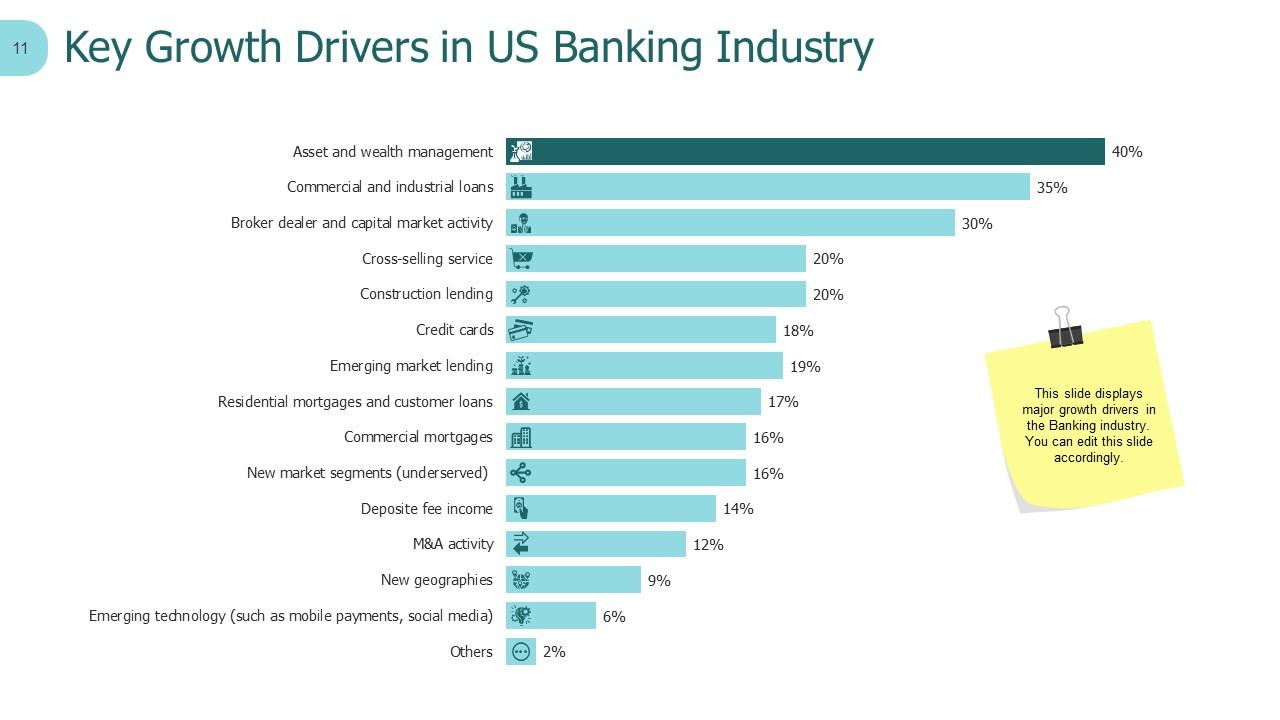
Slide 11: This slide showcases Key Growth Drivers in US Banking Industry.
Slide 12: This slide shows Federal Bank Regulation in US describing- Credit Card, Debt Collection, Lending Limits, Interest on DD, Consumer Protection, Withdrawal Limits.
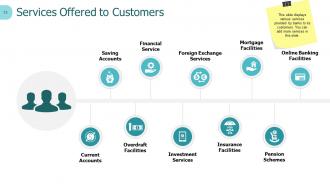
Slide 13: This slide displays various services provided by banks to its customers.
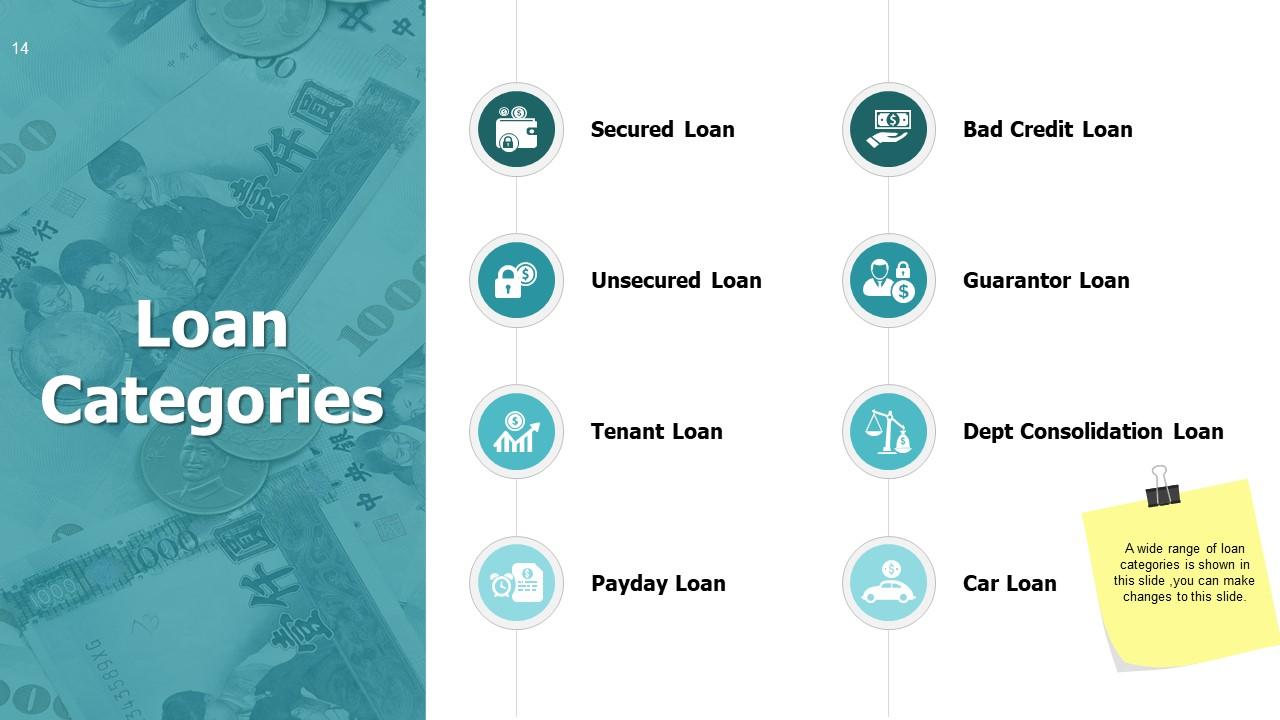
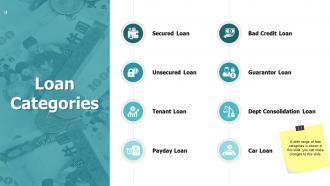
Slide 14: This slide presents wide range of Loan Categories.
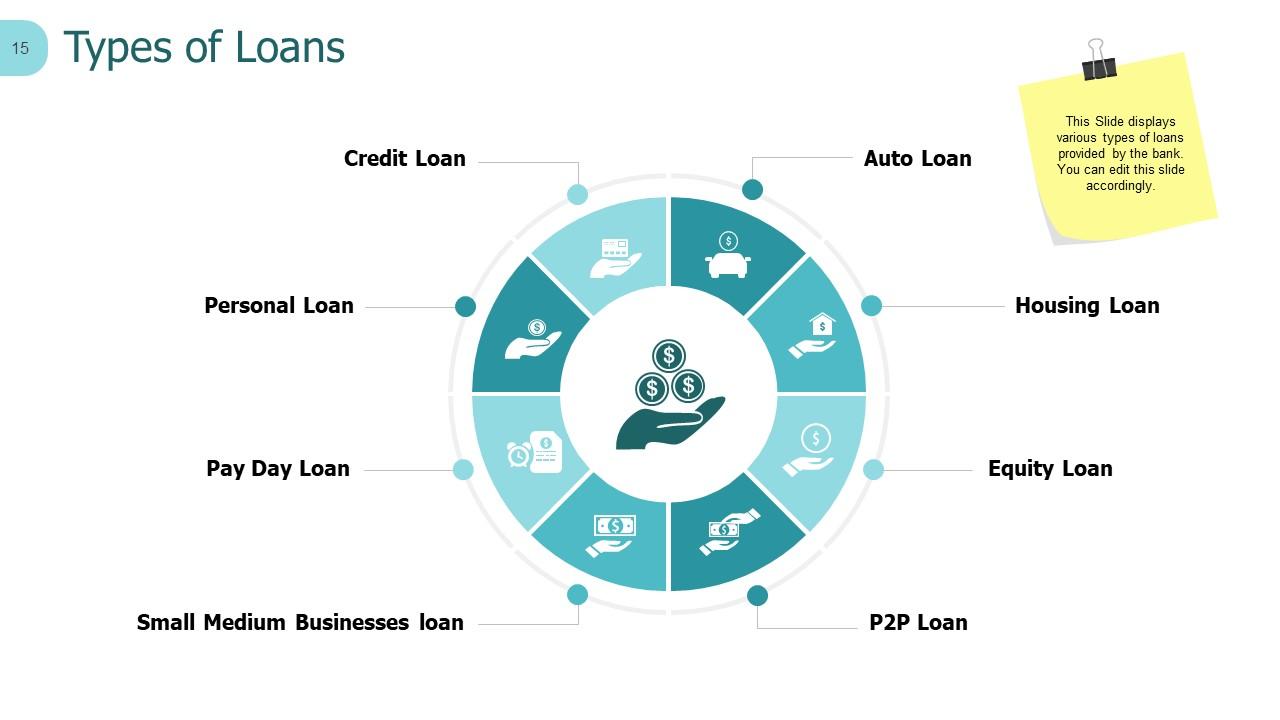
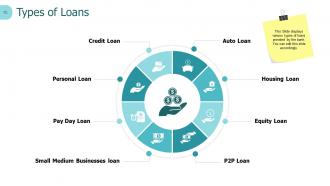
Slide 15: This slide represents Types of Loan including- Auto Loan, Housing Loan, Equity Loan, P2P Lending, Small Medium Businesses Loan, Payday Lending, Personal Loan, Credit Loan.
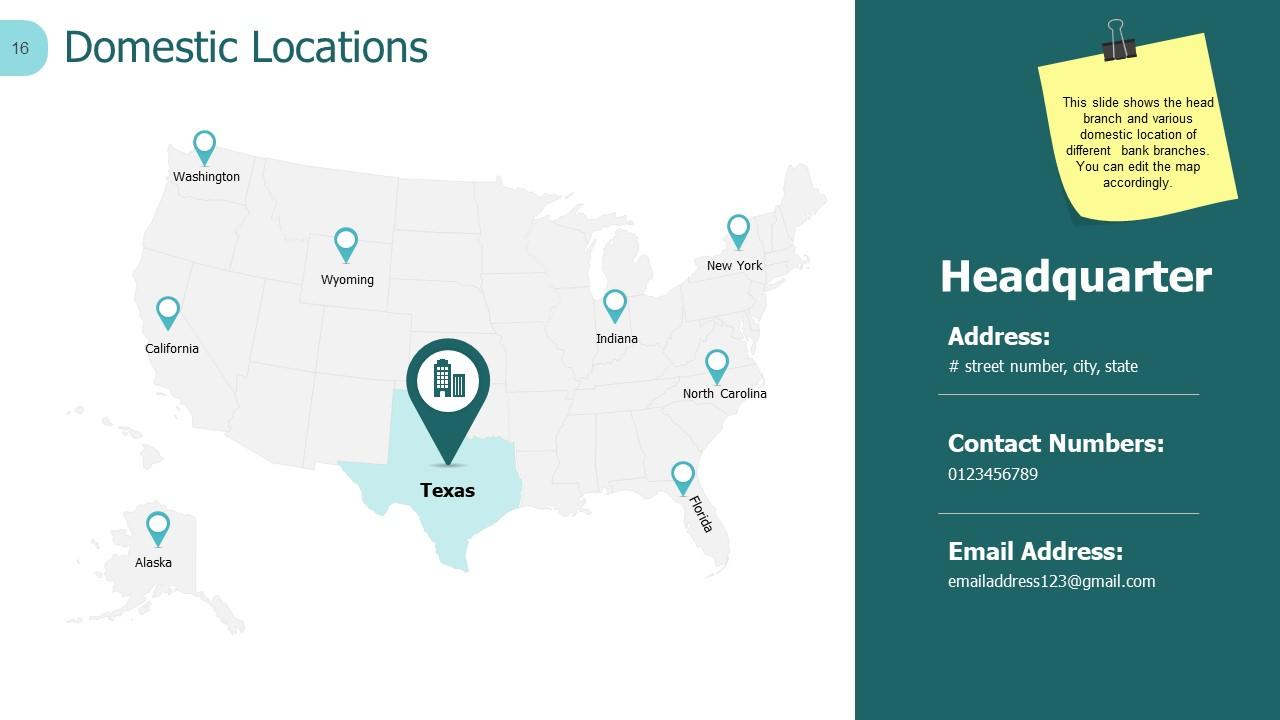
Slide 16: This slide showcases Domestic Locations of different bank branches.
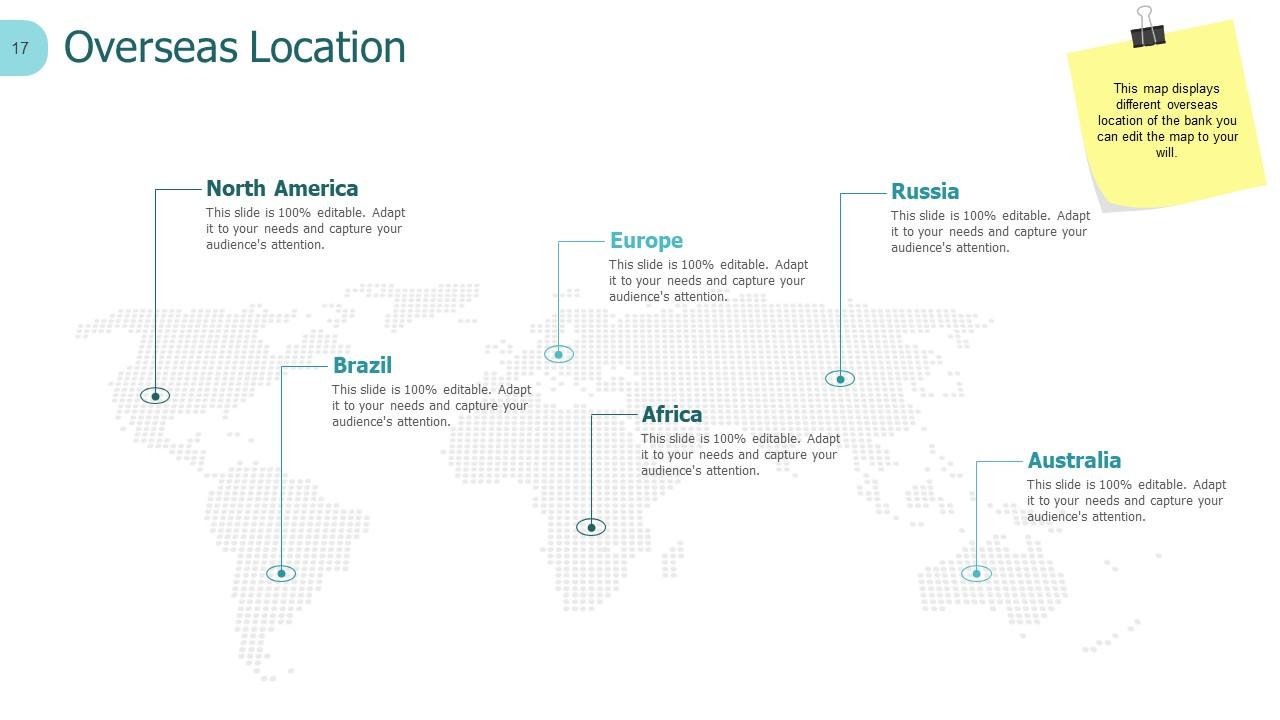
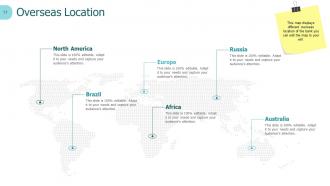
Slide 17: This slide shows Overseas Location of banks with map.
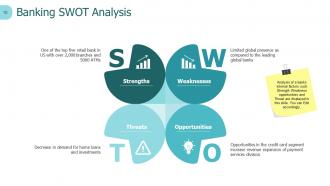
Slide 18: This slide presents Banking SWOT Analysis describing- Weaknesses, Threats, Opportunities, Strengths.
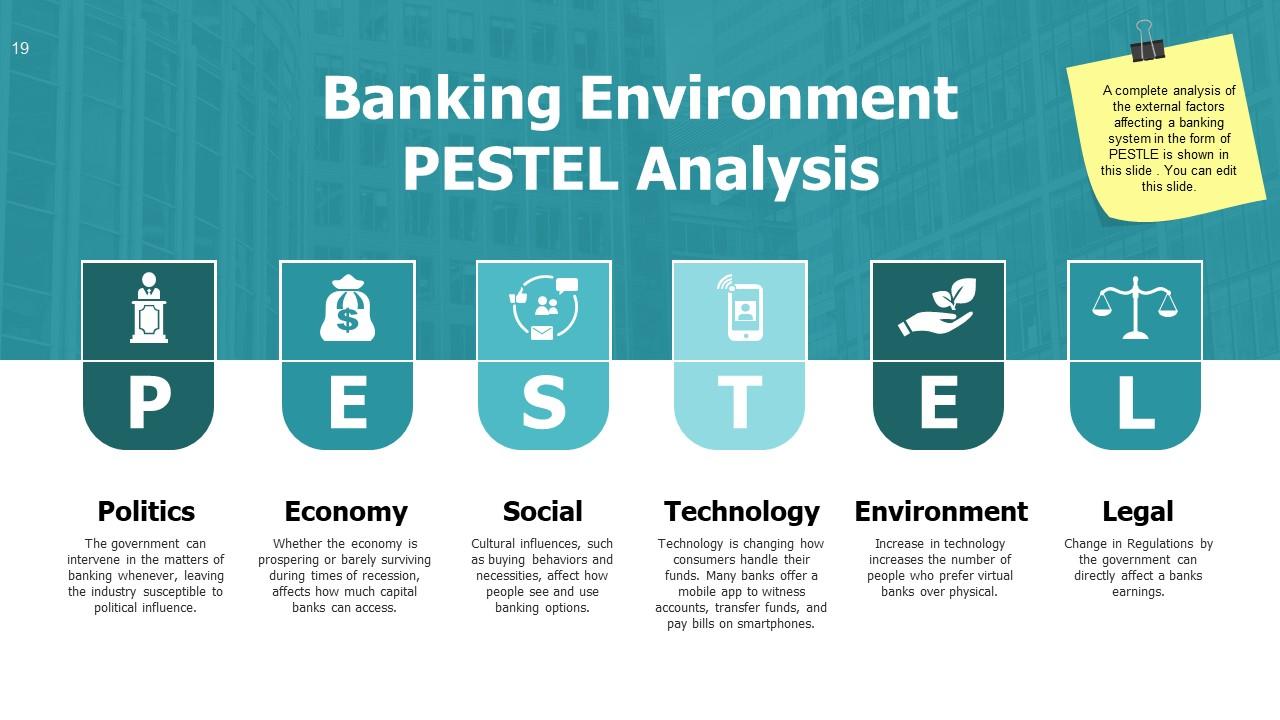
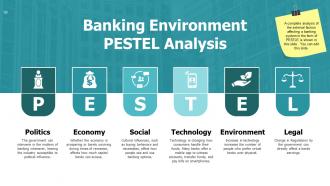
Slide 19: This slide displays Banking Environment PESTEL Analysis describing- Politics, Economy, Social, Technology, Environment, Legal.
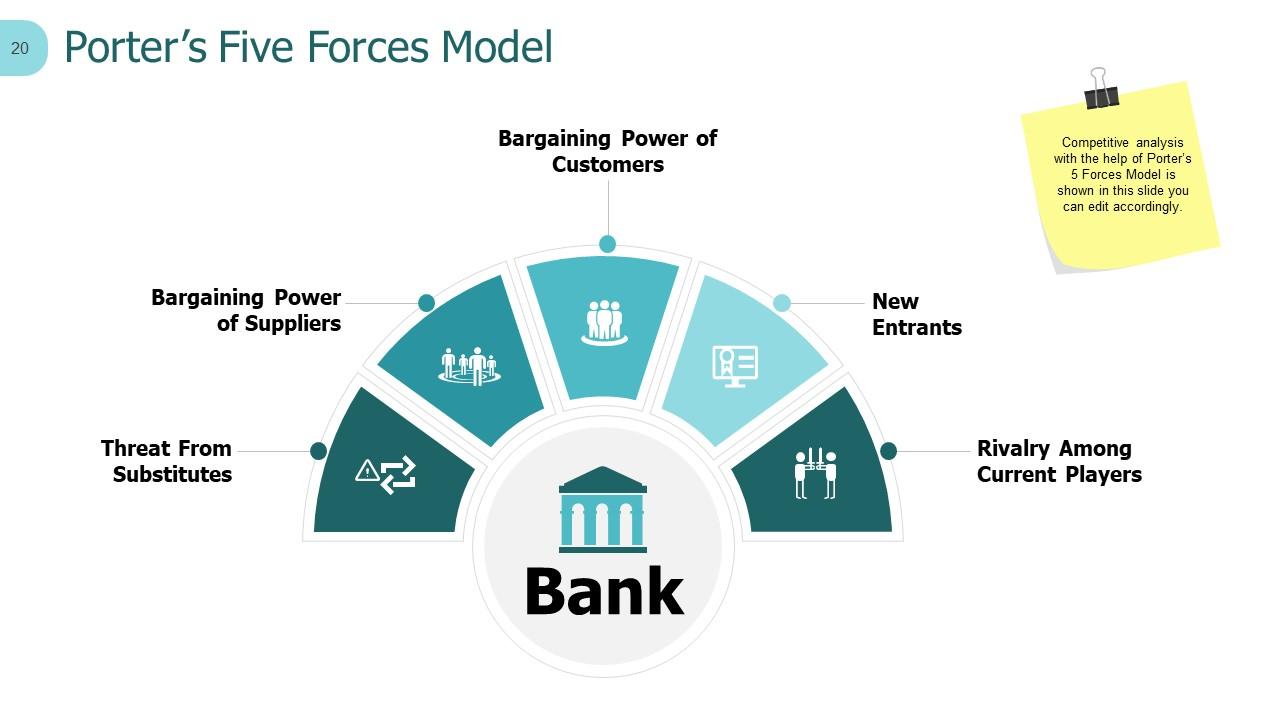
Slide 20: This slide represents Porter’s Five Forces Model as New Entrants, Threat form substitutes, Bargaining power of suppliers, Rivalry among current players, Bargaining power of customers.
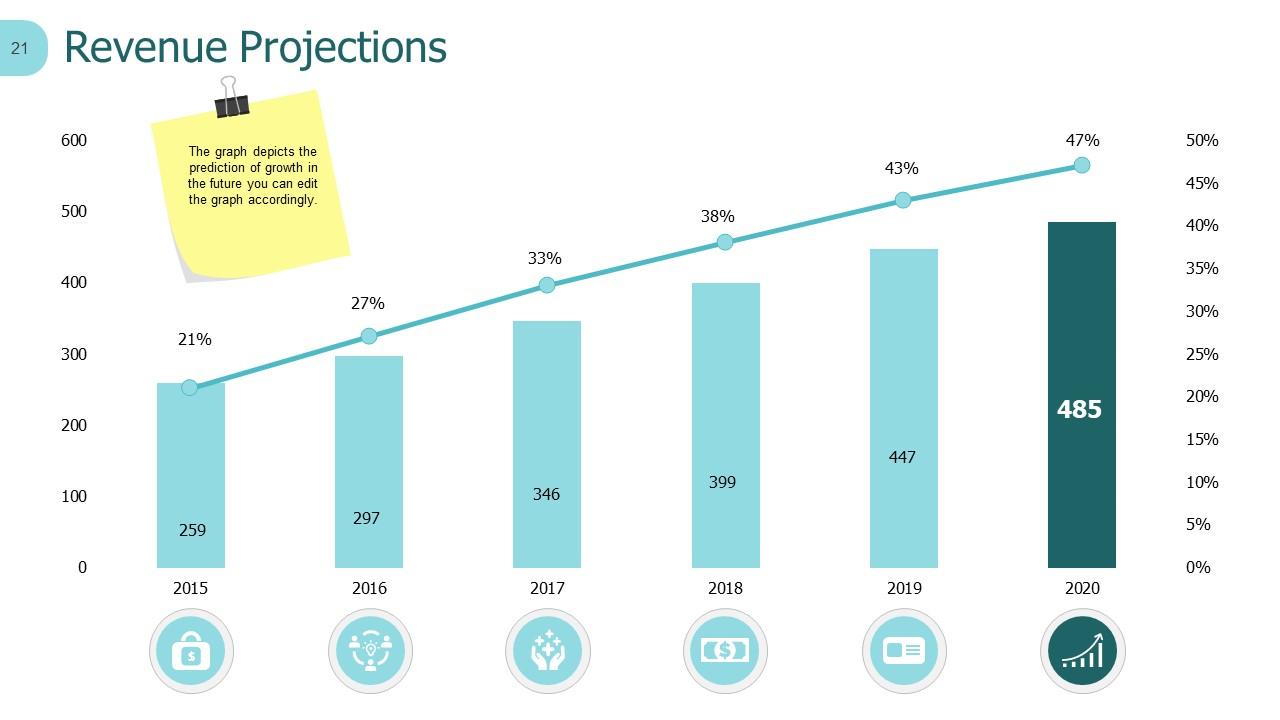
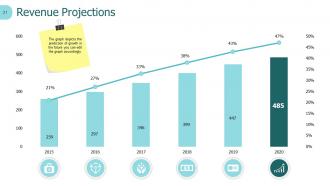
Slide 21: This slide showcases Revenue Projections in graphical form.
Slide 22: This slide displays Banking Icons.
Slide 23: This slide reminds about a 15 minutes coffee break.
Slide 24: This slide is titled as Additional Slides for moving forward.
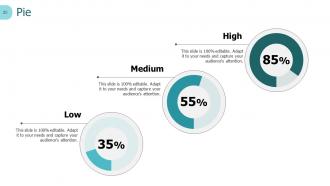
Slide 25: This slide displays Pie chart with data in percentage.
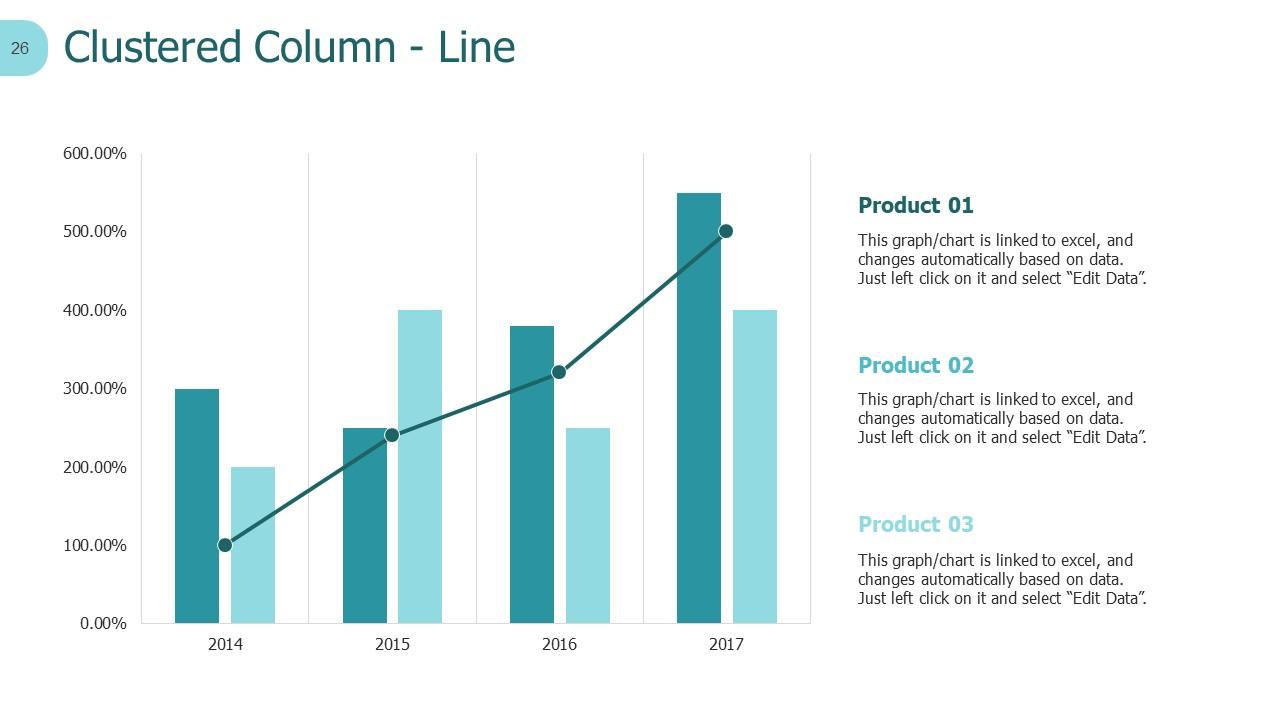
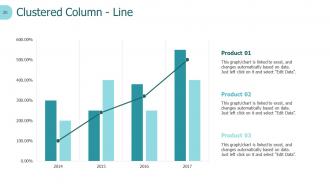
Slide 26: This slide showcases Clustered Column-Line chart to compare different products.
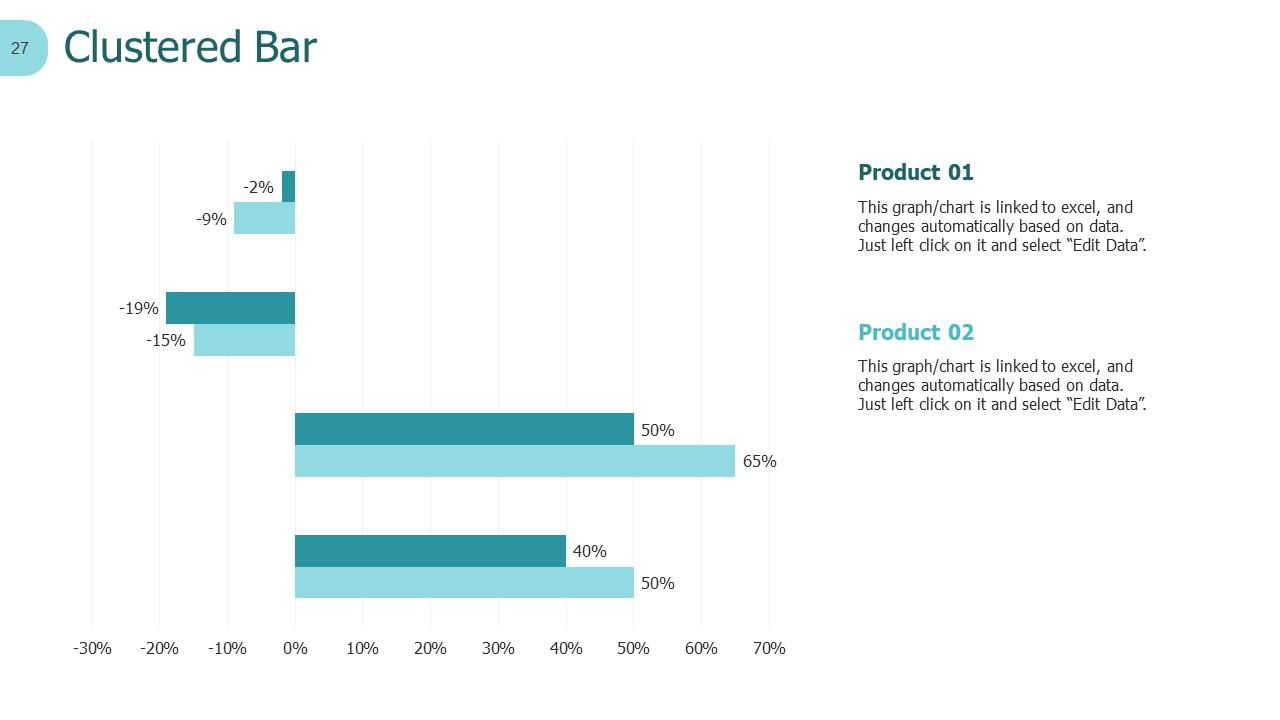
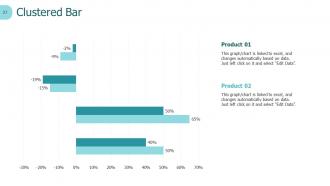
Slide 27: This slide shows Clustered Bar chart with two products comparison.
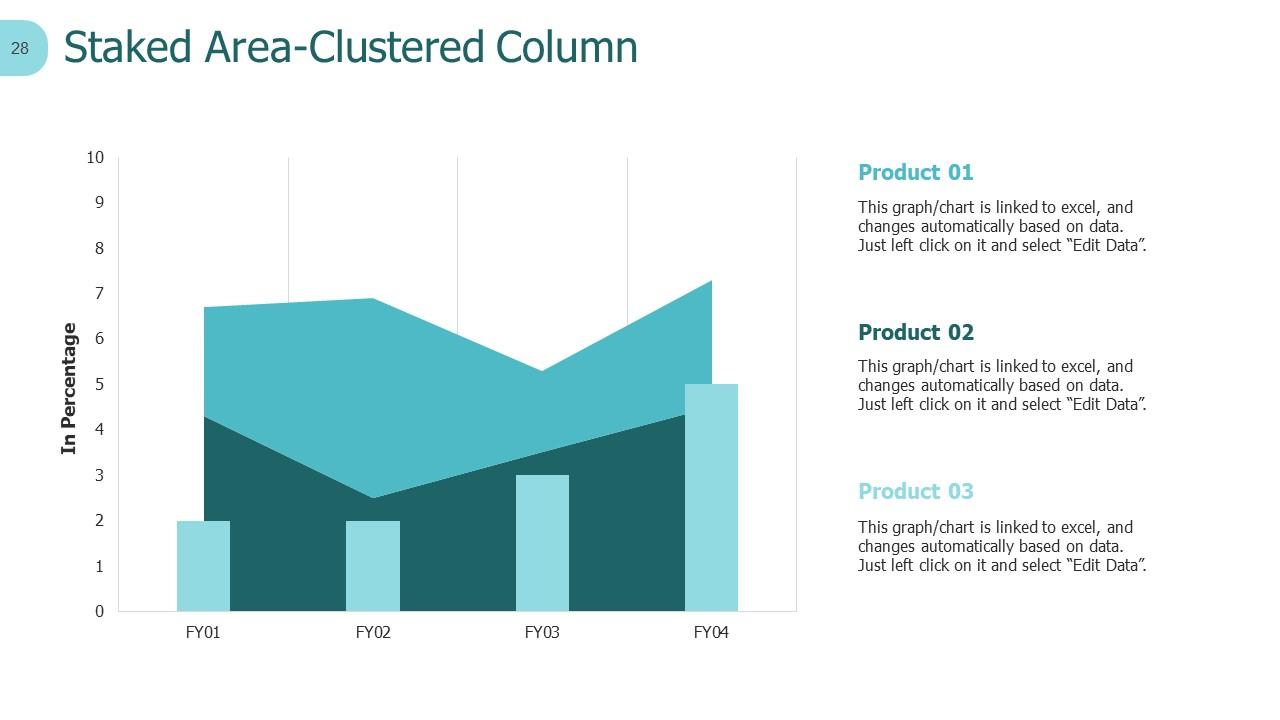
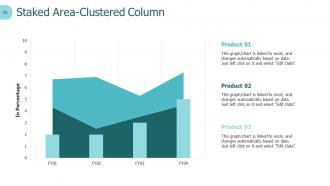
Slide 28: This slide displays Stacked Area - Clustered Column chart with three products comparison.
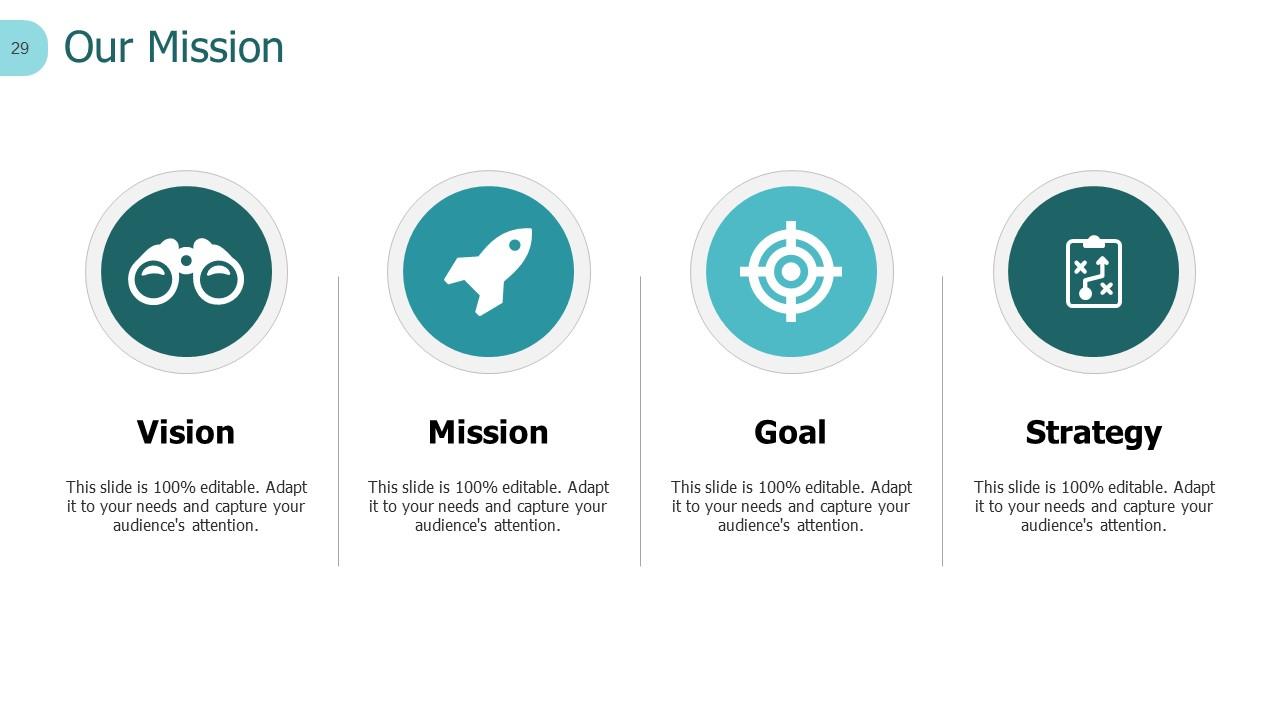
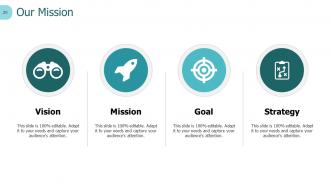
Slide 29: This is Our Mission slide with related icons and text boxes.
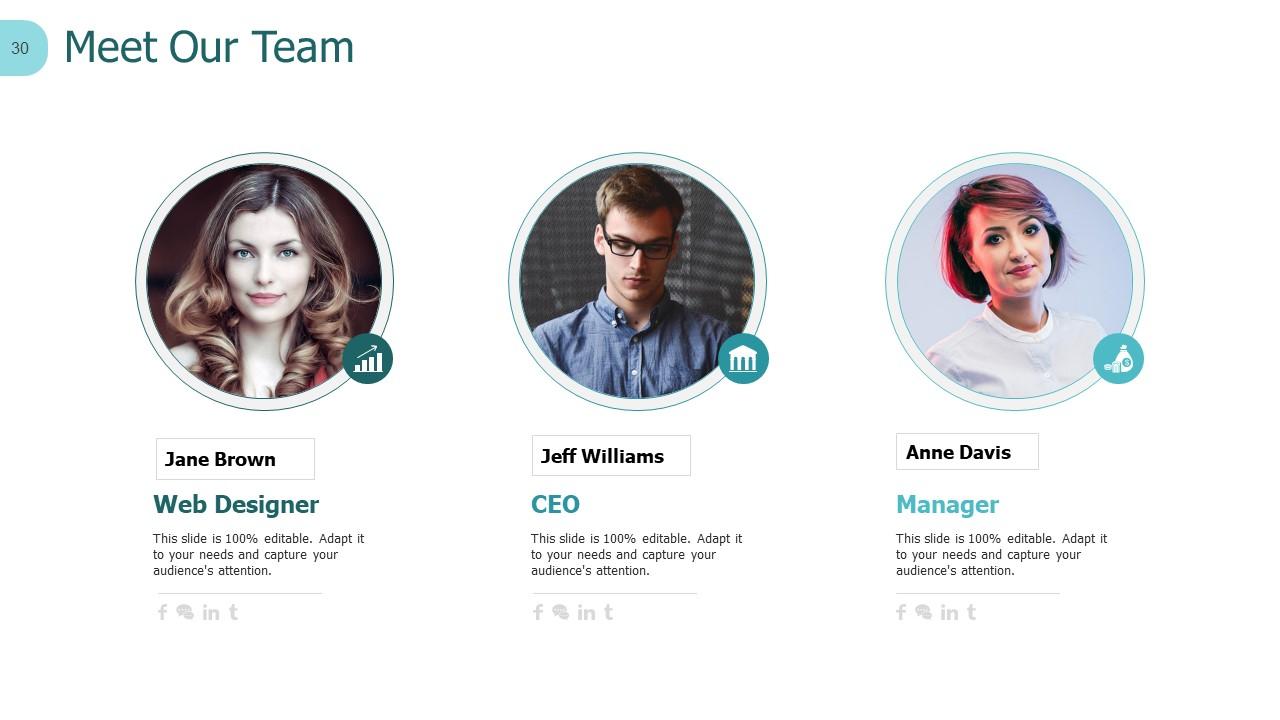
Slide 30: This is Meet Our Team slide with names and designation.
Slide 31: This is About Us slide to show company specifications.
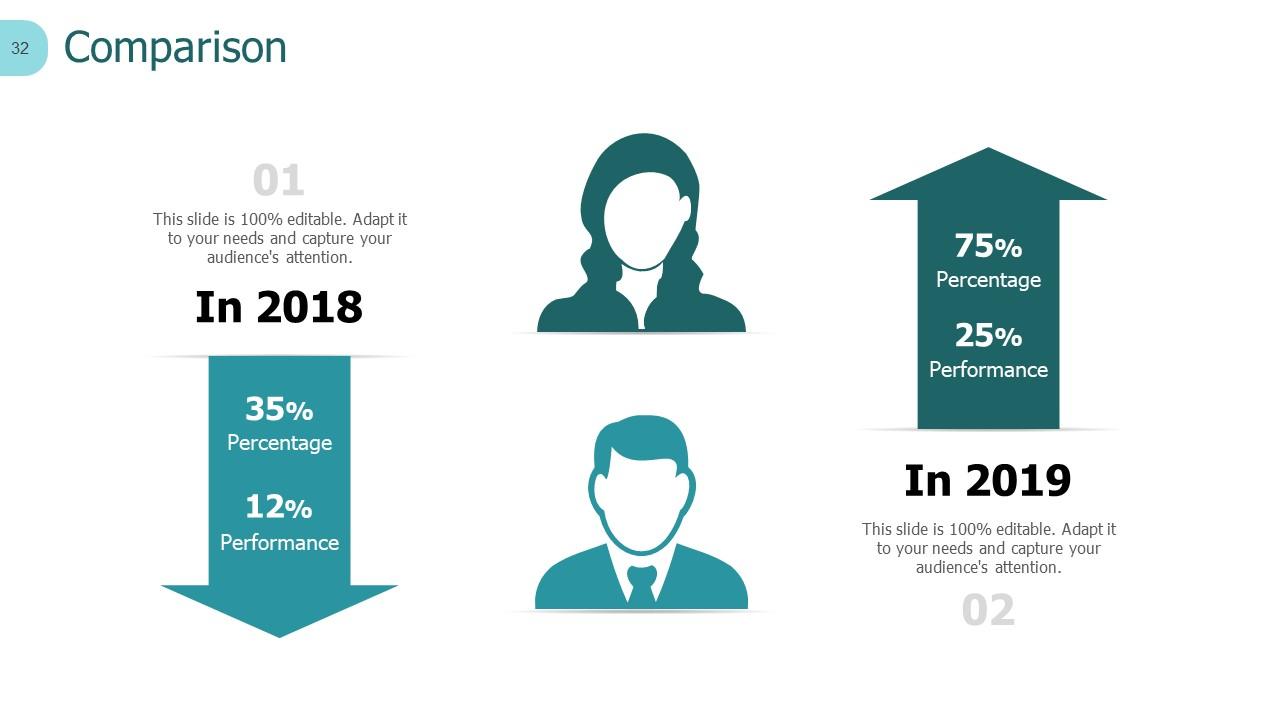
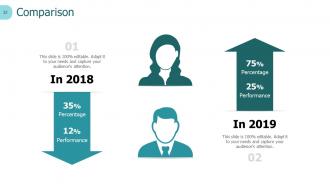
Slide 32: This is a Comparison slide to state comparison between commodities, entities etc.
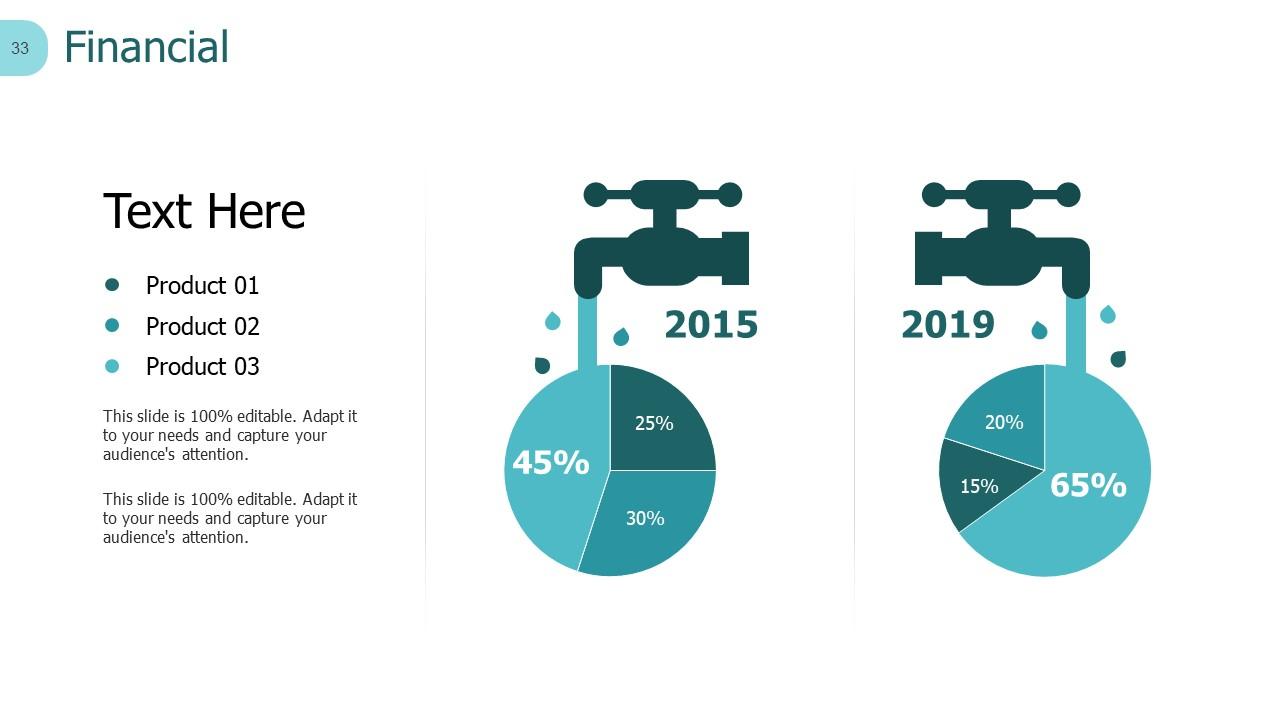
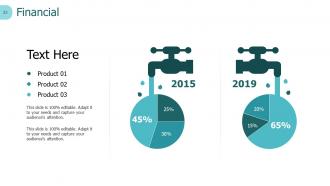
Slide 33: This is a Financial slide. Show your finance related stuff here.
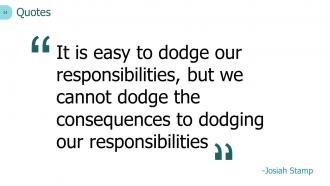
Slide 34: This is a Quotes slide to convey message, beliefs etc.
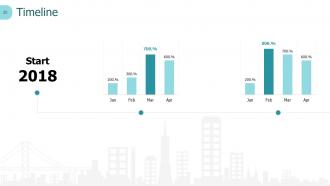
Slide 35: This is a Timeline slide to show information related with time period.
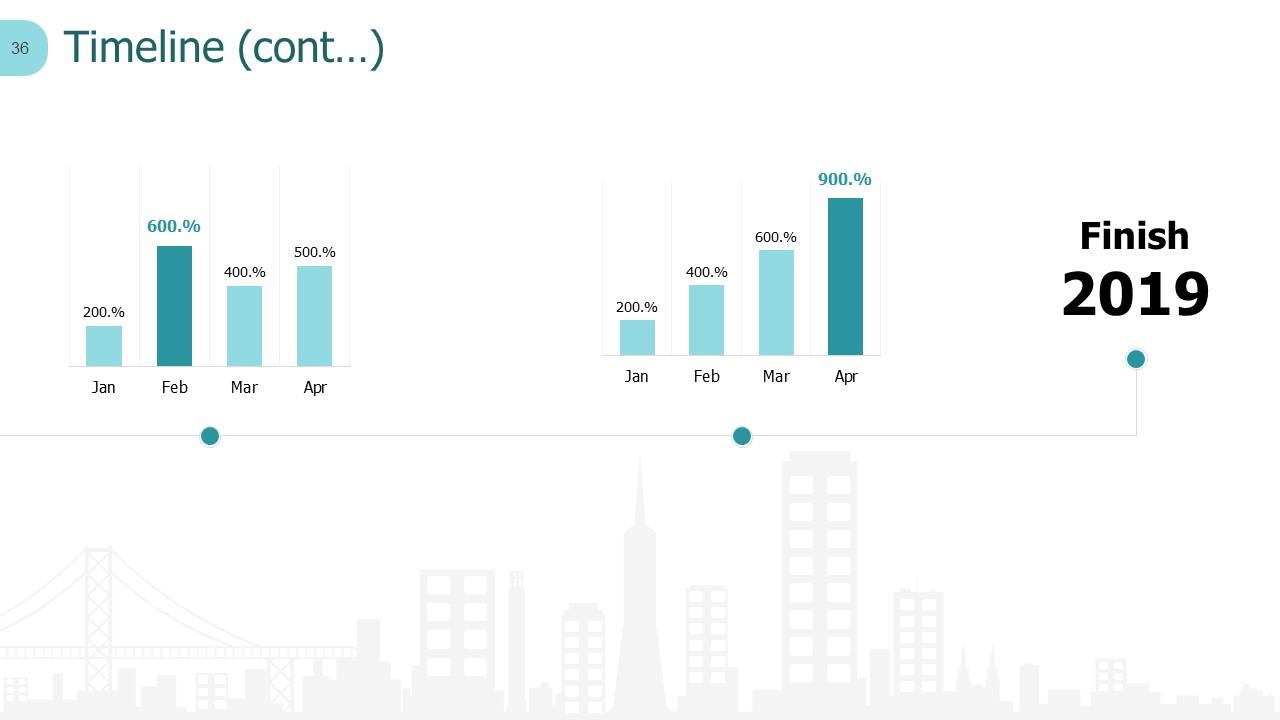
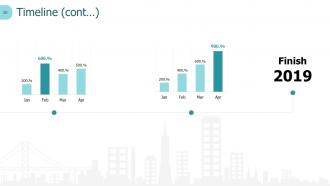
Slide 36: This is another slide continuing Timeline.
Slide 37: This slide is titled as Post It Notes. Post your important notes here.
Slide 38: This is a Puzzle slide with text boxes.
Slide 39: This is a Lego slide with additional text boxes.
Slide 40: This is a Target slide. State your targets here.
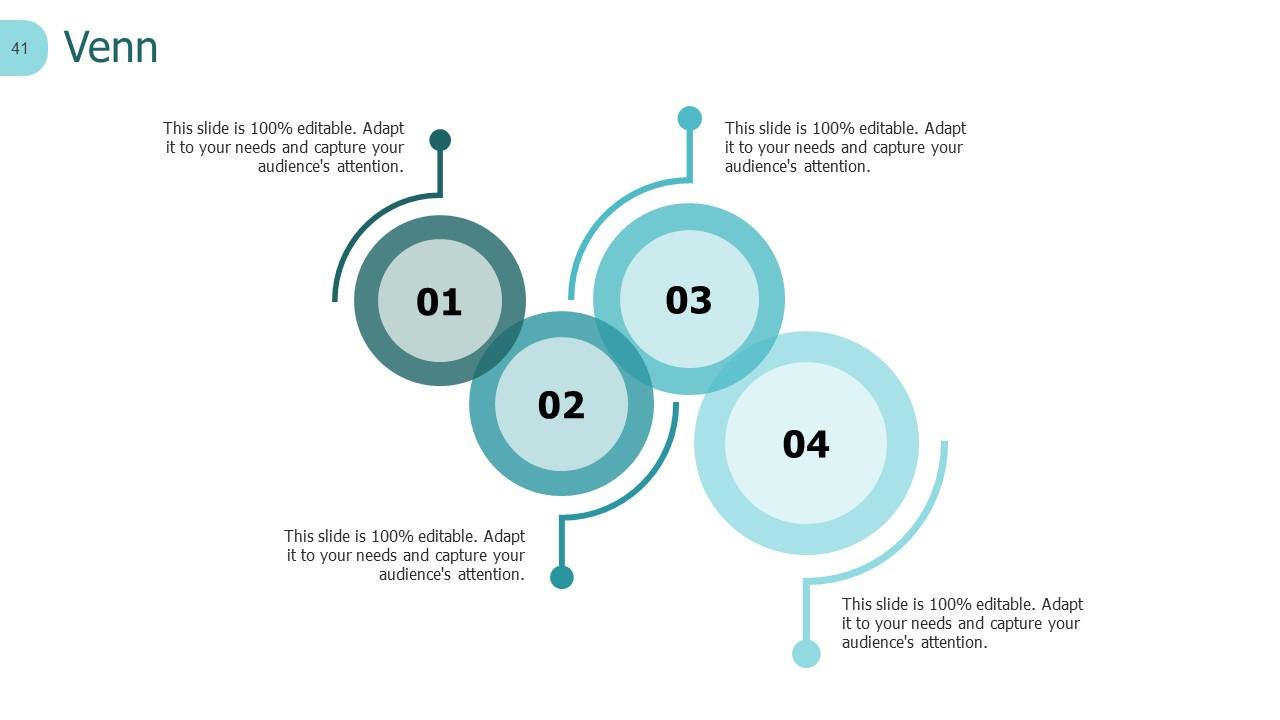
Slide 41: This is a Venn slide with additional text boxes to show information.
Slide 42: This is a Bulb or Idea slide to state a new idea or highlight information, specifications etc.
Slide 43: This slide shows Mind Map for representing entities.
Slide 44: This is a Thank You slide with address, contact numbers and email address.

FAQs for Banking

Dude, three big things are reshaping everything right now. AI personalization is huge - banks are using it for fraud detection and suggesting products based on how you actually spend money. Then there's embedded finance, where like Target or Starbucks can offer you a loan right in their app without involving a traditional bank. Open banking APIs let you see all your accounts in one dashboard too, which is honestly pretty convenient. Oh, and banks are basically becoming tech companies now - crazy how fast that happened. If you're working in finance, definitely focus on mobile and partnering with fintechs.

So banks basically have to scramble whenever new regulations hit major markets like the US or EU. Capital requirements change, lending gets stricter, risk management - the whole nine yards. Honestly, it's kind of insane how frequently this stuff happens now. Quick adapters usually come out ahead though, while slower banks get stuck with massive compliance costs. The annoying part? What starts in New York or London spreads to regional banks within months - there's no escaping it. I'd keep tabs on regulatory calendars if I were you, just so you're not blindsided.

Dude, banking apps have gotten insane lately. You can literally deposit checks by snapping a photo - no more waiting in those awful lines. Most banks have chatbots now that answer basic stuff instantly, plus they'll text you if someone tries anything sketchy with your account. I honestly forgot my local branch even exists lol. The budgeting features are actually pretty solid too, they'll show you where your money's going and let you send cash to friends instantly. Mobile banking has turned into something way more useful than just checking your balance. Download your bank's app if you haven't already!

So banks are basically turning into data detectives now. They're crunching thousands of transaction details, social media habits, spending patterns - way beyond just credit scores. Machine learning runs 24/7 flagging weird stuff instantly. Pretty wild how they can predict who's gonna default before it happens. Payment timing, which stores you shop at, all that builds your risk profile. My advice? Find your biggest blind spots first, then figure out what data might tip you off early. It's like having an early warning system but for money problems.
So blockchain in banking has some real perks - cross-border payments get way faster, fraud drops because records can't be tampered with, and you cut out middlemen which saves money. Transparency improves too, which regulators love. But the downsides are kinda brutal right now. Transaction speeds are painfully slow, regulations are all over the place, and don't get me started on the energy usage. Integration with old banking systems costs a fortune. My take? Start small with pilot programs for stuff like trade finance instead of going all-in. Much smarter approach.

So basically, traditional banks saw what fintechs were doing and went "oh shit, we need that too." Now they're all scrambling to build better mobile apps and faster payment systems. Most big banks have instant transfers now, plus those AI chat things (though honestly some are still pretty clunky). Smart ones are just buying fintech companies instead of starting from zero - way faster that way. Banks still have huge advantages though: people trust them more, they know regulations inside and out, and they've got massive cash reserves. Worth watching which banks decide to partner up versus compete directly with these fintech startups.

So banks need to hit three main things: make services accessible, keep costs low, and go digital. Mobile banking is huge - way more ATMs in underserved areas too. Most traditional banks have been pretty slow on this front, which is frustrating. Basic accounts with minimal fees help a ton, plus they should simplify the whole account opening mess. Partnering with local businesses works when you can't put branches everywhere. But honestly? The real game-changer is building apps that actually work on cheap smartphones. That's how most underbanked people access everything anyway.

Rising rates make borrowing way more expensive - nobody wants those crazy monthly payments on loans and mortgages. Credit cards get hit too since they follow the prime rate. But here's the thing: when rates drop, people go nuts refinancing and taking out cheap loans. Great for spending, but honestly? Creates bubbles sometimes. Your customers need to watch timing. Rates going up? Lock in loans now. Rates falling? Maybe wait it out or refinance what they've got. I learned this the hard way with my own mortgage timing.

Honestly, you need to layer your security like crazy. Start with encrypting everything and get solid firewalls up. Multi-factor auth is non-negotiable for everyone - customers and staff. Real-time fraud monitoring will save your ass because these hackers are honestly getting scary good at what they do. Regular pen testing keeps you ahead of vulnerabilities. Don't sleep on employee training either since people still fall for phishing emails way too often. Zero-trust is where everyone's heading now. I'd audit what you've got first and tackle the biggest holes.

So AI fraud detection is pretty amazing - it catches patterns no human ever could. Like, it's analyzing thousands of transactions instantly and learns what's "normal" for each customer. Someone suddenly buying 10 TVs across different states? Red flag immediately. What I love about it is how it gets better over time and stops flagging your regular customers for dumb stuff. It's working around the clock too. You just gotta train it on your actual data and tweak the sensitivity so you're not blocking legitimate purchases while catching the real fraudsters.

So open banking lets you connect your bank accounts to third-party apps through secure APIs. Pretty cool actually - you can use budgeting apps that see all your accounts, switch banks easier, get more personalized financial tools. Banks aren't thrilled about losing their data monopoly but they're making money through partnerships now. The downside? You're trusting more companies with your financial info, which honestly makes me a little nervous. But this stuff's only growing, so you should probably start looking into which financial apps might actually be useful for you. Just do your homework first.

Honestly, it's all about getting ahead of problems before they blow up. Your bank needs solid compliance stuff and regular check-ups on potential issues. Social media monitoring is absolutely critical now - one viral complaint can tank you overnight. When something does go wrong (and it will), be upfront about it immediately. People actually respect honesty more than perfect PR spin. Build a good culture with your team since they're the ones who'll either save you or accidentally create disasters. Oh, and have your crisis communication plan ready beforehand - you don't want to be scrambling when things hit the fan.

Banks are totally jumping on the green finance bandwagon right now - partly because customers want it, partly because regulations are pushing them. You'll see green bonds, eco credit cards, ESG portfolios, all that stuff. Real money's going toward renewable energy and clean tech though, not just marketing fluff (okay, some of it's still fluff). Honestly, I'd dig into their actual impact numbers if you're considering any banking partnerships. Don't just take their word on sustainability promises. My cousin works at a credit union and says even smaller banks are scrambling to add green products now.

Yeah, customers are way more impatient now - everything needs to be instant. Mobile apps better work flawlessly or people will just leave. Nobody cares about your bank's long history if the app crashes when they're trying to pay rent, you know? Trust is still shaky from all those scandals, so being upfront about fees really matters. Younger folks especially will bounce to another bank in a heartbeat for better rates. Oh, and they expect 24/7 support too. I'd say nail the digital stuff first and don't hide any costs.

ROA and ROE are your bread and butter metrics - definitely track those. Net interest margin shows how well you're making money off loans vs deposits. Non-performing loan ratios are critical because bad debt will kill your profits fast. I'd also watch your efficiency ratio and capital adequacy stuff for regulatory reasons. Oh, and don't sleep on customer acquisition costs with all the fintech competition these days. Most banks I know throw together dashboards with maybe 5-7 key metrics. Pick whatever matches your goals and check monthly - honestly that's frequent enough unless you're in crisis mode.

Ratings and Reviews

94% of 100
Write a review
Most Relevant Reviews
  1. 100%

    by Baby

    Very good
  2. 100%

    by arian vosoughi

    Perfect
  3. 100%

    by Mohammed Naveed

    Good
  4. 80%

    by Jones Cook

    Nice and innovative design.
  5. 100%

    by Donovan Cunningham

    Easy to edit slides with easy to understand instructions.
  6. 80%

    by Christoper Chavez

    Very well designed and informative templates.
  7. 100%

    by Jack Johnson

    Understandable and informative presentation.

7 Item(s)

per page: