


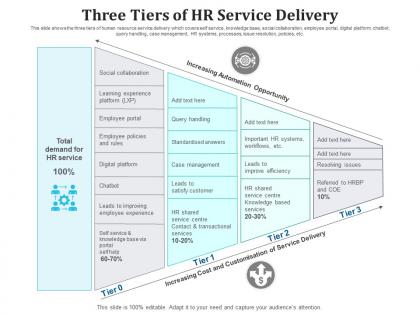
Three tiers of hr service delivery




Try Before you Buy Download Free Sample Product
 Impress Your
 Audience
 100%
100% Editable
 Save Hours
 of Time


This slide shows the three tiers of human resource service delivery which covers self service, knowledge base, social collaboration, employee portal, digital platform, chatbot, query handling, case management, HR systems, processes, issue resolution, policies, etc.
People who downloaded this PowerPoint presentation also viewed the following :
Three tiers of hr service delivery with all 2 slides:
Use our Three Tiers Of HR Service Delivery to effectively help you save your valuable time. They are readymade to fit into any presentation structure.
FAQs for Three tiers of
So HR service delivery works in three tiers - think of it like a pyramid. Your Tier 1 handles the easy stuff: service centers, chatbots, self-service portals for basic questions. Can't solve it there? Goes up to Tier 2 - HR business partners and specialists dealing with tricky policy issues. Tier 3 is where the real experts live - strategic workforce planning, that kind of thing. Honestly, the biggest pain point I see is when things don't flow smoothly between tiers and employees get bounced around like a pinball. You should probably map out what you've got now first, then see where the gaps are.
So first thing - dig into your actual data from last year instead of guessing what people need. Map out all your HR stuff by how complex it is. Password resets are obviously way different than messy compensation problems, right? Most places do pretty well with three tiers: let people handle basic stuff themselves, generalists take the middle ground questions, and specialists deal with the nightmare scenarios. Survey your managers about what's driving them crazy, check your ticket volumes, see where you're burning time. Build your tiers around those real patterns. Oh and definitely pilot it first - saves you from looking like an idiot later.
So basically you want to map out who needs what first - like executives vs regular employees have totally different support needs. Then dig into what kinds of HR requests you're actually getting and how often. That analysis part kinda sucks but you gotta do it. Also figure out what resources you have to work with - self-service stuff, generalists, specialists, whatever. The whole point is matching service levels to people without going broke doing it. I'd start by just auditing your current requests honestly. Once you see the patterns it gets way easier to build the tiers.
So basically, chatbots and self-service portals let your Tier 1 people handle way more volume. Employees can instantly check PTO balances or look up policies without waiting around. Response times get so much better - it's honestly pretty impressive. Your specialists in Tier 2 and 3 get better tools and data, so they can knock out the complex stuff faster. The trick is making sure everything connects smoothly between tiers. You don't want escalations getting lost in the shuffle. I'd start by figuring out where your team wastes the most time on repetitive junk.
Honestly, tiered support is pretty smart - you get issues to the right person from day one instead of ping-ponging them around. Basic stuff like password resets? Your Level 1 folks knock those out fast. Complex technical problems go straight to your senior people who actually know what they're doing. Response times get way better, and you're not wasting your expensive experts on simple requests. The trick is being super clear about what goes where (learned that one the hard way). Your employees will thank you when they're not waiting three days for a password reset.
So for each tier, you'll wanna measure different stuff based on what they actually do. Tier 1 is all about adoption rates and portal usage - basically how many people can solve their own problems without bugging anyone. Response times and first-call resolution are huge for Tier 2 since that's where most tickets land anyway. Don't forget employee satisfaction scores there too. Tier 3 should track resolution time for the messy escalated cases. Honestly, the real win is building dashboards that actually show you where things are breaking down. Otherwise you're just drowning in useless data.
So employee self-service is your first line of defense - handles all the basic stuff people can figure out themselves. Updating addresses, requesting PTO, downloading pay stubs, that kind of thing. It's honestly a lifesaver because otherwise your HR team gets buried in super simple questions all day. Like, do you really need to email someone just to change your phone number? The goal is filtering out routine requests so HR can tackle the actually complicated problems that need real people. Better self-service means way fewer "how do I do this obvious thing" tickets clogging up the system.
Start with solid processes and documentation - that's your base. Then create clear service level agreements for each tier so people know what self-service, HR generalists, and specialists should handle. Training is huge here, and honestly most companies totally mess this part up. Use the same tools and templates everywhere, plus do quality checks regularly. Track everything you can - response times, how fast things get resolved, satisfaction scores. Monthly team lead meetings help you spot problems early. Oh and measuring stuff constantly sounds boring but it actually saves your butt when things go sideways.
Honestly, the trickiest part is getting your team to actually route stuff correctly between tiers. Issues end up bouncing around like crazy - drives everyone nuts. Your Tier 1 people need solid training so they don't panic and escalate everything immediately. Meanwhile, senior folks have to fight the urge to jump in on basic questions they could solve in 30 seconds (harder than it sounds). Staff resistance is brutal too. People want to call whoever they've always called, not follow some new system. Clear escalation rules help, but you've really got to sell the "why" behind changes or people will find workarounds.
Oh, that's actually a smart setup! Basically employees get faster help because simple questions go to self-service stuff (like checking vacation days), but complicated issues get sent to actual experts who know their stuff. No more sitting on hold forever just to ask basic questions - been there, definitely not fun. The whole point is HR specialists can focus on the tricky problems while people solve easy things themselves. Works pretty well because when you can actually get help quickly instead of waiting around, you'll feel way more supported at work. Makes total sense honestly.
Look, your HR tiers are basically how people judge your whole company. Good tiers mean quick answers for simple stuff - like payroll questions getting solved in minutes, not weeks. Complex issues still get routed to experts who actually know what they're doing. It's honestly pretty straightforward when you think about it. Clear boundaries help everyone know where to go instead of bouncing around departments. This keeps good employees happy and makes candidates think "wow, these people have their act together." Without proper tiers? You'll lose talent over dumb frustrations that could've been avoided.
Figure out which employees actually matter most for hitting your goals - sales team, engineers, whoever. Those people get your Tier 1 treatment with fast responses and dedicated HR partners. Most places screw this up by just giving executives the red carpet treatment instead of thinking strategically about it. Your other tiers should still work fine, but don't spread yourself thin. I'd map this stuff out every few months since priorities change. The whole point is putting your HR resources where they'll actually make a difference for the business.
Honestly, start with tier-specific stuff - your front-line people need totally different skills than the specialists. Everyone should get customer service basics and escalation protocols first. Then pile on the technical knowledge based on what tier they're in. Cross-training is a lifesaver when someone calls out sick or things get crazy busy. Run practice scenarios where they can screw up without consequences - way better than learning on actual employees. Build a searchable knowledge base that doesn't suck. Oh, and skip the one-and-done training sessions. People forget that stuff immediately. You'll want ongoing coaching instead.
Honestly, it really depends on how big you are and how messy things get. Under 100 people? Two tiers works fine - let people handle the basics themselves, then just go straight to HR for anything complicated. Once you hit that medium size, three tiers makes sense. Throw a service center in the middle to filter stuff. Big companies though? They're dealing with so much chaos they sometimes need four or five levels just to keep their heads above water. Don't overthink it - match what you actually need, not what some Fortune 500 does. Start simple and only add more when you're drowning.
Honestly, I'd focus on resolution times and first-contact resolution rates first - those tell you if your tiers are actually doing their job. Track escalation percentages too. Don't forget employee satisfaction because miserable agents perform terribly. Cost per case is obvious but super important. Oh, and utilization rates - you don't want your Level 2 people twiddling their thumbs while Level 1 drowns. Compare everything to your pre-tier numbers monthly. I set up quarterly reviews to catch when tier definitions need tweaking.
-
Visually stunning presentation, love the content.
-
Very well designed and informative templates.