


Top performers vs average performers ppt samples




Try Before you Buy Download Free Sample Product
 Impress Your
 Audience
 100%
100% Editable
 Save Hours
 of Time


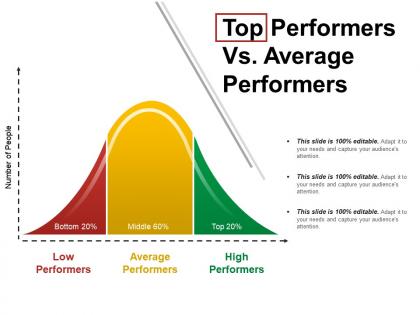
Do you want to analyze the characteristics that distinguish a high performing employee from an average performer? We are offering our intelligently designed top performers vs average performers PPT Samples design to let you do it without any hassle. Managing high, middle and low performers is very essential for any organization to successfully grow. With the support of this high performer vs. average performer PPT diagram, you can easily display characteristics of top performers that help your team members to understand and develop work strategies accordingly. You can highlight high performance employee behavior in an attractive way, so that you audience can easily work upon the required areas to achieve strategic business goals. Business managers who understand the difference will be more effective in engaging and retaining employees by identifying top performers in the business firm. So, keeping all these things in mind, download this amazing PPT diagram and use it to manage high, middle and low performers in your business firm. Generate finance for aspirations with our Top Performers Vs Average Performers Ppt Samples. Convince folks to fund the dreams.
People who downloaded this PowerPoint presentation also viewed the following :
Top performers vs average performers ppt samples with all 5 slides:
Depend on our Top Performers Vs Average Performers Ppt Samples to make the cut. They will help you plan your play.
FAQs for Top performers vs average
Honestly, the best people I work with just act like they own the place (in a good way). They spot problems before anyone else and show up with actual solutions. Building relationships across different teams is massively underrated - like, people forget how much this matters. Short version: don't wait around to be told what to do. Ask for feedback even when it's uncomfortable. Learn constantly. When you say you'll do something, actually do it. Biggest shift? Stop thinking about your tasks and start thinking about results. Game changer.
Honestly, the best people I know are kind of obsessed with learning new stuff - even when they don't have to be. Most people wait for their boss to tell them what to work on or until review season hits. But high performers? They're out there hunting for mentors and asking for harder projects because they actually enjoy getting better at things. Smart move is being strategic about it too - they don't just learn random skills. Instead of spreading yourself thin, pick the ONE thing that would totally change your game at work. Then go all-in on it. Sounds simple but most people never actually do this part.
Honestly, emotional intelligence is what separates good performers from absolute rockstars. The best people I know? They read rooms instantly and stay cool under pressure. I used to think being the smartest mattered most - totally wrong. Watch how top performers bounce back from criticism or handle office drama. They're masters at it. You don't need authority to influence people when you've got solid EQ. Next time you're stressed or someone pisses you off, just notice how you react. That awareness alone will change everything. Technical skills get you in the door, but EQ gets you promoted.
Honestly, the biggest thing I've noticed is that top performers get super specific about their goals. Like, they don't just say "get fit" - they'll map out exactly what that looks like and break it into tiny steps they can measure. They're also deadline obsessed (maybe a bit much sometimes lol). Not just for the big goal but for every little milestone too. Here's what really sets them apart though - they constantly review and tweak their approach. Most of us set goals then ignore them for months. These people are almost more focused on nailing the process than the actual end result. Just pick one goal, write down what success actually looks like, then work backwards to weekly check-ins.
Honestly, the best candidates ask really good questions about the role - that curiosity says everything. When I'm interviewing, I dig into how they've screwed up before and what they learned from it. Top performers always give you actual numbers and specifics, not just "I worked hard and succeeded" BS. Oh, and see how much they researched your company beforehand - shows they actually care. Use multiple interviewers so you don't hire someone just because they remind you of yourself. Skills matter, but I'd rather have someone who adapts well and fits the culture. Those people stick around longer anyway.
Honestly, the best people I know are crazy protective of their focused work time. Like, they'll literally block off hours for big projects and treat interruptions like emergencies. Batching similar stuff together helps too - don't jump from emails to calls to writing every five minutes. Planning the night before is huge (I forget this way too often). You wake up knowing exactly what you're tackling instead of wandering around confused. And yeah, they're way better at skipping pointless meetings than I am. Try blocking your calendar this week - even just for your hardest tasks. See what happens.
You know what I've noticed about really successful people? They're honestly kind of weird about challenges - like they get excited when stuff gets hard instead of avoiding it. Most of us (myself included) will procrastinate or overthink when things get tough. But these people just dive in and figure it out as they go. They don't sit around waiting for the perfect plan. Also, they take criticism way better than I do - they just adjust and move on instead of getting all defensive about it. Maybe try that whole "just start and fix it later" thing next time you're stuck?
Your top performers usually do great with collaboration - they can share what they know while tapping into everyone else's skills. But honestly? Average performers benefit even more. They get to learn directly from the stars and have backup when things get tough. I've watched mediocre people become solid contributors just by working with the right teammates. You can't just randomly pair people though - that rarely works. The magic happens when you're intentional about who collaborates and how. Short answer: collaboration helps everyone, but it's a game-changer for your middle-tier folks.
Your star players actually want strategic feedback - like growth opportunities and big-picture stuff, not nitpicky corrections. Regular performers need more hands-on guidance though. Structured check-ins work better for them. Honestly? We totally neglect our best people sometimes, which is dumb. High performers usually come to you asking for feedback, but you'll need to chase down average performers more. Just ask your top people what actually helps them - they'll tell you. With everyone else, be more direct until they figure out how to self-reflect better.
Look, motivation is what separates people who burn bright for six months from those who actually stay excellent long-term. The stuff that comes from inside you - genuinely caring about your work - beats external rewards every time. Sure, bonuses are nice, but they won't carry you through tough periods. Even crazy talented people hit walls or burn out if they don't have real drive behind what they're doing. You need work that matches your values and lets you actually solve problems that matter to you. Figure out what parts of your job energize you vs. what feels like total drudgery - that's your starting point.
Honestly, the best people I know are super picky about their tech. Average folks chase every shiny new app - high performers? They're brutal about only keeping stuff that actually helps their goals. Like, they'll automate boring tasks and use AI for research or rough drafts instead of grinding through everything manually. But here's the thing - they never let tech replace their brain. It's more like a power-up for skills they already have. Quick test: look at your phone right now. Are these apps actually saving you time, or just making you feel busy? Most people don't want to admit the answer.
Here's the thing - people who crush it don't take rejection personally. They're like detectives about failure, picking apart what went sideways and tweaking their game plan. Most of us? We spiral or keep making the same dumb mistakes. What's wild is how they separate their feelings from the results. Honestly, it's almost annoying how curious they get about screwing up instead of wallowing. Plus they move on crazy fast. Next time something doesn't work out, try asking "what'd I miss?" instead of feeling sorry for yourself.
Okay so here's the thing - top performers do "deliberate practice" instead of just grinding hours mindlessly. Pick one specific weakness and actually work on that exact thing daily. Most people think they'll magically improve over time (lol nope). Find someone who's crushing it in that area and bug them for feedback. I'm serious about this part - carve out 30 minutes every single day just for skill-building. Non-negotiable. Oh and don't try to fix everything at once, you'll burn out. Focus on one thing, get decent at it, then move on.
With your star players, give them room to breathe and challenging projects that'll stretch them. Skip the micromanaging - honestly, nothing kills high performers faster than hovering over their shoulders. Set clear goals and vision, then back off and let them figure out how to get there. Regular one-on-ones are huge, but focus on their growth instead of just checking boxes. Ask what roadblocks you can clear and what skills they want to build. Oh, and feedback should be about development, not just "good job on that task." These people want autonomy and innovation space, or they'll bounce to somewhere that gives it to them.
Oh man, this is such a huge thing people miss! What counts as a "star employee" changes completely depending on culture. Like in American workplaces, the person who speaks up loudly in meetings gets praised. But in more collectivist cultures? That same behavior looks arrogant - they respect the quiet person who builds consensus instead. Some places are all about speed and hitting numbers fast. Others care way more about relationships and taking time to get everyone on board. I've seen managers totally misjudge their best people because they're looking for the wrong signals. Your top performers might be the ones working behind the scenes, not the ones grabbing all the attention.
-
Enough space for editing and adding your own content.
-
Illustrative design with editable content. Exceptional value for money. Highly pleased with the product.