


Total quality management elements powerpoint presentation slides




Try Before you Buy Download Free Sample Product
 Impress Your
 Audience
 100%
100% Editable
 Save Hours
 of Time


Improve the processes, products, services, and the culture of the workplace by using our content ready Total Quality Management Elements Powerpoint Presentation Slides. Showcase the approaches to focus on continuous quality improvement with the help of this professionally designed TQM PPT slideshow. Ensure the quality standards by presenting various steps such as customer focus, planning process, process management, process improvement using quality management model PowerPoint complete deck. Showcase the planning process of total quality management by taking advantage of this professionally designed PowerPoint layout. You can also mention the stages of the continuous improvement process with the help of quality control PowerPoint graphics. Utilize the quality management PowerPoint visuals to represent determinants of product quality such as performance, durability, safety, reliability, evaluation, aesthetics, etc. Thus, download our ready to use quality control process PowerPoint presentation to ensure long term customer loyalty.
People who downloaded this PowerPoint presentation also viewed the following :
Content of this Powerpoint Presentation
Slide 1: This slide introduces Total Quality Management Elements. State your company name and begin.
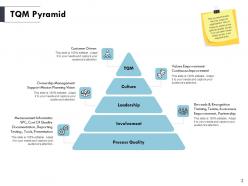
Slide 2: This slide showcases TQM Pyramid depicting Culture, Leadership, Involvement. This pyramid shows the key steps an organization has to follow to achieve the optimal quality levels. You can alter these steps as per your requirements.
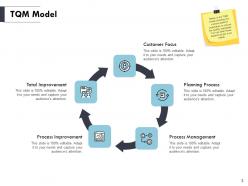
Slide 3: This slide presents TQM Model describing- Customer Focus, Planning Process, Process Management, Total Improvement and Process Improvement.
Slide 4: This slide describes Customer Focus in TQM.
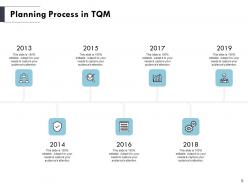
Slide 5: This slide showcases Planning Process in TQM.
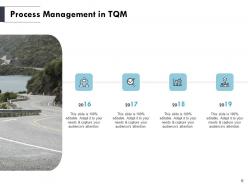
Slide 6: This slide displays Process Management in TQM.
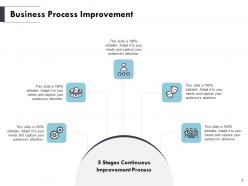
Slide 7: This slide showcases Business Process Improvement with 5 Stages of Continuous Improvement Process.
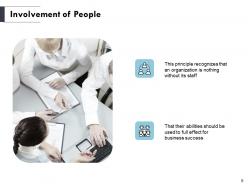
Slide 8: This slide discuss the Involvement of People.This principle recognizes that an organization is nothing without its staff, That their abilities should be used to full effect for business success
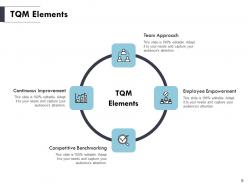
Slide 9: This slide describes TQM Elements such as- Team Approach, Employee Empowerment, Competitive Benchmarking and Continuous Improvement.
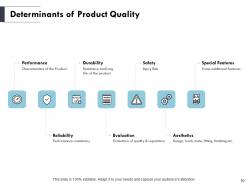
Slide 10: This slide displays the Determinants of Product Quality describing- Performance, Characteristics of the Product, Durability, Resistance and long life of the product, Safety, Injury Risk, Special Features, Some additional features, Reliability, Performance consistency, Evaluation, Evaluation of quality & reputation, Aesthetics, Design, touch, taste, fitting, finishing etc.
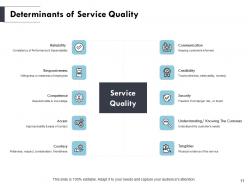
Slide 11: This slide displays the Determinants of Service Quality such as- Communication, Keeping customers informed, Credibility, Trustworthiness , believability, honesty, Security, Freedom from danger risk , or doubt, Understanding/ Knowing The Customer Understand the customer’s needs, Tangibles, Physical evidence of the service etc.
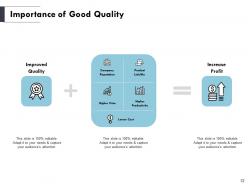
Slide 12: This slide tells about the Importance of Good Quality.
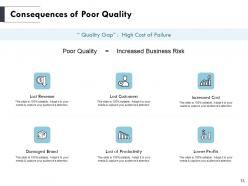
Slide 13: This slide describes the Consequences of Poor Quality such as- Lost Revenue, Lost Customers, Increased Cost, Damaged Brand Lost of Productivity etc.
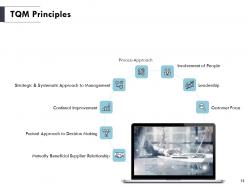
Slide 14: This slide describes TQM Principles containing- Customer Focus, Leadership, Involvement of People, Process Approach, Strategic & Systematic Approach to Management, Continual Improvement, Factual Approach to Decision Making, Mutually Beneficial Supplier Relationship etc.
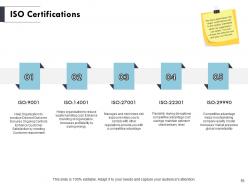
Slide 15: This slide displays ISO Certifications. We have listed down the major certifications wrt to the quality standards which an organization can attain. You can choose the relevant one and grey out the rest.
Slide 16: This is Total Quality Management Elements Icons Slide.
Slide 17: This slide is titled as Additional Slides for moving forward.
Slide 18: This is Our Mission slide. Showcase your vision, mission and goals.
Slide 19: This is About Us slide to show company specifications.
Slide 20: This is Our Team slide with names and designation.
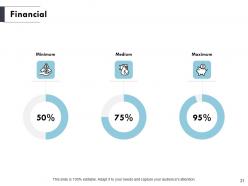
Slide 21: This is Financial slide.
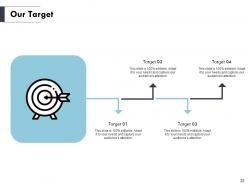
Slide 22: This is Our Target slide. Showcase your target achieved.
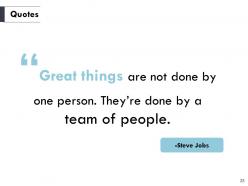
Slide 23: This is Quotes slide.
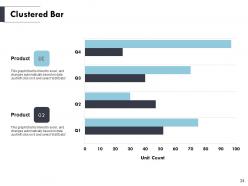
Slide 24: Thi is Clustered Bar chart with product comparison.
Slide 25: This is Thank You slide with address, contact number, Email address.
Total quality management elements powerpoint presentation slides with all 25 slides:
Put your thoughts to the council with our Total Quality Management Elements Powerpoint Presentation Slides. You will surely gain their admiration.



FAQs for Total quality management elements
**INPUT**: What are the key principles of Total Quality Management (TQM)? **OUTPUT**: Total Quality Management principles include customer focus, continuous improvement, employee involvement, process optimization, and data-driven decision making. These approaches streamline operations by enhancing quality standards, reducing defects, and fostering organizational accountability, with many manufacturing and service organizations finding that systematic TQM implementation ultimately delivers competitive advantage and sustained operational excellence.
TQM differs from traditional quality control by emphasizing prevention over detection, involving all employees rather than just inspectors, and focusing on continuous improvement across entire processes. While traditional methods inspect finished products for defects, TQM integrates quality management throughout operations, with organizations like Toyota and healthcare systems finding this approach delivers superior customer satisfaction and operational efficiency.
TQM drives continuous improvement through systematic process evaluation, employee empowerment initiatives, customer feedback integration, data-driven decision making, and cross-functional collaboration frameworks. These methodologies enable organizations to identify inefficiencies, streamline operations, and enhance product quality, with manufacturing companies and service providers finding that structured improvement cycles ultimately deliver reduced costs, faster delivery times, and sustained competitive advantage.
Leadership serves as the cornerstone of successful TQM implementation, driving cultural transformation, establishing quality vision, allocating necessary resources, and modeling continuous improvement behaviors throughout the organization. Strong leaders facilitate cross-functional collaboration, empower employee participation, and maintain long-term commitment to quality initiatives, with many organizations finding that executive involvement directly correlates with sustainable TQM outcomes and competitive advantage.
Employee involvement enhances TQM effectiveness by fostering ownership, encouraging innovative problem-solving, and creating frontline quality ambassadors who identify improvement opportunities daily. Through cross-functional teams, suggestion systems, and quality circles, organizations streamline processes, reduce defects, and accelerate continuous improvement initiatives, with many manufacturing and service companies finding that engaged employees deliver significantly higher customer satisfaction and operational efficiency.
**INPUT**: What metrics should be used to measure TQM success? **OUTPUT**: TQM success metrics include customer satisfaction scores, defect rates, process cycle times, employee engagement levels, and cost of quality measurements. These indicators work together by tracking operational efficiency, service delivery improvements, and workforce involvement, with many organizations finding that combining quantitative performance data with qualitative feedback ultimately delivers comprehensive insights into continuous improvement effectiveness and competitive positioning. [Word count: 60]
Customer feedback directly influences TQM practices by identifying improvement opportunities, validating quality standards, and driving continuous enhancement initiatives across all organizational processes. Through systematic feedback collection and analysis, companies like Toyota and Marriott streamline operations, reduce defects, and enhance service delivery, ultimately achieving higher customer satisfaction and competitive advantage in increasingly demanding markets.
Common TQM adoption challenges include resistance to cultural change, inadequate leadership commitment, insufficient employee training, lack of customer focus integration, and difficulty measuring quality improvements consistently. Organizations often struggle with breaking down departmental silos, securing long-term resource allocation, and maintaining momentum during transformation phases, with many finding that sustained executive support ultimately determines successful implementation.
TQM integrates seamlessly with Lean and Six Sigma by combining continuous improvement philosophies, data-driven decision making, and customer-focused processes. Organizations in manufacturing, healthcare, and financial services find that this strategic combination streamlines operations, reduces waste, and enhances quality control, ultimately delivering improved efficiency and competitive advantage.
A customer-focused approach in TQM is significant because it aligns all organizational processes with customer expectations, ensuring products and services consistently meet or exceed requirements. This strategic alignment enables companies to reduce defects, enhance satisfaction, and build loyalty, with many organizations finding that customer-centric TQM implementation delivers sustained competitive advantage and improved market positioning.
TQM contributes to organizational culture by fostering continuous improvement mindsets, promoting employee empowerment, and establishing customer-focused values across all departments. This approach transforms workplace dynamics by encouraging cross-functional collaboration, accountability at every level, and data-driven decision making, with many organizations finding that these cultural shifts ultimately deliver enhanced employee engagement and sustainable competitive advantage.
Essential TQM training includes quality management principles, statistical process control, problem-solving methodologies, customer service excellence, and leadership development programs. Organizations typically require dedicated quality manuals, measurement tools, cross-functional team workshops, and ongoing coaching resources, with many companies finding that comprehensive employee education and management commitment ultimately deliver sustained operational improvements and enhanced customer satisfaction.
TQM can be successfully applied to both manufacturing and service sectors through standardized processes, customer feedback systems, continuous improvement methodologies, and employee empowerment programs. While manufacturers focus on defect reduction and production efficiency, service organizations like banks and hospitals emphasize customer satisfaction metrics and service delivery optimization, ultimately enabling both sectors to enhance quality and competitive advantage.
Toyota's Production System revolutionized manufacturing through continuous improvement and employee involvement, while Motorola's Six Sigma approach reduced defects by 99.99% across operations. Companies like General Electric, 3M, and Xerox have similarly transformed their quality cultures, with many organizations finding that systematic TQM implementation delivers enhanced customer satisfaction, reduced operational costs, and sustainable competitive advantage.
Technology and data analytics support TQM initiatives by enabling real-time quality monitoring, predictive maintenance scheduling, automated defect detection, and comprehensive performance tracking across all operational processes. Through IoT sensors, machine learning algorithms, and integrated dashboards, organizations streamline quality control workflows, minimize human error, and accelerate corrective actions, ultimately delivering enhanced product consistency and operational efficiency.
No Reviews