

Transition plan deployment flowchart for transition project





Try Before you Buy Download Free Sample Product
 Impress Your
 Audience
 100%
100% Editable
 Save Hours
 of Time


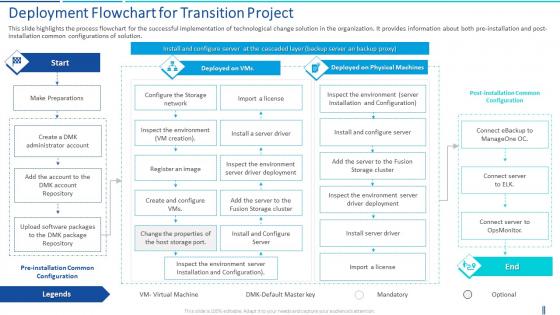
This slide highlights the process flowchart for the successful implementation of technological change solution in the organization. It provides information about both pre-installation and post installation common configurations of solution.
People who downloaded this PowerPoint presentation also viewed the following :
Transition plan deployment flowchart for transition project with all 6 slides:
Use our Transition Plan Deployment Flowchart For Transition Project to effectively help you save your valuable time. They are readymade to fit into any presentation structure.





FAQs for Transition plan deployment flowchart
Here's what I'd focus on: Get your timelines mapped out with actual deadlines, not just "soon-ish." Document everything - and I mean *everything* - because that stuff living in people's heads will disappear when they do. Set up clear handoffs so everyone knows who owns what. Communication plan's huge too, keep stakeholders in the loop. Oh, and build in checkpoints to catch problems before they explode. The documentation part sucks but you'll thank yourself later. Start this process way sooner than feels necessary - that extra time is literally the difference between looking like a pro and scrambling like crazy.
So basically you need a transition plan because otherwise everything turns into a mess. Map out who's doing what and when - think of it as your roadmap instead of just figuring it out as you go (which honestly never works out). The cool thing is you'll spot problems before they hit you. Clear ownership matters too, keeps everyone on the same timeline. Oh and your team will actually have something solid to follow when things get crazy. Start with your big milestones first, then work backwards from there.
Dude, stakeholder engagement can totally make or break your transition plan. Start early and be super transparent about what's changing and why. Leadership, frontline staff, even people you might not think of initially - they all need to be on board since they're actually doing the work. Listen to their concerns for real, don't just go through the motions. They'll catch problems you'd never see coming from wherever you're planning this thing. I learned this the hard way once! Create multiple check-ins throughout the process. Short version: get everyone involved early, keep them in the loop, and actually use their feedback.
Charts and timelines are honestly game-changers for transition plans. People zone out with walls of text, but throw in some org charts showing role changes? Suddenly everyone gets it. Color-code your phases, do some before/after comparisons - that stuff actually sticks. Plus visuals give you something to point at during presentations instead of just talking into the void. I'd make one solid visual for each major piece of your transition, then build your whole presentation around those. Progress dashboards work great too for tracking where you're at. Trust me, stakeholders will thank you for making it visual instead of another boring document.
Honestly? You're gonna deal with people hating change - that's like 90% of your headaches right there. Getting everyone on board early is huge, explain WHY you're doing this whole thing. Budget and staffing issues always come up when you least expect them. Also scope creep will absolutely destroy you if you're not careful about it. Oh and whatever timeline they gave you? Double it lol. Communication is everything - probably annoy people with how much you update them. Find a few key people who actually believe in this project because you'll need them when everything goes sideways.
Honestly, just pick one or two tools that don't suck and your team will actually use - don't go overboard with some massive tech overhaul. Set up shared dashboards so people can see what's happening without those endless "wait, where are we on X?" Slack messages (you know the ones). Automate the boring repetitive stuff, use collaboration platforms for sharing docs and knowledge transfer. Recording training sessions is clutch too - people can go back and reference them later instead of bugging you with questions. The fanciest tools aren't always the best ones. Start simple and build from there.
Track timeline stuff and how happy people are - those are your big ones. Are you hitting milestones? Check. How's the knowledge transfer going? Survey folks to see if they actually get what's happening. Honestly, I've watched so many transitions that looked perfect on paper but left everyone totally lost. Don't just tick boxes. Also keep an eye on daily operations - any hiccups there? Write down what you learn as you go, not at the end. Weekly check-ins work way better than waiting until it's over to figure out what went wrong.
Look, communication will absolutely make or break your transition - I can't stress this enough. When people know what's happening and when, they actually want to help. But leave them in the dark? You're screwed. I've watched perfectly good plans fall apart because someone forgot to tell the finance team about new deadlines (classic mistake). Start early and figure out who needs what info when. Then actually stick to it! Don't wait for people to come asking questions - that's already too late. Map it out, stay ahead of it.
Honestly, I'd go with Asana or Monday.com for the main project stuff. Gantt charts are kind of my thing - they just make timelines so much clearer than anything else. Also grab a basic spreadsheet for tracking handover details (boring but works). Document templates help a ton for knowledge transfer, plus you'll want some kind of RACI chart to map out who's doing what. Communication plan template too. But seriously, don't get crazy with fancy tools if your team won't use them. I learned that the hard way once. Start simple with timelines, responsibilities, and key milestones, then add more later.
Check it every quarter for sure. But honestly? When big stuff changes - new leadership, market shifts, whatever - just update it right away. Don't wait around. Set up calendar reminders or you'll totally forget (speaking from experience here). Make someone actually own this process too, otherwise it becomes one of those things everyone says they'll do "next week." Your plan's worthless if it doesn't match what's actually happening. Life moves fast and your transition plan should keep up. Think of it more like a Google doc you're constantly tweaking, not some dusty binder.
So corporate transitions are way more cut-and-dry - you've got clear hierarchies and succession plans focused on keeping shareholders happy. Nonprofits though? Total chaos. Boards, donors, volunteers all have opinions, plus the mission stuff makes every relationship crucial. Money solves most corporate problems, but nonprofits need creative workarounds since budgets are always tight. Honestly, consensus-building in nonprofits takes forever, so plan for longer timelines. Oh, and document those donor relationships ASAP - that's the hardest part to hand off, even harder than the actual day-to-day work.
Don't just ask for feedback at the very end - that's way too late. Check in regularly with your team, like every week or two. Anonymous surveys are honestly your best friend here since people won't always speak up directly. I've watched so many transitions crash because leadership ignored early warning signs. Maybe set up a Slack channel or send quick pulse surveys asking what's broken and what's actually working. Oh, and here's the thing - you've got to act on what they tell you and loop back about the changes you made. Otherwise people stop caring.
Get people involved from day one and be crazy transparent about what's happening. Communicate way more than you think you need to - seriously, people will assume the worst if they don't hear from you. Listen to their concerns and actually do something about them instead of brushing them off. Find your office influencers and win them over first since they'll help convince everyone else. Oh, and training is critical because most resistance comes from people being scared they won't know how to do their jobs anymore. I'd start by figuring out who's gonna fight you the hardest and have those tough conversations early.
Honestly, good documentation is like leaving breadcrumbs for future-you. When the next big change rolls around, you'll have this ready-made playbook showing exactly what worked and what was a total disaster. Way better than sitting in a meeting six months later trying to reconstruct why you made certain decisions, you know? New people can actually understand the context too instead of just inheriting random processes. Oh, and capture those lessons while they're still fresh in everyone's mind - trust me on this one. Write it like you're explaining to someone who knows nothing about the situation.
Honestly, Microsoft nailed it when Satya Nadella took over - they planned that whole thing like 18 months out. Apple's transition was more of a scramble, but whatever. Healthcare orgs switching medical directors and government handoffs are solid examples too. Here's what actually works: map out your critical stuff NOW, not when someone drops their resignation. Figure out who knows what, document everything important. I've seen too many places get burned because they waited until the last minute. Start early, identify your key people, and create decent handover docs. Change happens whether you're ready or not.
-
Wonderful templates design to use in business meetings.
-
Awesome use of colors and designs in product templates.