Transition plan key milestones of transition project
Try Before you Buy Download Free Sample Product
Audience
Editable
of Time
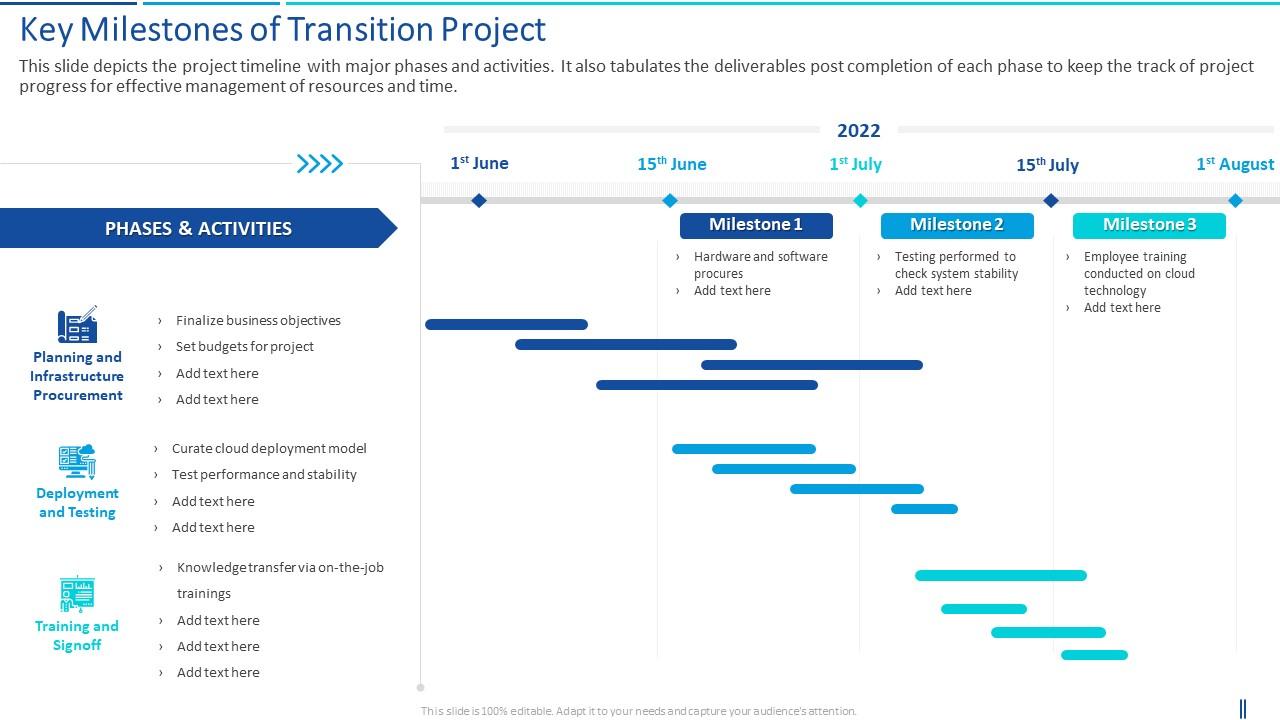
This slide depicts the project timeline with major phases and activities. It also tabulates the deliverables post completion of each phase to keep the track of project progress for effective management of resources and time.
People who downloaded this PowerPoint presentation also viewed the following :
Transition plan key milestones of transition project with all 6 slides:
Use our Transition Plan Key Milestones Of Transition Project to effectively help you save your valuable time. They are readymade to fit into any presentation structure.
FAQs for Transition plan key milestones
Honestly, start by brain-dumping everything that needs to happen, then work backwards from your deadline. You need clear timelines and who owns what - that's non-negotiable. Map out all the handovers and documentation stuff early, plus figure out your stakeholder communication plan. Buffer time is your best friend here, trust me. Always think through the "what could go wrong" scenarios because they WILL happen when you least expect it. Oh, and don't forget to set some success metrics so you actually know if this whole thing is working. Have backup plans ready too - saves your sanity later.
Honestly, regular check-ins are your lifeline here. Weekly updates if things are moving fast, monthly if you've got more breathing room. Map out who needs what info and when - then actually follow through (this is where most people drop the ball). Mix it up with emails, quick meetings, maybe throw together a dashboard they can peek at. Here's the thing though: beat them to the punch. Share your wins AND your problems before they start hunting you down with questions. Oh, and make it stupid easy for them to give feedback or flag issues. Trust me, you'll thank yourself later.
You should track the obvious stuff first - timeline, budget, stakeholder happiness scores. Knowledge transfer rates matter too, like how many processes got documented and actually validated by whoever's taking over. Timeline adherence is probably your biggest indicator honestly. Risk mitigation progress is key during those messy transition phases. Oh, and count any critical incidents - those tell you a lot. The documentation piece always stresses me out more than it should. Set your benchmarks right at the start so there's no confusion later. Don't wait until you're halfway done to start measuring this stuff.
Honestly, communication planning can make or break your whole transition. Map out who needs what info and when - trust me on this one. I've watched projects completely implode because people heard about changes through office gossip instead of proper channels. Awkward doesn't even begin to cover it. Figure out all your stakeholder groups first, then customize your messaging for each. Set up regular check-ins and feedback loops. You'll want clear escalation paths too, so when things go sideways (and they will), everyone knows exactly what to do next.
Honestly, the two big killers are bad communication and crazy deadlines. People freak out when they don't know what's going on, so I'd rather annoy everyone with too many updates than leave them guessing. Buffer time is your best friend - seriously, everything takes longer than you think, especially when teams have to wait on each other. Oh, and make sure someone actually owns each piece. I've seen projects where everyone assumes someone else is handling the critical stuff. Set up regular check-ins from day one. Trust me on this.
Look, I'd start with project management stuff like Asana or Monday - keeps everyone on the same page without constant check-ins. Automate the boring repetitive tasks that always slow things down. Yeah, you'll get hit with notification spam initially, but you get used to it. Cloud storage is a lifesaver so people aren't working off old versions of documents. Oh, and those dashboard things actually help you catch problems early. My advice? Don't go crazy installing everything at once. Figure out what's driving you nuts about your transition process, then grab tools that fix those specific headaches first.
Honestly, you need that timeline or your whole transition will just drag on forever. I've watched projects that should've taken 3 months turn into 9 because nobody set actual deadlines. People lose steam fast without firm dates. Plus it forces everyone to figure out priorities instead of just letting tasks pile up. You'll catch problems way earlier too - like when week 2 hits and you're already behind schedule. That's way better than realizing you're screwed at the end. Just add buffer time though, something always goes sideways.
Dude, first thing - get crystal clear on who owns what from the start. No fuzzy responsibilities. Pick one person to run the whole transition, then break everything into chunks with different leads handling systems, comms, processes, whatever. Trust me, I've watched these things implode because everyone thinks someone else has the boring details covered. Document who can actually make decisions too - like who approves changes or escalates when shit hits the fan. A basic RACI chart helps so people know if they're doing the work, accountable for results, or just getting updates.
Honestly, start with role-specific stuff first - get people comfortable with their new responsibilities before anything else. Then hit communication training hard because your team will get bombarded with questions during the transition. The tech training always takes forever (seriously, budget way more time than you think). Also throw in some change management support - transitions are stressful and people get weird about it. Regular check-ins help tons, plus make those quick reference guides actually useful, not just pretty. Oh, and start early! You can't cram this stuff last minute.
Build feedback checkpoints right into your milestone schedule - pause after each big phase to get input from stakeholders and your actual team. I do quick 30-minute sessions because honestly, who has time for those endless meetings? Ask specific stuff: what's working, what's broken, what needs tweaking before moving ahead. Short sentences work better for this. Document what you hear and actually update your plan based on the feedback (shocking concept, I know). Oh, and schedule your first session now even if you just started the transition. Don't wait until something's already going sideways.
Dude, pad your budget by like 20-30% right off the bat. These things ALWAYS cost more than you think. Figure out what's absolutely critical first and throw your money there, then work backwards from launch day. Honestly learned this the hard way last time around. Get your team capacity mapped out early, plus any vendor stuff. Oh and don't forget training costs - that always gets overlooked. Build in buffer time too because something's gonna break, guaranteed. I'd track spending weekly so you can pivot fast if needed. Testing and rollback scenarios cost money too btw.
Start with getting everyone together to brainstorm what could go sideways at each milestone - tech failures, budget issues, key people bailing, whatever. Write it all down in a risk register and rate how likely/bad each thing would be. High-priority stuff needs actual plans and someone responsible for it. Honestly, something random always happens that you didn't see coming! So pad your timeline with extra time and have backup plans ready. Oh, and don't just do this once - revisit monthly because risks shift as you move through the project.
Change management is your roadmap for getting people to actually embrace the transition instead of fighting it. Start by figuring out who's gonna push back hardest, then communicate the hell out of WHY you're making changes. I've watched so many good plans crash because leaders thought everyone would just go along with it - spoiler alert: they won't. Map out your stakeholders early and build in regular check-ins. Your milestones need change management checkpoints, not just the technical stuff. Oh, and feedback loops are clutch for catching problems before they blow up.
Start by listing your company's top 3-5 goals, then work backwards from there. Each milestone has to actually support something bigger - better efficiency, cost cuts, whatever matters most to leadership. I've watched so many transition plans just... exist without connecting to anything real. Get the higher-ups on board early (trust me on this one). Set up regular check-ins to see how you're tracking. The timeline needs to match their priorities, not yours. Think of it like connecting dots - every single milestone should clearly drive those bigger outcomes you're after.
Honestly, just block out time at 30, 60, and 90 days to actually check how things are going. Survey your team and users - are you hitting those original goals? What's their experience been like? Compare your metrics to where you started and write down the weird stuff that comes up (there's always weird stuff). The key is creating those feedback loops so you can pivot fast when needed. Oh, and assign someone to own this whole process - otherwise it'll just get pushed off forever. Set those calendar reminders now while you're thinking about it.
-
Perfect template with attractive color combination.
-
Out of the box and creative design.