

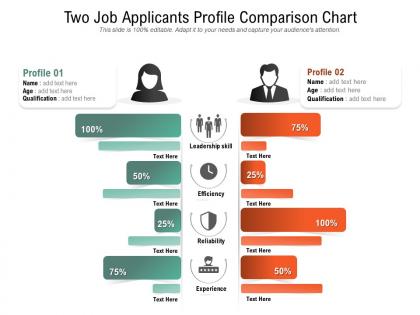
Two job applicants profile comparison chart




Try Before you Buy Download Free Sample Product
 Impress Your
 Audience
 100%
100% Editable
 Save Hours
 of Time


Our Two Job Applicants Profile Comparison Chart are explicit and effective. They combine clarity and concise expression.
People who downloaded this PowerPoint presentation also viewed the following :
Two job applicants profile comparison chart with all 2 slides:
Give your audience a fulfilling experience. They will find our Two Job Applicants Profile Comparison Chart elevating.
FAQs for Two job applicants
Look at three things: can they actually do the job, will they fit with your team, and do they want to grow? Check their technical skills first - that's the easy part. Cultural fit is way trickier but honestly just as important. You don't want someone who's gonna clash with everyone. Also see if they're eager to learn new stuff or just coasting. Oh, and make a little scoring system for each area so you're not just going with your gut every time. Trust me, it'll save you when your boss asks why you picked someone. Makes the whole thing less of a guessing game.
Honestly, they're pretty helpful when you've got multiple people who look great on paper but you can't tell them apart. You get insight into how they handle stress or work with others - stuff resumes don't show. I've found them most useful for seeing problem-solving styles, which matters way more than people think. Just don't make it your only deciding factor, you know? Use ones that actually connect to what they'll be doing day-to-day. And definitely give the same assessment to everyone so you're not comparing random things. They're just another tool in the toolbox really.
Yeah, cultural fit matters a ton when you're picking between candidates. Don't make it about hiring people exactly like you though - that's how teams get boring and miss out on good ideas. Ask questions about how they handle teamwork and solve problems. You're trying to figure out if their work style meshes with your team's vibe. Will they actually contribute something valuable to group projects? Some people are brilliant but just clash with certain environments. Focus on whether they'll do well in *your* specific setup rather than some generic "culture match."
Honestly, just pick stuff you can actually measure that shows they'll be good at the job. Look at years doing similar work, certifications that matter, concrete wins like "boosted sales 30%" or "led 15 people." Education's fine but skills tests usually tell you way more about what they can really do. Portfolio work, how they solve problems, project results - that kind of thing. Pick maybe 3-4 metrics and use them for everyone so you're not just going off vibes. Way better than the whole "they seem nice" approach most people use.
Before you start looking at applications, figure out your evaluation criteria first. Structure interviews so everyone gets asked the same questions. Score people on specific skills, not just vibes - our brains are terrible at this stuff and make unfair snap judgments all the time. Try removing names and photos during initial reviews if you can. Get multiple people to evaluate candidates separately, then compare what you found. Honestly, the whole point is creating consistency so you're not just picking people based on random preferences. Otherwise you'll end up with a mess.
Dude, get an ATS if you can swing it - Greenhouse and Lever are solid choices. They'll let you score candidates against the same criteria and actually compare apples to apples. Workday's good too but probably overkill unless you're hiring tons of people. HireVue does video screening comparisons which is pretty neat. Honestly though, even Typeform works for basic candidate assessments if you're on a tight budget. Just build some kind of standardized scorecard system - doesn't matter what tool you use. Trust me, anything beats those messy spreadsheets you're probably using now.
Honestly, cultural fit and growth mindset beat technical skills every time. I've watched so many "perfect" candidates completely flame out because they couldn't handle feedback or just didn't vibe with the team. Communication matters too - everyone's gotta collaborate somehow. When you're interviewing, ask about setbacks they've faced and times they learned something totally new. Skip the rehearsed stuff. Their answers will show you if they're actually resilient or just good at talking. Oh, and defensive people during interviews? Red flag. You want someone who genuinely wants to grow, not just collect a paycheck.
Honestly, soft skills matter way more than people think. Two candidates with identical tech skills? You'll always pick the one who doesn't make meetings awkward and can actually explain their work without being condescending. I've watched hiring managers reject clearly smarter candidates just because they were impossible to work with - happens all the time. Long-term success really comes down to how well someone fits with the team since you can't exactly teach someone to not be a jerk. When you're interviewing, dig into those behavioral questions. How they talk about past coworkers tells you everything.
Honestly, structured interviews are a game-changer for hiring. Everyone gets asked identical questions in the same order, which cuts down on bias big time. You know how interviews can spiral into random conversations about weekend hobbies or whatever? This prevents that. What's cool is you can score answers objectively instead of going with your gut - though I'll admit gut feelings aren't always wrong. If someone questions your hiring choice later, you've got documentation to back it up. Short version: make your question list and scoring system before you start interviewing people.
Work samples are honestly your go-to here. Way better than trying to decode resume fluff. I'd set up some basic scoring criteria first - technical skills, creativity, attention to detail, whatever actually matters for the job. Multiple people should review the same portfolios so you're not just going off one person's opinion (learned that one the hard way). Look for progression in their work too. Shows they're actually growing. The whole thing works better when you're systematic about it rather than just winging it with gut feelings. Makes comparing candidates so much easier.
References are seriously game-changing - sometimes more valuable than the actual interview. You get the real deal on how someone works when they're not putting on their interview face. I've watched stellar candidates tank after we called their old boss and got a lukewarm response. It's wild how much you can uncover. Skip the basic "would you hire them again" questions though. Dig deeper with specific scenarios - that's where you find out if they actually deliver under pressure or just talk a good game. Trust me, it's worth the extra effort.
Dude, adaptability is huge - probably top 3 for me when I'm looking at candidates. I've watched some crazy smart people totally crash and burn because they couldn't handle when we switched systems or priorities changed overnight. It's wild how that happens. Look for real examples of them dealing with curveballs or picking up new skills fast. Don't just take their word for it though - dig deeper with follow-ups. The person who can genuinely roll with changes will crush it compared to someone who looks perfect but can't bend when things get messy.
Honestly, it totally depends on what field you're in. Tech companies? They care way more about what you can actually build - I've seen coding bootcamp people get hired over computer science grads constantly. But if you're looking at finance, law, medical stuff, that fancy degree still matters a lot. You gotta know your industry first. Creative jobs focus more on your actual work and experience. Consulting firms though... ugh, they're still obsessed with which school you went to. It's kind of ridiculous but whatever. Just look at everything about the person, but yeah, definitely consider how much your specific area cares about formal education versus real-world skills.
Build this stuff right into your hiring process from day one. Structured interviews work best - same questions for everyone so you're actually comparing fairly. Get diverse people on your interview panels too. Honestly, ditch the whole "culture fit" thing - it's just code for bias half the time. Focus on actual skills instead. Your job descriptions should sound welcoming, and yeah, post them beyond the usual spots. Oh, and make everything consistent. That's really what gives people a fair chance to show what they've got. Short answer: fair processes = better hires.
Set up a rubric first - same questions and scoring for everyone. Trust me, the "gut feeling" approach is trash and lets way too much bias slip in. Get multiple people evaluating each candidate independently, then have them compare notes after. Oh, and if you can swing it, remove names/photos from resumes during the first screening round. The key thing? Actually stick to whatever process you create. I've seen so many teams make great systems then abandon them halfway through because someone had a "really good feeling" about a candidate. Document everything and don't get lazy about following your own rules.
No Reviews