

Unlocking The Impact Of Technology On Business Powerpoint Presentation Slides




Try Before you Buy Download Free Sample Product
 Impress Your
 Audience
 100%
100% Editable
 Save Hours
 of Time


Technology has had both positive and harmful consequences on society. Even though technology has made it simpler to communicate with others, obtain information, and provide better medical care. Introducing our insightfully developed PowerPoint presentation, Unlocking The Impact of Technology on Business, which covers different technological applications to develop new products and services. Additionally, our IT Services PPT includes applications that help to overcome gap analysis caused due to human errors and technical discrepancies. It also showcases the latest trends related to technology development in businesses. Moreover, this Augmented Reality deck portrays that businesses need to embrace and adjust to technology changes if they want to survive and grow in the digital age. Lastly, our Information System module covers a few dashboards that assist the company in tracking and measuring technological development in businesses. Download our 100 percent editable and customizable presentation which is also compatible with Google Slides.
People who downloaded this PowerPoint presentation also viewed the following :
Content of this Powerpoint Presentation
Slide 1: This slide introduces Unlocking The Impact of Technology on Business. State Your Company Name and begin.
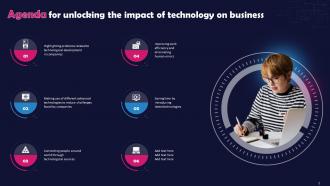
Slide 2: This slide is an Agenda slide. State your agendas here.
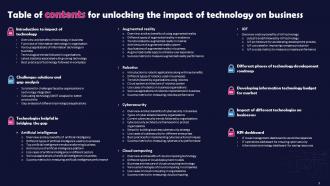
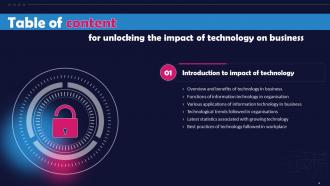
Slide 3: This slide shows a Table of Contents for the presentation.
Slide 4: This slide is an introductory slide.
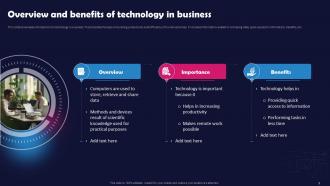
Slide 5: This slide showcases introduction to technology in business.
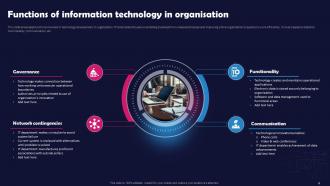
Slide 6: This slide shows functions involved in technology development in organisation.
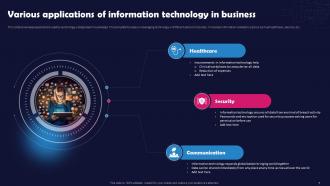
Slide 7: This slide illustrates applications used by technology widespread in businesses.
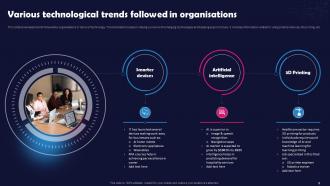
Slide 8: This slide portrays trends followed by organisations in terms of technology.
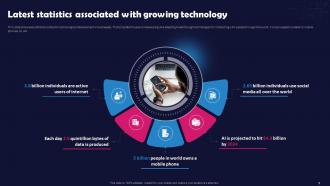
Slide 9: This slide entails statistics related to technological development in businesses.
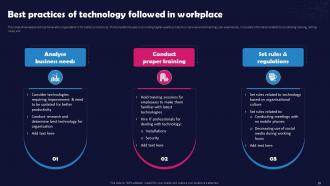
Slide 10: This slide focuses on practices followed in organisation’s for better productivity.
Slide 11: This slide is an introductory slide.
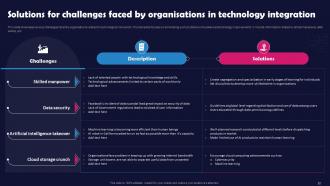
Slide 12: This slide showcases various challenges faced by organisations related to technological innovation.
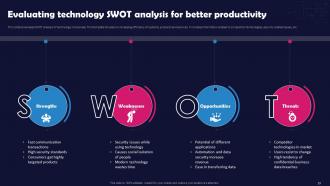
Slide 13: This slide highlights SWOT analysis of technology in business.
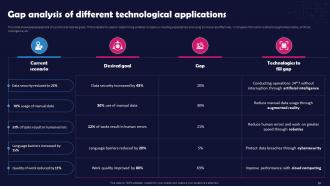
Slide 14: This slide showcases assessment of current and desired goals.
Slide 15: This slide is an introductory slide.
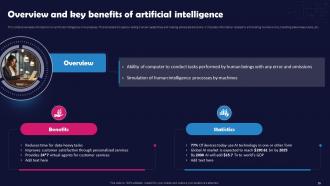
Slide 16: This slide illustrates introduction to artificial intelligence in businesses.
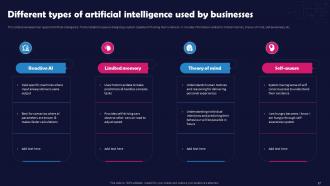
Slide 17: This slide entails main types of artificial intelligence.
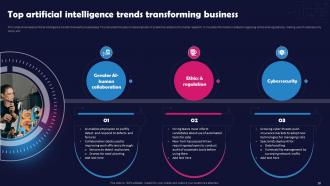
Slide 18: This slide portrays artificial intelligence trends followed by businesses.
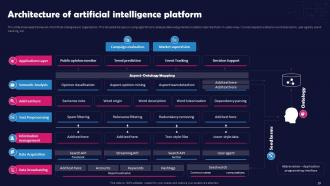
Slide 19: This slide showcases framework of artificial intelligence in organisation.
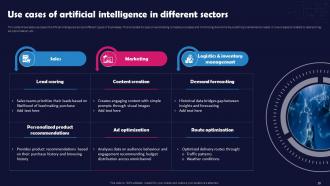
Slide 20: This slide shows use cases of artificial intelligence across different types of businesses.
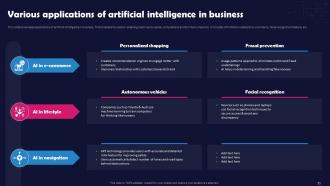
Slide 21: This slide caters to the applications of artificial intelligence n business.
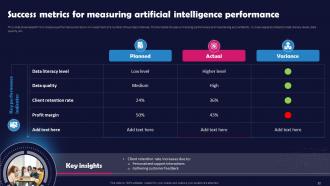
Slide 22: This slide contains KPI’s to measure performance and return on investment of a number of business initiatives.
Slide 23: This slide is an introductory slide.
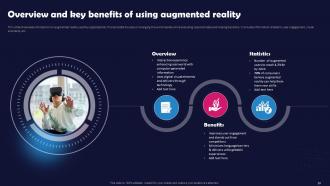
Slide 24: This slide showcases introduction to augmented reality used by organisations.
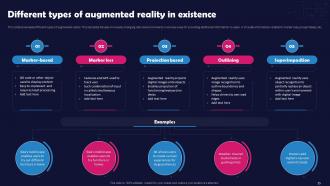
Slide 25: This slide illustrates different types of augmented reality.
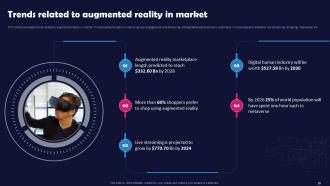
Slide 26: This slide entails trends related to augmented reality in market.
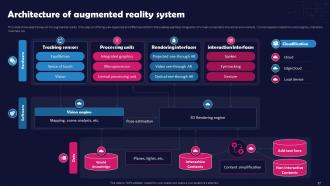
Slide 27: This slide focuses on the framework for augmented reality.
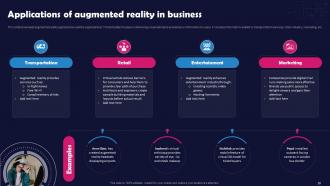
Slide 28: This slide portrays augmented reality applications used by organisations.
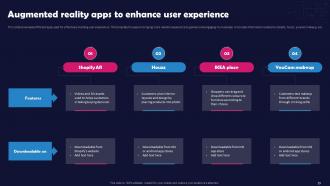
Slide 29: This slide showcases different apps used for effectively building user experience.
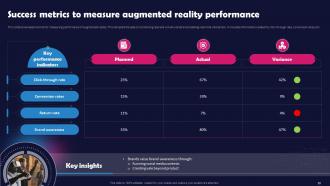
Slide 30: This slide entails metrics for measuring performance of augmented reality.
Slide 31: This slide is an introductory slide.
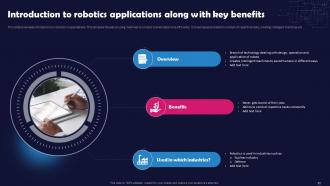
Slide 32: This slide presents introduction to robotics in organisations.
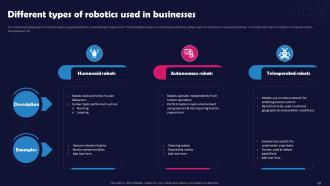
Slide 33: This slide represents types of robotics used by organisations for e=eliminating human errors.
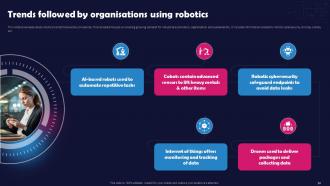
Slide 34: This slide showcases latest robotics trends followed by companies.
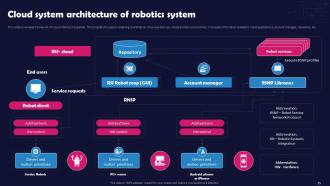
Slide 35: This slide focuses framework of cloud robotics in business.
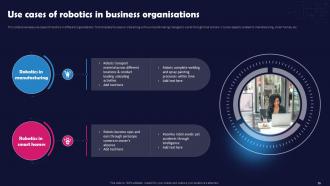
Slide 36: This slide entails use cases of robotics in different organisations.
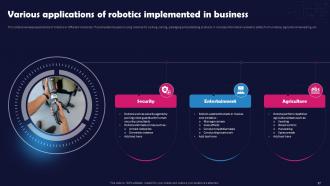
Slide 37: This slide represents applications of robotics in different industries.
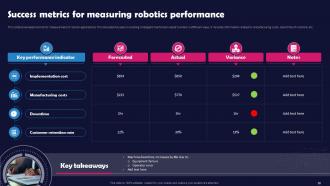
Slide 38: This slide entails metrics for measurement of robotic applications.
Slide 39: This slide is an introductory slide.
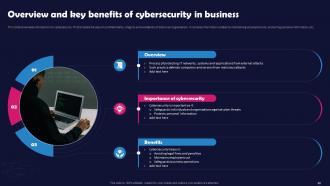
Slide 40: This slide illustrates introduction to cybersecurity.
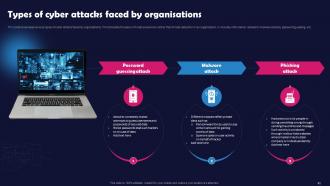
Slide 41: This slide highlights various types of cyber attacks faced by organisations.
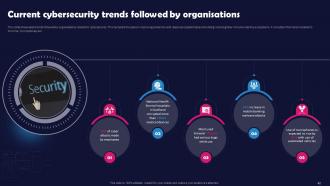
Slide 42: This slide showcases trends followed by organisations related to cybersecurity.
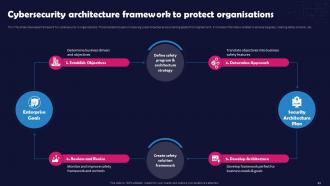
Slide 43: This slide illustrates framework for cybersecurity in organisations.
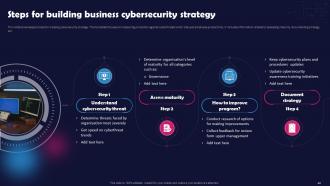
Slide 44: This slide portrays the process for creating cybersecurity strategy.
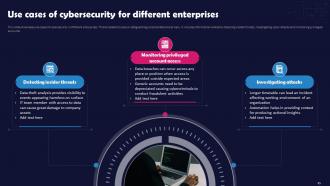
Slide 45: This slide showcases use cases of cybersecurity in different enterprises.
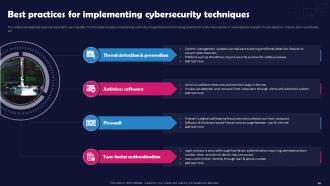
Slide 46: This slide shows best practices required for securing data.
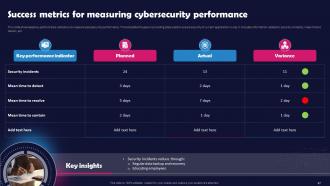
Slide 47: This slide pertains to key performance indicators to measure cybersecurity performance.
Slide 48: This slide is an introductory slide.
Slide 49: This slide showcases introduction to cloud computing.
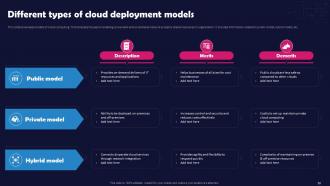
Slide 50: This slide shows models of cloud computing.
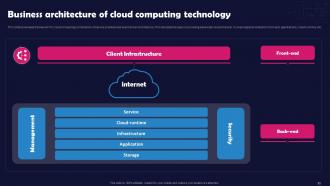
Slide 51: This slide puts framework for cloud computing combination of service oriented and event driven architecture.
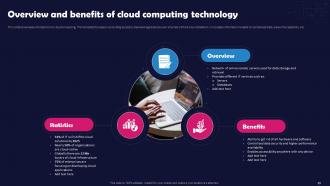
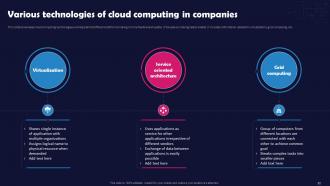
Slide 52: This slide focuses on the cloud computing technologies working behind different platforms making it more flexible and usable.
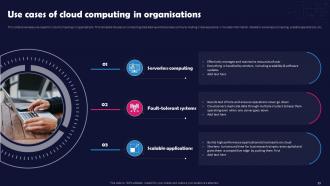
Slide 53: This slide entails the use cases for cloud computing in organizations.
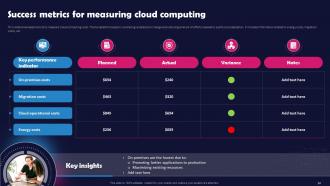
Slide 54: This slide illustrates metrics to measure cloud computing costs.
Slide 55: This slide is an introductory slide.
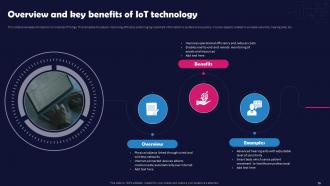
Slide 56: This slide showcases introduction to internet of things.
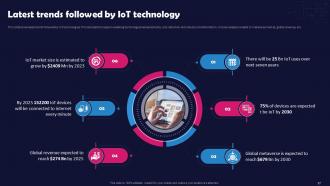
Slide 57: This slide entails the trends followed by IoT technologies.
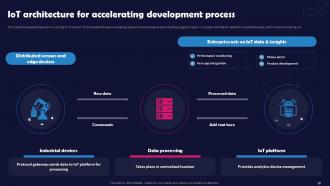
Slide 58: This slide puts the framework for working of IoT system.
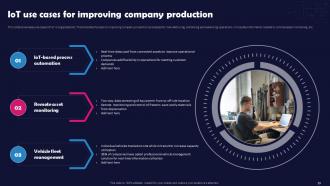
Slide 59: This slide illustrates use cases of IoT in organisations.
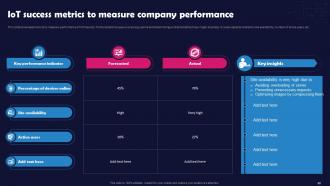
Slide 60: This slide highlights metrics to measure performance of IoT devices.
Slide 61: This slide is an introductory slide.
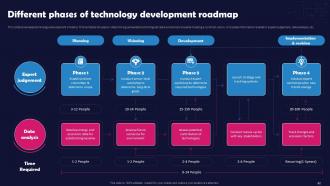
Slide 62: This slide pertains to the technology development timeline.
Slide 63: This slide is an introductory slide.
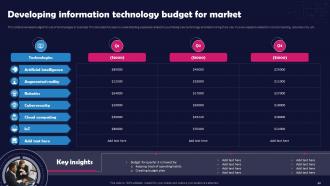
Slide 64: This slide showcases budget for use of technologies in business.
Slide 65: This slide is an introductory slide.
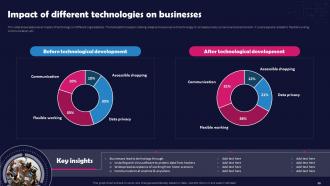
Slide 66: This slide represents overall impact of technology on different organisations.
Slide 67: This slide is an introductory slide.
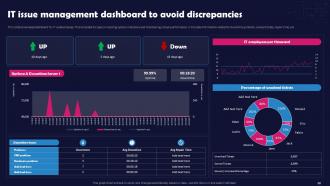
Slide 68: This slide puts the dashboard for IT related issues.
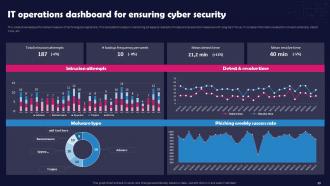
Slide 69: This slide introduces performance measure of technological operations.
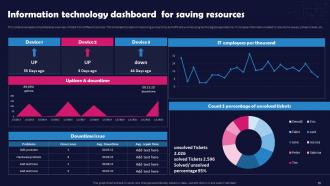
Slide 70: This slide showcases comprehensive overview of data from different sources.
Slide 71: This slide shows all the icons included in the presentation.
Slide 72: This slide is titled Additional Slides for moving forward.
Slide 73: This slide is an About Us slide to show company specifications etc.
Slide 74: This slide is Our Mission slide with related imagery and text.
Slide 75: This slide is Our Team slide with names and designations.
Slide 76: This slide contains a Puzzle with related icons and text.
Slide 77: This slide is an Idea Generation slide to state a new idea or highlight information, specifications, etc.
Slide 78: This slide depicts a Venn diagram with text boxes.
Slide 79: This slide showcases Magnifying Glass to highlight information, specifications, etc.
Slide 80: This slide is a thank-you slide with address, contact numbers, and email address.
Unlocking The Impact Of Technology On Business Powerpoint Presentation Slides with all 88 slides:
Use our Unlocking The Impact Of Technology On Business Powerpoint Presentation Slides to effectively help you save your valuable time. They are readymade to fit into any presentation structure.









FAQs for Unlocking The Impact Of Technology On Business
Artificial intelligence, cloud computing, automation, IoT, and blockchain are revolutionizing business operations through enhanced data analytics, scalable infrastructure, and streamlined processes. These technologies enable organizations to optimize resource allocation, improve customer experiences, and accelerate decision-making, with many companies finding that strategic integration delivers significant competitive advantages and operational efficiency.
Businesses can effectively integrate artificial intelligence by automating repetitive tasks, implementing predictive analytics, enhancing customer service through chatbots, and optimizing supply chain operations. Through strategic AI deployment, companies streamline workflows, reduce operational costs, and accelerate decision-making processes, with many organizations finding that AI integration delivers significant competitive advantages and improved customer experiences.
Cloud computing enables remote work by providing scalable access to applications, data storage, video conferencing platforms, project management tools, and collaborative software from any location. Through cloud infrastructure, organizations streamline communication, enhance file sharing, and maintain operational efficiency across distributed teams, while reducing IT costs and infrastructure overhead, ultimately delivering seamless connectivity and competitive advantage in an increasingly flexible work environment.
Small businesses can leverage technology to compete with larger enterprises by utilizing cloud computing, automation tools, digital marketing platforms, data analytics, and customer relationship management systems. These technologies enable smaller companies to streamline operations, reduce costs, and deliver personalized customer experiences previously available only to large corporations, with many finding that strategic technology adoption levels the competitive playing field significantly.
Companies should prioritize data privacy, transparency in algorithmic decision-making, consent management, bias prevention, and secure storage protocols when implementing big data analytics. These ethical frameworks enable organizations to build customer trust, ensure regulatory compliance, and maintain competitive advantage, with many financial services and healthcare institutions finding that proactive ethical practices ultimately deliver sustainable growth and enhanced stakeholder relationships.
Cybersecurity threats significantly reshape business strategies by forcing organizations to prioritize data protection, invest in robust security infrastructure, and implement comprehensive risk management frameworks. Companies across sectors like banking, healthcare, and retail are increasingly integrating security-first approaches into their digital transformation initiatives, ultimately delivering enhanced customer trust and competitive advantage.
CRM systems are crucial for driving sales by centralizing customer data, tracking interactions throughout the sales funnel, and enabling personalized outreach strategies. These platforms streamline lead management, automate follow-up processes, and provide analytics that help sales teams identify opportunities, with many organizations finding that integrated CRM approaches ultimately deliver higher conversion rates and stronger customer retention.
Automation streamlines processes by eliminating manual tasks, reducing human error, accelerating workflow cycles, and enabling 24/7 operations across departments. Through robotic process automation and AI-driven systems, organizations in manufacturing, finance, and healthcare significantly minimize labor costs, enhance accuracy, and deliver faster customer services, ultimately achieving competitive operational efficiency.
Mobile apps significantly enhance customer engagement and loyalty by providing personalized experiences, push notifications, loyalty programs, seamless transactions, and 24/7 accessibility. Through features like in-app messaging and data analytics, businesses across retail, banking, and hospitality sectors deliver targeted content, streamlined services, and instant support, ultimately building stronger customer relationships and competitive advantage.
Social media significantly influences brand perception by enabling real-time customer feedback, viral content sharing, and direct brand-consumer interactions that shape public opinion instantly. This dynamic environment compels businesses to adopt agile marketing strategies, with companies in retail, hospitality, and consumer goods finding that authentic engagement, responsive customer service, and targeted content creation ultimately deliver enhanced brand loyalty and competitive market positioning.
**INPUT**: What emerging technologies should businesses monitor for potential disruption? **OUTPUT**: Businesses should monitor artificial intelligence, quantum computing, blockchain, augmented reality, and Internet of Things for potential disruption across industries. These technologies streamline operations, enhance customer experiences, and create competitive advantages, with financial services, healthcare, and retail finding that early adoption delivers cost reduction, faster services, and strategic market positioning. **Word count: 54 words**
Businesses measure technology ROI by tracking key metrics like cost savings, productivity gains, revenue increases, and operational efficiency improvements before and after implementation. Through comprehensive analytics platforms, organizations can quantify benefits such as reduced processing times, lower labor costs, and enhanced customer satisfaction, with many finding that systematic measurement approaches deliver clearer strategic insights and justify future technology investments.
E-commerce fundamentally transforms retail by enabling omnichannel experiences, direct-to-consumer sales, data-driven personalization, global market reach, and reduced overhead costs. Traditional retailers increasingly integrate online platforms with physical stores, leveraging technologies like inventory management systems and customer analytics to streamline operations, enhance customer experiences, and maintain competitive advantage in today's digital marketplace.
Businesses can leverage technology to enhance employee training through learning management systems, virtual reality simulations, AI-powered personalized learning paths, mobile learning platforms, and interactive video content. These solutions streamline training delivery, reduce costs, and improve knowledge retention, with companies like Walmart and UPS finding that immersive VR training significantly accelerates skill development while delivering measurable performance improvements.
Businesses face adoption challenges including employee resistance, integration complexities, budget constraints, cybersecurity concerns, and inadequate training programs. Organizations overcome these through strategic change management, phased implementation approaches, and comprehensive staff development, with many companies finding that early stakeholder engagement, robust security protocols, and dedicated training initiatives ultimately deliver smoother transitions and sustained competitive advantage.
-
Their professional templates are very impressive, even my manager was curious about the source. I am very grateful.
-
Spacious slides, just right to include text. SlideTeam has also helped us focus on the most important points that need to be highlighted for our clients.