

Value Chain Analysis Process Steps And Approaches Powerpoint Presentation Slides




Try Before you Buy Download Free Sample Product
 Impress Your
 Audience
 100%
100% Editable
 Save Hours
 of Time


Follow Value Chain Analysis Process Steps And Approaches to generate the superior value for your customers. Every now and then, a firm has to conduct a value chain analysis to find primary and support activities which add value to their products. Use value chain analysis process steps and approaches PPT presentation to find ways to reduce costs or increase differentiation. This ready-to-use value chain analysis PPT example includes topics such as value chain analysis framework, primary activities, support activities, competitive advantage type, cost and differentiation advantage, 3 step value chain analysis process, and more. Incorporate Porter’s value chain framework to explain how business receives raw materials and adds value to them through various processes to bring out the best final product for the consumers. Make this extensive process simple and easy with value chain analysis process steps and procedures. Download content-ready value chain analysis process steps and approaches presentation to maximize the value for the customers. Create a firm employee base with our Value Chain Analysis Process Steps And Approaches Powerpoint Presentation Slides. Make them feel like a big family.
People who downloaded this PowerPoint presentation also viewed the following :
Content of this Powerpoint Presentation
Slide 1: This slide introduces Value Chain Analysis Process Steps And Approaches. Present your company name here and get started.
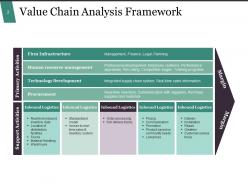
Slide 2: This slide showcases Value Chain Analysis Framework. Use it as per your requirment.
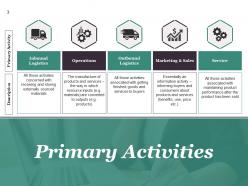
Slide 3: This slide showcases Primary Activities. These are as follows- Service, Operations, Inbound Logistics, Outbound Logistics, Marketing & Sales.
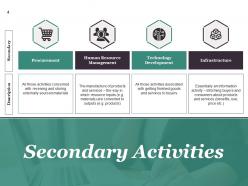
Slide 4: This slide showcases Secondary Activities involving- Procurement, Human Resource Management, Technology Development, Infrastructure.
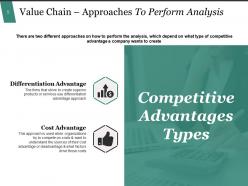
Slide 5: This slide presents Value Chain – Approaches To Perform Analysis with Competitive Advantages Types. These two types are- Differentiation Advantage, Cost Advantage. You can alter the contents as per requirement.
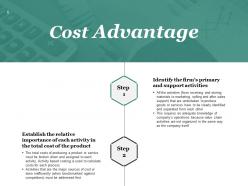
Slide 6: This slide states Cost Advantage with 2 steps- Step 1 Identify the firm’s primary and support activities, Step 2 Establish the relative importance of each activity in the total cost of the product.
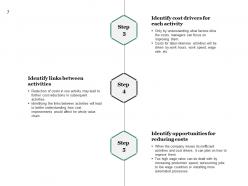
Slide 7: This slide also states Cost Advantage with- Step 3 Identify cost drivers for each activity, Step 4 Identify links between activities, Step 5 Identify opportunities for reducing costs.
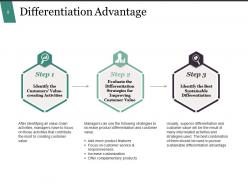
Slide 8: This is Differentiation Advantage slide showing- Step 1 Identify the Customers’ Value-creating Activities Step 2 Evaluate the Differentiation Strategies for Improving Customer Value Step 3 Identify the Best Sustainable Differentiation
Slide 9: This slide showcases Value Chain Analysis – 3 Step Process with- Activity Analysis, Value Analysis, Evaluation & Planning.
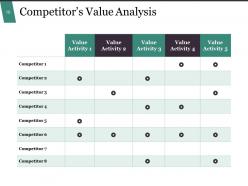
Slide 10: This slide presents Competitor’s Value Analysis in a tabular form.
Slide 11: This slide is titled Coffee Break to halt. You may change the slide content as desired.
Slide 12: This slide forwards to Charts & Graphs. You can alter the content as per need.
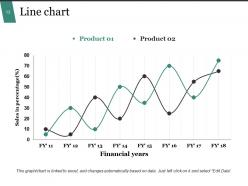
Slide 13: This is a Line Chart slide to show product/ entity comparison, specifications etc.
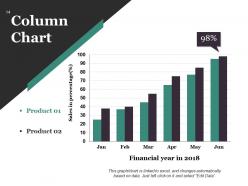
Slide 14: This slide presents a Column Chart for showcasing product/ company growth, comparison etc.
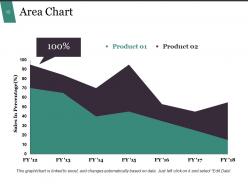
Slide 15: This slide presents an Area Chart for showcasing product/ company growth, comparison etc.
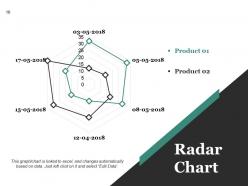
Slide 16: This is a Radar chart slide to show product/ entity growth, comparison etc.
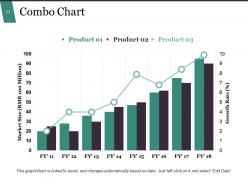
Slide 17: This is a Combo chart slide to show product/ entity growth, comparison etc.
Slide 18: This slide is titled Additional Slides to move forward. You can change the slide content as per need.
Slide 19: This slide showcases Our Team with name and designation to fill.
Slide 20: This slide contains Our Mission with text boxes. State your mission, vision and goals here.
Slide 21: This is an About Us slide. State team/ company specifications here.
Slide 22: This is Our goal slide. State your targets, goals etc. here.
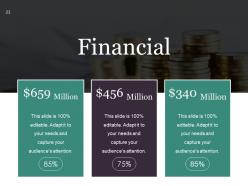
Slide 23: This is a Financial score slide. State financial aspects, information etc. here.
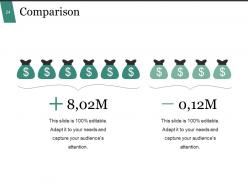
Slide 24: This is a Comparison slide to show comparison of two entities.
Slide 25: This is a Quotes slide to convey message, beliefs etc.
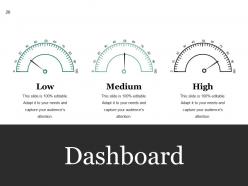
Slide 26: This is a Dashboard slide to state Low, Medium and High aspects, kpis, metrics etc.
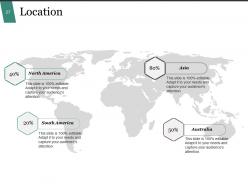
Slide 27: This is a Location slide to show global segregation, presence etc. on a world map and text boxes to make it explicit.
Slide 28: This is a Target image slide. State targets, etc. here.
Slide 29: This is a Puzzle pieces image slide to show information, specifications etc.
Slide 30: This is a Circular image slide. State specifications, information here.
Slide 31: This is a Venn diagram image slide to show information, specifications etc.
Slide 32: This is a Mind map image slide to show information, specifications etc.
Slide 33: This is a LEGO slide with text boxes to show information.
Slide 34: This is a People's silhouettes slide. Use it the way you want to show solutions etc.
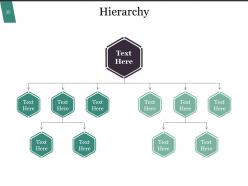
Slide 35: This is a Hierarchy slide to show information, organization structural specifications etc.
Slide 36: This is a Bulb And Idea image slide to state a new idea or highlight specifications/ information etc.
Slide 37: This slide shows a Magnifying glass with text boxes.
Slide 38: This is a Thank You image slide with Address, Email and Contact number.
Value Chain Analysis Process Steps And Approaches Powerpoint Presentation Slides with all 38 slides:
Arrive at a judgement with our Value Chain Analysis Process Steps And Approaches Powerpoint Presentation Slides. Be assured of authentic inputs.




FAQs for Value Chain Analysis Process Steps And Approaches
So you've got two main buckets here. Primary activities are your bread and butter - inbound logistics, operations, outbound logistics, marketing/sales, and service. Those directly make you money. Support activities include procurement, tech development, HR, and firm infrastructure. They keep the lights on, basically. People always skip over the support side but honestly? That's where you find some of your biggest cost drains. Map everything out first - like literally write down what's happening in each area. Then figure out where you're crushing it versus bleeding cash. Oh, and don't get too fancy with the analysis right away.
So basically you just write down everything your business does from beginning to end. Then split it up - some stuff directly helps customers (like making your product, shipping it, sales, customer service) and other stuff supports those things (HR, buying supplies, tech stuff). I know it sounds boring but it's actually pretty useful! List out all your activities first, then ask yourself "does this directly touch customers or just help the stuff that does?" Oh and once you map it all out, you'll spot where you're wasting time or where you're actually crushing it compared to competitors.
Tech is basically your secret weapon for making everything run smoother. Automate the boring stuff, get real-time data on what's happening, and use analytics to catch problems early. AI and machine learning are honestly pretty amazing for predicting what customers want and managing inventory. Cloud systems help different teams actually talk to each other (finally), while IoT sensors show you things you couldn't see before. Don't just grab whatever's trending though - pick stuff that fixes your actual headaches. Start with one thing, see if it works, then expand from there.
So value chain analysis is basically breaking down every single thing your company does - procurement, operations, marketing, customer service, all of it. Then you figure out which parts actually give you an edge over competitors. Honestly, most companies think they're good at everything when they're really not. Map it out and you'll see where you're burning money vs. where you're crushing it. Maybe your customer service sucks but your R&D team is incredible? Put your resources there instead. It's like getting a reality check on what makes you different, then betting big on those strengths.
Honestly, the worst part is getting departments to actually share their data with you. Finance hoards cost info, operations won't explain their processes clearly - it's annoying. Defining where one activity ends and another begins gets messy too, especially when teams work together on stuff. Oh, and people get paranoid you're trying to slash their budgets or jobs, so they clam up. I learned the hard way that you've gotta be super upfront about why you're doing this analysis. Get the department heads on your side first, or you'll be fighting uphill the whole time.
So basically you break down your business into chunks and look at each piece for waste. Map out your main activities first - that's where the big money usually is. Then check if departments are duplicating work or if you're getting ripped off by suppliers. Look for bottlenecks too, those kill efficiency. Honestly, most companies don't realize how much they're bleeding money on redundant processes. You'll probably find tasks you can automate or contracts worth renegotiating. It's like taking apart your operations to see what's actually necessary versus what's just... there.
Honestly, value chain analysis is pretty straightforward for this. Map out your whole process - from getting supplies to customer service after the sale. Then figure out where customers are getting pissed off or really happy. Your manufacturing might be perfect, but if your delivery tracking is garbage, that's where you're losing them. Survey customers about each step they go through with you. I'd focus on the big frustrations first - those are usually easier wins anyway. The whole point is finding those specific spots where you're either adding value or accidentally screwing things up for people.
Track both cost and value for each part of your value chain. Costs are easier - direct expenses, time, resource usage rates. Value's where it gets interesting though. Quality improvements, customer satisfaction, how much each activity actually adds to your final product. Some stuff is super hard to measure - like how today's R&D affects sales two years from now. But you've gotta try anyway. Don't go crazy with data collection. Pick 2-3 metrics per activity that you can realistically track AND actually use to make decisions. Otherwise you're just drowning in spreadsheets for no reason.
Think of globalization like spreading your business operations around the world based on what each place does best. You'd make stuff in Vietnam (way cheaper labor), run R&D in Silicon Valley where all the smart people are, maybe handle customer calls from Dublin since they speak great English. Honestly, it's kind of like playing a giant puzzle game with your company. Sure, you'll save tons of money and get better at what you do. But you're also signing up for supply chain nightmares and trying to deal with different countries' rules. Map out what you're doing now and see what makes sense to move where.
Start with Porter's Value Chain - it's like the gold standard for this stuff. SWOT analysis helps you spot strengths in different areas, and activity-based costing shows where your budget's actually disappearing (sometimes the results are wild). Benchmarking is clutch too. I got way too into competitive analysis spreadsheets last month - they're weirdly addictive once you see the patterns. For visualizing everything, Visio or Lucidchart work great. Build off Porter's framework first, then add whatever tools match what you're trying to figure out.
So basically, value chain analysis lets you map out all your business activities and see which ones actually help you hit your strategic goals. Like if you're trying to be the low-cost option but your procurement team is buying premium everything - that's a problem, right? It's pretty eye-opening honestly. You can spot where you're creating real customer value versus just doing stuff because... well, because you always have. Short sentences work great for this - just list your main activities and ask "does this actually push us toward what we're trying to accomplish?" The misalignments become super obvious once you lay it all out.
So basically, old-school value chains are super linear - you do procurement, then production, then distribution, one after another. Digital ones are way more connected though. You can pull data from everywhere at once and actually see the whole picture. Like Amazon doesn't just sell stuff step by step. They're constantly using data from every single touchpoint to tweak everything simultaneously. It's honestly pretty wild how they optimize in real-time. The big win? You'll spot opportunities that cross multiple activities instead of just fixing one thing at a time. I'd start by figuring out how data currently moves between your different processes.
So basically value chain analysis is like creating a map of everything your business does, then hunting for weak spots. You'll document each step - production, sales, IT, HR, all that stuff - and then play the "what could go wrong here?" game at every stage. Single points of failure become super obvious this way, plus you'll catch supplier dependencies and bottlenecks before they bite you. It's honestly kind of eye-opening how many vulnerabilities you don't realize exist until you actually sit down and map it all out systematically.
Honestly, the magic happens when you stop working in silos and actually talk to everyone in your supply chain. Your supplier might know about some material that cuts costs. Meanwhile, your distributor could have brilliant ideas about packaging that customers would love. I've seen companies completely transform just by getting these groups in the same room regularly. Instead of everyone just dumping problems on the next person, they're actually brainstorming together. Customers too - they'll tell you stuff you'd never think of. Different perspectives always lead to better solutions, and it's wild how much innovation comes from those conversations.
You're actually in a pretty good spot with this - small businesses can pivot way faster than the big guys. Don't get caught up analyzing every tiny detail like corporations do. Pick the 2-3 things that really matter for your competitive edge or where you're bleeding money. Could be customer service, supply relationships, whatever. Honestly, you probably already know your business better than any consultant would. Just grab a whiteboard and map out your main activities. You'll spot the problem areas pretty quick. The whole point is finding where you're losing ground or cash - then you can actually do something about it without waiting for approval from five different departments.
-
Professional and unique presentations.
-
Great quality slides in rapid time.