


Value chain vs supply chain analysis powerpoint slide presentation guidelines




Try Before you Buy Download Free Sample Product
 Impress Your
 Audience
 100%
100% Editable
 Save Hours
 of Time


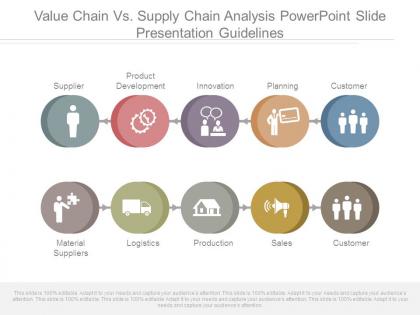
A business has got a lot of things to manage. The two most important sectors are supply chain and value chain management. Presenting, this Value Chain vs Supply Chain Analysis PowerPoint Slide presentation Guidelines. This is a professionally designed analysis management icon, representing the key areas of a business. The powerful business PPT slide design includes a wide variety of graphical icons in the round shaped graphics. Where value chain help add value to the products, an article, marketing and terms of after sales service, a supply chain help manage the entire process and the strategies. However, to reach a common ground of conclusion, a business industry needs to go through a value chain vs supply chain analysis. This business investigation process not only clears the management procedure, but also contributes in getting the effective results. This ten stage process PowerPoint slide icon include supplier, product development, innovation, planning, customer, material suppliers, logistics, production, sales, customer, serving as a key area aiming business PPT design template. Colors burst forth from our Value Chain Vs Supply Chain Analysis Powerpoint Slide Presentation Guidelines. The canvas will appear to come alive.
People who downloaded this PowerPoint presentation also viewed the following :
Value chain vs supply chain analysis powerpoint slide presentation guidelines with all 7 slides:
Our Value Chain Vs Supply Chain Analysis Powerpoint Slide Presentation Guidelines are bold and bright. Color your canvas as you desire.


FAQs for Value chain vs supply chain analysis powerpoint
So value chain analysis is all about what happens inside your company - like mapping out every step from R&D to customer service to see where you're actually adding value (or hemorrhaging it, honestly). Supply chain is different - that's tracking goods and materials flowing between different companies, from your suppliers all the way to distributors. Internal vs external basically. If you're trying to fix internal processes or cut costs, value chain's your friend. Got supplier headaches or logistics nightmares? That's when you'd use supply chain analysis. Both are useful but they tackle totally different problems.
So value chain analysis breaks down your business into primary and support activities - think of it like an X-ray of your operations. You'll see exactly where you're creating competitive advantage and where you're bleeding it away. The cool part? It shows which activities add the most customer value versus where your costs are highest. Once you map everything out, you can spot where you outperform competitors and identify your weak spots. Then just double down on strengths and fix the gaps. Honestly, it's one of those frameworks that actually makes prioritizing improvements way less overwhelming.
So you basically map out your whole operation and suddenly see where everything's going wrong. Bottlenecks jump out at you, plus all the places you're bleeding money on redundant stuff. I was honestly shocked when I first did this - you'll spot inventory just sitting around forever and suppliers who are constantly late. Routes that make zero sense become obvious too. The visual mapping part is key, though it's kind of tedious. Focus on your three biggest headaches first instead of trying to fix everything. You can consolidate vendors, fix your forecasting, all that good stuff. But seriously, start with end-to-end mapping.
So here's the deal - customers basically decide what's worth paying for, which makes their opinions super important for value chain stuff. You've gotta figure out what they actually care about first, then work backwards through your processes. Like, maybe you're really proud of your fancy packaging, but if customers think it's just wasteful fluff? You're actually hurting yourself. I've seen companies do this all the time - they get obsessed with internal efficiency while totally missing what buyers want. Best move is probably just asking customers directly what matters to them, then matching that up with where you're spending time and money.
So for supply chain metrics, I'd focus on cycle time first - basically how long from order to delivery. Inventory turnover and fill rate are solid too. Cost per unit matters obviously. Quality stuff like defect rates you can't ignore, and honestly supplier performance scores will save your ass or totally screw you over. Lead time variability is another big one since nobody likes getting surprised with delays. Don't try tracking everything though - that's a nightmare. Pick maybe 3-4 metrics that actually matter for YOUR situation and goals. Start there, then add more later if needed.
Start with mapping your value chain to see where you actually create customer value. Then put your supply chain analysis on top of that - you'll spot risks and bottlenecks that could mess with your high-value stuff. Honestly, seeing it all laid out like this is kind of a game changer. Pay attention to where they connect. Like if fast delivery is your thing, your supply chain map better show you exactly where delays might happen. The goal is using those value chain insights to figure out which supply chain fixes actually matter for staying competitive. Pick one critical activity and just trace it backwards through your whole network.
Tech is basically a huge multiplier for both your value and supply chains. It automates tons of stuff and gives you real-time visibility into what's happening. Your value chain gets optimized from R&D (AI-powered product development) all the way to customer service bots. Supply chains benefit from IoT sensors tracking shipments, predictive analytics stopping stockouts, blockchain for transparency. Honestly? Both would be a mess at scale without it now. The trick is picking tools that actually fix your problems instead of whatever flashy platform everyone's hyping up this month.
Honestly, globalization makes everything way more complicated - you're dealing with crazy long lead times, currencies going nuts, and political drama that can wreck your whole operation. Plus consumer trends change overnight now (social media ruins everything lol). The smart move? Don't put all your eggs in one basket. Spread your suppliers across different regions and build some flexibility into your logistics. Companies that are crushing it right now treat their supply chains like secret weapons, not just boring cost stuff. Map out where you're most vulnerable and figure out your backup plans before you need them.
So for mapping this stuff out, I'd honestly just start with Visio or Lucidchart - both are pretty straightforward for those activity flow diagrams. Excel's still your best bet for the actual analysis part since you can customize everything and break down costs without learning some weird new platform. Miro's great if you're working with a team and need to brainstorm which activities are primary vs support. There are fancier options like ARIS or Bizagi, but honestly? I'd stick with what you already know first. You can always get more sophisticated later if things get complicated - no point overcomplicating it right out the gate.
Yeah, it totally works for finding bottlenecks! Value chain analysis looks at where you're actually adding value versus just moving stuff around - which is honestly way more useful than basic supply chain mapping sometimes. Map out each activity and what it costs you (time and money). The spots where you're spending a ton but not getting much value back? Those are your bottlenecks right there. It's like finding where your process is bleeding money for no good reason. Way better than just tracking materials moving from point A to B.
So here's the thing - when suppliers actually work together, your whole value chain analysis gets way more interesting. You can't just look at each company by itself anymore. Instead, you're tracking how they connect - like shared shipping routes, joint research projects, or quality systems that talk to each other. Honestly, this is where you find the really good cost savings that nobody else spots. These cross-company relationships create value in weird places. When you're mapping everything out, don't forget to capture how these supplier partnerships actually boost your competitive edge.
Your value chain shows *what* customers actually want, but your supply chain handles the *how* - and honestly, they rarely sync up well. Like you might discover faster delivery is huge for customers, but your supply chain can't pull it off without blowing the budget. Different teams usually own these pieces too, which makes everything messier. The gaps typically hit you in three spots: your metrics don't match up, cost priorities compete against each other, and strategic timing clashes with what's operationally possible. I'd start by mapping out where your value drivers actually need supply chain performance - that's where you'll spot the worst disconnects.
So you're basically adding environmental and social stuff to your usual cost analysis. For value chains, look at how green initiatives affect your competitive edge - do customers actually pay more for sustainable products? Supply chains get trickier though. You'll be tracking supplier practices, carbon footprints, ethical sourcing (honestly such a pain at first). Map out where you're causing the biggest environmental damage and build metrics around those spots. Don't forget circular economy principles like waste reduction. Short sentences help. Start with your worst impact areas - that's usually the smartest move anyway.
Look at Apple - they control everything from design to manufacturing partnerships to create that premium feel. Amazon's crushing it too by connecting their logistics with data to cut costs while boosting customer experience. Zara's wild though, they can get runway trends into stores within weeks by syncing their design teams with super responsive supply chains. The trick is spotting where your value creation connects to supply decisions (or the other way around), then optimizing both together instead of treating them as separate things. Don't silo them - that's where most companies mess up.
Numbers tell you where problems are, but qualitative data shows you why they're happening. Like, you might see delivery delays but miss that it's actually because your warehouse team and drivers can't stand each other. Customer interviews and employee feedback reveal all the messy human stuff behind your metrics. I'd start with your worst performance areas, then go talk to people. You'll find things like crappy supplier relationships or communication breakdowns that spreadsheets never show. Honestly, most teams waste so much time staring at charts when they should just ask their people what's going wrong.
-
Easily Understandable slides.
-
The content is very helpful from business point of view.