

Video game proposal powerpoint presentation slides





Try Before you Buy Download Free Sample Product
 Impress Your
Audience
 100%
Editable
 Save Hours
of Time


Taking an impressive idea and turning it into a quality gaming experience is best handled by tech professionals. The video gaming market has made a reputation for holding immense business potential. So, SlideTeam developers dedicate this offering to iOS, windows, android, and other video gaming developers. Check out the all-new Video Game Proposal PowerPoint Presentation Slides. This solicited business proposal deck features state-of-the-art graphics and cogent content. The cover letter is packed with the necessary goodness to pique your customer’s interest in your organization. The role of well-articulated cover letters in responsive business proposals cannot be overemphasized. Hence, SlideTeam researchers and designers assemble and arrange PowerPoint formats as per the video gaming industry specifics. Use this PPT slideshow to highlight the video game development proposal project context and goals. Showcase your rendition of your prospective customer’s needs. Include specifics like the integration of ads for revenue generation. Once you have listed all the major project ins and outs, walk your client through the video gaming development process. Illustrate the various stages of development like pre-production, release, post-production, etc. Our PowerPoint templates assist you in demonstrating the timeframe of gaming app development. Through this PPT format, gaming service providers can also pitch additional services. Gaming designers often provide auxiliary tech services such as artificial intelligence, software development, and technical SEO. Moreover, use this presentation to break down your cost framework as per the development stages. Elaborate on your customer’s investment through pre-production, production, alpha/beta polish, release, and post-production stages. Employ our video game business proposal PPT format to illustrate your edge over competitors. Portray awards and recognition for past achievements. This will help you in building credibility as service providers amongst your target audience. Introduce your customers with the gaming application development personnel and their responsibilities. Our business proposals end on a high note for max impact. Our PPT theme ends with client testimonials and case study. Your clients gain insightful info about your organization via such slides. So, hit the download button and get personalized.
People who downloaded this PowerPoint presentation also viewed the following :
Content of this Powerpoint Presentation
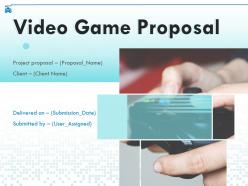
Slide 1: This slide introduces Video Game Proposal. State Submission date, User assigned and Client name.
Slide 2: This slide displays Cover Letter for Video Game Proposal
Slide 3: This slide displays Table of Content of the presentation.
Slide 4: This slide shows Table of Contents with- Project Context and Objectives.
Slide 5: This slide displays Project Context and Objectives for Video Game Proposal
Slide 6: This slide displays Table of Contents.
Slide 7: This slide depicts Our Process.
Slide 8: This slide shows Timeframe for Video Game Proposal
Slide 9: This slide represents Additional Service Offerings for Video Game Proposal.
Slide 10: This slide shows Table of Contents with- Your Investment.
Slide 11: This slide shows Investment details.
Slide 12: This slide shows Investment details.
Slide 13: This slide shows Investment details.
Slide 14: This slide shows Table of Contents with- Company Overview
Slide 15: This slide depicts Why Us for Video Game Proposal. Mention Strengths that will add to your firm.
Slide 16: This is About Us slide to showcase Company specifications.
Slide 17: This slide shows Our Expertise for Video Game Proposal
Slide 18: This slide displays Awards & Recognition for Video Game Proposal
Slide 19: This is Our Team slide with Names and Designations.
Slide 20: This is Our Team slide with Names and Designations.
Slide 21: This slide shows Table of Contents with- Our Past Experience.
Slide 22: This slide shows Client Testimonials.
Slide 23: This slide shows Client Testimonials.
Slide 24: This slide showcases Case Study for Video Game Proposal
Slide 25: This slide represents Table of Contents with- Statement of Work and Contract.
Slide 26: This slide describes Statement of Work and Contract for Video Game Proposal
Slide 27: This slide displays Table of Contents with- Next Steps.
Slide 28: This slide depicts Next Steps for Video Game Proposal
Slide 29: This is Contact Us slide with Address, Email address, Phone number and Website.
Slide 30: This is Icons Slide for Video Game Proposal.
Slide 31: This slide is titled as Additional Slides for moving forward.
Slide 32: This is About Us slide to showcase Company specifications.
Slide 33: This slide displays Organization Mission and Vision Statement.
Slide 34: This slide depicts Roadmap Process.
Slide 35: This slide shows Timeline process.
Slide 36: This is 30 60 90 Days Plan slide.
Slide 37: This slide displays Gantt Chart.
Video game proposal powerpoint presentation slides with all 37 slides:
Use our Video Game Proposal Powerpoint Presentation Slides to effectively help you save your valuable time. They are readymade to fit into any presentation structure.


FAQs for Video game proposal
Dude, your game proposal needs to hit three main things. First - nail down a super clear concept that anyone can understand in like 30 seconds. Do your homework on market research too, show there's real demand for what you're making. Budget and timeline stuff is huge - don't lowball it because execs will see right through that. Honestly? I've watched so many cool projects crash because teams promised way more than they could deliver. Include who you're competing against and how you'll actually make money. Oh, and throw in some competitive analysis. Lead with why it's fun, but have the data ready to back everything up.
Honestly, market research is what separates serious proposals from pipe dreams. It shows you actually know your audience instead of just guessing. You'll have real data backing up your concept - demographics, what competitors are doing, where the gaps are. Publishers eat that stuff up. Without it, you're basically walking into meetings blind and hoping nobody asks "who's gonna buy this?" (spoiler: they always do). The research helps you nail down monetization too. Even small focus groups or basic surveys make your proposal look way more legit. Trust me, it's worth the effort upfront.
So for your game design doc, start with the basics: concept overview, who you're targeting, core mechanics, and art/audio stuff. Technical requirements and monetization strategy too - oh, and throw in a rough timeline. Honestly though? Don't obsess over perfection right away. These things change SO much once you actually start building. I've seen devs rewrite their entire vision three times lol. Just get enough detail down so your team gets what you're going for and anyone with money can decide if they're in. Begin with a solid one-pager hitting those points, then flesh out whatever sections need more love based on feedback.
Start with the basics - age, gaming experience, what platforms they use, how much they spend. Check out similar games on Steam, read reviews, see what players are saying on social media. Honestly, I end up falling down Reddit rabbit holes for hours doing this research, but you find gold in those comment threads. Survey people if you can, even just asking friends works. Think about who might find your game later too, not just your main audience. You want to be specific enough that it actually helps you make decisions, but not so narrow that you can't make money. Build real personas with actual problems your game solves.
Dude, you NEED a solid budget. Publishers aren't idiots - they can spot someone who hasn't done their homework from miles away. Research what similar games actually cost to make, then break down everything: dev salaries, marketing, platform cuts, the works. It proves you're not just another person with a "million dollar idea" and zero clue about execution. Plus when you're negotiating, you'll know exactly what you need instead of just throwing out random numbers. Honestly, I've seen so many cool concepts die because the creator looked clueless about money stuff. Don't be that person.
Oh totally, a good demo changes everything. I've watched terrible game ideas get funded just because their prototype was addictive. It's like - suddenly the suits can actually play your vision instead of squinting at design docs trying to figure out if it'll be fun. Your demo needs to nail the core mechanics that make the game special. Don't worry about polish, just make sure the fun factor hits immediately. Decision makers will remember how the game *felt* way more than whatever you wrote in the pitch deck. Plus it shows you can actually build the thing, not just dream about it.
Honestly, I'd start by figuring out your actual audience size - like how many people are buying games in your genre and price point. Check out competitor sales data, review scores, that kind of thing. Market surveys can help but they're kinda unreliable unless you get a decent sample size. Revenue projections matter too, especially when you're talking to investors or whatever. Look at similar titles and seasonal patterns. Oh, and social media engagement tells you a lot about buzz. I always make a simple spreadsheet comparing maybe 4-5 similar games across these areas - makes everything way clearer.
Don't just stick all your storytelling in one section - spread it throughout the whole proposal. Hook them right away with your main character's conflict in the overview. Then connect your story beats to actual gameplay moments. Like, "players discover the protagonist's dark past through environmental clues in level 3" - that kind of specific stuff. Show how narrative choices affect replay value too. Honestly, the best proposals I've seen make story and mechanics feel totally connected, not like someone slapped a plot onto existing gameplay. Oh, and explain how player choices actually matter for the narrative.
Your core mechanic is everything - that's what sticks in publishers' heads. Hades and Among Us? They grabbed familiar stuff but twisted it in ways nobody expected. Art style can set you apart too, or going after audiences the big studios totally ignore. Weird ideas honestly perform better than safe ones most of the time. But here's the thing - don't just rattle off features. Explain why players will actually care about your differences. What new experience are you creating? Oh, and test your pitch on non-gamers. If they don't get the hook, it probably needs work.
Dude, your team is everything. Publishers will tear apart your portfolio - especially if you're pitching something way outside your wheelhouse. Like, don't pitch a massive RPG when you've only done match-three games, you know? They care more about whether you can actually pull it off than your brilliant concept. Good teams can always tweak a mediocre idea, but amazing ideas die with weak execution. Put your best people's experience right up front. And honestly? If you're missing key skills, just say so and explain your hiring plan. Way better than trying to fake it.
Dude, the biggest thing I see is people being super vague about how their game actually plays. Publishers want mechanics, not just "epic fantasy world with dragons." Also stop saying you're targeting "all gamers" - that's meaningless and makes you look amateur. Keep your feature list tight too. Nobody wants to read about 47 different systems you're cramming in there. Makes you seem all over the place. Lead with what's fun about playing it first, then maybe show off the pretty art later. Oh and don't oversell your market size either - be realistic about scope or you'll get laughed out of the room.
Dude, visuals are everything for game proposals. People will skip your text but they'll totally watch a sick trailer or gameplay clip. Screenshots show off your art style and UI, while videos prove your mechanics actually work. Art concepts are clutch for stuff you haven't built yet - helps people get your vision. Just make sure what you show matches what you can actually deliver, you know? Oh and definitely lead with your best visual right away. Hook them from the start or you're screwed.
Definitely get the IP ownership stuff sorted first - who owns the code, characters, all that. Third-party licensing for engines or music needs to be crystal clear too. Revenue splits and platform distribution deals are obviously huge. Localization is trickier than people think since every country has weird content rules. Liability protection is a must (lawsuits happen), plus data privacy compliance if you're collecting user info. Honestly, just pay a lawyer to look it over before signing - I learned that one the hard way. Way cheaper than fixing problems later.
Honestly, just break it down into phases - pre-production, production, post-production with real deadlines for each. Don't lowball your timeline because you'll hate yourself later (learned this the hard way). Stakeholders eat up visual stuff like Gantt charts - they want that bird's eye view. Always pad extra time for revisions and testing because stuff will go wrong. Call out which tasks depend on others and any outside factors that might mess with your schedule. Oh, and be upfront about potential risks from the start. Buffer time isn't optional, it's survival.
Honestly, feedback loops are a game changer for proposals. Start internal - do quick pitch sessions with your team to catch the obvious stuff first. Focus groups with your actual audience come next, and yeah, they can be harsh but that's the point. I'd throw in some online surveys too, maybe hit up Discord or Reddit gaming communities if that's your crowd. Oh, and don't skip those stakeholder check-ins with publishers or whoever you're pitching to. The trick is asking specific questions instead of the vague "thoughts?" nonsense. Plan for 2-3 rounds minimum before you present.
-
Perfect template with attractive color combination.