

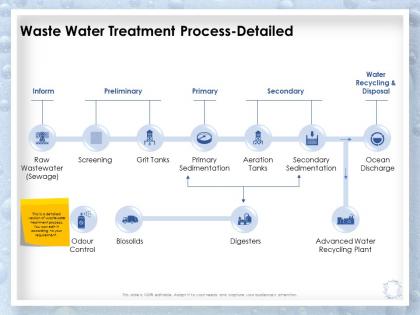
Waste water treatment process detailed sedimentation ppt presentation show




Try Before you Buy Download Free Sample Product
 Impress Your
 Audience
 100%
100% Editable
 Save Hours
 of Time


Our Waste Water Treatment Process Detailed Sedimentation Ppt Presentation Show are topically designed to provide an attractive backdrop to any subject. Use them to look like a presentation pro.
People who downloaded this PowerPoint presentation also viewed the following :
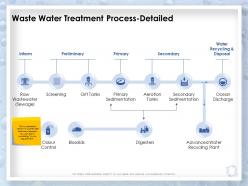
Waste water treatment process detailed sedimentation ppt presentation show with all 2 slides:
Use our Waste Water Treatment Process Detailed Sedimentation Ppt Presentation Show to effectively help you save your valuable time. They are readymade to fit into any presentation structure.
FAQs for Waste water treatment process detailed sedimentation
So basically gravity does all the work here - heavy stuff sinks, light stuff floats or just hangs around in the water. Particle size and density matter, plus water temp affects how fast things settle. Primary clarifiers aren't amazing but they'll grab like 50-60% of solids just by waiting around. Secondary ones after bio treatment? Way better - you're looking at 85-90% removal. Keep your retention time around 1.5-3 hours for primary settling. Oh and definitely watch that sludge blanket depth or you'll get carryover problems (learned that one the hard way).
Dude, sedimentation is like the unsung hero of wastewater treatment. Gravity does most of the heavy lifting - you get 50-70% of suspended solids removed without burning electricity on pumps all day. Your downstream bio processes won't get swamped since they're dealing with much cleaner water. BOD drops significantly too, which is huge. I've seen plants where they really dialed in their retention times and sludge removal schedules - makes a massive difference in overall performance. It's probably the most cost-effective step in the whole process, honestly.
There's basically three main types you'll run into - rectangular, circular, and upflow clarifiers. Rectangular ones are everywhere because they fit in tight spots and you can mess with the flow using baffles. Circular tanks work well for bigger plants since they use space better, plus that radial flow really helps settling. Honestly, the upflow ones like UASB systems are getting pretty popular for industrial stuff lately. What you pick depends on your flow rates and space - oh, and what kind of solids you're dealing with obviously. You should definitely try to visit some plants if you can. Seeing them in action beats reading about it any day.
So for tank design, you'll want that length-to-width ratio around 3:1 or 4:1 - gives particles time to settle without weird flow shortcuts. Depth should be 10-15 feet, which is deep enough for good retention but not so deep that sludge removal becomes a total pain. Your inlet/outlet setup is huge here. Baffles really help prevent turbulence from stirring up stuff that already settled. Keep surface loading under 800-1000 gpd/sq ft for most jobs. If settling looks crappy, I'd check hydraulic loading first, then see if your inlet design is causing flow problems.
So basically, bigger and heavier particles will drop faster - pretty straightforward physics there. Water temp matters too since warmer water's less thick, so stuff falls through easier. Your tank shape and depth affect how long particles hang around before settling. Turbulence is honestly the worst thing for this - keeps everything mixed up when you want it to drop. Oh, and definitely watch your overflow rates. Keep those inlet speeds low or you'll just stir everything back up again. Surface area of your tank plays into detention time too, which you'll want to maximize.
So primary sedimentation is just the first step where gravity pulls down all the heavy junk - grit, big particles, whatever's in the raw wastewater. Way different from secondary though. That one happens after biological treatment and you're dealing with biological solids like activated sludge. Those fluffy bio particles are honestly a pain because they settle super slowly compared to the heavy stuff. Primary clarifiers work fast, but secondary ones need way more time to do their job. Oh and if you're sizing clarifiers, definitely give your secondary ones extra detention time or you'll regret it later.
So upflow clarifiers are actually pretty smart - they get way better particle contact with the sludge blanket than regular settling tanks. That upward flow creates this dense sludge zone that basically filters everything. Space-wise, you're killing two birds with one stone since the same tank does clarification AND thickening. Honestly, the hydraulic loading rates blow traditional methods out of the water - we're talking 2-3x higher. Perfect if you're cramped for space or need more capacity without expanding your footprint.
So you add chemicals like aluminum sulfate that neutralize the charges keeping particles apart - kinda like turning off magnets that were pushing each other away. Those tiny particles then clump into bigger, heavier chunks that actually sink instead of just floating around forever (which honestly some of them would do without this step). The bigger clumps settle way faster and grab other contaminants as they drop. You'll get much better removal rates if you do coagulation first, then sedimentation. Makes a huge difference in how well the whole thing works.
So flocculation is what makes your sedimentation tank actually do its job - it sticks all those tiny floating particles together into bigger clumps. Otherwise you'd just have microscopic junk floating around forever, which is pretty useless. The chemicals (or sometimes natural binding) create these heavier "flocs" that sink way faster than individual particles would. Usually happens right before your primary clarifiers. Timing is everything though - not enough mixing and particles won't stick, too much and you'll destroy the flocs you just made. Kind of a goldilocks situation honestly.
Yeah, wastewater type totally affects settling. Industrial stuff with oils and chemicals? That's gonna screw with your particle density and slow everything down. Domestic wastewater settles way more predictably - it's mostly just organic matter and regular suspended solids. Food processing waste actually settles faster because the particles are bigger and denser. Cold temperatures slow things down too, which honestly makes winter operations a pain. When your influent changes significantly, you gotta run jar tests. There's really no other way to figure out your detention times and chemical doses.
Oh man, settling tanks can be such a pain. Poor settling hits you first - temperature swings, shock loads, or those annoying filamentous bacteria that make everything fluffy. Short-circuiting happens constantly too, where flow just takes the easy route instead of actually letting stuff settle. Density currents screw with your patterns when influent temps don't match what's in the tank. Wind's weirdly problematic for surface skimming - who knew? Watch your sludge blanket levels and flow distribution religiously. Those'll tell you when things are about to go wrong.
Look, catching problems early beats scrambling to fix disasters later. Turbidity sensors and sludge level monitors will save your sanity - trust me on this one. Instead of wandering around with a clipboard every few hours, you'll get continuous data on what's actually happening in those tanks. Chemical dosing gets way more precise, and you can tweak detention times before things go sideways. Nobody needs a washout event ruining their weekend plans. The automation piece is nice too since it keeps your effluent quality steady without babysitting everything. Start with basic turbidity and sludge monitoring if you're not there yet.
Dude, that untreated sedimentation stuff will absolutely wreck aquatic systems. The discharge carries heavy metals and pathogens that basically suffocate everything downstream. Fish populations get destroyed. Water quality goes to hell, and you'll probably see nasty algal blooms too. Honestly, the regulatory headaches alone should scare anyone straight. All that sediment clogs up stream beds and ruins fish spawning areas - it's like paving over their nurseries. You've gotta have solid dewatering and disposal protocols in place before any discharge happens, otherwise you're looking at serious environmental violations.
So the big thing now is ballasted flocculation - basically they add microsand to make stuff settle way faster. Pretty cool tech, honestly. Lamella clarifiers are getting better plate designs too, which gives you more surface area to work with. AI dosing systems are popping up everywhere, automatically tweaking coagulants based on what the water looks like in real time. Some facilities are even trying magnetic separation for pulling out specific nasties. Oh, and I keep hearing about these new systems but haven't seen one in person yet. If you're thinking about upgrading, I'd definitely look into whether ballasted flocculation makes sense for your flow rates first.
So climate change is messing with sedimentation in several ways. Warmer temps ramp up biological activity, which screws with your settling rates and creates more floating sludge. Storm events are getting nastier too - they'll overwhelm your primary clarifiers with crazy flow rates. Less dissolved oxygen in warmer water means your settling tanks go anaerobic way faster. Oh, and if you're dealing with upstream algae blooms (which seem to be everywhere now), that organic load completely throws off settling. Honestly, I'd start watching sludge blanket levels like a hawk during temp swings. Maybe tweak detention times seasonally too.
-
The Designed Graphic are very professional and classic.
-
Awesome presentation, really professional and easy to edit.
-
Thanks for all your great templates they have saved me lots of time and accelerate my presentations. Great product, keep them up!
-
Use of icon with content is very relateable, informative and appealing.