


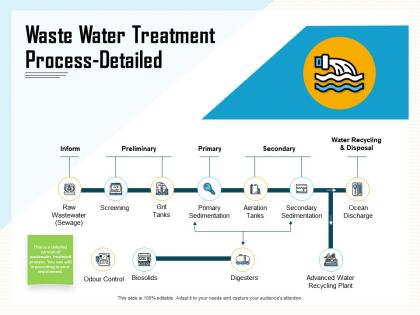
Waste water treatment process detailed aeration ppt powerpoint presentation model portrait




Try Before you Buy Download Free Sample Product
 Impress Your
 Audience
 100%
100% Editable
 Save Hours
 of Time


Our Waste Water Treatment Process Detailed Aeration Ppt Powerpoint Presentation Model Portrait are topically designed to provide an attractive backdrop to any subject. Use them to look like a presentation pro.
People who downloaded this PowerPoint presentation also viewed the following :
Waste water treatment process detailed aeration ppt powerpoint presentation model portrait with all 2 slides:
Use our Waste Water Treatment Process Detailed Aeration Ppt Powerpoint Presentation Model Portrait to effectively help you save your valuable time. They are readymade to fit into any presentation structure.

FAQs for Waste water treatment process detailed aeration ppt powerpoint
Okay so most plants have three stages but some skip the last one. Primary treatment filters out the big chunks and lets solids settle - pretty straightforward. The secondary stage is where it gets interesting though, they use actual bacteria to eat up all the organic stuff. Nature doing the work for us, right? Tertiary treatment is the final polish with fancy filtration and disinfection before they release it. Not every facility bothers with tertiary if their discharge standards aren't super strict. When you tour the place, definitely ask which stages they're running - it'll make way more sense once you know their specific setup.
So biological treatment is basically getting bacteria to eat your waste - pretty clever if you ask me. Chemical treatment throws in stuff like chlorine to kill contaminants or coagulants that make particles stick together. Bio's way cheaper long-term since the bacteria work for nothing, but it's slow and kinda picky about conditions. Chemicals work fast and handle more types of pollutants, though you'll spend more and deal with leftover sludge. Honestly, most places just use both. Let the bio do the grunt work, then chemicals for cleanup. Figure out what you're treating first - that'll tell you which route makes sense.
So basically, microorganisms are doing all the heavy lifting in wastewater treatment. They literally munch on organic pollutants and turn them into harmless stuff like CO2 and water. Pretty wild, right? You've got bacteria and protozoa breaking down everything from food scraps to human waste. It's like we're running massive microbial farms to clean our water - which honestly sounds way cooler than it probably smells. The trick is keeping conditions just right though. Oxygen levels, pH, temperature - all that matters for keeping your tiny workers happy and productive.
So basically, AOPs create these super reactive hydroxyl radicals that demolish the tough contaminants regular treatment can't handle - like pharmaceuticals and pesticides. Pretty neat stuff. They'll also kill pathogens while they're at it, so you get better disinfection too. You can actually drop them into your existing treatment setup at different points, which is convenient. The trick is figuring out what specific nasties you're dealing with first. Then pick the AOP that targets those particular compounds. Way more effective than just hoping biological treatment catches everything.
Yeah so basically untreated wastewater is a total disaster for aquatic life. Raw sewage dumps tons of nitrogen and phosphorus into waterways, which causes these massive algae blooms. The algae sucks up all the oxygen and fish literally suffocate - it's pretty brutal to see happen. You've also got pathogens, heavy metals, and other nasty chemicals that work their way up the food chain. For your setup, the main thing is making sure your treatment systems actually remove this stuff before it hits the water. Focus especially on getting rid of nutrients and killing off pathogens.
So here's the deal - what's actually in your wastewater totally determines how you treat it. Got organic stuff? Activated sludge works great because those little microbes just eat it up. Heavy metals are a different beast though - you'll need chemical precipitation or ion exchange for those. Oil and grease have to get physically separated first (learned that one the hard way). For suspended solids, filtration or settling tanks do the trick. Dissolved chemicals are trickier - might need advanced oxidation or membranes. Honestly, just test everything upfront so you don't design the wrong system.
So activated sludge is pretty solid if you need really clean water coming out - handles different loads well and you can dial in the controls. But honestly? The energy costs will kill you. Those blowers never stop running and your electric bill shows it. Plus you need people who actually know what they're doing to run it, which isn't cheap either. Oh and the sludge disposal thing becomes a real headache since you're making way more biomass than simpler setups. All that equipment breaks down too. If you've got the budget and need top-tier treatment, go for it. Otherwise I'd look at easier biological options first.
So basically it's like having this crazy fine filter that grabs all the tiny stuff your regular treatment can't catch. Bacteria, viruses, suspended particles - the membrane just blocks them physically. Pretty cool tech honestly, I was surprised when I first saw it working. You'll hit those strict discharge limits way more consistently, which is huge. Plus depending on which type you go with, it can even pull out some dissolved nasties too. Oh and here's the kicker - instead of just dumping that treated water, you could actually reuse it for irrigation or other processes.
So basically you've got biological nutrient removal systems - they use specific bacteria to tackle nitrogen and phosphorus. Nitrogen gets handled through nitrification-denitrification, which honestly sounds more complicated than it is. Phosphorus removal usually means enhanced biological phosphorus removal or just throwing iron/aluminum salts at it. Membrane bioreactors are another option if you need super tight limits, but they'll murder your energy bill. Short version: match your tech to whatever discharge limits you're stuck with. I'd definitely check your local regs first though - no point overengineering if you don't have to.
Oh man, wastewater facilities are dealing with some serious headaches right now. Volume swings are crazy - everyone does laundry on weekends, then you get hit with a massive storm. Most of the infrastructure is old as hell and costs a fortune to fix. Then there's all this weird stuff in the water now - pharmaceuticals, industrial chemicals, random contaminants that weren't even a thing when these plants were built. Space is another nightmare since there's nowhere to expand. Honestly, if you're planning one from scratch, build in way more capacity than you think you'll need. Trust me on that. Flexibility is everything.
So basically, treated wastewater is huge for water management - you get this whole secondary water source that takes pressure off freshwater supplies. Instead of just dumping it, cities can use it for irrigation, industrial stuff, even pumping it back into groundwater. We used to waste so much water it's actually insane. Plus you're stopping all that pollution from flowing into rivers and lakes, which obviously protects drinking water downstream. The main thing is just making sure your treatment quality matches whatever you're gonna use it for. Pretty smart system honestly.
You'll mainly track BOD, COD, and TSS - plus removal efficiency percentages for each one. pH and dissolved oxygen matter too. For municipal wastewater, pathogen counts are huge for obvious public health reasons. Nitrogen and phosphorus removal gets monitored as well. Your regulatory folks will tell you exactly what to test and how often, which honestly takes the guesswork out of it. I'd set up some kind of dashboard to watch trends - way easier to catch problems early before you're scrambling to fix compliance issues.
First thing - figure out what contaminants you're actually dealing with through testing. No point guessing. UV/H2O2 or ozonation work great as add-ons to what you've already got. Membrane bioreactors are expensive but they crush pharmaceuticals and personal care stuff. The tech honestly moves way faster than any regulations do. Activated carbon's your go-to for most organic compounds - can't really go wrong there. You don't need to tear everything down and start over. Just upgrade strategically based on your budget and what fits with your current setup.
Dude, community education makes such a difference! Most people have no clue that flushing grease or old pills down the drain costs everyone money. Treatment plants get totally overwhelmed when they're dealing with chemicals and weird stuff - honestly, you wouldn't believe what ends up there. Short campaigns work best. Teach folks proper disposal and they'll actually start caring about infrastructure funding too. It's wild how much cleaner everything runs when communities understand the connection. Start small though, maybe focus on the worst offenders first like cooking oil and medications.
Honestly, MBRs are probably the biggest deal right now - they mix biological treatment with ultrafiltration and it's pretty slick. AI monitoring systems are getting really good at optimizing everything in real-time too. More plants are going decentralized instead of those massive centralized ones, which just makes more sense logistically. Advanced oxidation is finally getting affordable, so you can actually tackle pharmaceuticals and microplastics now. Oh, and resource recovery is huge - plants are becoming energy-positive by capturing biogas. Digital twin tech is becoming pretty much essential for predictive maintenance, so definitely look into that.
-
I discovered this website through a google search, the services matched my needs perfectly and the pricing was very reasonable. I was thrilled with the product and the customer service. I will definitely use their slides again for my presentations and recommend them to other colleagues.
-
Informative design.