


Water management powerpoint presentation slides




Try Before you Buy Download Free Sample Product
 Impress Your
 Audience
 100%
100% Editable
 Save Hours
 of Time


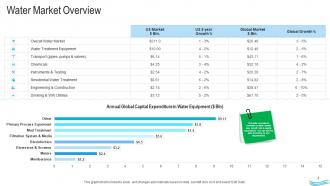
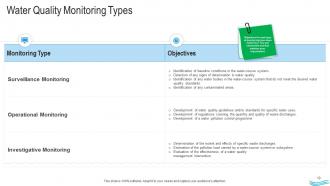
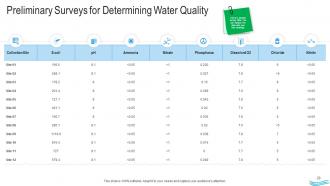
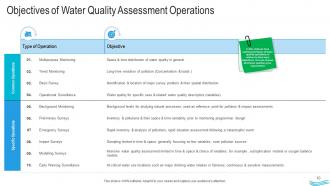
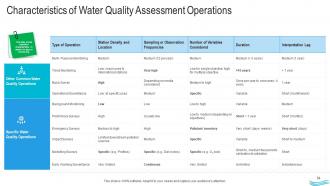
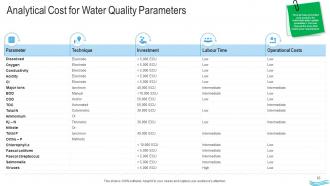
Manage the optimum use of water with the help of our visually appealing Water Management PowerPoint Presentation Slides. . The presentation provides an overview of water market size, growth rate, and expenditure. Other information like water industry key statistics, trends, and growth drivers are also offered in this water management PPT slideshow. Provide details on sources of water pollution with the help of these PowerPoint slides. Utilize this content-ready PowerPoint slide deck to showcase the natural processes that affect the quality of water. Mention the strategies used to resolve the conflict between water use and quality deterioration. You can effectively design the global water quality program by displaying market share and growth rate. Types of water quality monitoring with their objectives can also be listed with the help of these PPT visuals. You can easily present the survey for determining the water quality with these thoroughly researched PowerPoint templates. You can provide technical details of wastewater treatment by using this PPT presentation. Address the issues associated with wastewater using PowerPoint infographics.
People who downloaded this PowerPoint presentation also viewed the following :
Content of this Powerpoint Presentation
On March 22 every year, humanity marks World Water Day. According to the United Nations, water is the most precious resource around and managing it sustainably is the key to the shared future of humanity. On its website, the UN says that individuals and communities benefit from water management, a roughly $15billion market. Potential gold mines for businesses exist in sectors, such as health, food and energy security, protection from natural hazards, education, improved living standards and employment, economic development, and a variety of ecosystem services.
Understand urban water management here.
As a business wanting to tap into the opportunity of water management, it is essential to understand, present and convince stakeholders. SlideTeam is aware of a major pain point that smart business owners and managers face in doing this right. Mostly, such talented individuals lack the time and resources to create such a formal presentation from scratch.
If you are into sustainable water management, this presentation template from SlideTeam is for you.
Our PPT Templates are the answer that resolves your problems. We have curated content-ready presentations with a clutter-free design that you can showcase before any audience. The 10 templates below, part of a complete deck on water management, allow you to relax and focus on the presentation. We take care of the visual element and address all major questions in this slide.
Even better, each of the templates is 100% editable and customizable, adding to the appeal. You can add your own information, while getting a readymade structure.
Let’s explore!
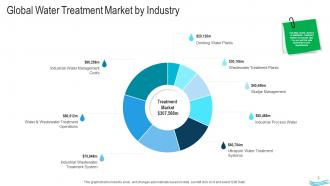
Template 1 Global Water Treatment Market by Industry
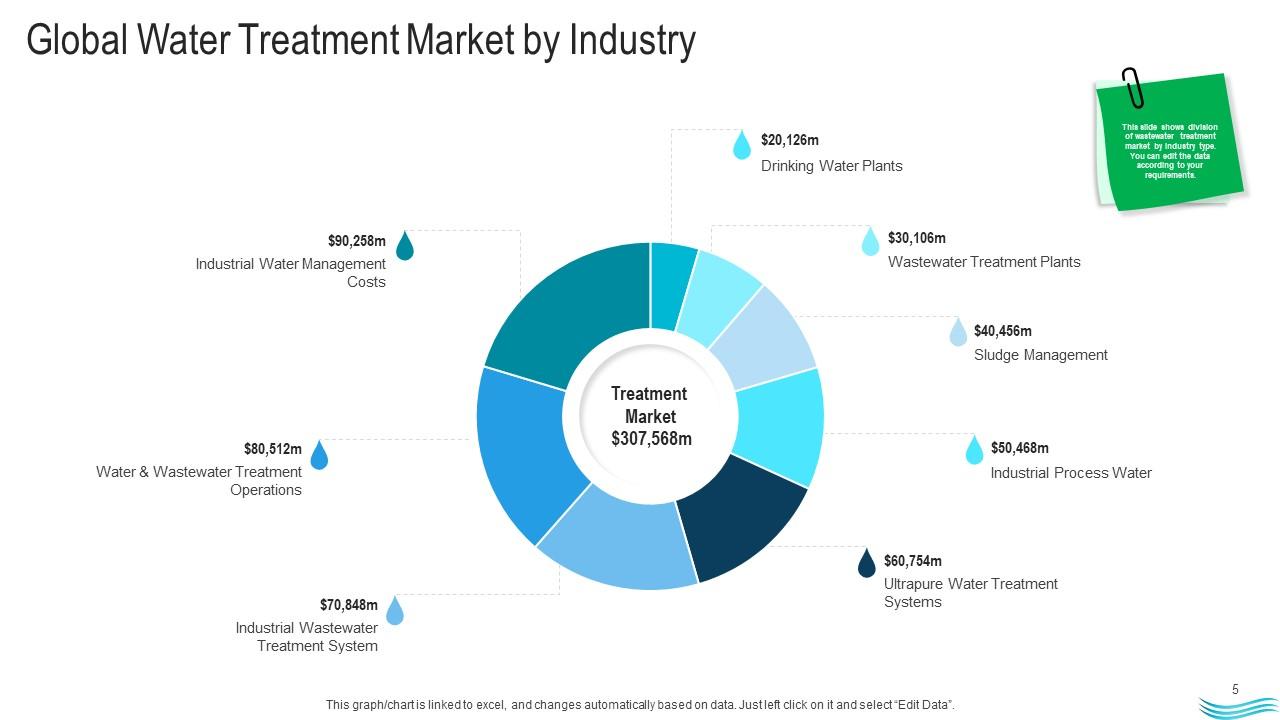
This slide showcases the division of wastewater treatment market by industry type. The wheel-chart, a pie-chart, divides the total water treatment market into operational opportunities. The largest chunk is taken up by Industrial Water Management Costs at $9billion, with waste water treatment operations coming in next at roughly $8billion. Ultrapure water treatment systems is also a huge business opportunity. The design and color-coded illustration is a treat to watch for professionals for its clarity.
Template 2 Water Industry Growth Drivers PPT Template
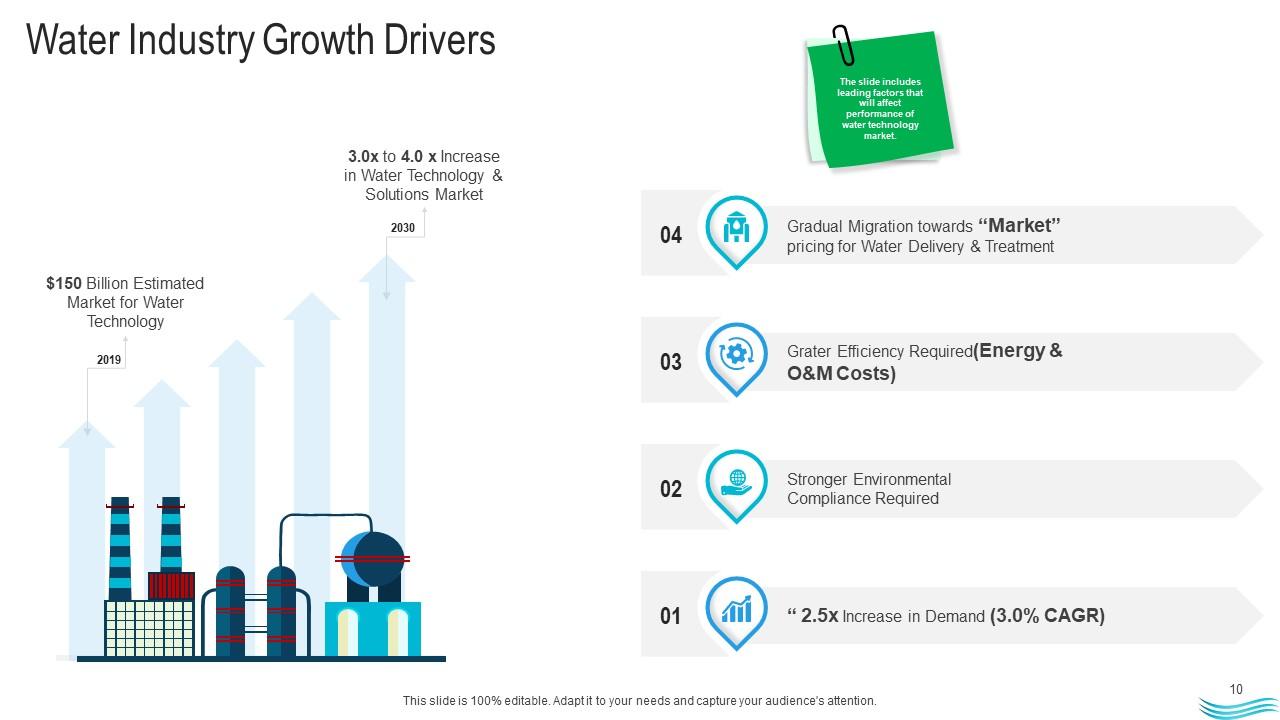
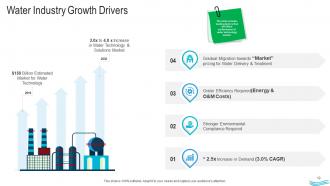
This decade is expected to see manifold growth in Water Technology & Solutions Market. This PPT Template includes the leading factors that will affect the performance of this market. The slide lists the prominent one as stronger environmental clearance required and gradual migration towards market pricing for water delivery and treatment.
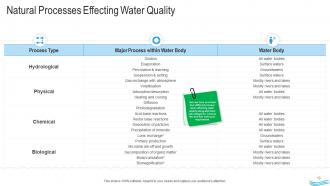
Template 3 Natural Processes Affecting Water Quality PPT Template
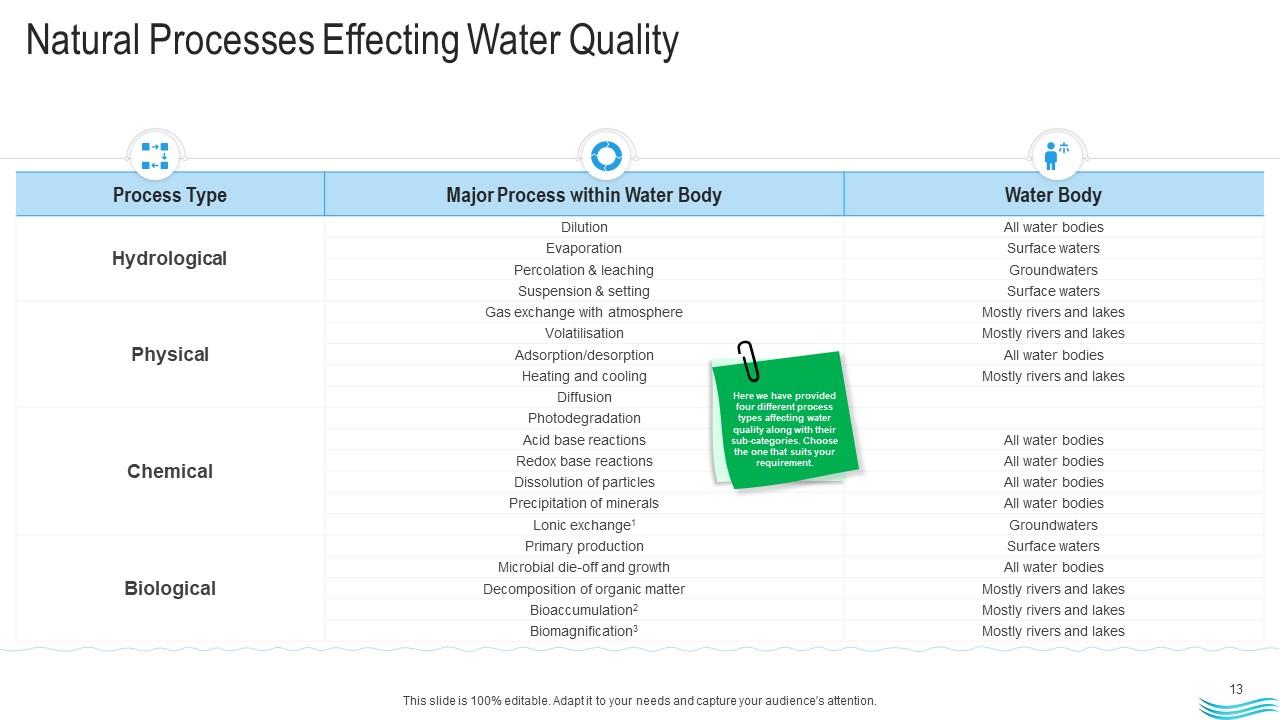
With the use of this slide, the idea is to provide four different process types affecting water quality along with their sub-categories. Choose the one that suits your requirement. The PPT Template lists these as hydrological, physical, chemical, and biological.
Template 4 Pollutants that Deteriorate Water Quality on Global Scale

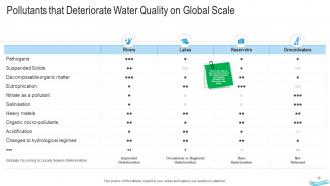
To ensure we preserve enough water for our future generations, basic knowledge of common pollutants is necessary. This PPT Template showcases some of the common chemical and biological pollutants that deteriorate water quality. The tabular format also touches base with the sources each pathogen makes its home.
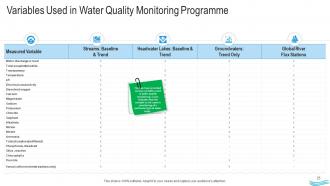
Template 5 Variables Used in Water Quality Monitoring Program
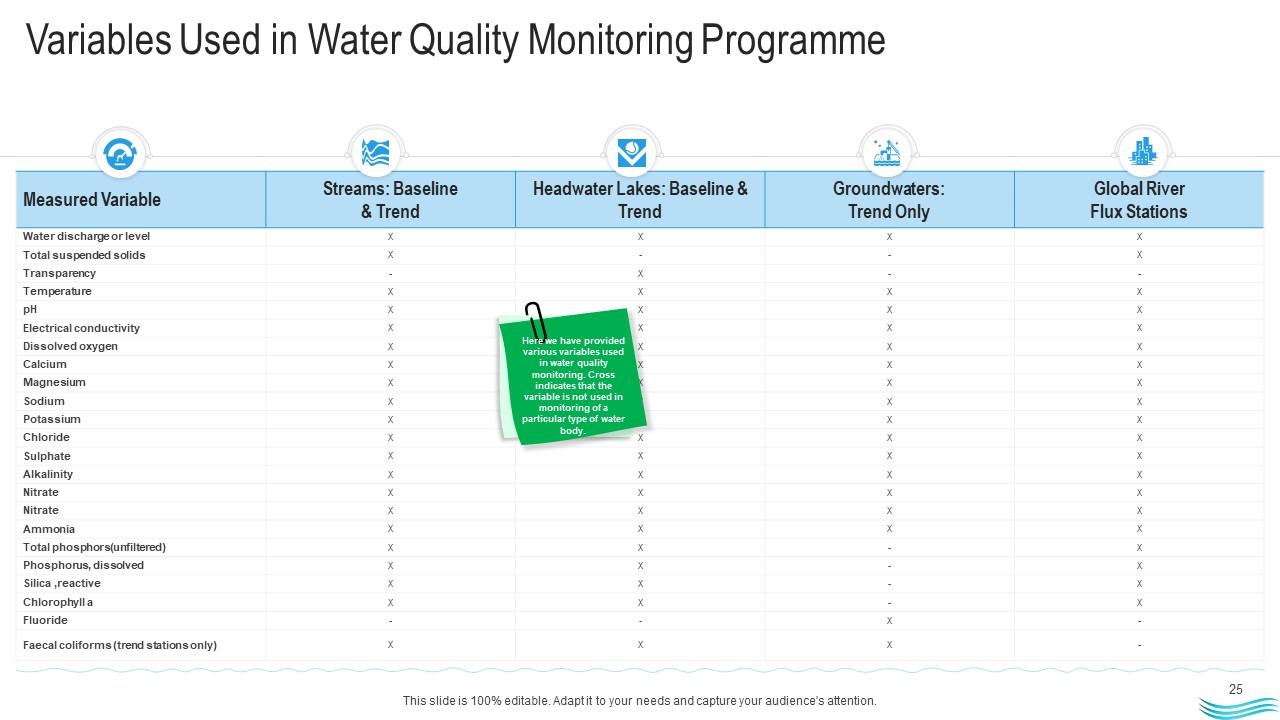
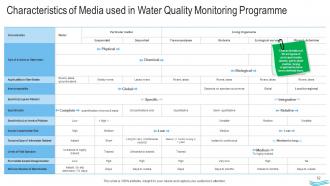
Water quality is the base of the entire entrepreneurial edifice around the management of this precious natural resource. Businesses may use this PPT Template to dig deep and depict, in a clutter-free manner, into variables used in water quality monitoring. A cross in the table indicates that the variable is not used in the monitoring of a particular type of water body.
Template 6 Detailed Waste Water Treatment Process
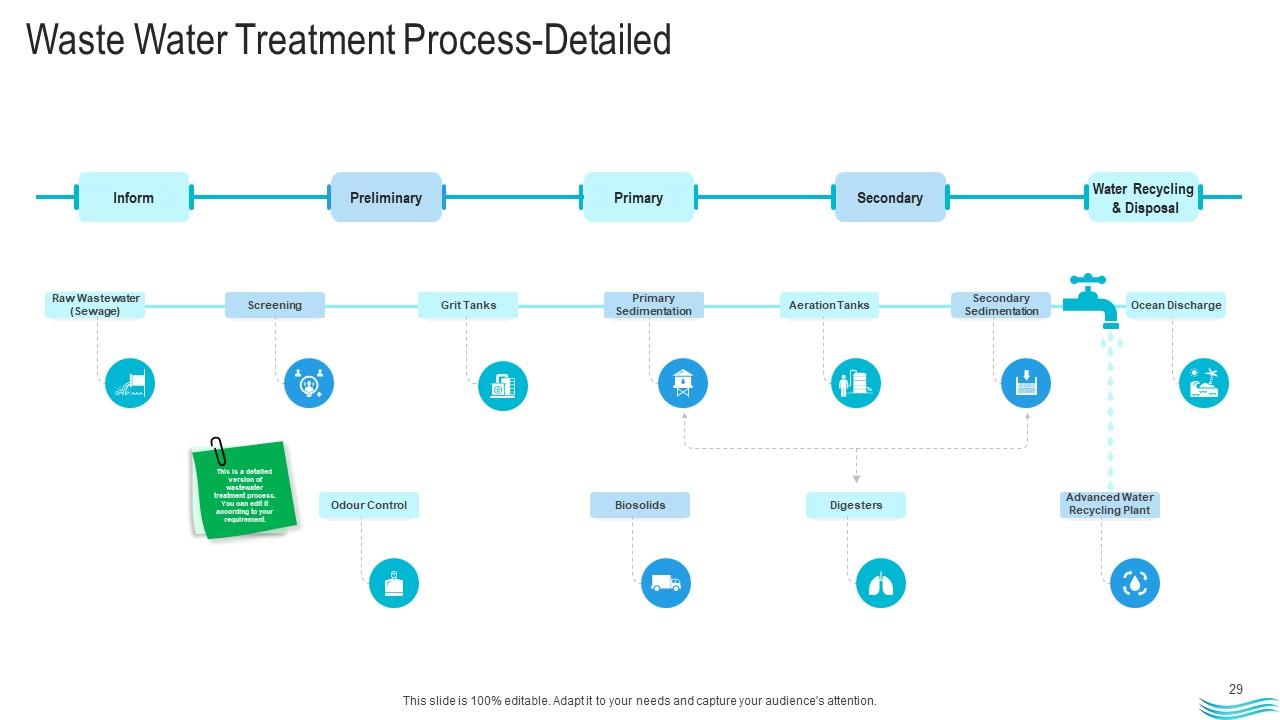
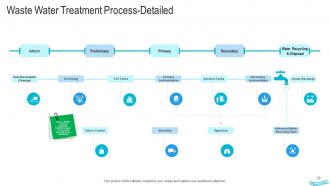
With over half of the business opportunity in water management related to treatment of waste water, mastering the process, as this PPT depicts, is critical to user success. In the slide, each step is explained. From the screening of raw waste-water (sewage) to odor control, the Layout illustrates each task to be done. The icons add to the ease of reading the slide, with most steps clear just in a jiffy.
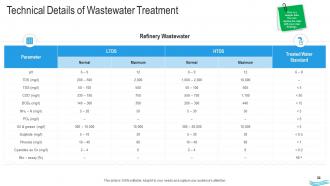
Template 7 Technical Details of Wastewater Treatment PPT Template
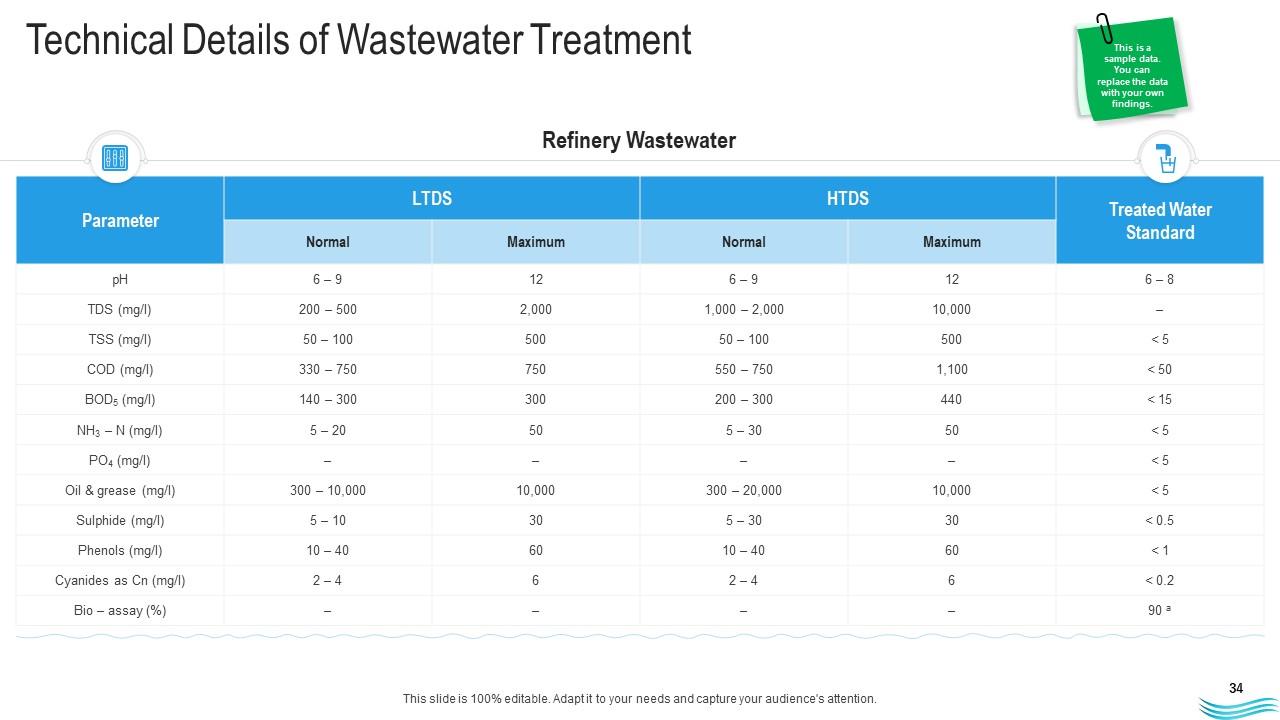
Use this slide to detail the impurities and technical chemicals added to water as it is purified. The table compares the values in terms of Low Total Dissolved Solids (LTDS), High Total Dissolved Solids (HTDS) and Standard Treated Water. This is a sample data. You can replace the data with your own findings. The values, however, have to align with the calibration as per the standard water.
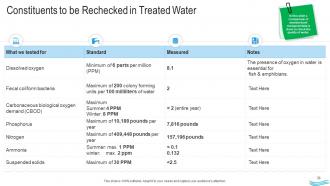
Template 8 Constituents to be Rechecked in Treated Water
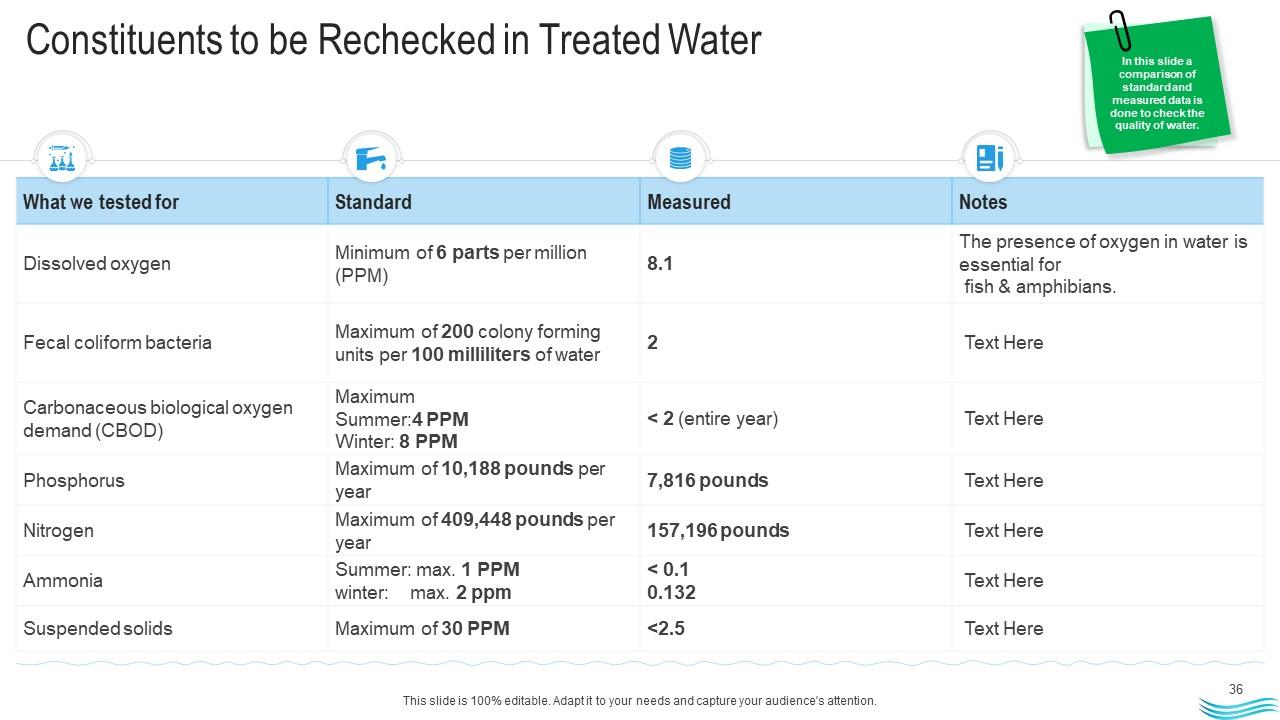
In this slide, a comparison of standard and measured data is done to check the quality of water. The PPT Template’s USP is its column on what we tested for, where the water management firm can aim to differentiate itself on, based on the quality of checks and the number of checks. The columns of standard, measured and notes make the slide very useful.
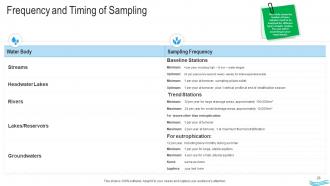
Template 9 Water Quality Monitoring Trend Template
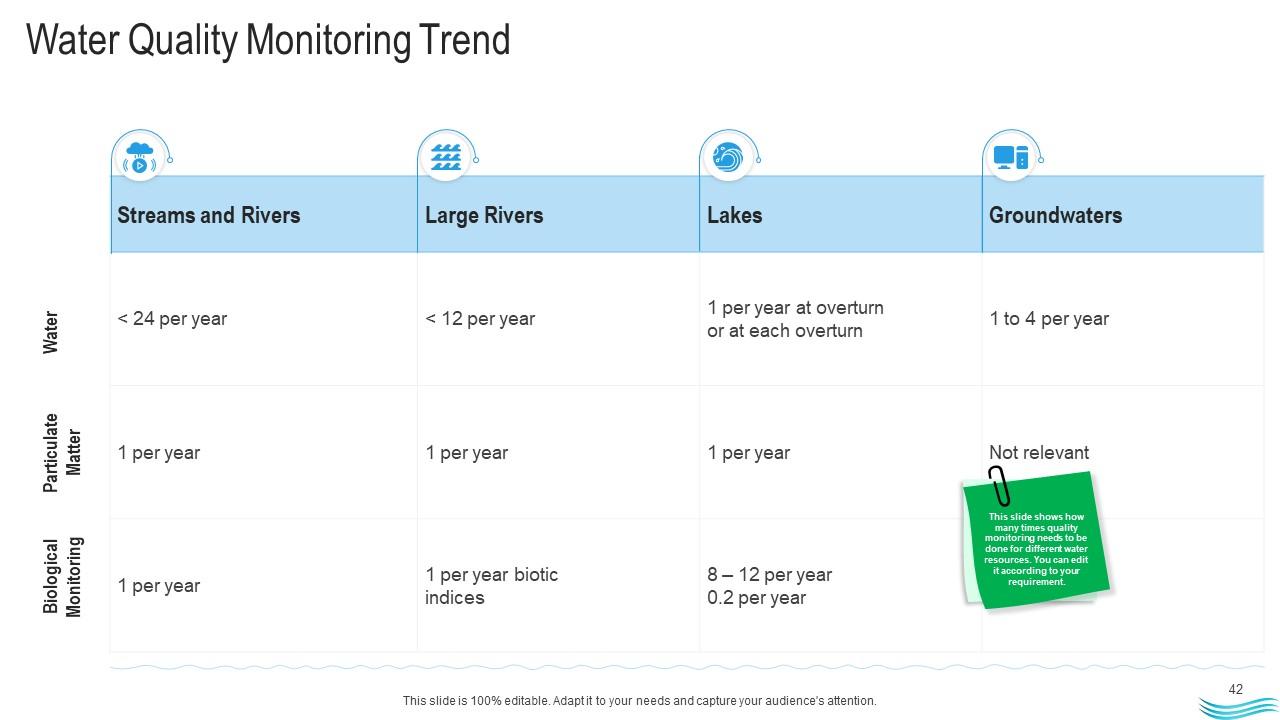
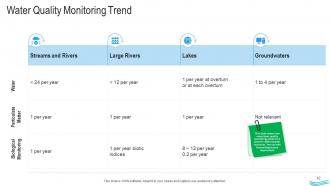
Do you really want to know what is the iterative opportunity for water quality monitoring? This PPT Slide helps you showcase this in the most capable manner. This slide shows how many times quality monitoring needs to be done for different water resources. For instance, every major water resource needs monitoring, from groundwaters to streams and rivers. The monitoring must account for particulate matter, and water. Biological monitoring is also needed.
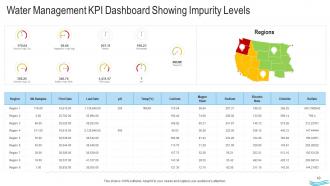
Template 10 Water Management KPI Dashboard Showing Impurity Levels
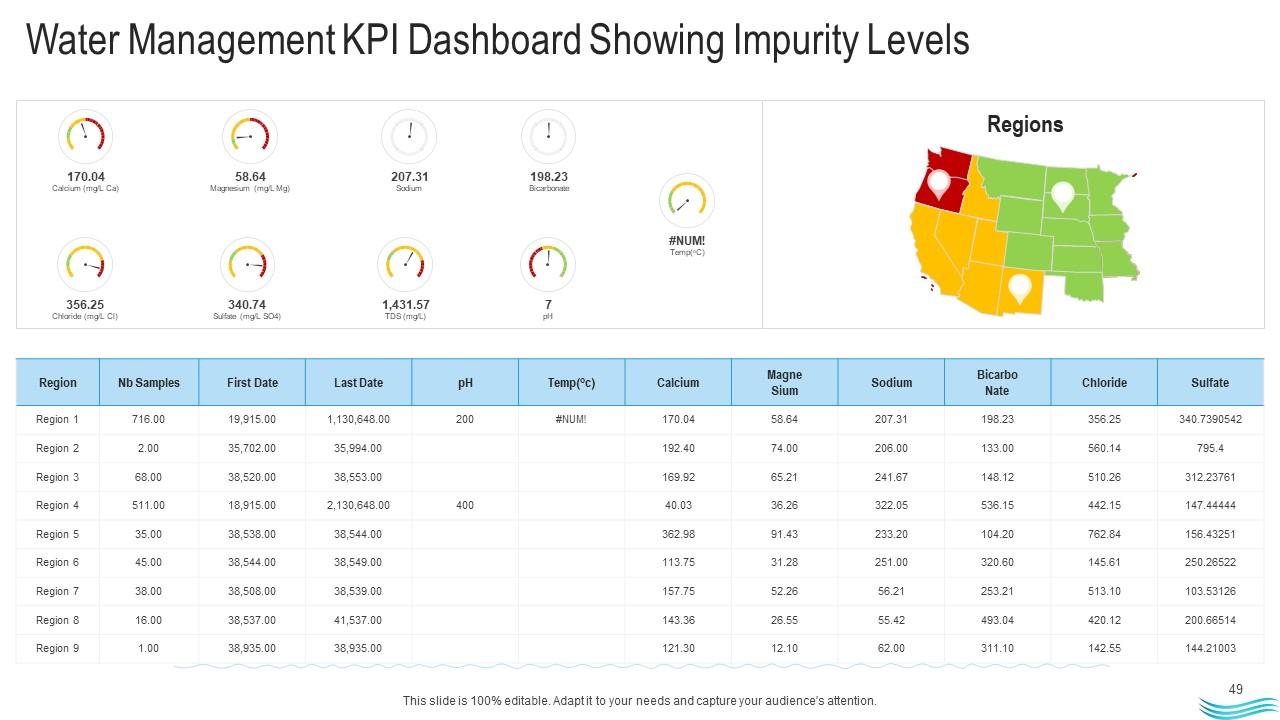
This PPT Template helps users map regions across a geography to impurity levels, using a map and color-coded legend. Calcium, Magnesium, Sodium, Sulphates and Chlorides are all calculated and represented in this wonderful, clutter-free PPT design. The Ph and temperature also recorded, along with the date and time when the sample was taken. A second sample is taken, if necessary.
*****
MANAGING WATER A GOLD MINE
It is clear that water management is a limitless opportunity for businesses, provided we don’t overexploit it commercially. As the UN has already noted, and this blog has backed, sustainable water management is the way forward. The sooner businesses grasp this concept, the better for their own bottom lines and for the shared future of humanity as well. Without water, there is no life.
PS There is already cutting-edge technology available for water management. Experience it through our PPT Template on Internet of Things (IoT) Water Management here.
Water management powerpoint presentation slides with all 78 slides:
Use our Water Management Powerpoint Presentation Slides to effectively help you save your valuable time. They are readymade to fit into any presentation structure.






FAQs for Water management
So you're looking at water conservation? Start with rainwater harvesting - it's surprisingly effective. Green infrastructure helps a ton too, like permeable pavement and rain gardens. Smart recycling systems are worth investigating. Honestly, the leak detection thing is huge - cities waste insane amounts through crappy old pipes. Tiered pricing also pushes people to conserve without being heavy-handed about it. Greywater systems work well for irrigation, and urban wetlands do natural filtration (plus they look nice). Don't put all your eggs in one basket though. Audit what you've got first, then tackle your biggest water losses.
Honestly, tech has been huge for water conservation lately. Smart irrigation is probably your best bet - it reads soil moisture and weather data, then adjusts automatically. Cuts waste by like 30%. IoT sensors let you track usage as it happens, plus AI can spot leaks early before they get crazy expensive. There are even apps that turn conservation into a game for employees (sounds cheesy but apparently works!). My advice? Pick one or two that target your worst waste areas first. Scale up once you see it's actually working and paying off.
So basically, government policies are what set all the water rules in your area - pricing, allocation, who gets what during droughts, all that stuff. Without them you'd have total chaos with every city doing whatever they want with water rights (which would be a nightmare honestly). They also force utilities to actually plan ahead with sustainability strategies and emergency plans. Oh and there's usually conservation incentives built in too. When you're figuring out your water management strategy, definitely check what regulations you have to follow first. Then you can build around those requirements instead of having to backtrack later.
So climate change is screwing with water planning big time. We're getting these crazy swings - super long droughts, then BAM, massive floods. Makes it impossible to predict what's coming next. Snowmelt's happening at weird times now too, which throws off the whole seasonal rhythm we used to count on. Higher temps don't help either - more water just evaporates away from reservoirs, and farmers need way more irrigation. That old-school approach of just looking at historical data? Totally useless now, honestly. Water managers have to start using climate projections instead and build systems that can actually handle these wild swings.
Track your water supply reliability and how efficiently you're distributing it first. Customer satisfaction matters too - nobody's happy when their tap runs dry. Infrastructure age is critical because surprise pipe bursts at 2am suck for everyone involved. I'd also watch leak detection rates and energy consumption per unit delivered. Oh, and recovery time from disruptions is huge. Water quality metrics are obviously non-negotiable. Setting up monthly tracking helps you catch problems before they blow up. Cost-effectiveness ratios round out the picture so you know if you're burning money somewhere.
Honestly, getting the community involved from day one is huge for water projects. Locals know stuff you'd never think of - like which streets flood every winter or why nobody uses that one water fountain. People actually follow conservation rules when they helped make them, which sounds obvious but you'd be surprised how often agencies skip this step. Host some listening sessions before diving into planning. Your project will run smoother, last longer, and residents will help you catch problems early instead of complaining later.
Look, the biggest wins are usually the obvious stuff - fixing leaks (those tiny drips add up like crazy), recycling water through closed-loop systems, and reusing rinse water instead of dumping it. Most companies don't even know where their water goes, which is wild. Do a proper audit first - track usage by department and map your flows. You can't fix what you're not measuring, right? Oh, and swap out those ancient once-through cooling systems if you still have them. Low-flow fixtures help too, but honestly that's just scratching the surface compared to process changes.
So basically, data analytics spots leak patterns and predicts when demand's gonna spike before it happens. Smart meters and sensors are totally worth the investment - that data helps you catch problems way earlier than walking around checking pipes manually. The coolest part? Predictive models actually tell you which pipes might fail next, so you can fix them before they burst and flood everything. You'll also see consumption patterns across different zones, which makes balancing supply so much easier. Honestly feels like cheating sometimes. Real-time pressure monitoring is clutch too for keeping everything running smooth.
So it really depends on what each place has going for them. Israel and Australia are crazy good at desalination because they've had to figure it out. Middle Eastern countries dump tons of money into those plants, but California focuses more on conservation rules and managing groundwater. Africa often goes with wells and rainwater collection since they're working with limited infrastructure. Singapore does this insane thing where they turn sewage into drinking water - they actually branded it "NEWater" which is kind of genius marketing honestly. Most places that succeed don't just pick one thing though, they mix strategies.
Dude, when groundwater runs low, everything falls apart fast. Wells fail. Pumping costs go crazy. Plus you're fighting neighbors for whatever's left - not fun. Here's the kicker though: aquifers take forever to bounce back, sometimes decades. I'd start looking at drip irrigation and drought-resistant crops ASAP. Soil moisture sensors help too. Some guys I know switched to treated wastewater or set up rainwater collection. Honestly, get multiple water sources lined up before you're scrambling. Crisis mode sucks and it's expensive as hell.
First thing - map out where your water's coming from now and where rainwater could actually help fill the gaps. Most planning frameworks already do infrastructure assessments anyway, so just add rainwater as another source. Getting planning, zoning, and utilities to actually coordinate is the real challenge though (good luck with that bureaucracy). Build collection requirements right into your codes, connect storage to stormwater plans, and link everything to existing water networks. Don't try to replace your whole system - just supplement it. Honestly, pilot projects work best for proving it's worth the investment before you go big.
Honestly, the biggest thing I've noticed is you can't just throw tech at water problems - communities have to actually want it to work. Singapore nailed this by doing massive public education campaigns alongside their recycling infrastructure. Israel basically made desalination a point of national pride, which sounds weird but totally worked. Australia figured out that when you price water right, people change their habits crazy fast. Oh, and their drought policies are solid too. Start small with one pilot that actually shows results, then expand once people are already believers. Way easier than trying to convince skeptics.
Honestly, start by actually talking to the communities that need help - don't just assume you know what they want. Map out who's lacking clean water in your area first. Then focus on stuff they can realistically maintain themselves, like community-run systems or smaller treatment setups. The financing part is tricky though - you can't just dump costs on people who are already struggling. I've seen way too many projects fail because some consultant thought they knew better than locals who've lived there forever. Get the community leaders involved from day one, not as an afterthought.
So pollution totally screws with water management costs. You've got industrial runoff, farm chemicals, city waste - it's a nightmare honestly. Treatment gets crazy expensive when all that junk contaminates your sources. Water managers end up dumping money into fancy filtration systems or scrambling to find cleaner alternatives. The smart move? Stop pollution before it happens instead of trying to clean up the mess later. Way cheaper that way. Plus stricter regulations mean you can't just ignore contaminated sources anymore - my cousin works in water treatment and says it's gotten insane lately.
Honestly, you need countries to actually sit down and hash out real agreements - none of this wishy-washy stuff. Set up joint monitoring so everyone's looking at the same numbers. The Mekong River thing works okay, though they've had drama. Build in ways to handle disputes before they blow up. Regular meetings help too, plus shared funding for big projects. Climate change is gonna mess with water patterns, so make everything flexible enough to adapt. Oh, and map out who controls what watersheds first - sounds boring but trust me, you'll thank yourself later when borders get messy.
-
very good
-
Graphics are very appealing to eyes.
-
Really like the color and design of the presentation.
-
I discovered this website through a google search, the services matched my needs perfectly and the pricing was very reasonable. I was thrilled with the product and the customer service. I will definitely use their slides again for my presentations and recommend them to other colleagues.
-
Topic best represented with attractive design.
-
The content is very helpful from business point of view.
-
Awesome use of colors and designs in product templates.
-
Wonderful templates design to use in business meetings.
-
Illustrative design with editable content. Exceptional value for money. Highly pleased with the product.
-
Illustrative design with editable content. Exceptional value for money. Highly pleased with the product.
-
Page:
- You're currently reading page 1
- Page 2
-
