


Wearable Sensors Powerpoint Presentation Slides




Try Before you Buy Download Free Sample Product
 Impress Your
 Audience
 100%
100% Editable
 Save Hours
 of Time


Grab our insightfully designed template on Wearable Sensors that briefly explains digital biomarkers, their outlook, importance, market, regulatory validation processes, etc. We have incorporated an overview of digital biomarkers, including their stance, the principle of behavioral analysis, their importance, and much more. In addition, this biomarker classification deck showcases the global market size and factors affecting the market and market segmentation for them. It also includes their regulatory validation process. Also, the Digital health PPT portrays how healthcare has transformed with a digital transformation, including its benefits, impact, and application areas. It also encompasses digital biomarkers categorization and users. Furthermore, our Biomedical Informatics template caters to enhanced sensing technologies and devices used in digital biomarkers, including swear detection, insole sensing, apps predicting disease onset, portable intelligent devices, etc. Moreover, this Wearable Sensors deck contains potential use cases of digital biomarkers, various challenges, and solutions to their adoption. It also includes a comparison between traditional and digital biomarkers characteristics. Lastly, this Health Information Management PPT contains a roadmap, a timeline to develop digital biomarkers solutions, and a performance tracking dashboard. Get access now.
People who downloaded this PowerPoint presentation also viewed the following :
Content of this Powerpoint Presentation
Slide 1: This slide introduces Wearable Sensors. Commence by stating Your Company Name.
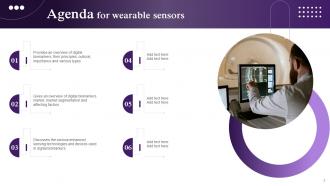
Slide 2: This slide depicts the Agenda of the presentation.
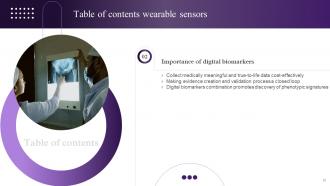
Slide 3: This slide elucidates the Table of Contents.
Slide 4: This slide highlights the Title for the Topics to be covered further.
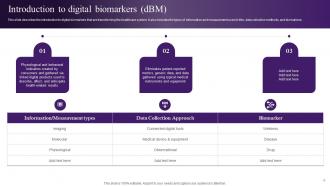
Slide 5: This slide describes the introduction to digital biomarkers that are transforming the healthcare system.
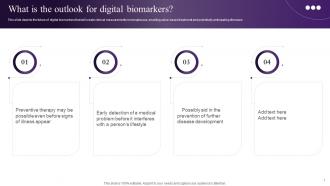
Slide 6: This slide displays the future of digital biomarkers that will create clinical measurements inconspicuous, enabling value-based treatment and potentially anticipating illnesses.
Slide 7: This slide shows the principles of behavioral analysis using digital biomarkers.
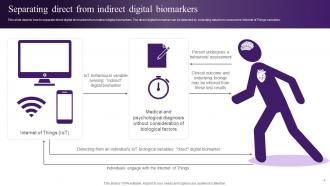
Slide 8: This slide mentions how to separate direct digital biomarkers from indirect digital biomarkers.
Slide 9: This slide elucidates the Heading for the Contents to be discussed next.
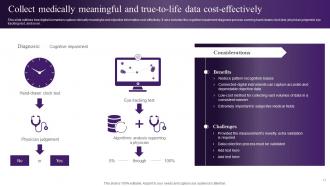
Slide 10: This slide outlines how digital biomarkers capture clinically meaningful and objective information cost-effectively.
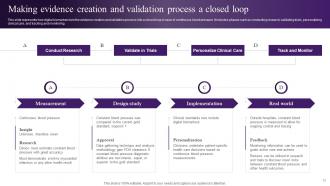
Slide 11: This slide represents how digital biomarkers turn the evidence creation and validation process into a closed loop in case of continuous blood pressure.
Slide 12: This slide talks about how combining digital biomarkers allow for identifying phenotypic characteristics that can better explain human health and illness variation.
Slide 13: This slide portrays the Title for the Ideas to be covered further.
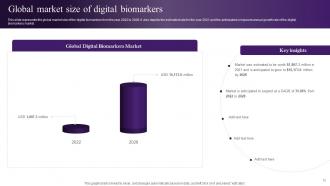
Slide 14: This slide represents the global market size of the digital biomarkers from the year 2022 to 2028.
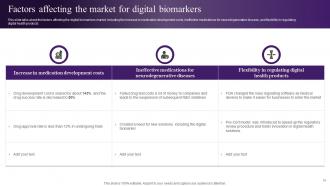
Slide 15: This slide deals with the factors affecting the digital biomarkers market.
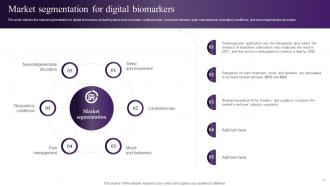
Slide 16: This slide outlines the market segmentation for digital biomarkers including sleep and movement, cardiovascular, mood and behavior, pain management, etc.
Slide 17: This slide contains the Heading for the Topics to be discussed next.
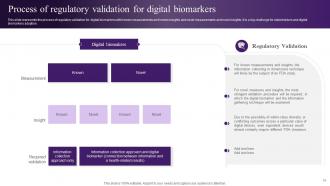
Slide 18: This slide represents the process of regulatory validation for digital biomarkers with known measurements and known insights and novel measurements and novel insights.
Slide 19: This slide indicates the features of precision neurology technology which is a new gold standard.
Slide 20: This slide highlights the Title for the Components to be discussed further.
Slide 21: This slide illustrates the advantages of digital biomarkers in healthcare based on cost, digital conversions, comfort, etc. for continuous monitoring to provide a more accurate assessment of consumer health.
Slide 22: This slide represents how digital biomarkers are transforming the healthcare system by aiding in early illness detection, treatment effectiveness evaluation, resolving clinical trial recruiting challenges, etc.
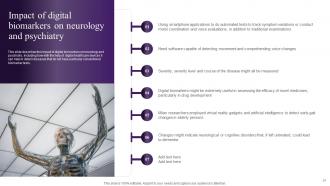
Slide 23: This slide describes the impact of digital biomarkers on neurology and psychiatry, including how with the help of digital healthcare devices it can help to detect diseases that do not have particular conventional biomarker tests.
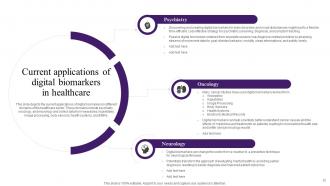
Slide 24: This slide depicts the current applications of digital biomarkers in different domains of the healthcare sector.
Slide 25: This slide displays the Heading for the Ideas to be covered in the upcoming template.
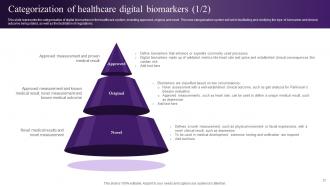
Slide 26: This slide represents the categorization of digital biomarkers in the healthcare system, including approved, original, and novel.
Slide 27: This is yet another slide continuing the Categorization of healthcare digital biomarkers.
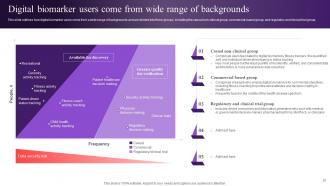
Slide 28: This slide outlines how digital biomarker users come from a wide range of backgrounds and are divided into three groups.
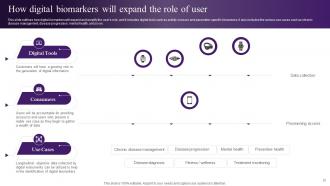
Slide 29: This slide outlines how digital biomarkers will expand and amplify the user's role, and it includes digital tools such as activity sensors and parameter-specific biosensors.
Slide 30: This slide indicates the Title for the Topics to be covered further.
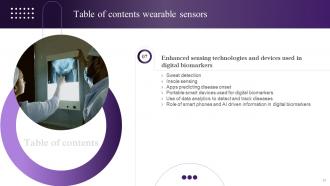
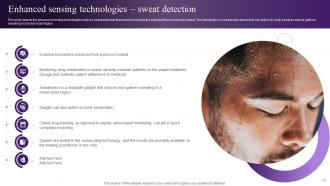
Slide 31: This slide depicts the enhanced sensing technologies such as sweat detection that examine biomarkers extracted from a person’s sweat.
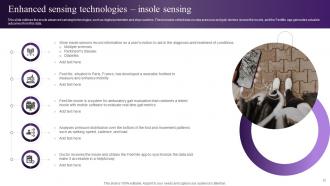
Slide 32: This slide outlines the insole advanced sensing technologies, such as digital pedometer and step counters.
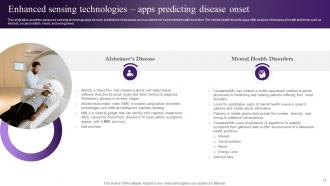
Slide 33: This slide talks about the advanced sensing technology apps for early predictions of diseases such as alzheimer’s and mental health disorders.
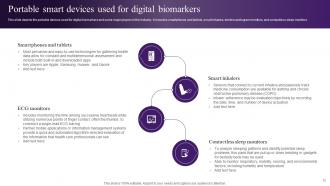
Slide 34: This slide showcases the portable devices used for digital biomarkers and some major players in the industry.
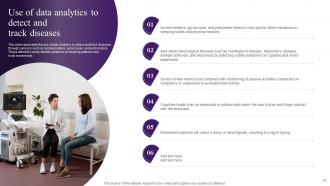
Slide 35: This slide represents the use of data analytics to detect and track diseases through sensors, such as accelerometers, gyroscopes, and pedometers.
Slide 36: This slide illustrates the role of smartphones and artificial intelligence-driven information in digital biomarkers.
Slide 37: This slide mentions the Heading for the Contents to be discussed in the forth-coming template.
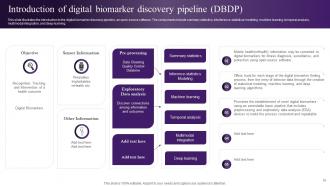
Slide 38: This slide illustrates the introduction to the digital biomarker discovery pipeline, an open-source software.
Slide 39: This slide represents the digital biomarker discovery pipeline's landscape.
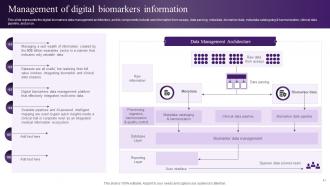
Slide 40: This slide highlights the digital biomarkers data management architecture, and its components include raw information from assays, data parsing, metadata, etc.
Slide 41: This slide comprises the Heading for the Ideas to be discussed in the next template.
Slide 42: This slide talks about the potential use cases of digital biomarkers in biopharma, healthcare providers, and medical insurance payers.
Slide 43: This slide mentions the Title for the Topics to be covered further.
Slide 44: This slide depicts the challenges to digital biomarker adoption, and it includes privacy concerns, adoption challenges, and regulatory hurdles.
Slide 45: This slide represents the hurdles before data becomes an insightful digital biomarker and includes three stages: assessment, cleaning, and application.
Slide 46: This slide describes the clinical adoption of digital biomarkers obstacles associated with stakeholder incentives and clinical workflow integration based on evidence, implementation, and incentives.
Slide 47: This slide talks about the infrastructure hurdles in adopting digital biomarkers, including conventional and emerging challenges.
Slide 48: This slide represents the digital biomarkers adoption challenges related to gold standard validation, including the results, such as true negative and positive, false positive and negative produced by the gold standard.
Slide 49: This slide elucidates the Heading for the Ideas to be discussed further.
Slide 50: This slide describes the comparison between traditional and digital biomarkers characteristics, including qualitative and quantitative measurements, cost, intrusiveness, modularity, and use of both methods in medical research.
Slide 51: This slide exhibits the Title for the Components to be covered in the following template.
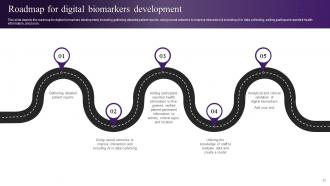
Slide 52: This slide depicts the roadmap for digital biomarkers development, including gathering detailed patient reports, using neural networks to improve interaction.
Slide 53: This slide portrays the Heading for the Topics to be discussed next.
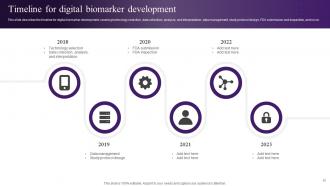
Slide 54: This slide describes the timeline for digital biomarker development, covering technology selection, data collection, analysis, and interpretation, etc.
Slide 55: This slide highlights the Title for the Topics to be covered further.
Slide 56: This slide represents the dashboard for digital biomarkers tracking, and it covers details about coughing, talking, physical activity, respiration, cardiac activity, etc.
Slide 57: This is the Icons slide containing all the Icons used in the plan.
Slide 58: This slide is used to reveal some Additional information.
Slide 59: This slide mentions about the Brief history from telematics to digital health.
Slide 60: This slide presents the Stacked column for depicting company related information.
Slide 61: This is the Line chart for some relevant information.
Slide 62: This slide portrays the Organization's Timeline.
Slide 63: This is the Puzzle slide with related imagery.
Slide 64: This slide includes the Post it notes for reminders and deadlines.
Slide 65: This slide incorporates the 30 60 90 days plan for efficient planning.
Slide 66: This is the Venn diagram slide for some more relevant information.
Slide 67: This is the Thank You slide for acknowledgement.
Wearable Sensors Powerpoint Presentation Slides with all 75 slides:
Use our Wearable Sensors Powerpoint Presentation Slides to effectively help you save your valuable time. They are readymade to fit into any presentation structure.





























FAQs for Wearable Sensors
Dude, the flexible stuff is insane - sensors that actually bend and stretch with your skin. No more finger pricks for blood sugar either, which is huge. Battery tech finally caught up too, some last weeks now instead of dying every other day. What's really cool is the AI learning your specific patterns instead of just spitting out random numbers at you. Oh and they're detecting stress hormones through sweat now? Wild. Honestly if you're thinking about investing or whatever, health monitoring is where all the money's going right now.
Honestly, wearable sensors are game-changers because they give you constant health monitoring instead of waiting for doctor appointments. Your watch tracks heart rate, blood pressure, even glucose and sleep patterns. Pretty wild, right? You can catch problems early before they get serious. If you have diabetes or heart issues, you'll be able to tweak meds or diet based on real data instead of just winging it. My cousin does this with her blood sugar now. Just make sure whatever device you get actually talks to your doctor's system - otherwise you're just collecting fancy numbers that go nowhere.
Honestly, battery life is gonna be your worst nightmare - people hate charging stuff constantly. Motion screws up readings all the time, which is super annoying. Different skin types make sensors act weird too. Oh, and you need people to actually want to wear the thing long-term, not just shove it in a drawer after a week. Processing all that raw sensor data into something useful? That's a whole other mess. Start fixing the power issues early though - trust me, you don't want to redesign everything later when you realize it dies in three hours.
So basically they encrypt the data when it's being sent and store it securely in the cloud with access controls. Plus they strip out identifying info through anonymization. Good devices let you pick what gets shared and with who. Honestly though, those privacy policies are such a pain to read through - who has time for that? Reputable brands have to follow GDPR or HIPAA rules depending on the device. I'd stick with well-known manufacturers and check your settings regularly. Those sketchy cheap ones probably cut corners on security.
Healthcare's where it's at right now - continuous glucose monitors, heart rate stuff, remote patient monitoring. Hospitals are saving crazy money on this. Manufacturing's getting really interesting too, workers wear sensors to prevent injuries and track how they move. Honestly didn't expect that one to blow up but it's everywhere now. Agriculture does livestock monitoring, construction companies use them for safety. Oh and fitness obviously - everyone's tracking steps and sleep scores these days. I'd probably go after healthcare or industrial safety if I were you. Those budgets are insane and growing fast.
Dude, wearable sensors are honestly game-changers for training. They track your heart rate, sleep, recovery - all that stuff you can't really feel accurately when you're grinding through workouts. The movement data is where it gets interesting though. You'll see your exact stride length, power output, technique flaws you never knew existed. Recovery tracking between sessions? Super clutch for avoiding burnout. I'd probably start simple with basic heart rate monitoring and movement sensors, then get sport-specific ones later. Way better than guessing how hard you're actually working - I used to think I was pushing harder than I actually was.
Most wearables just use Bluetooth or WiFi to connect to your phone, then dump everything into their companion apps. Battery life stays decent because they use Bluetooth Low Energy - pretty smart actually. The apps will process and show you all your data in charts and whatever. Oh, and most have APIs if you want to get fancy and connect to other platforms or build something custom. Honestly though, the app ecosystem is what makes or breaks these devices. I'd definitely check the app store reviews first and maybe peek at their API docs if you're planning anything complex. Some brands are way better than others for that stuff.
So basically, AI turns your fitness tracker from a fancy calculator into something that actually gets you. It learns your normal heart rate patterns and can tell if you're just walking upstairs or having a real health scare. The algorithms get smarter about YOUR body over time - honestly, it's kind of creepy but super helpful. Without this stuff, you'd just have a bunch of random numbers. Oh, and definitely look for "on-device processing" when you're shopping around. Way better for keeping your data private plus it's faster.
Dude, wearable sensors are completely changing how doctors monitor patients remotely. Instead of just seeing you every few months, they're getting continuous data on heart rate, blood sugar, whatever - which catches problems way sooner. Patients actually pay more attention to their health when they can see their own numbers (honestly kind of genius). During telehealth calls, doctors aren't just relying on "yeah I feel fine" - they've got real biometric data backing everything up. Oh, and treatments can get adjusted immediately instead of waiting weeks for your next visit. Main thing to think about: what health metrics would actually make your doctor change treatment if they could see them 24/7?
So basically, medical sensors get FDA approval and have way stricter accuracy - like within 2-3% vs your Fitbit being off by 10-15%. Which honestly is fine for just tracking workouts and stuff. Medical ones also have better data security but cost a fortune. Consumer wearables are getting pretty decent though! My Apple Watch isn't perfect but it's close enough for everyday use. If you're doing actual research or need clinical data, go medical-grade. But for general wellness? Consumer devices work great and won't break the bank.
Yeah, so your wearable can get pretty wonky depending on conditions. Heat and cold mess with calibration big time. Humidity screws with the electronics too. If you're doing crazy workouts, all that bouncing around makes heart rate monitors and accelerometers give garbage readings. Altitude changes? That'll throw off pressure sensors. I swear my fitness tracker had a complete meltdown during that heat wave last summer - totally useless. Other electronics nearby can interfere with the wireless stuff too. Just know your device's limits and maybe double-check readings when the weather's being weird.
Honestly, wearables are about to get crazy good. We're talking continuous glucose monitoring for everyone, not just diabetics. Plus sensors that'll catch you getting sick before you even know it - which is kind of wild if you think about it. Battery life won't suck anymore (finally!), and they're working on flexible tech that goes right into your clothes instead of these chunky watches. The whole thing's shifting from "hey you walked 10k steps" to actual medical-grade health tracking. AI will make them way smarter at predicting problems too. You should probably start thinking about what health stuff you'd actually want to monitor, because there's gonna be tons of options soon.
Honestly, those sensors are pretty slick - they'll track your heart rate, how you're moving, even if you're around sketchy chemicals or loud noise. Real-time alerts pop up when you're about to mess up your back lifting something or you're too beat to work safely. Your managers can spot workflow issues and see where things get bottlenecked too. The data's actually useful for once. I'd probably test them out in whatever area has the most accidents first - that's where you'll see if they're worth the investment. Pretty wild how much they can monitor without being annoying about it.
Honestly, it's mostly about privacy and who gets your data. These things track everything - where you go, your heart rate, sleep patterns, the works. Companies can sell that info or employers might use it against you somehow. The consent thing is huge too since nobody actually reads those crazy long terms of service agreements (guilty as charged lol). Being constantly monitored just feels weird and invasive after a while. Hackers are another worry - they love health data. My advice? Actually check your privacy settings regularly and think twice before sharing everything with every app that asks.
So basically all these sensors work together to get the full picture of what's going on with your body. Your accelerometer counts steps and catches if you fall. Gyroscopes track when you're turning or twisting around. Heart rate monitors do the obvious thing, and temperature sensors can spot fevers or figure out your sleep cycles. GPS throws in location data when you're outside doing stuff. Oh, and honestly? It's wild how much they can piece together when they're all working at once. Each one covers what the others miss, so you end up with this really complete health snapshot.
-
Presentation Design is very nice, good work with the content as well.
-
They had the topic I was looking for in a readymade presentation…helped me meet my deadline.