


Wearable Technology Powerpoint Ppt Template Bundles




Try Before you Buy Download Free Sample Product
 Impress Your
 Audience
 100%
100% Editable
 Save Hours
 of Time


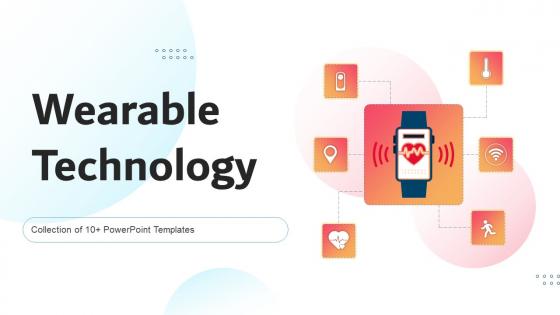
Introducing our PPT on Wearable Technology including category of electronic devices worn as accessories such as Smart watches, Smart Jewellery and Web enabled glasses. Such devices help in tracking fitness routine and physical movement of individuals at all times.Use our 100 perect downloadable presentation for better organizational productivity.
People who downloaded this PowerPoint presentation also viewed the following :
Content of this Powerpoint Presentation
Slide 1: This slide showcase title Wearable Technology.
Slide 2: This slide showcases categorization of wearable devices changing life of individuals in better way.
Slide 3: This slide showcases few examples of technologies which can be worn by consumers to keep their lifestyle on track.
Slide 4: This slide showcases organizations investing in wearable technologies used by people for tracking heath, physical movement, etc.
Slide 5: This slide showcases future forecast of technological market aiming to attract customer and helping them to keep check with their health.
Slide 6: This slide showcases benefits of using technological devices in sports aiming to prevent any health related issues.
Slide 7: This slide showcases implementation of augmented reality and virtual reality in daily lives.
Slide 8: This slide showcases market size and share of wearable technological devices driving growth of market during forecast period.
Slide 9: This slide showcases consistent force of technological wearable devices for businesses and industries.
Slide 10: This slide showcases working of cloud-based software to power wearable devices in healthcare.
Slide 11: This slide showcases critical components driving wearable devices with aim of maximizing market reach.
Slide 12: This slide showcases problems faced by individuals using wearable devices causing them trouble throughout its use.
Slide 13: This slide showcases growth of wearable technological devices in market of United States.
Slide 14: This slide showcases survey of individuals wearing and using smart watches in United States.
Slide 15: This slide showcase Wearable technology icon for listening music
Slide 16: This slide showcase Icon for tracking movement through wearable technology
Slide 17: This slide showcase Wearable technology watch icon for tracking health
Slide 18: This is a Thank You slide with address, contact numbers and email address.
Wearable Technology Powerpoint Ppt Template Bundles with all 26 slides:
Use our Wearable Technology Powerpoint Ppt Template Bundles to effectively help you save your valuable time. They are readymade to fit into any presentation structure.










FAQs for Wearable Technology Powerpoint
Common wearable technologies include smartwatches, fitness trackers, smart glasses, hearables, smart clothing, and health monitoring devices like continuous glucose monitors. These devices enhance personal productivity, health management, and connectivity by tracking biometrics, delivering notifications, and enabling hands-free interactions, with healthcare and fitness industries finding significant improvements in patient monitoring and wellness outcomes.
Wearable technology improves health monitoring by providing continuous vital sign tracking, real-time activity measurement, sleep pattern analysis, and early warning alerts for irregular conditions. These devices enable healthcare providers to monitor patients remotely, reduce hospital readmissions, and deliver personalized treatment plans, while individuals gain actionable insights for preventive care, ultimately enhancing patient outcomes and reducing healthcare costs.
Wearable technology revolutionizes fitness and physical training by providing real-time health monitoring, personalized workout guidance, performance tracking, and data-driven insights for optimization. These devices enable athletes, fitness enthusiasts, and healthcare professionals to monitor heart rate, calories burned, sleep patterns, and recovery metrics, ultimately delivering enhanced training efficiency, injury prevention, and measurable fitness outcomes.
Businesses integrate wearable technology through fitness trackers for wellness programs, smartwatches for real-time communication, and biometric devices for safety monitoring and time tracking. These technologies streamline operations by enhancing employee health, enabling instant collaboration, and providing actionable productivity data, with manufacturing, healthcare, and logistics companies finding significantly improved efficiency and reduced operational costs.
Wearable device privacy concerns include unauthorized data access, location tracking vulnerabilities, biometric data breaches, third-party sharing without consent, and inadequate encryption protocols. While these challenges require robust security frameworks, many organizations are finding that transparent data policies, enhanced encryption, and user control features ultimately deliver greater consumer trust and competitive advantage in the wearable market.
Data from wearable devices is secured through multi-layered encryption, secure cloud storage, anonymization protocols, two-factor authentication, and regular security updates. These protection mechanisms streamline compliance with privacy regulations while enabling healthcare providers, fitness companies, and insurance firms to deliver personalized services, ultimately enhancing user trust and competitive advantage in data-driven markets.
Anticipated wearable technology advancements include enhanced health monitoring sensors, flexible display integration, improved battery life, AI-powered predictive analytics, and seamless connectivity across devices. These innovations enable organizations to deliver more precise healthcare services, streamline workplace productivity monitoring, and enhance customer experiences, with industries like healthcare and manufacturing finding significant operational efficiency improvements.
Wearable technology reshapes mobile app development by requiring simplified interfaces, real-time data synchronization, and optimized battery performance. Developers now create companion apps for smartwatches and fitness trackers, enabling seamless health monitoring, notifications, and quick interactions, while healthcare, fitness, and retail sectors increasingly leverage these integrated experiences for enhanced customer engagement.
Wearable devices enhance gaming and entertainment through immersive haptic feedback, biometric monitoring for adaptive gameplay, gesture controls, and augmented reality overlays. These technologies streamline user engagement by delivering personalized experiences, real-time health integration, and seamless interaction across platforms, with many gaming companies finding that wearables ultimately create more compelling, physically responsive entertainment experiences.
Wearable technology revolutionizes chronic disease management by enabling continuous monitoring, early detection of health changes, and personalized treatment adjustments through real-time data collection. These devices streamline patient care by reducing hospital visits, enhancing medication adherence, and improving quality of life, with healthcare providers increasingly finding that remote monitoring delivers better outcomes and lower costs.
Wearable tech revolutionizes remote patient monitoring by continuously tracking vital signs, detecting health anomalies, and transmitting real-time data to healthcare providers. These devices enable physicians to monitor chronic conditions, adjust treatments proactively, and reduce hospital readmissions, with many healthcare systems finding that wearable integration delivers faster interventions and improved patient outcomes.
Wearable technology production presents both environmental challenges and opportunities, including resource extraction for rare earth minerals, energy-intensive manufacturing processes, electronic waste generation, and carbon emissions from global supply chains. However, many manufacturers increasingly adopt sustainable practices like recyclable materials, energy-efficient production methods, and take-back programs, ultimately delivering reduced environmental impact while meeting growing consumer demand for eco-conscious devices.
Educators can utilize wearable devices to enhance learning through real-time health monitoring during physical activities, interactive augmented reality lessons, biometric feedback for stress management, and gamified fitness challenges that promote active learning. These technologies streamline data collection, personalize educational experiences, and increase student engagement, with many schools finding that wearable integration ultimately delivers improved learning outcomes and better student wellness tracking.
Workplace wearable monitoring raises concerns around employee privacy, data security, consent transparency, and potential discrimination based on health metrics. While these technologies can enhance workplace safety and productivity, organizations must balance monitoring benefits with worker rights, ensuring clear policies, voluntary participation, and secure data handling to maintain trust and avoid creating surveillance-oriented work environments.
Fashion and design enhance wearable technology's future by improving user adoption, creating aesthetic appeal, and ensuring seamless integration into daily life. Through strategic collaboration between designers and engineers, companies develop devices that balance functionality with style, ultimately delivering broader market acceptance and sustained usage, with many fashion-forward brands finding that design-first approaches revolutionize consumer engagement.
-
My search for complete decks ended with SlideTeam. Such a surplus collection of HD PowerPoints. Moreover, their standard and widescreen formats have helped me in delivering bullseye presentations.
-
It is my first time working with them and that too on a friend's recommendation. I would say, I am not expecting such a worldly service at this low price.