


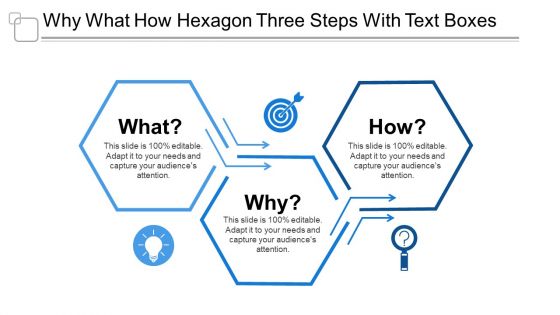
Why what how hexagon three steps with text boxes





Try Before you Buy Download Free Sample Product
 Impress Your
 Audience
 100%
100% Editable
 Save Hours
 of Time


Fly into the future with our Why What How Hexagon Three Steps With Text Boxes. Get off the ground with a big advantage.
People who downloaded this PowerPoint presentation also viewed the following :
Why what how hexagon three steps with text boxes with all 5 slides:
Enlighten your audience with your breathtaking ideas. Shine the light of our Why What How Hexagon Three Steps With Text Boxes on them.

FAQs for Why what how hexagon three steps
So basically you're connecting ideas instead of just writing random lists. Draw hexagons for your concepts, then add lines between them showing how they relate. Way more fun than regular notes, honestly. Your brain starts thinking differently - like "oh wait, how does this tie to that other thing?" You end up building this whole web instead of memorizing boring facts. I actually use it for project planning now too. Just throw your main ideas in hexagons and start connecting stuff. It's kinda addictive once you get going.
So basically give everyone their own hexagon to focus on, then have them map out how their piece connects to the others. Works best when you match people's strengths to their hexagon - like putting your detail person on the technical stuff. Everyone uses sticky notes or whatever digital tool you prefer to show relationships. When you bring it all together, that's where the good stuff happens. Someone always spots something the rest of us missed. Short sentences work better than long rambling ones for this kind of brainstorming, I've noticed. Each person becomes the expert on their section while still seeing how everything fits together.
Honestly, the visual part is what makes hexagonal thinking actually work - otherwise you're just brainstorming in circles. Use real hexagon shapes (I know, seems obvious but most people just do bullet points). Label each one clearly and color-code the connecting lines between related ideas. Don't cram too much text inside or nobody can read it from their seat. Here's the trick: start with your main concept in the center, then work outward. Shows people how everything connects instead of leaving them guessing. Way better than those boring linear presentations that put everyone to sleep.
Honestly, hexagonal thinking works with basically anything. Just grab some hexagon cards and have kids connect six related concepts. English class? They link themes, characters, literary devices - whatever. Science gets interesting when they're connecting causes, effects, variables. History's probably my favorite though - events, people, consequences all start making sense. The physical moving around is what makes it click. Something about shuffling those hexagons keeps them way more focused than normal. I usually start with just six concepts, then they get excited and want to add more connections. Give them like 10 minutes to mess around with arrangements. You'll actually see their thinking get deeper when the relationships are right there visually.
So basically, hexagonal thinking gets kids making connections instead of just cramming facts. They arrange these hex tiles and have to explain why concepts actually link up - that's when you see real critical thinking kick in. The physical setup is genius because they can move pieces around and suddenly spot patterns they'd totally miss on a worksheet. Plus watching them argue over whether two ideas truly connect? Pretty entertaining, not gonna lie. Start with something controversial - the debates get intense and that's where the learning happens. Way more engaging than regular formats.
So I've been using this thing called hexagonal thinking for strategy stuff and it's honestly game-changing. Basically you put your main challenge in the middle, then surround it with six different angles - like for market expansion, I'd look at customer needs, competitors, our capabilities, budget, regulations, and tech trends. Way more useful than SWOT charts (those are so overdone). The magic happens when you draw lines connecting each angle to the others - that's where you find solutions you'd never think of otherwise. I probably sound like a total strategy nerd right now, but seriously try it in your next planning meeting.
Miro's probably your best bet - they actually have hexagon templates built in. Super easy to drag stuff around and connect ideas. Mural's good too, similar vibe. If you're already using Google everything, Jamboard works but it's pretty basic honestly. Oh, and Padlet's shelf layout is surprisingly decent for this kind of thinking - mimics that hexagonal flow well enough. The main thing is making sure your whole team can jump in and move pieces around without it being a pain. I'd just start with Miro's free version and see how it goes. Worst case, you're out zero dollars.
Honestly, hexagonal thinking crushes regular linear methods. You're connecting ideas from all angles instead of just going A to B to C - way more like a web than a straight line. People stay engaged because they're making their own connections rather than following some boring path. The results are pretty amazing too: better understanding, stuff actually sticks, and you get those lightbulb moments constantly. Oh, and people don't zone out halfway through like they usually do. Seriously, try swapping your next brainstorming for a hexagonal map. You'll see the whole room's energy change immediately.
Honestly, the biggest pain is how much time it takes - both to teach the method and assess it properly. Kids get SO confused at first because they're used to linear formats. I've watched students just freeze up completely when you put those hexagons in front of them! Student resistance is real too. They want the familiar worksheet, not this weird connection-making thing. Oh, and good luck fitting it into your already crazy schedule when you have to scaffold everything. My advice? Start super simple with topics they already know well. Let them figure out the process first, then worry about harder content later.
Here's the thing - most people make their hexagon once and forget about it exists. Big mistake. After each session, spend a few minutes asking what new connections you found and which ones seemed weaker than expected. Your hexagon should be like a living document that grows with you. I usually set little "hexagon check-ins" every couple weeks (sounds nerdy but it works). Keep updating based on fresh evidence or random insights that pop up. The whole point is making your thinking more adaptive, so don't let it get stale.
Honestly, just start small - like 3 or 4 hexagons max. Give them sentence starters like "This connects to ___ because..." so they're not just staring at you blankly. I always put mine in pairs first since it's less intimidating that way. The weird thing is they actually get super into it once they find their first connection! Use stuff they already know well though - don't throw new content at them while they're figuring out the process. I learned that one the hard way last year. Start with something familiar and you'll be surprised how quickly they catch on.
Oh this is actually brilliant for cross-subject stuff! Students put different concepts - math, history, science whatever - on separate hexagons, then draw lines between the ones that connect. Way better than those boring Venn diagrams we always used. The visual aspect is huge because kids spot connections they'd totally miss otherwise. As the discussion gets going, you just keep adding more hexagons. I'd probably start with like 6-8 concepts from maybe 2 or 3 subjects and see what bridges they find. It's honestly pretty cool watching them make those "wait, these relate!" moments happen.
I saw this tech startup use hexagonal thinking to fix their onboarding process - they mapped out six angles like user experience, tech limits, business goals, support issues, marketing, and analytics. Found solutions they totally missed before. Toyota does something similar for manufacturing problems too, though honestly the research is still pretty thin since it's newer. Used it myself for project planning and yeah, it actually works. You catch things you'd normally overlook. Feels weird at first but just try it on whatever complex problem you're dealing with - the connections you'll spot make it worthwhile.
Dude, hexagonal templates are actually pretty genius for breaking down complex stuff. Instead of drowning people in walls of text, you split everything into six connected pieces. Way easier to follow. People can see how all the concepts link together, which helps them remember better - our brains are weirdly good at processing visual patterns. Honestly, anything beats another death-by-PowerPoint situation. The cool part is it forces YOU to think harder about how ideas connect instead of just making random lists. Next time you need to explain a project, try putting the main topic in the middle with related factors around it. Game changer.
Honestly, kids love hexagonal thinking because they get to decide which connections make sense - not just follow whatever path you planned. They pick ideas to link together and defend their choices. Creates real ownership, you know? I've seen students get pumped about connections I never even considered (which is kind of humbling lol). The hands-on visual stuff keeps them hooked. Plus there's no "wrong" answer to stress over since it's open-ended. Just grab 6 hexagons next week and try it with whatever topic you're covering. You'll see them engage totally differently.
-
Unique research projects to present in meeting.
-
Appreciate the research and its presentable format.
-
GOOD