


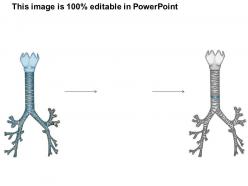
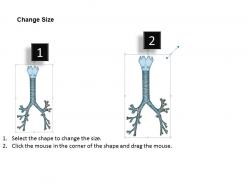
0514 trachea and divisions medical images for powerpoint




Try Before you Buy Download Free Sample Product
 Impress Your
 Audience
 100%
100% Editable
 Save Hours
 of Time


Our 0514 Trachea And Divisions Medical Images For PowerPoint put your success first and foremost. Your achievements are their abiding concern.
People who downloaded this PowerPoint presentation also viewed the following :
0514 trachea and divisions medical images for powerpoint with all 11 slides:
Break free from the shackles with our 0514 Trachea And Divisions Medical Images For PowerPoint. Allow your thoughts to experiment anew.


FAQs for 0514 trachea and divisions medical
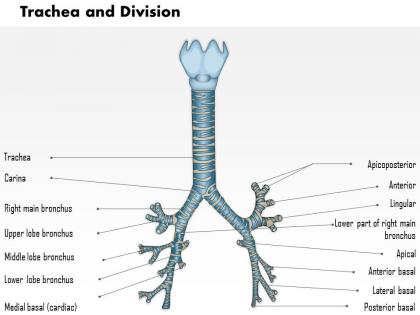
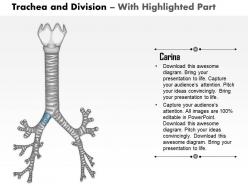
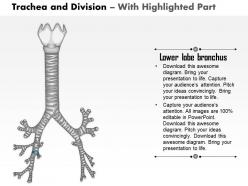
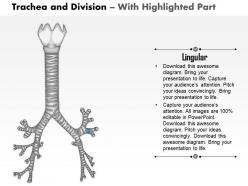
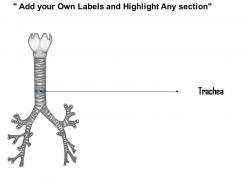
So the trachea's this 4-5 inch tube connecting your larynx to your bronchi. It's made of C-shaped cartilage rings - honestly pretty smart design because they prevent collapse when you breathe. Those rings open toward your esophagus so food can still go down without interference. Inside there's ciliated epithelium that basically sweeps mucus and junk upward to keep your lungs clean. Oh, and if you're ever checking patients with breathing problems, tracheal deviation usually means something serious is going on - like pneumothorax or masses pushing things around.
So the trachea is basically your main breathing tube - those C-shaped cartilage rings keep it from collapsing when you inhale. Smart design, right? It runs from your voice box down to where it branches into your lungs. The rings maintain structure so air flows both ways without getting blocked. There's also smooth muscle and tiny hairs (cilia) that clear out junk and can adjust the diameter slightly. When you're checking patients with breathing problems, always look for anything blocking or pushing the trachea around - that'll mess up airflow fast. Kind of amazing how such a simple tube does so much work.
So basically your trachea is like this amazing defense system. Those tiny cilia hairs beat around 1,000 times per minute - which is crazy fast if you think about it. They create this mucus escalator that catches all the gross stuff before it hits your lungs. Dust, bacteria, whatever you're breathing in gets trapped and swept upward. Then you either swallow it or cough it out. Pretty gross but super effective! Oh and if someone's got a chronic cough that won't quit, their whole mucus transport thing might be messed up. It's running 24/7 keeping your lungs clean.
So those C-shaped rings are basically what keep your windpipe from collapsing when you breathe - think of them like tiny scaffolds. There's about 16-20 of them stacked up your trachea. Pretty smart design actually - the open part faces your esophagus so it can expand when you swallow. Without them? Your airway would just cave in from the pressure changes, especially when you're coughing hard or taking deep breaths. I never really thought about it until anatomy class, but it's wild how something so simple keeps us from suffocating. Next time you see airway problems in patients, you'll totally get why this structure matters so much.
So the big ones you'll run into are tracheomalacia - that's when the cartilage gets too soft and everything just collapses. Tracheal stenosis is another major one, usually from scarring or tumors causing narrowing. Tracheitis happens when infections cause inflammation. Oh, and tracheoesophageal fistulas are absolutely terrible - they create these weird connections between the trachea and esophagus. Kids are constantly aspirating random objects too, honestly it's amazing what they'll stick down there. Tumors exist but aren't super common. If you're hearing stridor, breathing issues, or that persistent cough, definitely think tracheal problems and get imaging.
Baby tracheas are crazy small - like 4-5mm compared to our 15-20mm. The cartilage is super soft too, so it collapses way easier than you'd think. Sits higher up in their neck and it's shorter overall. Even a tiny bit of swelling becomes a huge problem because there's basically no room for anything to go wrong. That's why babies get so sick so fast with respiratory stuff. Oh and mild stridor? Don't let it fool you - could mean they're in real trouble. I learned that the hard way during my peds rotation. You'll see what I mean when you start working with little ones.
So your trachea has this amazing cleaning system called the mucociliary escalator. Tiny hairs called cilia beat in waves (honestly looks wild under a microscope) and push mucus upward with all the gross stuff trapped in it. You end up coughing it out or swallowing it. Pretty gross but super effective at keeping your lungs clean and preventing infections. Smoking totally wrecks this system though - that's why smokers get pneumonia and lung infections way more often. Without it working properly, all that junk just sits in your lungs.
So basically those C-shaped rings are doing two jobs at once. They keep your windpipe from collapsing when you breathe in - which would suck obviously. But they're not complete circles, right? That gap in the back is actually genius because it lets your trachea squish a bit when you're swallowing something big. Like, imagine trying to gulp down a huge bite of sandwich if your throat was totally rigid. The rings give you that perfect combo of structure but flexibility. Pretty cool how it works out. Oh and if you're ever dealing with patients who can't breathe properly, tracheal ring problems could definitely be the culprit.
Dude, tracheal obstruction is no joke - you'll see stridor, trouble breathing, maybe even cyanosis. Get them sitting upright and on high-flow oxygen ASAP. If it's a complete blockage, you might need to do a cric or emergency trach (scary stuff but necessary). Foreign bodies usually need bronchoscopy to fish them out. Honestly, this is one situation where you can't afford to second-guess yourself. Secure that airway first, worry about the why later. Oh, and always keep your emergency airway kit close when you suspect tracheal problems - learned that the hard way during residency.
So basically smoking totally messes up those tiny hair things in your throat - cilia, I think they're called? They normally sweep out all the gross stuff, but smoke paralyzes them. Then everything just builds up and gets infected. Plus the smoke makes your throat produce even more mucus, which is disgusting. That's why smokers always have that nasty cough and get sick more often. The good news though - if you quit, those little hairs start working again pretty quickly. Like within a few weeks your body begins fixing itself.
So you'll mostly see tracheostomies, tracheal resections, and bronchoscopy stuff. Trachs are super routine now but still watch for bleeding, infection, pneumothorax. The resections though - those'll keep you up at night because you're messing with airway continuity. Anastomotic dehiscence is basically your worst nightmare scenario. Oh, and don't forget about recurrent laryngeal nerve injuries, esophageal perf, stenosis later on. Always have backup airway plans ready. Honestly, I learned the hard way to loop in anesthesia early if anything feels sketchy during the case.
CT scan first - that's your best bet for seeing how bad the narrowing actually is. Bronchoscopy's essential too since you need eyes on the actual lesion. If it's mild, sometimes you can just watch and wait. But once they're having real symptoms? Time to act. Surgery varies - shorter segments might get tracheal resection with anastomosis, longer ones need tracheoplasty. Honestly can't remember which technique works better for mid-tracheal lesions off the top of my head. Loop in pulm and thoracic surgery early though. These cases spiral quickly and you definitely don't want to be flying solo on something this tricky.
So basically the trachea and esophagus are like roommates - one handles air going to your lungs, the other deals with food heading to your stomach. They're positioned right next to each other which works pretty well most of the time. When you swallow, your epiglottis has to block off the trachea so food doesn't go down the wrong way (hence why choking happens when this fails). Here's the thing though - if someone's having swallowing problems, both tubes could be involved since they're so close together. It's honestly amazing we don't choke more often.
So your trachea is actually pretty smart about this stuff! When you're working out hard, those cartilage rings can widen a bit to let more air through easier. There's also smooth muscle in there that adjusts automatically. The weird part is that when you breathe in really deep, the negative pressure helps keep everything open instead of making it collapse (which honestly seems backwards to me). Your body just figures it out on its own - like next time you're running, pay attention to how your breathing gets deeper without you thinking about it. Pretty cool how it all works together.
Dude, there's actually some wild stuff happening with tracheal repair right now. Scientists are literally growing new windpipes in labs using donor tissue as like a framework - sounds straight out of sci-fi but it's real. 3D printing is huge too, plus they're using patients' own stem cells which makes sense for rejection issues. Clinical trials with synthetic grafts are going pretty well, at least for smaller problems. Traditional surgery is still rough honestly. If your patient needs this kind of work, I'd definitely reach out to research centers doing these trials. Way more options than there used to be.
-
Great quality slides in rapid time.
-
I discovered this website through a google search, the services matched my needs perfectly and the pricing was very reasonable. I was thrilled with the product and the customer service. I will definitely use their slides again for my presentations and recommend them to other colleagues.