


0814 dna replication medical images for powerpoint




Try Before you Buy Download Free Sample Product
 Impress Your
 Audience
 100%
100% Editable
 Save Hours
 of Time


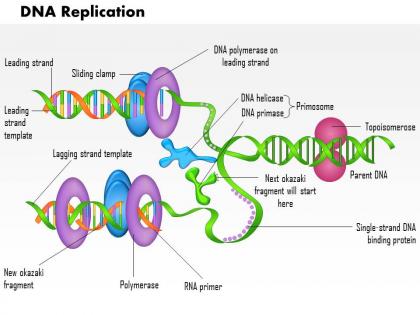
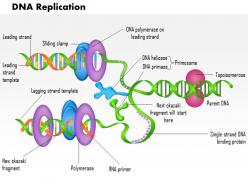
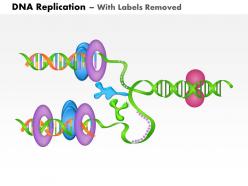
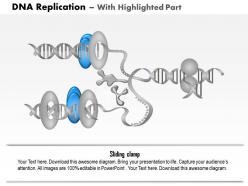
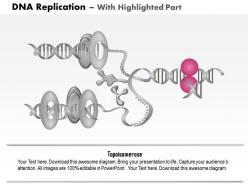
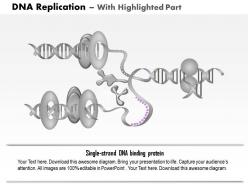
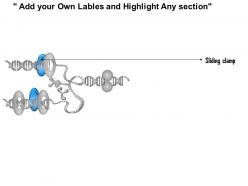
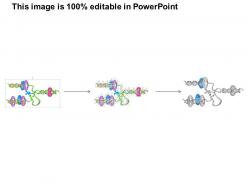
DNA replication is a very novel and fascinating procedure of creating single identical replica of DNA from another original DNA molecule. It is important in the sense that all biological inheritance is passed in this process, occurring in every living organism known. In short, it is basically the method of copying Deoxy Ribonucleic Acid (DNA) within our own cells. The two former DNA strands act as templates or bases for formation of another new strand. Are you a scientist and want to inform your audience about this complex process through colorful, bright yet easy to understand PPT slides? Are you frustrated by continuously searching for a suitable presentation tool for this task? Don’t lose heart. Our professional Presentation slides will serve you well. One such functional example of PPT is our DNA replication medical images for PowerPoint layout. Employ this slide in various scenarios like technical paper speeches, hospital management, medical studies and more. Click, download for best results possible. Our 0814 DNA Replication Medical Images For Powerpoint are all hand picked. They comply with all the conditions.
People who downloaded this PowerPoint presentation also viewed the following :
0814 dna replication medical images for powerpoint with all 10 slides:
Our 0814 DNA Replication Medical Images For Powerpoint can be of great help. Just try them out and you will be thrilled.
FAQs for 0814 dna replication medical
So basically you've got these key enzymes doing different jobs. Helicase unzips the double helix first. Then DNA polymerase comes in and does the heavy lifting - it's honestly pretty amazing how fast this thing works. Primase drops down those RNA primers to get started. The tricky part is polymerase only goes 5' to 3', so you end up with leading and lagging strands. That's where those Okazaki fragments come in on the lagging side. Oh and ligase seals everything up at the end. Definitely nail down the directionality thing first - once that clicks, the rest makes way more sense.
Ok so DNA's double helix thing is actually genius for copying itself. Each strand acts like a template - when it unzips, you've got A pairing with T and G with C, so the cell basically just fills in what's missing. The 5' to 3' direction helps enzymes figure out which way to go too. It's way more reliable than starting from nothing because you're just using one strand to rebuild its partner. Kind of like having the answer key while taking a test, if that makes sense? That's why replication works so well.
ok so basically prokaryotes do everything in the cytoplasm from just one starting point, but eukaryotes have their DNA tucked away in the nucleus and use tons of different origins - which tbh is probably necessary since they have way more genetic material to copy. The enzymes are different too. Prokaryotes stick with DNA polymerase III while eukaryotes juggle multiple ones (α, δ, ε) for various tasks. Eukaryotic replication has all these checkpoints and error-checking systems that make it super regulated. Start with the single vs multiple origins thing though - that's like the key difference that'll help everything else click.
Ok so basically the leading strand gets made all in one go, super smooth. But the lagging strand? Total pain - it has to be made in these little chunks called Okazaki fragments (like 100-200 nucleotides each) because DNA polymerase is picky about direction. The leading strand just follows along with the replication fork in the 5' to 3' direction no problem. Meanwhile the lagging strand goes the opposite way, so the enzyme has to keep starting over in short bursts. Both still go 5' to 3' though - that part never changes, it's just how they get there that's different.
So DNA polymerase has this cool 3' to 5' exonuclease thing that basically proofreads as it goes - catches wrong nucleotides and fixes them immediately. That gets you to like 99% accuracy already. But then there's also mismatch repair systems that go back and scan for anything that got missed. Honestly the whole setup is pretty impressive when you think about it. Plus there's post-replication repair for the really tricky damage. All these checkpoints working together bring your error rate down to something crazy like 1 in 10 billion. When you're explaining it, definitely emphasize it's not just one system - it's the teamwork that makes it so reliable.
So the origin of replication is just where DNA starts unzipping - like the cell's "begin here" marker. DNA polymerase needs this spot to latch onto and start making new strands. Prokaryotes only get one per chromosome, but eukaryotes are smart and use multiple origins to go faster. It's honestly kind of like that first chess move - everything builds from there. When you're working through replication problems, find the origin first and the rest makes way more sense. Without it, the whole copying process would be totally lost.
So basically, when your cells divide, there's this annoying problem where DNA polymerase can't copy all the way to the end of chromosomes. It needs an RNA primer to start, so the lagging strand always comes up short. Pretty crappy design if you ask me! That's where telomeres come in - they're like disposable caps made of repetitive DNA sequences that can get shorter without messing up your actual genes. Stem cells have telomerase to add the sequences back, but most cells don't. That's why telomere length is actually a solid way to measure cellular aging.
So DNA polymerase is super picky - it literally can't start making DNA without a 3'-OH group to work with. That's where primase comes in. It drops these short RNA primers on both strands, which is like giving polymerase a little foothold to grab onto. The lagging strand actually needs tons of these primers because of all those Okazaki fragments (honestly such a pain). Later on, the cell just swaps out the RNA bits for proper DNA. Bottom line: no primer means polymerase just sits there doing nothing!
So DNA replication forks are these Y-shaped things that pop up when helicase unwinds the double helix. Picture helicase moving down the chromosome, splitting apart those two strands. Then DNA polymerase jumps in to make new DNA on both sides. The leading strand gets built smoothly, but the lagging strand? Total pain - it has to work in little chunks called Okazaki fragments since it's going backwards. What's cool is you've got tons of these forks working at once on each chromosome. Otherwise we'd be here forever waiting for our cells to divide lol.
So basically, DNA replication screws up sometimes and causes mutations. Your cells are actually really good at catching these mistakes with proofreading - thank god, right? But when errors slip by, you get changes like single nucleotides switching out, or bits getting inserted/deleted. Where it happens matters a ton. If it hits an important gene, you could be looking at cancer or other nasty diseases. Minor spots? Maybe just small protein changes. Cells have tons of repair checkpoints specifically because these errors can be so devastating if they're not caught.
So there's hydroxyurea that messes with dNTP pools, and aphidicolin blocks DNA polymerase α. For cancer treatment, docs use 5-fluorouracil and methotrexate - they screw up nucleotide synthesis. It's actually pretty crazy how effective these are against rapidly dividing cells. Hydroxyurea works for sickle cell too, weirdly enough. If you're setting up experiments, just pick based on what step you want to target. Different inhibitors hit initiation, elongation, or nucleotide availability. The whole approach basically exploits how cancer cells divide faster than normal ones, which makes them more vulnerable to this kind of interference.
So basically cells have a bunch of backup systems for when DNA copying goes wrong. DNA polymerase does proofreading while it's working, then there's mismatch repair (MMR) that comes after and fixes wonky base pairs - that's the big one with MutS and MutL proteins scanning everything. You've also got base excision repair for damaged bases and nucleotide excision repair for bulky damage. Honestly the timing stuff confused me at first too. Don't get caught up memorizing every single protein though - just focus on how they work in sequence and what each one specifically targets. Way more manageable that way!
Hey! So DNA replication happens during S phase - that's when cells copy their entire genome before splitting up. Makes sense since you can't divide without duplicating all that genetic info first. There are these checkpoints that basically monitor everything, like "did you copy this correctly?" If something's off or incomplete, they'll actually stop the whole cycle. Pretty smart system honestly - prevents messed up DNA from getting passed down. Oh and this all happens before G2 and mitosis obviously. Bottom line: gotta replicate before you can divide!
So epigenetics is basically like traffic control for DNA replication. Methylated regions usually replicate way later in S phase, while open chromatin with active histone marks goes first. It's kinda like your cells have this whole timing system worked out. The replication machinery gets directed where to go and when - super cool how organized it all is. This stuff matters a lot for keeping cells functioning right during division. Oh and if you're looking into replication timing, definitely check methylation patterns in your target regions first. That'll save you some headaches later.
Dude, X-ray crystallography was huge for actually seeing DNA polymerases and replication proteins up close. Then single-molecule techniques came along - you can literally watch replication forks moving in real time, which is wild. PCR made studying specific sequences so much easier too. Cryo-electron microscopy is giving us insane detail now of the whole replication machine working. Oh and fluorescence microscopy - that's been clutch for the live imaging stuff. Start with those single-molecule papers if you're getting into this, they're honestly the most fun to read.
-
Great product with highly impressive and engaging designs.
-
Best Representation of topics, really appreciable.