


0914 cell mediated immunity medical images for powerpoint




Try Before you Buy Download Free Sample Product
 Impress Your
 Audience
 100%
100% Editable
 Save Hours
 of Time


You have an exquisite new design to offer. Add some brocade with our 0914 Cell Mediated Immunity Medical Images For Powerpoint.
People who downloaded this PowerPoint presentation also viewed the following :
0914 cell mediated immunity medical images for powerpoint with all 10 slides:
Handle complaints with our 0914 Cell Mediated Immunity Medical Images For Powerpoint. Convince the customers of your concern.

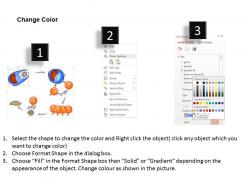
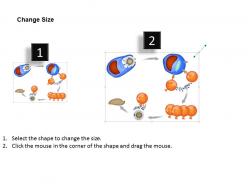
FAQs for 0914 cell mediated immunity medical
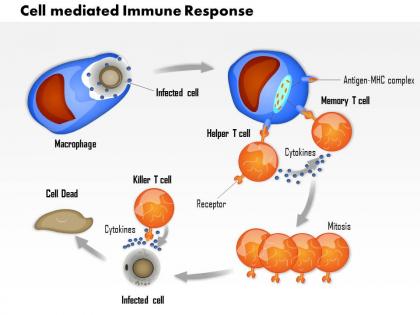
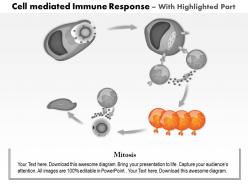
So basically T cells run the show here. CD8+ ones kill infected cells directly, while CD4+ helpers coordinate everything else. Dendritic cells and macrophages present antigens to show T cells what needs attacking. NK cells also help out when viruses or tumors pop up - they're pretty useful honestly. The whole thing works without antibodies, just your cells doing the work. Oh and definitely study T cell activation and differentiation hard, that's where professors love to trip people up on exams. It's way more straightforward once you get the basic players down.
So basically T cells pick their job based on what signals they get when they're activated. CD4+ cells can go four ways - Th1 fights stuff inside cells, Th2 handles parasites and allergies, Th17 tackles bacteria outside cells, or they become regulatory cells that basically tell everyone to chill out. CD8+ cells? They're simpler - just become killers that destroy infected or cancerous cells. It's not random though - specific transcription factors control which path they take. Honestly, it's pretty cool how organized the whole system is! You can actually predict which type will win based on the initial signals floating around.
So APCs are basically like cellular matchmakers - they grab antigens, chop them up, and stick the pieces on MHC molecules for T cells to see. Your T cells would be totally lost without them, just floating around with no clue what's threatening you. Dendritic cells are definitely the stars of the show here, though macrophages and B cells can pitch in too. They get both your CD4+ helpers and CD8+ killers all revved up. Honestly, it's pretty cool how they're literally what starts the whole adaptive immune response rolling. Without APCs doing their thing first, you'd have no real immune memory.
So basically cytokines are like the messaging system that gets your T cells talking to each other. IL-1 from APCs gives that crucial co-stim signal along with TCR binding. Then IL-2 kicks in - that's your main proliferation driver once things get activated. You've also got IL-4, IL-12, TGF-β steering naive cells into different fates (Th1, Th2, whatever). Honestly reminds me of group chats where everyone's coordinating plans. If your T cell assays are acting weird, I'd def check what's happening with cytokine levels first - saves you tons of troubleshooting time later.
Ok so cytotoxic T cells have two ways they kill stuff. First one's the perforin-granzyme route - perforin punches holes in the target cell, then granzymes slip through and trigger apoptosis. The second way uses Fas-FasL binding, where your T cell basically sends a death signal to the target cell's Fas receptor. Both end up activating caspases and causing apoptosis (not necrosis - profs always test that difference). The whole thing is honestly pretty fascinating how precise it is. Just remember both pathways = controlled cell death, and you'll be good for the exam.
Oh, so memory T cells are insanely fast compared to the first time around - like hours vs days fast. Your body basically keeps them on standby after that initial infection, already locked and loaded. They skip all that annoying activation stuff naive T cells have to go through. The response lasts way longer too and cranks out more effector cells. It's honestly pretty brilliant how it works. That's why vaccines are so focused on building up that memory arsenal instead of just getting you through one exposure. Makes total sense when you think about it.
So basically, cell-mediated immunity is super important for vaccines because T-cells give you that long-lasting protection - antibodies are great but they're not the whole story. Most traditional vaccines just go for the antibody response, which honestly isn't always enough. The really good vaccines activate both CD4+ and CD8+ T cells. Live attenuated ones are actually awesome at this since they basically trick your body into thinking it's the real infection. For stuff like TB or malaria, you definitely need adjuvants that boost T-cell responses because antibodies alone are pretty useless against intracellular pathogens. Bottom line: your vaccine needs to hit both MHC pathways for solid protection.
So basically what happens is your T cells get confused and can't tell the difference between your own cells and invaders anymore. They start attacking healthy tissue instead of protecting it. Could be genetics, infections messing with your system, or just environmental stuff triggering it. MS is a perfect example - your T cells go after the protective coating around nerves. Same thing happens in type 1 diabetes but they target insulin cells instead. Honestly, autoimmune stuff is tricky because symptoms can be all over the place. If you're dealing with weird inflammation that won't quit, might be worth getting tested early.
Your T cells are basically the MVPs here - they're what keep chronic stuff like TB and HIV from totally taking over. CD8+ and Th1 cells do most of the work. But here's the annoying part: some bugs are really good at dodging or shutting down your cell-mediated responses, which is exactly why they stick around so long. That's why immunocompromised patients get hit hard with reactivated infections - their T cell game is weak. Short version? Always check where the patient's cell-mediated immunity stands before treating chronic infections.
So regulatory T cells are basically like bouncers for your immune system. They pump out stuff like IL-10 and TGF-β to chill out inflammation when it gets too crazy. Without them? You'd be screwed - constant inflammation and your immune system attacking your own body. They don't just shut things down though. Instead, they're smart about it, letting real threats get handled while protecting healthy tissue. Kind of like having a good friend who knows when to tell you to calm down vs when to let you go off on someone. Pretty wild how they balance everything honestly.
CAR-T therapy is insane right now - they're basically hacking your immune cells to hunt cancer. Checkpoint inhibitors are crushing it too, especially for blood cancers. FDA's been fast-tracking approvals like crazy. There's also this adoptive T cell thing where they yank out your cells, beef them up in a lab, then shoot them back in. Pretty wild stuff. Oh and neoantigen vaccines are finally working for solid tumors. Honestly though? The combination trials are where you'll see the real breakthroughs. That's what I'd watch if you're in immunology.
So cell-mediated immunity is like the backbone of cancer immunotherapy these days. T cells already know how to spot and kill tumor cells - we just need to help them do it better. CAR-T therapy actually rewires a patient's own T cells to hunt down cancer antigens more effectively. Checkpoint inhibitors work differently though - they basically remove the molecular "stop signs" that tumors use to shut down immune attacks. I think it's really cool how we're not inventing anything new, just amplifying what the body already wants to do. The trick is figuring out what's blocking your patient's specific immune response and picking the right tool to fix it.
So dendritic cells are like the wingmen of your immune system - they grab bits of bad stuff (antigens) and show them to your T cells to get everything started. They're constantly patrolling around, eating up foreign junk, then heading to lymph nodes to display what they found on these MHC molecules. Once there, they activate CD8+ T cells for direct attacks and CD4+ helper cells that organize the whole response. Honestly, without them doing this presentation thing first, your T cells would just be sitting around completely useless. They're basically what gets the entire cellular immune response rolling.
So basically they work together like a team. Your T helper cells wake up the B cells to start making antibodies - that's how cell-mediated immunity gets the humoral response going. Then those antibodies tag infected cells so your cytotoxic T cells know what to attack. Pretty cool system honestly. Both sides also share memory cells, which is why you don't get the same infection twice (usually). Oh and here's the thing - people always think of them as totally separate but they're really just different parts of one defense system that talk to each other constantly.
So basically your T cells are the troublemakers here - they spot donor tissue and go "nope, that's not supposed to be here" and attack it. CD8+ cells directly kill the transplanted stuff while CD4+ cells rally everyone else to join the fight. Pretty wild how our bodies are so good at detecting foreign tissue, honestly. That's why people need those heavy immunosuppressive drugs like cyclosporine - they shut down T cell activation pathways. The tricky part? You've gotta suppress the immune response enough to stop rejection but not so much that you can't fight off infections anymore.
-
Good research work and creative work done on every template.
-
Very unique and reliable designs.