


3d Printing Technology In Construction Industry




Try Before you Buy Download Free Sample Product
 Impress Your
 Audience
 100%
100% Editable
 Save Hours
 of Time


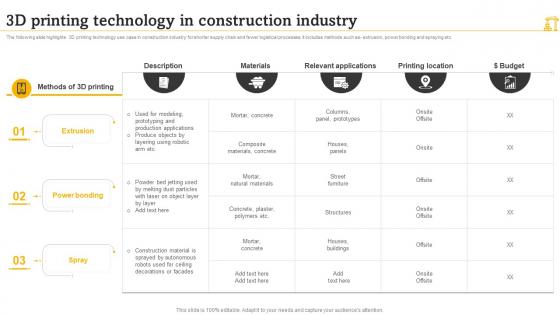
The following slide highlights 3D printing technology use case in construction industry for shorter supply chain and fewer logistical processes. It includes methods such as extrusion, power bonding and spraying etc.
People who downloaded this PowerPoint presentation also viewed the following :
3d Printing Technology In Construction Industry with all 6 slides:
Use our 3d Printing Technology In Construction Industry to effectively help you save your valuable time. They are readymade to fit into any presentation structure.





FAQs for 3d Printing Technology
Dude, 3D printing in construction is honestly game-changing. Speed's the biggest thing - houses can get built in days instead of weeks, which is wild to watch. Labor costs drop massively since you don't need as many people on site. Design-wise, you can create crazy shapes that would cost a fortune with regular building methods. Oh, and there's way less waste since it only prints what you actually need. My buddy works construction and says it's still pretty niche, but if you're planning any builds, definitely look into it for at least part of the project.
Honestly, 3D printing is a total game changer for construction timelines. You can print entire complex structures in one go instead of piecing together a million separate parts. The design-to-build cycle goes from months down to just weeks - no more waiting around for materials or dealing with scheduling headaches from different crews. Some companies literally print whole house frames overnight, which is pretty wild when you think about it. Here's the kicker though: printing something super intricate costs the same as basic shapes, so architects can go nuts with creative designs without destroying your budget. I'd start by looking at repetitive stuff in your current projects first.
So you're looking at concrete composites, clay mixtures, and these special cement blends - they're basically souped-up versions of regular materials that can flow through those printer nozzles without falling apart. The tech is honestly getting crazy good. You get way better precision and less waste than traditional building, but man, it's pricey right now. Some need specific conditions to cure properly too, which can be a pain. Strength-wise? Most match regular concrete, though some fancy proprietary stuff is actually stronger. I'd check what suppliers near you carry first since availability is all over the place depending where you are.
Honestly, the money thing is brutal - equipment costs are insane. Building codes are a mess too since nobody knows how to regulate this stuff yet. Most places you'll hit red tape everywhere. Materials are pretty limited right now, basically just concrete-type stuff, so don't expect fancy designs. The printers still can't handle overhangs well or detailed work. Speed's getting better but it's not revolutionary like everyone thought it'd be. My advice? Start with something simple and boring, talk to your local building department early before you get too deep into planning. Trust me on that last part.
Dude, 3D printing is a game changer for construction waste. You literally only use what you need - no leftover concrete or wood scraps lying around. They're seeing like 60% less waste than regular building methods, which is crazy good. The precision thing is wild too when you watch it work. Bio-based concrete and recycled materials? Yeah, you can print with those now. Transportation costs drop since you're not hauling as much stuff around, plus builds go way faster. Honestly forgot to mention - your carbon footprint shrinks too. If you're doing any building soon, definitely look into it for foundations or walls.
So there's this crazy office building in Dubai that got 3D-printed in 17 days - like, what?? ICON's doing some solid work in Austin with affordable housing that doesn't look terrible (which honestly surprised me). Oh and there's a bridge in the Netherlands people actually walk on every day, plus this apartment building in Germany where folks are living normally. The German one's multi-story too. If you're seriously thinking about this stuff, definitely check out ICON first - they seem way more realistic than some of the other companies out there.
The cool thing about 3D printing is you can literally design impossible stuff now - organic curves, crazy lattice work, buildings that look totally alien. Traditional construction rules? Out the window. You're not stuck with standard materials or having to assemble pieces anymore, which honestly opens up wild aesthetic options. Built-in ventilation channels, decorative elements - you can print functional stuff right into the structure. I'd mess around with small models first though, just to see what geometric freedom you're actually working with. It's pretty mind-blowing once you realize the constraints are gone.
Yeah so 3D printing houses costs more upfront - materials are pricier and the tech isn't mainstream yet. But you'll save big on labor since you barely need anyone on site. Speed is where it really shines though. Way less waste, builds happen faster, and you don't need as many skilled workers which honestly is getting harder to find anyway. The cool part? You can do crazy complex designs for the same price as basic ones. I'd say go for it if you care more about getting something unique done quickly rather than just the cheapest option possible.
Building codes are seriously holding back 3D construction right now. Most weren't designed for this tech, so you're stuck with approval processes that drag on forever and cost way too much. Dubai and some European cities are actually creating proper frameworks for it, but everywhere else? Good luck. Materials testing, structural standards, inspections - all of it needs updating but government moves slow as hell. Oh, and definitely talk to your local building department super early if you're thinking about this. Trust me, budget extra time for all the bureaucratic nonsense.
Honestly, 3D printing for emergency housing is pretty wild. You can literally roll up portable printers to disaster sites and have basic shelters built in hours - sometimes a whole small house in under 24 hours. Way faster than traditional construction. The best part? You don't need a bunch of skilled workers who probably aren't around after disasters anyway. Just use concrete or whatever local materials you've got. ICON and Apis Cor are already testing this in actual disaster zones, and the structures hold up surprisingly well. Worth checking out if you're doing disaster planning stuff - though I guess it's still pretty new tech.
Look, 3D printing will mess with construction jobs for sure, but it's not like robots just take over everything. Basic stuff like bricklaying? Yeah, fewer people needed there. But someone's gotta run these huge printers and do all the detail work afterward. The machines honestly can't handle the tricky parts yet. Your crew will need different skills - operating equipment, digital design, that kind of thing. I'd start looking into retraining options now instead of scrambling later when it hits.
So with 3D printing, you're basically just tweaking digital files instead of redoing entire construction setups. Way more flexible than traditional building. You can change room layouts, wall thickness, built-in stuff - even decorative details - without the usual crazy costs. The printer just follows whatever design you give it, so those unique architectural touches that normally need specialized workers? Totally doable now. Clients get personalized homes without going broke. I mean, the tech still feels kind of futuristic to me honestly. But yeah, definitely worth pitching to clients with specific needs.
Dude, multi-material printing is where it's at - imagine concrete, insulation, and electrical all going down in one shot. Some companies are already cranking out whole houses in under 24 hours, which honestly blows my mind. Mars stuff is getting real money thrown at it (crazy times we live in), but you'll probably see modular printed pieces first that just get put together on-site. Oh, and AI is gonna optimize designs to cut waste while keeping everything structurally sound. ICON and Apis Cor are the ones to watch if you want to see where this madness is heading.
So they do tons of material testing first - the concrete gets analyzed like crazy to make sure it's stronger than regular stuff. During printing, sensors track how well layers stick and cure (which is actually pretty neat). Third-party engineers run all the load calculations, plus inspectors check everything against local codes. Oh and they print test samples just to destroy them and see what breaks lol. Honestly though, you'll want to research your local building codes ASAP because that's where most people get stuck waiting for approvals. The engineering side is solid - it's the bureaucracy that'll slow you down.
Honestly, the multi-material stuff is wild - they're printing steel, concrete, and insulation all at once now. Some printers can knock out whole foundations in under 24 hours, which is nuts. The concrete they're using is getting really advanced too, like it can actually heal itself and has built-in sensors to monitor how the structure's holding up. AI design is making everything stronger than regular construction methods. Oh and definitely check out ICON and Apis Cor if you want to see where this tech's headed. It's moving fast.
-
The templates are easy to get, and the chat customer support is excellent.
-
Satisfied with the way SlideTeam resolved my query regarding the right business PPTs that I was having difficulty finding. I found the perfect match with their assistance.