

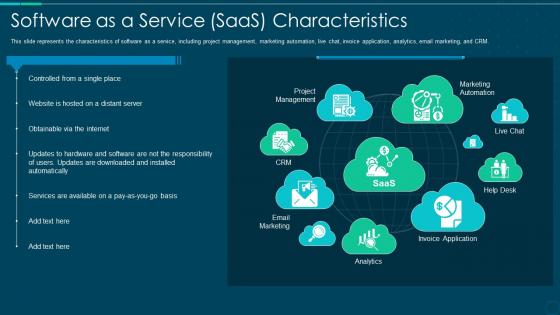
Software as a service saas characteristics ppt professional inspiration




Try Before you Buy Download Free Sample Product
 Impress Your
 Audience
 100%
100% Editable
 Save Hours
 of Time


Our Software As A Service Saas Characteristics Ppt Professional Inspiration are topically designed to provide an attractive backdrop to any subject. Use them to look like a presentation pro.
People who downloaded this PowerPoint presentation also viewed the following :
Software as a service saas characteristics ppt professional inspiration with all 6 slides:
Use our Software As A Service Saas Characteristics Ppt Professional Inspiration to effectively help you save your valuable time. They are readymade to fit into any presentation structure.





FAQs for Software as a service saas characteristics
So basically you just open your browser instead of downloading anything to your computer. Monthly payments instead of dropping a huge chunk upfront - which is honestly way better for cash flow. All the boring stuff like updates and security gets handled automatically, so you don't have to deal with IT drama. Plus you can log in from literally anywhere with wifi. Need more users? Takes like two seconds to add them. Oh and if you decide you hate it, you're not stuck with some expensive software you can't return. Way less headache overall.
Yeah, multi-tenancy is tricky because you're basically cramming everyone's data into the same infrastructure. The scary part? One bad query and suddenly Customer A sees Customer B's private stuff - nightmare scenario. You'll want rock-solid separation at every level: database schemas, encryption keys, access controls, the works. Row-level security plus tenant-aware APIs are your best friends here. Oh, and definitely test your isolation setup constantly - I've seen too many "secure" systems fall apart under pressure. Maybe even spring for a pen test focused on cross-tenant leaks. Trust me, it's worth the paranoia.
Honestly, cloud infrastructure is what makes SaaS apps actually scalable. Your user traffic suddenly explodes? More servers automatically kick in without you scrambling to order hardware or whatever. Pretty crazy compared to those nightmare server room days (glad I missed most of that). Resources just expand and shrink based on real demand, plus you've got backup across different data centers. The whole elastic thing means you can actually work on your product instead of stressing about whether you'll have enough capacity. It's like having an IT department that never sleeps.
Start with their SLA - anything under 99.9% uptime is honestly a red flag. Then hit up sites like StatusPage or DownDetector to see what's actually happening vs what they promise. G2 and Capterra reviews are clutch, especially the bad ones since people get brutally honest when things break. Try to get references from companies similar to yours if you can swing it. But honestly? Nothing beats running a pilot or trial first. You'll learn more about their reliability in two weeks of testing than months of research.
Yeah, subscription pricing is honestly pretty great for budgeting - you know exactly what's coming out each month, no weird surprise costs. Your finance team will definitely appreciate that steady cash flow. Only downside is those little monthly charges add up fast when everyone's signing up for stuff. I learned that the hard way lol. But you can actually scale things up or down based on what you're using, which is clutch. Just start tracking your SaaS spending monthly and maybe set up some approval process so people aren't going rogue with new subscriptions.
Here's the thing - when your tools actually talk to each other, people will actually use them. No more copying data between systems or having twelve tabs open (honestly the worst). Your CRM syncs with email, project management flows into everything else, and suddenly nobody's wasting time on manual entry. The whole stack just works together. Teams stop complaining and you actually see the results you paid for. Oh and definitely check what APIs they have before you buy - you'll want connectors that play nice with whatever you're already using.
First thing - demand they show you their security docs right away. If they're weird about it, run. You'll want encryption for everything (data moving around AND stored data), plus multi-factor auth is basically mandatory now. Single sign-on makes life easier too. SOC 2 or ISO 27001 certs aren't optional anymore - I learned this the hard way at my last job. Their backup situation matters more than you think since you're handing over all your data. Oh, and if you're connecting different tools together, ask about integration security. That's where things get messy fast.
Honestly, SaaS is a game-changer for remote work. Everything runs in your browser, so you can work from literally anywhere with decent internet. No more installing software on every single device or fighting with IT about VPN access (though some companies are still obsessed with those). Real-time collaboration is where it really shines - everyone can edit the same doc simultaneously, share files instantly, hop on video calls without worrying about compatibility issues. Updates happen automatically too, which is clutch because nobody's stuck on some ancient version. I've worked from coffee shops, my couch, even that weird 24-hour diner downtown. Just need solid wifi and you're set.
Dude, if your SaaS interface sucks, people will bail so fast it'll make your head spin. I've watched products with incredible features totally bomb because the UX was garbage. Users need those "aha moments" right away - like within their first few clicks - or they're out. Good design makes your signup smooth and keeps important features right where people expect them. Honestly, it doesn't matter how revolutionary your backend is if someone can't figure out how to actually use the thing. Focus on that onboarding flow first.
Honestly, the scariest part is losing control of your data - like, what if they go under or change their terms? Your IT team will probably hate the idea since they're used to managing everything themselves. Integration is where things get messy though. Connecting all your current systems takes way longer than anyone thinks it will. Also, those monthly fees add up fast compared to just buying software once. Oh, and people hate change, so expect pushback. I'd definitely test it with just one department first. Work out the bugs before your whole company deals with the chaos.
Honestly, SaaS is so much easier for updates. Everything just happens automatically in the background - you wake up and boom, new features are there. The vendor deals with all that messy stuff. With on-premises though? Ugh, you're stuck doing everything yourself. Download the update, test it, pray it doesn't break anything, then actually install it during some planned maintenance window. Your IT team probably hates it tbh. If you don't want to spend time babysitting software updates, definitely go SaaS. Way less headache.
Dude, data residency laws are such a pain for SaaS. Countries like Germany and Canada have super strict rules about where you can store their citizens' data - like, it literally has to stay within their borders. You'll end up needing infrastructure in multiple regions, which honestly gets pricey quick. Then there's all the compliance stuff to juggle - GDPR, CCPA, plus whatever industry-specific regulations apply. My advice? Map out where you want to sell before you build anything. Design your system for regional data isolation right from the start, or you'll be doing expensive rewrites later.
Dude, SaaS support is totally different - way more hands-on. They actually want you to stick around since you can bail anytime, so you get dedicated success managers and 24/7 chat. None of that "buy it and good luck" nonsense from old software companies. Your account gets monitored constantly, updates happen automatically. Honestly, I've had better luck treating them like actual partners instead of just calling when stuff breaks. Oh, and you're not waiting years for bug fixes anymore - they push updates whenever.
AI's everywhere now - most SaaS platforms are just baking it right in instead of making separate tools. Industry-specific stuff is huge too. Companies don't want generic software anymore, they want something built for their exact niche. Pricing's getting weird though - lots of places are ditching flat monthly fees for "pay as you go" models. Makes sense I guess, but tracking usage gets annoying. Oh, and everyone's obsessed with mixing and matching different tools that actually talk to each other. Honestly, when you're shopping around, just make sure whatever you pick plays nice with your other software.
Look, your SaaS tools are sitting on treasure troves of data you're probably not even using. Most have decent dashboards already built in - track user engagement, sales funnels, support tickets, whatever matters to your business. The cool part is connecting data between different tools to see the bigger picture. I'd start by figuring out your key metrics first, then set up some automated reports so you don't forget to check. Oh, and actually schedule team reviews to discuss what you're seeing - data's useless if it just sits there collecting digital dust.
-
Wonderful templates design to use in business meetings.
-
Wonderful templates design to use in business meetings.