


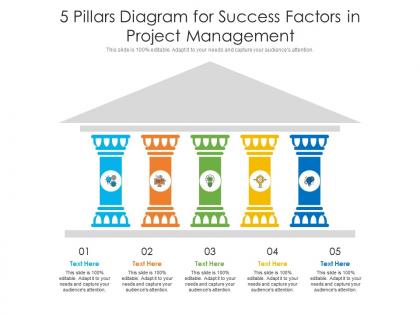
5 pillars diagram for success factors in project management infographic template




Try Before you Buy Download Free Sample Product
 Impress Your
 Audience
 100%
100% Editable
 Save Hours
 of Time


Derive factual results using this 5 Pillars Diagram For Success Factors In Project Management Infographic Template. Deploy this PowerPoint template to make and display prospective strategies using impressive graphics that enhance the visual quotient of the presentation. This infographic template also helps in elevating the aesthetic appeal of the presentation, making it useful for every organization. Apart from this, things and projects can be visualized from the onset using this PPT design. As this PowerPoint visual provides an abundance of information in a single layout, it can impress any viewer or higher managerial staff. It also boosts business actions by presenting flawless presentations. The biggest advantage of this slide is that it can be reproduced in various formats, including Google Slides. Therefore, download it now to present a unique presentation every time.
People who downloaded this PowerPoint presentation also viewed the following :
5 pillars diagram for success factors in project management infographic template with all 2 slides:
Use our 5 Pillars Diagram For Success Factors In Project Management Infographic Template to effectively help you save your valuable time. They are readymade to fit into any presentation structure.
FAQs for 5 pillars diagram for success factors in project
Honestly, I'd focus on the big ones first - scope completion, budget variance, and whether you're hitting your deadlines. Quality stuff like defect rates matters too. But here's what people forget: stakeholder satisfaction is everything. I've watched "successful" projects get torn apart because nobody bothered communicating well. Team productivity and resource utilization help you spot problems early. ROI proves to leadership that you're not just burning money. Don't go crazy though - pick maybe 3-5 KPIs that actually match what your project's trying to accomplish. Tracking fifty metrics just makes you look busy, not smart.
Dude, stakeholder engagement can totally make or break your project. Get them involved early and you'll actually understand what people want - plus they won't throw curveballs at you later. I learned this the hard way on a project that was technically solid but nobody wanted to use it because we ignored half the team. Map out who matters most and how often they need updates. Trust me, when people feel heard they'll actually champion your work instead of sabotaging it. It's honestly one of those things that seems obvious but so many people skip it.
Dude, communication can literally make or break your project. I've watched so many things go sideways because people just assumed everyone knew what was happening - spoiler alert, they didn't. When you're actually clear about goals and deadlines upfront, you avoid that nightmare scenario where everyone's working toward completely different stuff. Plus you'll catch problems early before they turn into expensive headaches. Honestly, I'd rather over-communicate than have someone blindsided later. Oh, and those kickoff meetings? Don't skip them, even if they feel redundant.
Honestly, risk management is just about thinking ahead so you don't get blindsided later. Start by listing what could go wrong - your top 5 biggest nightmares for the project. Then figure out how you'd handle each one if it actually happens. I learned this the hard way on my last project when everything went sideways and we had zero backup plans. Keep updating that list as things change, because they always do. The whole point is avoiding that panic mode where you're just putting out fires. Come up with at least two ways to tackle each risk you identify.
Look, the stats don't lie - agile and hybrid methods hit 65-70% success rates while waterfall sits around 40-50%. Pretty obvious why too. Agile lets you course-correct when stuff inevitably goes wrong (and it will). Scrum's the go-to for most teams, though I've seen Kanban work great for ongoing work. You really just need to match the approach to what you're dealing with. Got unclear requirements and complexity? Go agile for sure. Well-defined project with locked scope? Waterfall's fine. Start by figuring out how much uncertainty you're facing - that'll basically tell you which direction to go.
Honestly, team collaboration can make or break everything. I've watched so many projects crash because people weren't talking to each other properly. Slack's pretty solid for quick messages, and something like Asana or Trello keeps everyone from forgetting deadlines. Video calls are clutch too - you miss way too much over text. Oh, and don't go crazy with tools. Pick one thing everyone will actually check instead of spreading across five different apps that just sit there unused. Communication saves you from those nightmare last-minute scrambles where nothing works together.
Okay so first thing - break your project into smaller pieces and figure out what can't start until other stuff is done. Your team's probably juggling other work too, plus people get sick or go on vacation. I always add like 20-30% extra time because honestly, something weird always pops up. Don't forget about review rounds either - those take forever. Oh and make sure everyone knows what you're assuming upfront about resources and deadlines. Buffer time is your friend here, trust me on this one.
Start by figuring out which company goals your project actually helps with - revenue, market growth, whatever. Then map your deliverables directly to those bigger objectives. Honestly, this stuff matters more than you'd think. I worked on this technically perfect project once that bombed because it didn't connect to business priorities at all. Define outcomes you can measure so stakeholders see the link between your work and where the company's headed. Oh, and check this alignment regularly since priorities change constantly. Makes your project way more likely to get support and resources.
Dude, leadership style can totally make or break a project. Too hands-off and your team's gonna lose direction, miss deadlines. But micromanage them? You'll burn everyone out and crush any creativity they had. I've seen both happen way too many times. The trick is being flexible - sometimes you gotta jump in during crisis mode, other times just let the experts handle their stuff. Your communication filters down to everything too. Keep people in the loop with clear updates so nobody's confused about what's happening. Match your approach to what that specific team actually needs, not whatever feels easiest for you.
Honestly, post-project reviews are clutch even though they feel annoying when you're burnt out. Get your whole team together and hash out what worked, what bombed, and weird stuff that caught you off guard. Document everything before people forget or move on to other things. I used to skip these but learned the hard way - those insights actually save your butt on future projects. You'll dodge the same mistakes and can copy whatever went well. Just be real about the failures instead of sugarcoating them. Oh, and put this stuff somewhere people can actually find it later, not buried in some random folder.
Start by mapping out who can do what and when they're actually free - sounds obvious but you'd be surprised how often people skip this. I'd make a simple chart showing assignments and timelines because trying to juggle it all mentally is a recipe for disaster. Check your team's workload weekly to catch problems before they explode. Those regular check-ins with stakeholders? Total lifesaver for spotting issues early. Oh, and definitely pad your timeline - something always goes sideways. Track how busy everyone is so you can shuffle people around before deadlines start slipping.
Honestly, being flexible with projects is what separates success from disaster. You can't stick to your original plan when everything around you shifts - I learned this the hard way on a project that technically "worked" but was completely useless by launch. Build in regular check-ins where you actually question if you're still on the right track. Leave buffer time for pivots. Sometimes your timeline needs tweaking, sometimes it's the whole approach. The projects that survive are the ones that adapt. Trust me, you'll save yourself so many headaches if you plan for change from the start instead of fighting it.
Honestly, cultural differences can totally derail your project if you're not paying attention. Some people will never disagree with you directly - it's a respect thing. Others will challenge every single decision you make. Time means different things too, which drives me crazy sometimes. What feels urgent to you might seem totally flexible to someone else. Set up communication rules right from the start. Check in constantly to make sure everyone's actually understanding each other. Oh, and create an environment where people won't get weird about bringing up misunderstandings. Trust me, they'll happen.
Honestly, the biggest thing is getting everyone to agree on what you're actually building before you start - like, write it down and make them sign off on it. People WILL try to sneak in extra features later (I swear it's inevitable), so set up some kind of formal process for handling changes. Document literally everything because everyone forgets what they agreed to. Regular check-ins help catch scope creep before it spirals. Oh, and practice saying no nicely - sounds weird but you'll use that skill constantly when people want to add random stuff that wasn't part of the original plan.
Look, if you're not constantly learning from your projects, they'll turn into total disasters down the line. I've seen it happen so many times. Do quick retrospectives after big milestones and actually use what you learn - don't just file it away somewhere. Your team will stop firefighting constantly and start getting ahead of problems. Plus you build up this knowledge that makes future projects way smoother. The projects that crash and burn? Usually teams that got stuck doing things the same old way. Industry stuff changes fast, so you've got to adapt or you're screwed.
-
Great product with effective design. Helped a lot in our corporate presentations. Easy to edit and stunning visuals.
-
Colors used are bright and distinctive.
-
Great quality slides in rapid time.
-
Editable templates with innovative design and color combination.