


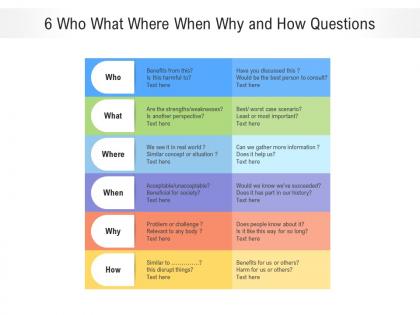
6 who what where when why and how questions




Try Before you Buy Download Free Sample Product
 Impress Your
 Audience
 100%
100% Editable
 Save Hours
 of Time


Our 6 Who What Where When Why And How Questions are explicit and effective. They combine clarity and concise expression.
People who downloaded this PowerPoint presentation also viewed the following :
6 who what where when why and how questions with all 2 slides:
Give your audience a fulfilling experience. They will find our 6 Who What Where When Why And How Questions elevating.
FAQs for 6 who what where when why
Dude, questioning stuff is literally what makes you think critically instead of just believing whatever. Like when you ask "why" or "how does this work" - you're forcing your brain to actually analyze things. I do this thing where I ask three follow-up questions about any big decision or claim I hear. Sounds nerdy but it works. You start catching logical gaps and questioning your own assumptions too. It's basically like being a detective but for your thoughts, which honestly feels pretty cool once you get into it. Try it today!
Here's the thing - open-ended questions actually make people think instead of just sitting there nodding along. Like asking "What challenges have you faced with this?" hits way different than "Do you agree?" You know? It gets them sharing real stuff from their own experience. Plus people start building off each other's answers, which honestly makes your job easier. I always drop these questions right after explaining something new but before jumping to the next topic. Oh and definitely prep 2-3 questions beforehand because trying to come up with good ones on the spot is rough.
Questions work way better than just talking at people because they force everyone to actually think instead of zoning out. Your brain has to work harder when it's predicting answers or making connections - kinda like doing the workout yourself vs watching someone else sweat. Plus there's this weird psychology thing where unanswered questions bug us, so people stay hooked wanting the payoff. Oh, and when someone has to pull info from their memory to respond? That actually makes them remember it better later. I'd throw in a question every few minutes to keep everyone's brain switched on.
Okay so first thing - literally tell people you want questions! They won't ask unless you give permission. I always pause and make eye contact to show I'm actually open to being interrupted. Here's a game changer: say "What questions do you have?" instead of "Any questions?" The first one assumes they've got something brewing. Also try asking THEM stuff first to break the ice. When someone finally speaks up, thank them properly before diving into your answer. Oh and this works really well - after each section go "What are you wondering about this part before I keep going?" Gets them every time.
Honestly, when you ask questions totally changes the vibe. Start early and people loosen up - they'll actually participate instead of sitting there like zombies. I always throw in questions mid-way too because you can tell if they're getting it or if their eyes are glazing over. Saving everything for the end? Bad move. By then they've either forgotten what they wanted to ask or they're mentally checked out already. Just read the room and sprinkle questions throughout. Works way better than dumping them all at once.
So rhetorical questions are just for effect - you're not expecting anyone to actually answer. Like "Who hasn't been there before?" You know? It's more about making people think or proving your point. Clarifying questions are totally different. You actually want responses! Stuff like "Does Monday work better?" where you need to hear back from people. I used to get these mixed up constantly and would just... stand there waiting for answers to rhetorical questions. Super awkward. Now I think of it this way: rhetorical = engagement tool, clarifying = information gathering. Makes way more sense.
Know your crowd before you even walk in. I prep like 2-3 versions of the same question - basic ones for mixed groups, then technical stuff for the experts who actually know what they're talking about. My trick? Start broad, then get specific. Ask "What data problems keep you up at night?" before diving into schema migration horror stories. Watch faces closely - blank stares mean backtrack to basics. People checking phones or nodding like "duh"? Skip to the good stuff. Honestly, most people appreciate when you don't waste their time with stuff they already know.
Dude, your body language is everything when you're asking questions. Eye contact and open gestures? Game changer. People can tell if you actually want their input or you're just checking boxes. Don't cross your arms or stare at your notes - total vibe killer. Honestly, half the battle is just pausing after you ask something and actually scanning the room like you care. Your face needs to scream "I'm listening" without being weird about it. Oh, and practice in a mirror first if you're nervous. Sounds dumb but it works.
Virtual presentations are tricky since you can't see faces or body language. Polls and chat features are total game-changers though - seriously, use them constantly. I always call people out by name for questions, otherwise crickets. Leave way longer pauses too because of lag - what feels awkward to you gives them time to actually think. Breakout rooms work great for smaller discussions. The main thing? Plan your questions ahead of time and give people multiple ways to jump in. Most won't unmute themselves, so don't count on it.
Honestly, the biggest mistake is asking yes/no questions - they're conversation killers. Multi-part questions confuse people too, like they don't know which part to answer first. Leading questions are super annoying ("Don't you think we should...") because you're basically fishing for agreement. And please don't ask stuff you already know the answer to - it feels fake and people can tell. Instead, go with open-ended questions that sound genuinely curious. Something like "What's been your biggest challenge with..." works way better than "Has anyone struggled with this?" You'll actually get real responses that way.
So basically you're flipping the script - instead of just dumping info on people, you ask questions that make them figure stuff out themselves. Start broad like "What's your biggest challenge with X?" then narrow it down. Way better than being a human PowerPoint, trust me. Build each question on the last one - maybe follow up with "What if we tried Y approach?" People actually pay attention when they're part of the conversation. Plus they'll believe in solutions more if they helped connect the dots. It's like being a really strategic tour guide instead of just lecturing at everyone.
Oh, definitely check out Slido - it's honestly my favorite because it's so easy to use and works with PowerPoint and stuff. Mentimeter and Poll Everywhere are solid too. People just use their phones to submit questions, which is way better than passing around index cards (though some old-school folks still do that). If you're doing Zoom or Teams, they've got Q&A built right in. The cool thing about these digital ones? You can moderate questions first, let people upvote the good ones, and keep everything anonymous. Makes the whole thing way less awkward for shy people.
Honestly, you've gotta be the one asking questions first - like actually admitting when you're clueless about something in meetings. People copy what they see way more than what you tell them. Make those "stupid" questions feel celebrated (which is funny because they're usually the best ones). Set up regular Q&A times and reward people for being curious, not just knowing stuff already. When someone asks something tough, thank them out loud before answering - shows you actually want the pushback. Oh and respond with genuine interest, not that defensive thing we all do. Start small but stick with it.
Dude, follow-up questions are seriously a lifesaver. They snap people out of that glazed-over listening mode. Ask something like "Does that make sense?" or "How would this work for your project?" and suddenly they're actually thinking, not just nodding along. I've been in way too many presentations that felt like weird monologues - this fixes that. The best part? Their responses tell you exactly where to go next. Your whole presentation becomes way more relevant to what they actually want to hear. I usually throw in maybe 2-3 throughout each section, wherever it feels natural.
Okay so first thing - lead with your strongest stuff and data to show you know what you're talking about. Then flip the script and ask them questions like "What's been your experience with this?" Eye contact helps here too. Honestly, admitting when you don't know something actually makes you seem more trustworthy, not less. Weird but true. When they push back (and they will), get curious instead of defensive. Something like "That's interesting - walk me through your thinking" works way better than getting all heated about it. Oh and use pauses! People need time to process.
No Reviews