


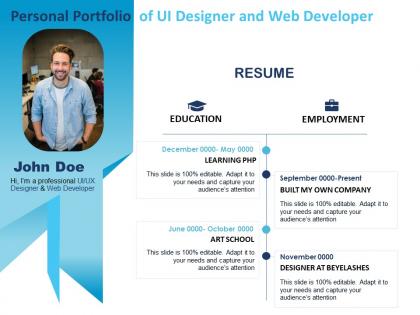
Personal portfolio of ui designer and web developer




Try Before you Buy Download Free Sample Product
 Impress Your
Audience
 100%
Editable
 Save Hours
of Time


Bring every factual detail into fine focus with our Personal Portfolio Of Ui Designer And Web Developer. They ensure full and clear disclosure.
People who downloaded this PowerPoint presentation also viewed the following :
Personal portfolio of ui designer and web developer with all 6 slides:
Handle emerging concerns with our Personal Portfolio Of Ui Designer And Web Developer. Your analysis will appear factual and convincing.


FAQs for Personal portfolio of ui designer
Okay so basically you need three main things: your absolute best work (not everything you've ever done), clear explanations of what you actually did on each project, and contact info that's super obvious. I always tell people to include a quick intro about yourself too. Testimonials are clutch if you've got them. Here's the thing though - organize it so someone can figure out what you do in like 20 seconds max. Nobody has patience anymore. Test all your links before you send it anywhere because broken links are honestly embarrassing. Oh and update it regularly or it'll get stale fast.
Honestly, just stalk their job postings first - sounds creepy but you'll figure out what they actually want. Tech companies? Show off your coding and how you solve problems. Creative agencies want the flashy visual stuff and your thought process behind it. Basically you're the same person, just switching up what you put front and center. I usually keep like 2-3 versions ready so I'm not rebuilding everything from scratch every time. Move your best relevant projects to the top, copy their language from the job description, and ditch anything that doesn't fit. Way easier than you'd think.
Honestly, it depends on what you're going for. Digital portfolios are way easier to share - just send a link and boom, they can check it out whenever. Plus you can throw in videos, animations, whatever. But there's something about a physical portfolio that just hits different, you know? Especially if you're in design or architecture where they want to see actual textures and materials. I keep both versions because some people are still old school and want to flip through pages. Also learned the hard way that digital means no more worrying about spilling stuff on your work lol.
Look, hiring managers see hundreds of portfolios that all blur together. Your work needs a story behind it - like, what problem were you trying to solve? What went wrong along the way? (There's always something lol.) How'd you figure it out? Don't just dump your projects there. Walk them through your actual process and thinking. Make each one feel like a little story with a beginning, middle, end. Oh and definitely practice saying this stuff out loud before interviews. You'll sound way more natural than if you're just winging it.
Okay so visual design is huge - people judge your portfolio before they even see your actual work. Clean fonts, good spacing, consistent colors? That stuff screams "I pay attention to details." I've watched incredible portfolios get passed over just because they looked sloppy or like they're from 2010 (honestly breaks my heart). Good design also helps people follow your content without getting lost. My rule: keep it simple and let your work shine. The design should be like a good picture frame - you notice it's nice but the photo is what matters.
Honestly, aim for every 3-6 months or whenever you finish something that's way better than what's already up there. I'm terrible at remembering this stuff – went a whole year once without touching mine and felt like an idiot when someone asked to see it. Don't just dump everything new in there though. Replace your weaker pieces with the stronger ones. Got a big client or made something you're actually proud of? Swap it in immediately. Oh, and definitely refresh it before any job hunting or networking events. Maybe set a phone reminder so you don't forget like I always do.
Honestly, most portfolios are boring carbon copies of each other. Put your absolute best work first—don't make people hunt for it. Your case studies should show HOW you think, not just the shiny end result. I'd focus on whatever makes you weird in a good way. Maybe you combine skills nobody else does, or you approach problems differently. Use your actual voice when writing descriptions too. The goal is someone should be able to spot YOUR portfolio in a stack of others based on your style and thinking alone. It's like... be memorable, you know?
Don't just show the shiny final designs - walk people through your whole messy process! Start with that chaotic initial brief, then your research, how you figured out what the real problems were. I hate seeing portfolios with zero context honestly. Throw in your sketches, wireframes, strategy stuff. Always add a section about what went wrong and how you had to pivot. Oh, and if you've got numbers, use them - like "engagement went up 40%" or whatever. Makes everything feel way more legit than just pretty mockups.
Hover effects on your thumbnails are a must. Interactive timelines showing career progression look super clean too. But honestly? Clickable prototypes where people can actually mess around with your designs - that's what gets you hired. Video walkthroughs showing your process beat static screenshots every time. Micro-animations between sections add nice polish, and a filterable project grid makes everything feel more professional. Your contact form should do something fun when submitted (mine does a little confetti thing lol). Maybe add process sketches or behind-the-scenes stuff if you've got it. Just pick two features that actually show off your skills first.
Dude, you need other people looking at your portfolio. You're way too close to your own work to see the problems. A good mentor will straight-up tell you which projects suck - mine made me cut like half my stuff because it wasn't doing me any favors. They know what hiring managers actually want to see, which is gold. Ask them about your project order, how you're explaining your process, the whole structure. Short sentences work. But don't just say thanks and ignore what they tell you - that's pointless. Fresh perspective is everything when you can't see your own blind spots anymore.
Ugh, don't make the mistake I see everywhere - cramming in every single thing you've ever touched. Pick like 5-7 killer pieces instead of 20 random ones. Quality beats quantity here, trust me. Make your contact info stupid easy to find (people are lazy). Oh, and definitely check how it looks on mobile since everyone's on their phones now. The other thing? Actually explain your thinking behind each project. Pretty pictures are nice but the story sells it. Your best work + the why behind it = solid portfolio.
Don't just dump all your testimonials on one boring page - sprinkle them throughout your portfolio instead. When I ask clients for feedback, I'm super specific about what problem I actually solved for them. Generic "awesome job!" comments are basically worthless. Pull quotes that show real results, like "Sarah boosted our conversion rate by 40%" and put it right next to that project. Screenshots of LinkedIn recs work great too since they look more legit. The whole point is matching testimonials with the actual work so people can see your impact. Oh, and obviously get permission before using anyone's name publicly - learned that one the hard way!
Adobe Creative Suite is still the gold standard - InDesign, Photoshop, Illustrator. But honestly? Canva's gotten crazy good lately and won't break the bank. Figma's where everyone's at now for digital stuff since you can collaborate easily. I've even seen gorgeous portfolios made in PowerPoint (I know, I know). Pick whatever clicks with you first, then actually learn it inside out. Clean layouts beat flashy effects every time. Oh, and invest in decent images - blurry photos will kill even the best design. Focus on consistent fonts too, makes everything look way more professional.
Put your strongest work right up front - seriously, don't make people dig for the good stuff. I've seen way too many portfolios where the amazing pieces are buried halfway through. Group everything by project type or skills, whatever makes more sense for your work. Quick descriptions help too, just so people know what they're looking at and what you actually did. Oh, and make sure the navigation isn't confusing - your contact info should be super easy to find. Test it on someone first though, they'll catch weird stuff you missed.
Track how long people actually stay on your portfolio and which projects grab attention. Click-through rates to your contact info are gold - that's where you see real interest. But honestly, the numbers that matter most are inquiries and interview requests after someone checks out your work. Keep a simple spreadsheet of views vs actual opportunities, you'd be surprised how clear the patterns get. Also ask people which pieces stood out to them. Google Analytics works great if it's online. Oh, and bounce rates tell you a lot too - if people leave immediately, something's off with your opening projects.
No Reviews