


A Beginners Guide To Artificial Intelligence Training Ppt




Try Before you Buy Download Free Sample Product
 Impress Your
 Audience
 100%
100% Editable
 Save Hours
 of Time


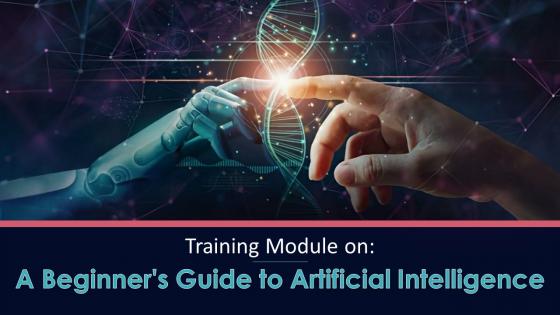
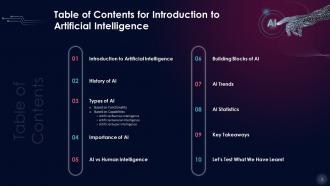
This training module on A Beginners Guide to Artificial Intelligence provides a comprehensive view of the concept of AI. It presents its definition along with its history. Further, it covers its types that are based on functionality Limited Theory, Reactive Machine, Theory of Mind, Self-Aware AI and capabilities Artificial Narrow Intelligence ANI, Artificial General Intelligence AGI, Artificial Super Intelligence ASI. It also discusses the importance of AI, provides a comparison between human and artificial intelligence, briefly covers the building blocks of AI, and highlights key trends and industry statistics. It also includes Key Takeaways and Discussion Questions related to the topic to make the training session more interactive. The deck has PPT slides on About Us, Vision, Mission, Goal, 30-60-90, Days Plan, Timeline, Roadmap, Training Completion Certificate, and Energizer Activities. It also includes a Client Proposal and Assessment Form for training evaluation.
People who downloaded this PowerPoint presentation also viewed the following :
Content of this Powerpoint Presentation
Slide 4
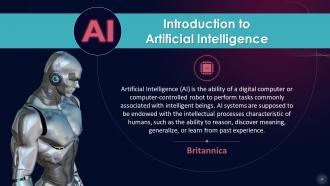
This slide gives an introduction to Artificial Intelligence (AI), which involves embedding intelligence in machines so that these can function like humans. Machines use this AI to make decisions in real-time. An Artificially Intelligent computer receives real-time data, discovers its meaning and responds appropriately.
Slide 5
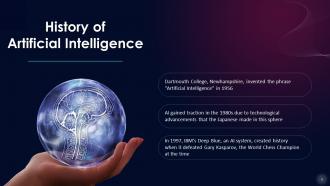
This slide illustrates the history of Artificial Intelligence. Dartmouth College invented the phrase "Artificial Intelligence" in 1956. AI gained attention in 1980s due to technology advancements that the Japanese made in this field.
Slide 6
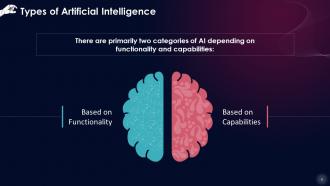
This slide lists the types of Artificial Intelligence. There are primarily two categories of AI depending on functionality and capabilities.
Slide 7
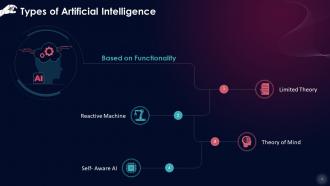
This slide illustrates that functional categorization classifies AI based on its resemblance to the human mind and its ability to think and feel like humans. The functional types of AI are:
Instructor Notes:
- Limited Theory: This sort of AI has memory capabilities, allowing it to use prior information/experience to make better future judgments. Most applications that we encounter today, fit into this category. These AI applications may be taught by storing a considerable amount of training data in their memory in a reference model
- Reactive Machines: These are the most basic and ancient form of Artificial Intelligence. These simulate a human's capacity to respond to many types of inputs. Because this sort of AI lacks memory power, it cannot access previously acquired information/experience to get better results
- Theory of mind: With little to no presence in our daily life, this kind of AI is primarily at the "Work in Progress" stage, and is restricted to research labs. Once created, these types of AI will have a thorough understanding of human brains, including their wants, preferences, emotions, mental processes, and so on. The AI will change its response based on its comprehension of the human brain and its whims
- Self-aware AI: It is the last stage in the evolution of AI. Its existence is speculative and can only be discovered in science fiction films. These kinds of AI can comprehend and elicit human emotions and feelings. These types of AI are decades, if not centuries away from becoming a reality. This is the type of AI that sceptics like Elon Musk are concerned about. Once an AI becomes self-aware, it can enter self-preservation mode; it may view humanity as a possible threat and may directly or indirectly pursue efforts to terminate our race
Slide 8
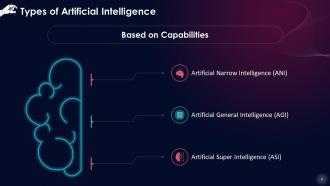
This slide demonstrates that the second categorization method is more common in the IT business, and is based on capabilities of AI against human intelligence.
Instructor Notes:
- ANI is the foremost level of AI that we have achieved to date
- AGI stands for Artificial General Intelligence, sometimes known as human-level AI
- ASI is an Artificial Super Intelligence that is sharper than the world's brightest people's combined intellect in every discipline
Slide 9
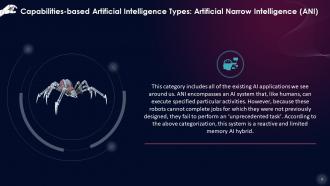
This slide depicts that artificial narrow intelligence encompasses an AI system that, like humans, can execute specified particular activities. However, because these robots cannot complete jobs for which they were not previously designed, they fail to perform an ‘unprecedented’ task.
Slide 10
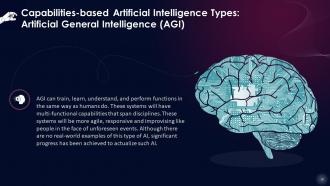
This slide showcases that artificial general intelligence can train, learn, understand, and perform functions as humans do. These systems will have multi-functional capabilities that span disciplines, and these systems will be more agile, reacting and improvising like people in the face of unforeseen events.
Slide 11
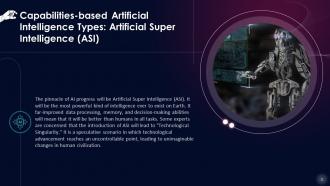
This slide illustrates that Artificial Super Intelligence (AI) will be the most powerful kind of intelligence ever to exist on Earth. It far-improved data processing, memory, and decision-making abilities will mean that it will be better than humans in all tasks. Some experts are concerned that the introduction of ASI will lead to Technological Singularity.
Instructor Notes:
Technological Singularity: It is a speculative scenario in which technological advancement reaches an uncontrollable point, leading to unimaginable changes in human civilization.
Slide 12
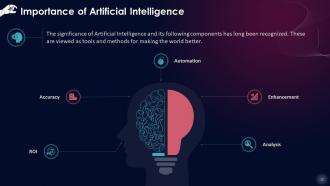
This slide discusses what makes Artificial Intelligence so important and useful. These benefits include automation, enhancement, analysis, accuracy, and ROI.
Instructor’s Notes:
- Automation: AI can automate a routine process previously completed by hand, without causing weariness or the need for breaks that a human employee requires
- Enhancement: Through skills such as optimizing conversation bots or customer service menus and giving better product suggestions, AI can make products and services better and more effective, enhancing end-user experience
- Analysis: AI can process data far quicker than people, detecting patterns much faster. It can also examine much bigger datasets than humans, revealing patterns that humans might miss
- Accuracy: AI can be trained to be more accurate than humans in jobs such as choosing financial investments or recognizing malignant growths (on x-rays) by exploiting its capacity to acquire and evaluate data
- ROI: AI increases the quality of data by better evaluating complicated, multivariate connections without taking pauses and with fewer errors. This makes it a critical technology for any company that depends on data and works at scale
Slide 13
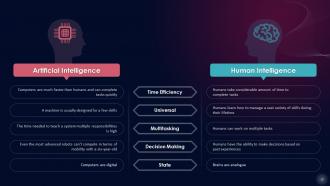
This slide lists the differences between Artificial Intelligence and human intelligence. The parameters for comparison are multitasking, decision making, time efficiency, and state.
Slide 15
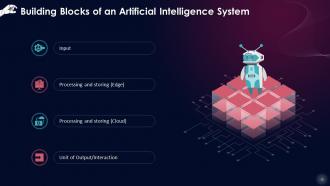
This slide displays the AI system's building components, such as input, processing and storage (edge), processing and storage (cloud), and output/interaction unit.
Instructor Notes:
- Input: Captures data from users and the immediate environment through mobile applications, cameras, microphones, and so on
- Processing and storage (Edge Computing): Processing and storage are essential and need to happen, even if the Internet is not available. In the event that updates do not happen, the system should be self-sufficient, and decisions should be made on the run
- Processing and storage (Cloud): It comprises collection of data in even more detail. Machine learning model creation and maintenance happen in this stage. Data scientists get involved in the AI process from this layer onwards
- Unit of output/interaction: Output might be in the form of a display/voice or a robotic activity
Slide 16
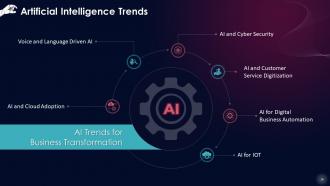
This slide explores sectors in which AI can be seen as a business opportunity such as cloud adoption, cyber security, IoT etc.
Instructor’s Notes:
- AI and Cloud Adoption: Artificial intelligence and cloud computing have produced solutions that benefit millions. AI, speech recognition, and cloud computing are now part of our daily lives thanks to digital assistants like Siri, Google Home, and Amazon's Alexa. AI-based capabilities are now layered on top of cloud computing, assisting businesses in managing data, delivering consumer experiences, and streamlining operations
- Voice and Language driven AI: Developers can now use speech technologies, chatbots, and increasingly AI-enabled voice to train neural network models and create human-like experiences. Natural Language Processing (NLP) and Natural Language Generation (NLG) enable computers to comprehend, interpret, and modify the human language, allowing us to communicate with machines
- AI and Cyber Security: AI has emerged as a critical technology in data security because of its ability to automate large-scale processes, access millions of events, and identify a wide range of threats – from malware to identifying risky behavior that could lead to a phishing attack or the download of malicious content
- AI and Customer Service Digitization: A firm cannot succeed without monitoring and enhancing customer experience, regardless of its exceptional service or product. A company's most crucial building component is its customers. Brands continue to use AI to generate real interactions and the hyper-personalized experience to satisfy changing customer expectations
- AI for Digital Business Automation: Several firms have turned to Robotic Process Automation (RPA) as a digital transformation hack. RPA is cheaper and faster than total platform revamps, and it minimizes reliance on humans for high-volume, repetitive operations. Continued AI and Machine Learning advancements enhance RPA's ability to handle more complex jobs in cognitive automation, such as pattern recognition and decision-making
- AI for IoT: Smart gadgets like Google Nest, Smart Plugs, and Smart Locks now only respond to commands, but when combined with AI technology, these devices can foresee human requirements and start appliances and processes without human participation
Slide 17
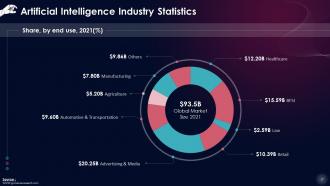
This slide demonstrates the Global Artificial Intelligence Market share in 2021. The global AI market was worth $93.5 billion in 2021, and it is expected to increase at a 38.1% Compound Annual Growth Rate (CAGR) from 2022 to 2030. The adoption of advanced technologies in finance, automotive, healthcare, retail, and manufacturing is driven by continual research and innovation.
Slide 18
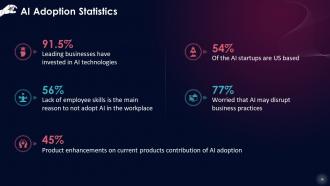
This slide demonstrates the statistics in adoption of Artificial Intelligence. Majority of the leading businesses in the US have invested in AI technologies to increase their economic gains and many businesses believe that AI will disrupt their business practices.
Slide 19
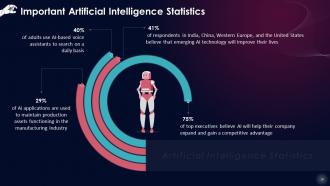
This slide mentions important AI Statistics. In this digital age, smart, data-driven technologies like Artificial Intelligence are being used at an unprecedented scale in enterprise applications, reshaping the business landscape like never before.
Slide 35 to 50
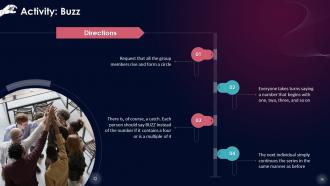
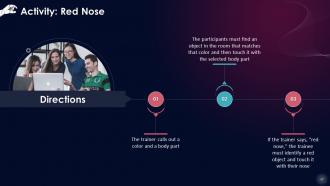
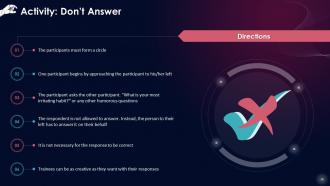
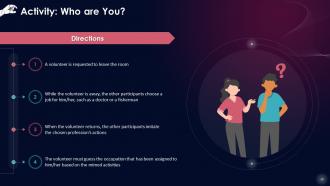
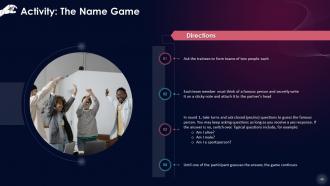
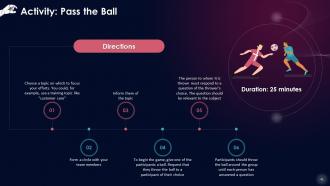
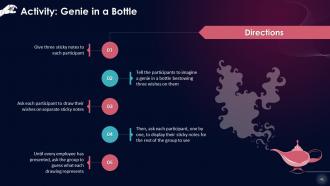
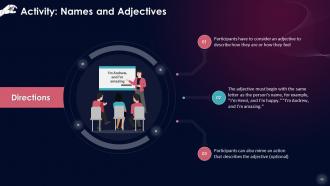
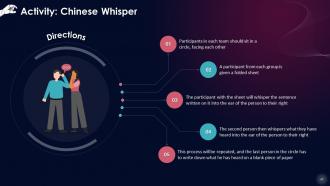
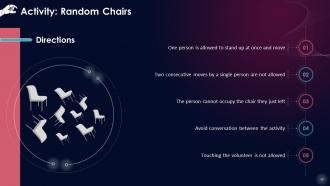
These slides contain energizer activities to engage the audience of the training session.
Slide 51 to 78
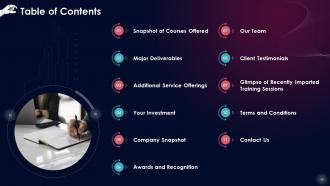
These slides contain a training proposal covering what the company providing corporate training can accomplish for the client.
Slide 79 to 81
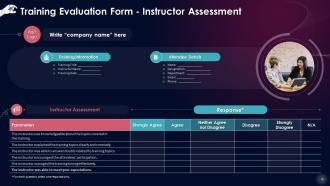
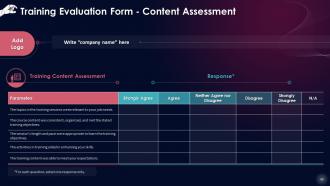
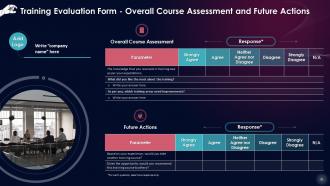
These slides include a training evaluation form for instructor, content and course assessment.
A Beginners Guide To Artificial Intelligence Training Ppt with all 86 slides:
Use our A Beginners Guide To Artificial Intelligence Training Ppt to effectively help you save your valuable time. They are readymade to fit into any presentation structure.
















FAQs for A Beginners Guide To Artificial
So you'll need good quality data first - clean stuff that actually represents what you want the AI to do. Garbage in, garbage out is painfully real with this. Clear objectives help too, plus the right model setup. Oh and validation methods to test if it's actually working. You need decent computing power obviously, and feedback loops to keep tweaking things. Monitoring tools are clutch for catching problems early. Honestly though? Define your success metrics right at the start. Trust me, it'll save you so much frustration later when you're trying to figure out if your results are any good.
Honestly, start tracking metrics before the training even begins - that's the only way you'll know if it actually worked. Do skill assessments before and after, then watch if people are genuinely using the AI tools day-to-day. Productivity gains matter too, but engagement during training is huge. If everyone's checking their phones, you've got problems. The real kicker? Check back in three months. That's when you'll see who actually retained anything versus who just nodded along. I always do quarterly follow-ups because, let's be real, most corporate training gets forgotten pretty fast.
Honestly, the biggest thing is checking your training data for bias first - that's where most projects go wrong. Diverse datasets are crucial because we've all seen those hiring algorithms that totally screwed over certain groups. Also, figure out if you actually have permission to use people's data (boring but necessary). Document everything as you go so you're not scrambling later when someone asks "how does this thing work?" Privacy stuff matters too - users deserve to know their info might be training your model. Short version: audit your dataset early, get proper consent, and keep good notes throughout.
Honestly, your dataset is like 90% of the battle. Feed your model garbage data and you'll get garbage results back - that whole "garbage in, garbage out" thing is painfully true. Size definitely helps, but quality trumps quantity every time. I learned this the hard way on a project last year. You really want your training data to mirror what you'll actually use the model for, otherwise it'll flop when real users start hitting it. Worth spending way more time than you think on cleaning and checking your data upfront. Trust me, it beats debugging weird model behavior later.
You definitely need people watching AI at every step - someone's gotta check the data quality, review what the model spits out, and handle the tricky ethical stuff. During training, humans pick the datasets and tweak settings. Once it's running, you're constantly monitoring and jumping in when things get weird (which happens more than you'd think). Never deploy anything you can't quickly shut down or override. I learned this the hard way on a project last year - always build in those human checkpoints because AI can go off the rails fast without proper supervision.
Your old skills totally apply to AI stuff. Psychology background? You'll get why models behave weird with certain inputs. Stats is honestly clutch - probably the most directly useful thing you can have. Finance or healthcare experience helps you know what questions to actually ask instead of just throwing data at problems. Even basic project management saves you since these projects always spiral (learned that the hard way lol). Just think about the frameworks you used before and apply them. Like, how did you solve problems in your old job? Same logic works here.
Data quality issues will mess you up more than anything else - seriously, garbage in, garbage out. Clean that stuff first or you're building on quicksand. Overfitting's another pain where your model just memorizes instead of actually learning patterns. Cross-validation and dropout layers help with that. Oh, and computational costs can get brutal fast. I'd start small with prototypes before going big, maybe use cloud platforms that scale automatically. Honestly though? Focus on getting your data right first since everything depends on it anyway.
So the algorithm you choose basically controls how fast your model learns and how much compute you'll burn. Adam's great for quick convergence but eats memory like crazy. SGD won't kill your resources but training takes forever. Architecture choice matters too - transformers are crazy powerful but cost a fortune compared to simpler stuff. It's honestly like picking a Ferrari vs a bike for your daily drive lol. I'd say start with whatever's proven for your specific problem, then worry about optimizing once you figure out what's actually slowing you down.
Dude, the AI training space is moving crazy fast right now. GPUs got way better and distributed computing lets you crunch through huge datasets without waiting forever. Transformers totally changed the game - I'm still amazed how much more efficient they are than the old stuff. Mixed-precision training is a game changer for cutting costs, so definitely start there. Also, automated hyperparameter tuning saves you from all that tedious manual tweaking. Oh and federated learning is pretty cool too - you can train on scattered data without worrying about privacy issues. Data preprocessing tools got way smoother recently which honestly makes everything less painful.
Honestly, good preprocessing makes a huge difference for AI training. Your model gets way better data to work with when you clean up missing values, normalize scales, and ditch outliers. Without it, you're basically teaching someone to read using a book that's half destroyed with coffee stains everywhere - good luck with that. Training goes faster too since the model isn't wasting cycles on garbage data. Quick tip: always audit your dataset first before you get all excited about fancy architectures. Trust me on this one.
Hey! So instead of doing those big one-time model updates, you want continuous learning - way less painful. Set up automated pipelines that keep feeding your models fresh data. Incremental learning is your friend here since you won't have to retrain everything from zero each time. Transfer learning works really well too - grab pre-trained models and just fine-tune them for what you need. Oh, and definitely build in monitoring from the start to catch when performance drops. Trust me, retrofitting this stuff later is such a headache. The whole trick is making your architecture flexible right away.
Honestly, working with others makes such a difference for AI training. More people means way more data to work with, which cuts down on bias issues. Someone always catches the weird edge cases you'd totally miss on your own - it's crazy how blind you can be to obvious problems. The shared knowledge thing is clutch too. Better features, smarter testing, quicker fixes when stuff breaks. And trust me, it will break. Setting up those regular team reviews? Game changer. Everyone learns from each other's mistakes and wins.
Honestly, AI is changing everything about what jobs need right now. There's gonna be this weird split between people who figure out how to use AI tools and those who don't - kinda like when everyone had to suddenly learn computers but way more intense. Focus on stuff AI can't do well: creative thinking, reading people, making tough calls. Oh and weirdly enough, learning how to actually work alongside AI systems. I'd start looking at your current skills now. Which ones are safe from AI? The gap's happening fast, so don't wait too long to upskill the vulnerable areas.
Make it feel natural, not like you're forcing everyone into mandatory training. Those "lunch and learn" sessions actually work way better than formal workshops - people are more relaxed with food involved. Give teams time to mess around with new AI tools, even if half the experiments flop. Set up cross-department groups so marketing can see what engineering's doing and vice versa. Monthly show-and-tells are gold for this stuff. Oh, and celebrate the failures just as much as wins - sounds cheesy but it really does help people take risks instead of playing it safe all the time.
Think of simulation as a safe sandbox where you can train AI models without breaking anything expensive. You'll be able to run thousands of scenarios super quickly - like putting self-driving cars through every weird traffic situation without actually crashing real cars (which, let's be honest, would get pricey fast). The whole point is testing edge cases and watching things fail safely before you unleash them into the real world. I'd definitely use simulation when getting actual training data is either dangerous, costs too much, or you just can't collect enough of it naturally. Game changer for most projects.
-
Good research work and creative work done on every template.
-
Definitely recommend SlideTeam to all who need help with PowerPoint presentations. Their design team can create anything you need.