


Agile software development module for it powerpoint presentation slides
Agile software development in IT refers to software methodologies based on iterative development. Check out our efficiently designed Agile Software Development in IT template that showcases a way of project management that divides a project into stages. The template includes continuing cooperation with stakeholders and continuous development at each point. The proposal covers the collaboration of self-organizing cross-functional teams, which leads to the evolution of criteria and solutions. Scrum and Kanban are two of the most common Agile development methodologies used in this template. Further, the proposal provides information on Agile Methodologys phases and goals. Additionally, our template covers details on the Agile transformation model along with Agile Diagram- Software Design Thinking and Lean Startup Phases, etc. Our IT deck also covers information on the Agile-driven approach for software development. Further, this module provides details on the Agile software development lifecycle in IT, the role of the Agile team, and learning-oriented techniques for the Agile Team. It also highlights Agile performance evaluation metrics and Agile enterprise developed architecture-Post Implementation attributes. Get access now.

















































You must be logged in to download this presentation.


Do you want to remove this product from your favourites?
 Impress your
 audience
 100%
100% Editable
 Save Hours
 of Time
PowerPoint presentation slides
This complete presentation has PPT slides on wide range of topics highlighting the core areas of your business needs. It has professionally designed templates with relevant visuals and subject driven content. This presentation deck has total of sixty seven slides. Get access to the customizable templates. Our designers have created editable templates for your convenience. You can edit the color, text and font size as per your need. You can add or delete the content if required. You are just a click to away to have this ready-made presentation. Click the download button now.

People who downloaded this PowerPoint presentation also viewed the following :
Content of this Powerpoint Presentation
Slide 1: This slide introduces Agile Software Development. State Your Company Name and begin.
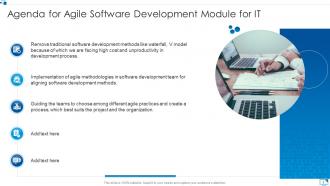
Slide 2: This is an Agenda slide. State your agendas here.
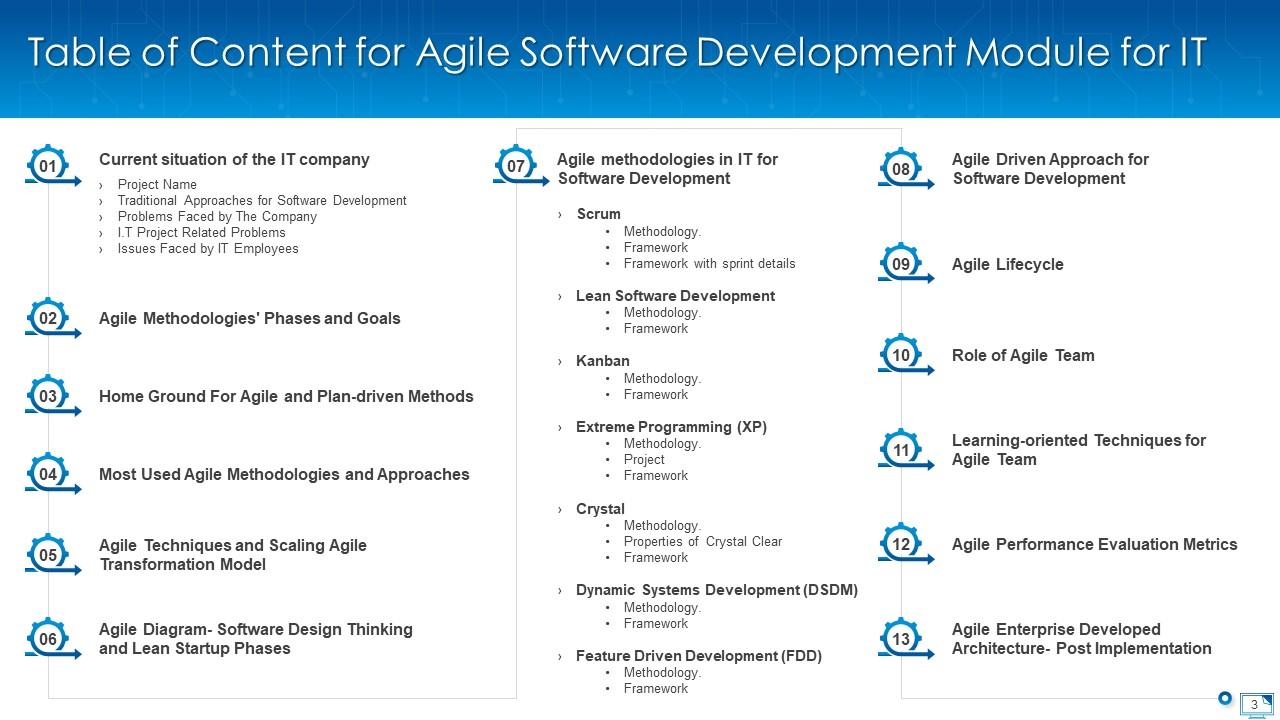
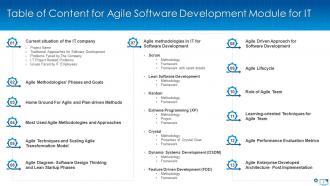
Slide 3: This slide presents Table of Content for Agile Software Development in IT.
Slide 4: This slide shows title for 'Current situation of the IT company'.
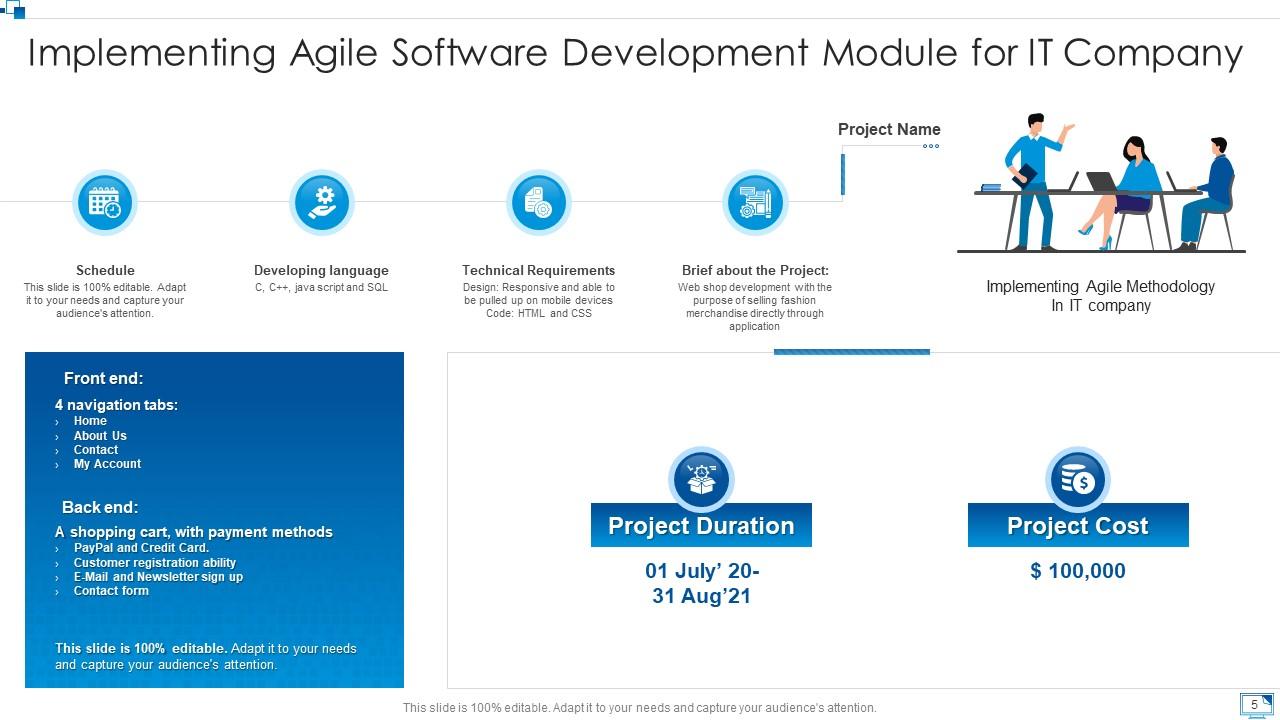
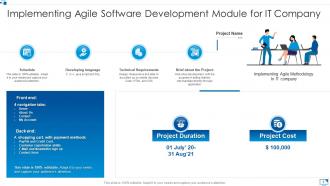
Slide 5: This slide depicts Implementation of agile methodology in IT company.
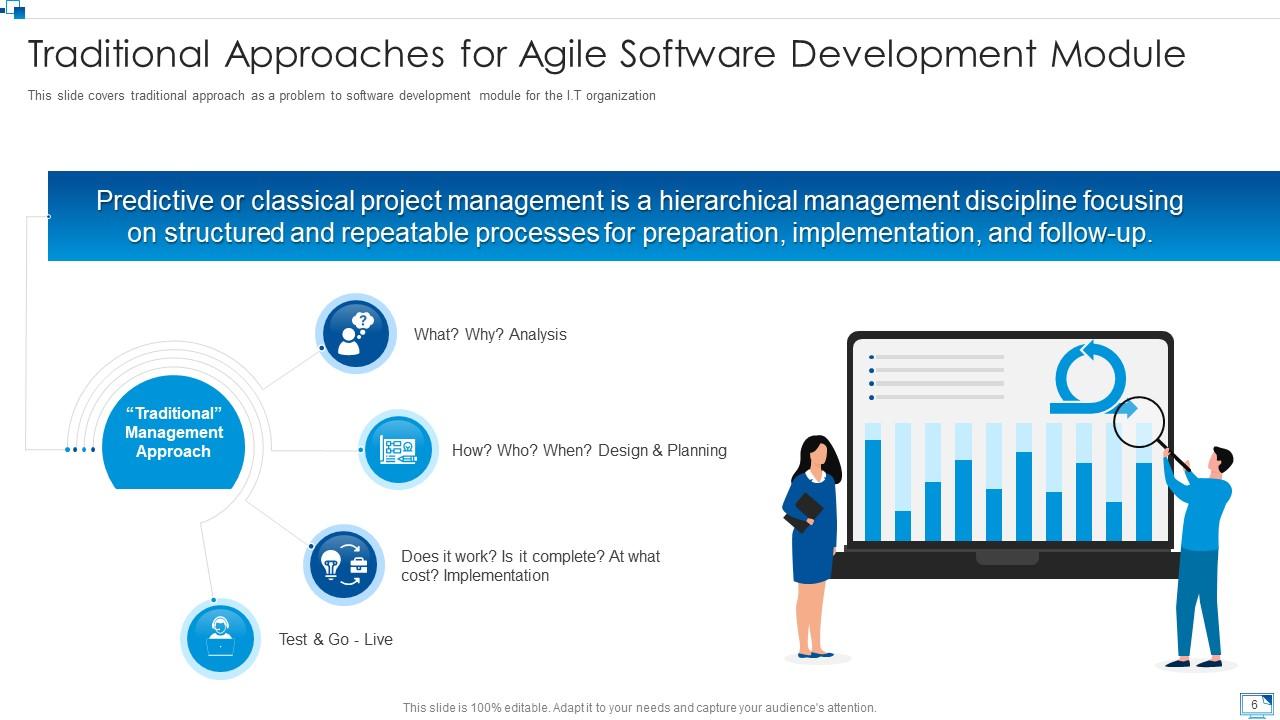
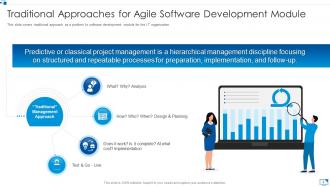
Slide 6: This slide covers traditional approach as a problem to software development for the I.T organization
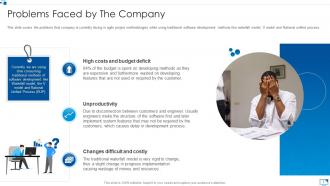
Slide 7: This slide covers the problems that company is currently facing in agile project methodologies.
Slide 8: This slide covers the problems related to the IT projects of the company and reasons to implement agile methodologies in IT department/company.
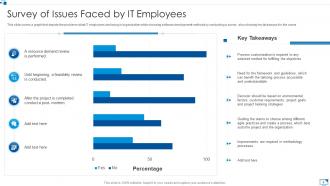
Slide 9: This slide covers a graph that depicts the problems what IT employees are facing in organisation.
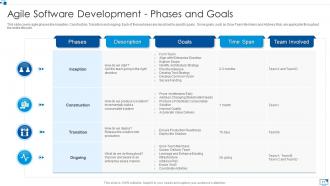
Slide 10: This slide depicts title for 'Agile Methodologies phases & goals'.
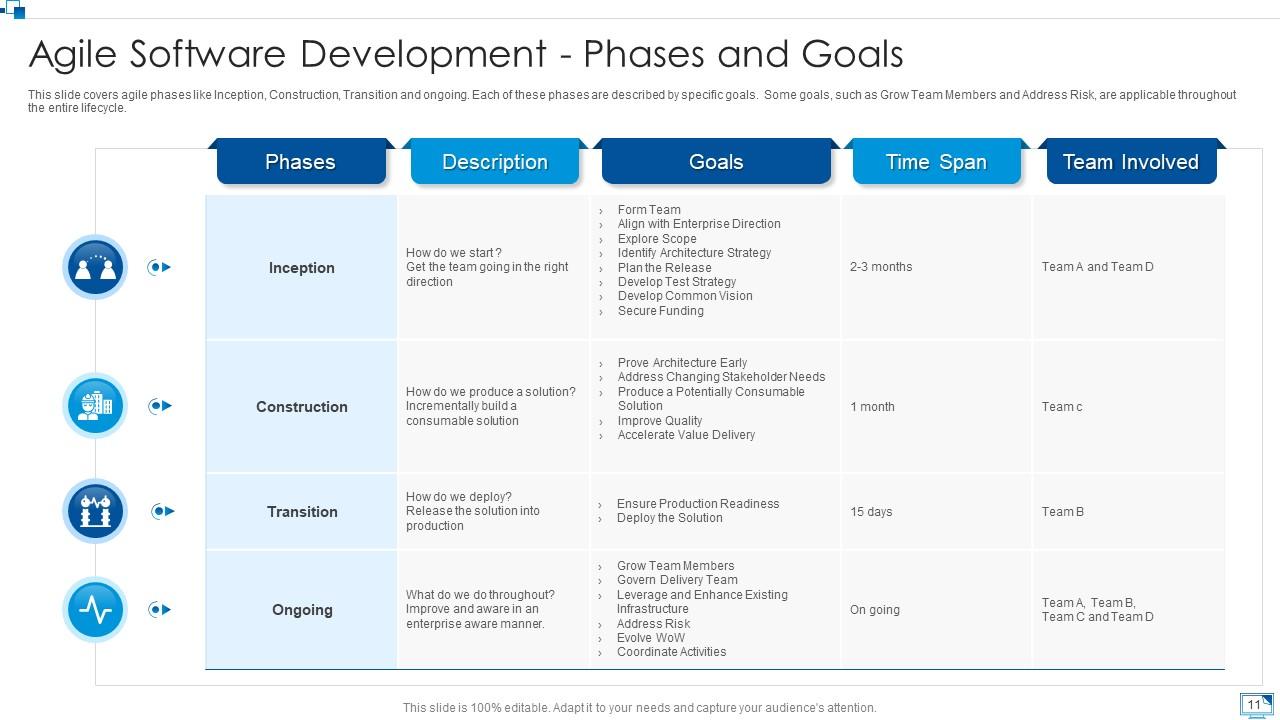
Slide 11: This slide covers agile phases like Inception, Construction, Transition and ongoing.
Slide 12: This slide shows title for topics that are to be covered next in the template.
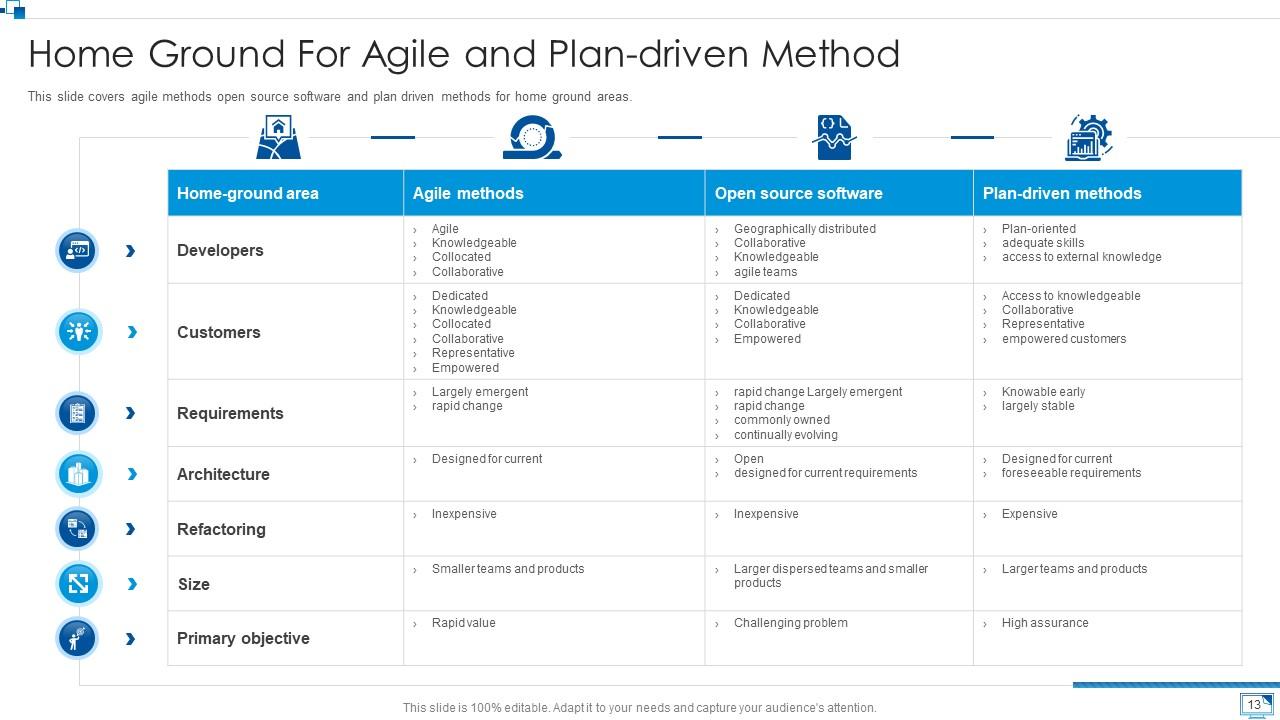
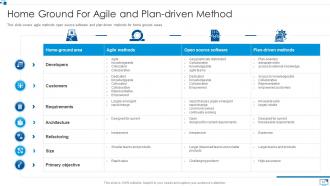
Slide 13: This slide covers agile methods open source software and plan driven methods for home ground areas.
Slide 14: This slide shows title for topics that are to be covered next in the template.
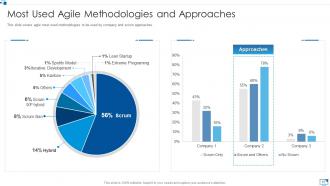
Slide 15: This slide displays Most Used Agile Methodologies and Approaches.
Slide 16: This slide shows title for topics that are to be covered next in the template.
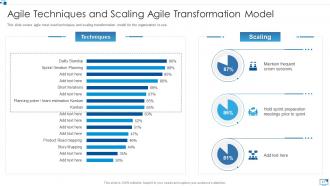
Slide 17: This slide represents Agile Techniques and Scaling Agile Transformation Model.
Slide 18: This slide shows title for topics that are to be covered next in the template.
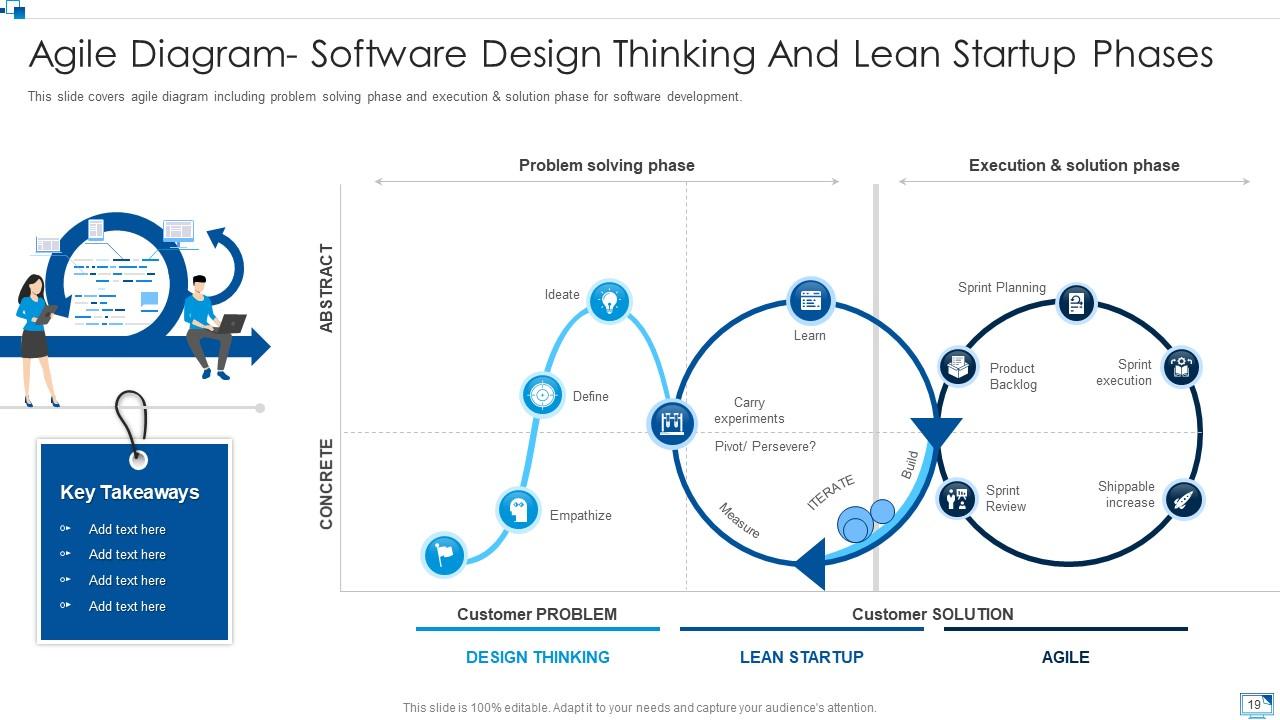
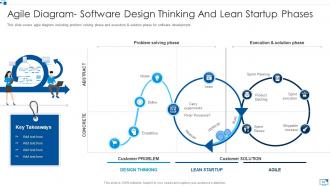
Slide 19: This slide showcases Agile Diagram- Software Design Thinking And Lean Startup Phases.
Slide 20: This slide shows title for topics that are to be covered next in the template.
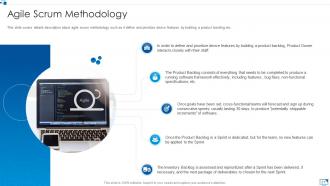
Slide 21: This slide covers details description about agile scrum methodology such as it define and prioritize device.
Slide 22: This slide presents framework of agile scrum methods including product backlog sprint planning.
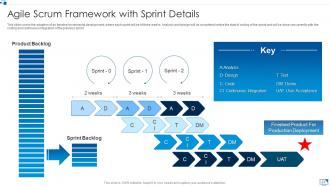
Slide 23: This slide displays Agile Scrum Framework with Sprint Details.
Slide 24: This slide shows title for topics that are to be covered next in the template.
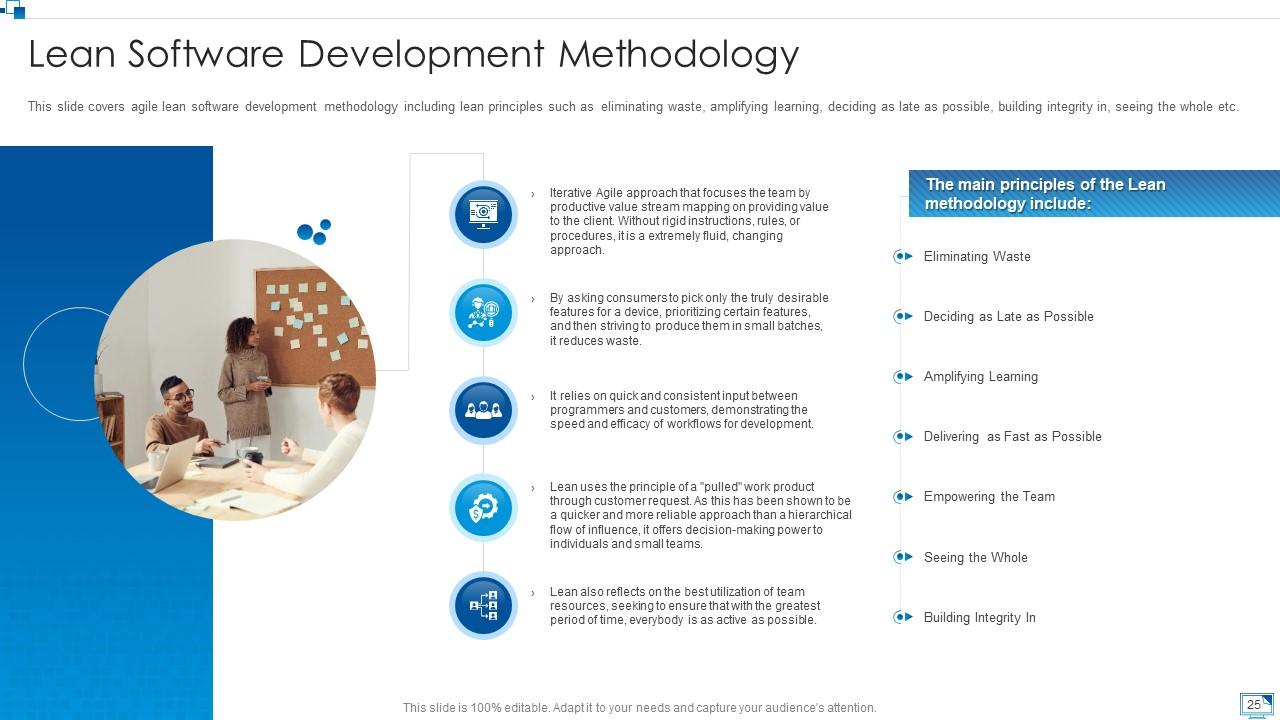
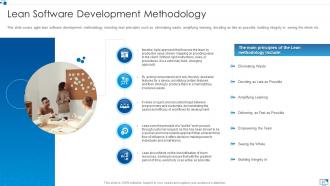
Slide 25: This slide covers agile lean software development methodology including lean principles.
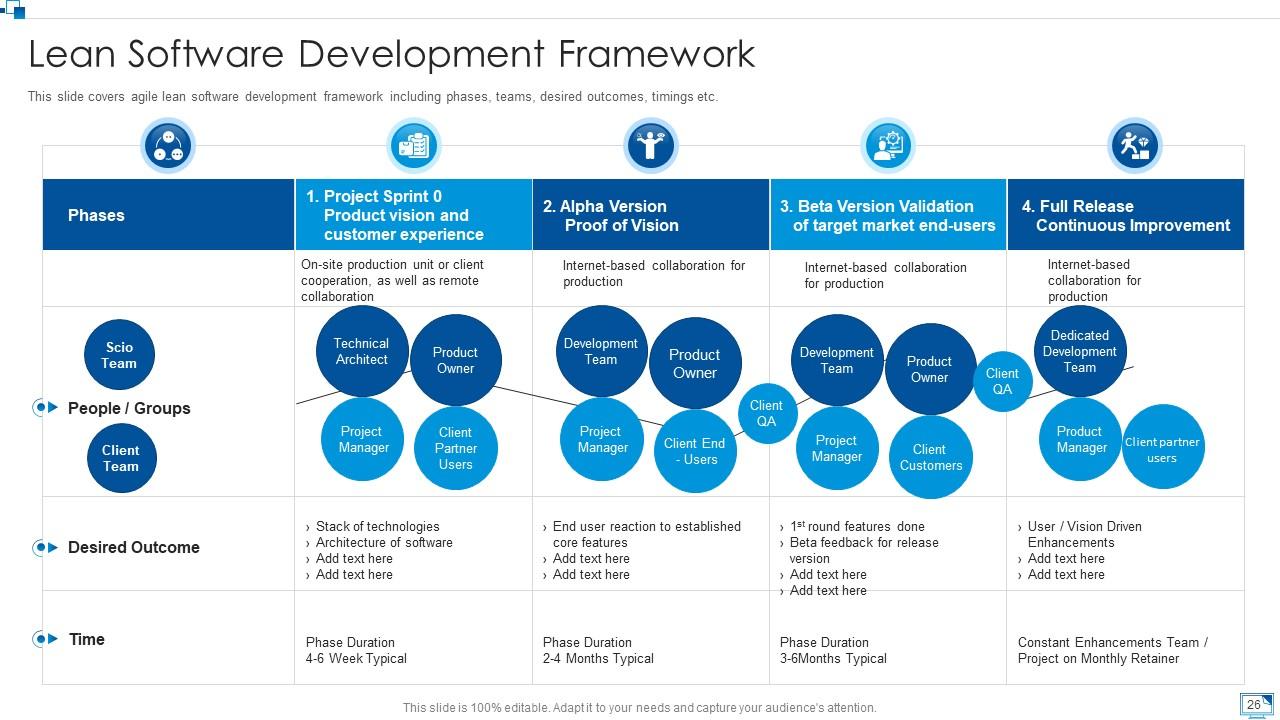
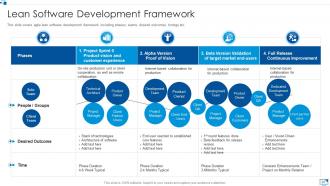
Slide 26: This slide showcases agile lean software development framework including phases, teams, desired outcomes, etc.
Slide 27: This slide shows title for topics that are to be covered next in the template.
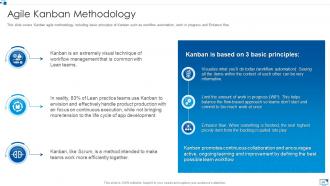
Slide 28: This slide displays Kanban agile methodology including basic principles of Kanban.
Slide 29: This slide covers agile Kanban framework including pool of ideas, feature preparation, etc.
Slide 30: This slide shows title for topics that are to be covered next in the template.
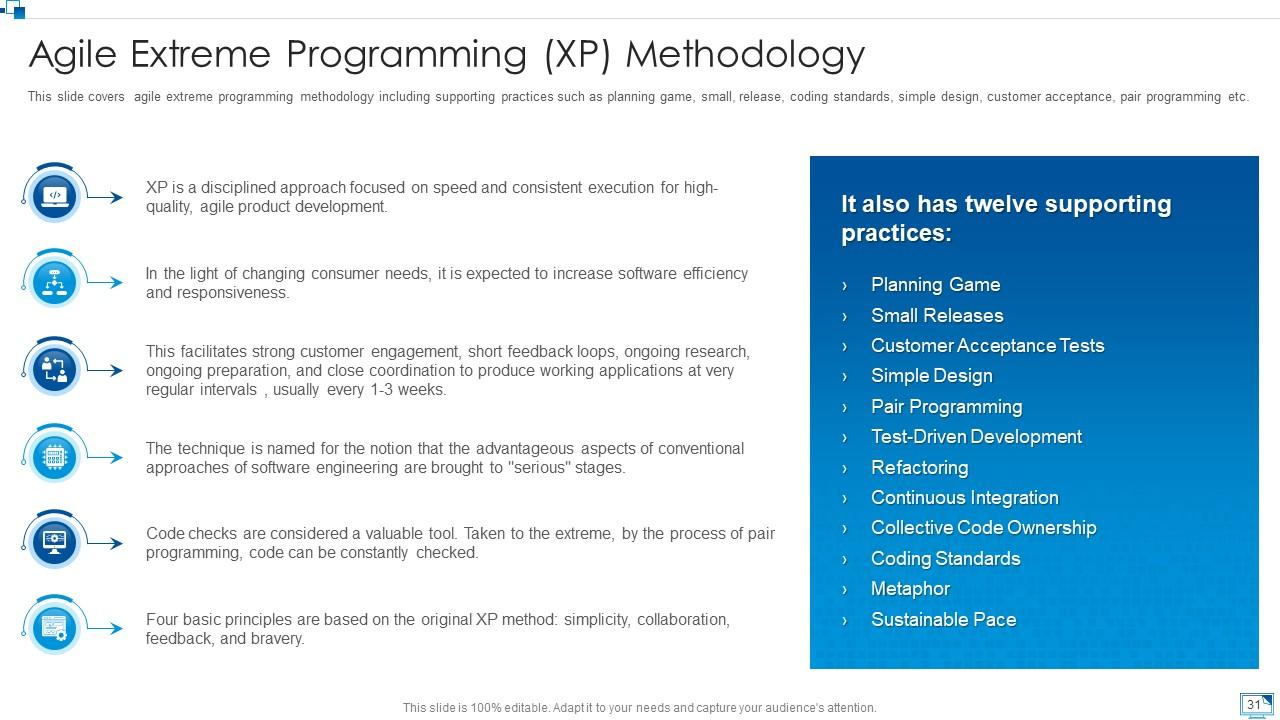
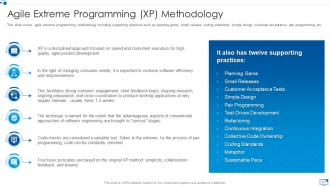
Slide 31: This slide covers agile extreme programming methodology including supporting practices.
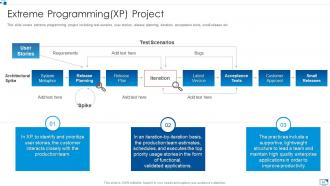
Slide 32: This slide covers extreme programming project including test sensors, user stories, etc.
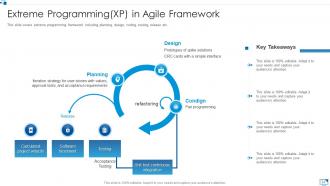
Slide 33: This slide covers extreme programming framework including planning, design, coding, testing, release etc.
Slide 34: This slide displays title for 'Crystal'.
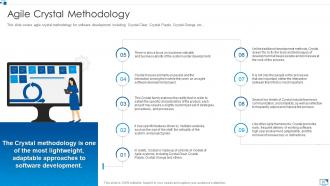
Slide 35: This slide covers agile crystal methodology for software development.
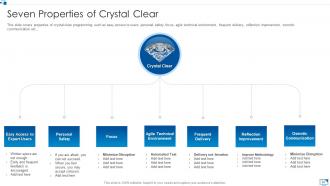
Slide 36: This slide covers properties of crystal clear programming.
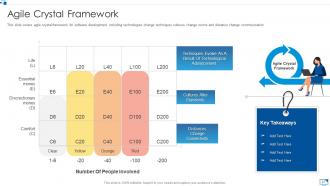
Slide 37: This slide covers agile crystal framework for software development.
Slide 38: This slide presents title for 'Dynamic systems development'.
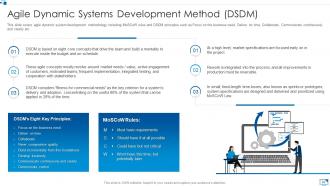
Slide 39: This slide displays Agile Dynamic Systems Development Method (DSDM).
Slide 40: This slide represents Dynamic Systems Development Method (DSDM)Framework.
Slide 41: This slide shows title for topics that are to be covered next in the template.
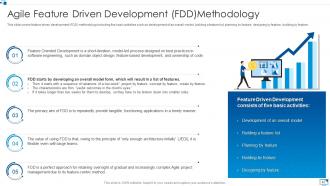
Slide 42: This slide represents feature driven development (FDD) methodology including five basic activities.
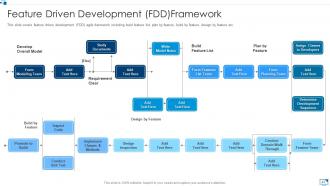
Slide 43: This slide showcases feature driven development (FDD) agile framework including build feature list.
Slide 44: This slide shows title for topics that are to be covered next in the template.
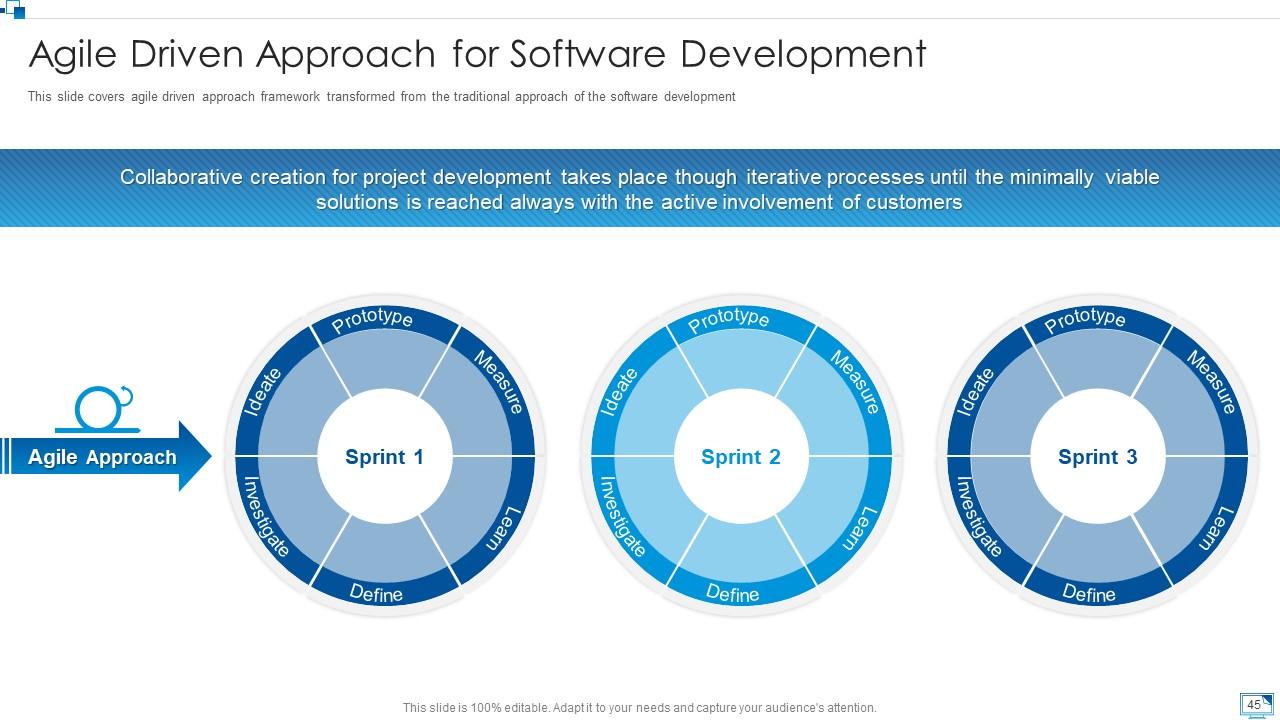
Slide 45: This slide presents Agile Driven Approach for Software Development.
Slide 46: This slide shows title for topics that are to be covered next in the template.
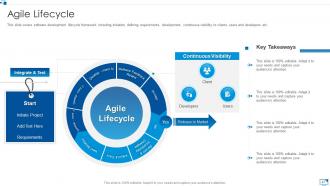
Slide 47: This slide displays software development lifecycle framework including initiation, defining requirements, etc.
Slide 48: This slide shows title for topics that are to be covered next in the template.
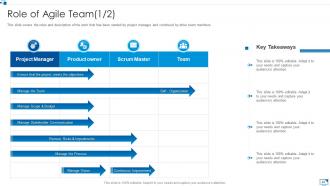
Slide 49: This slide presents roles and description of the work that has been started by project manager.
Slide 50: This slide displays some of the activities that are performed by project owner, scrum master, development team etc.
Slide 51: This slide shows title for topics that are to be covered next in the template.
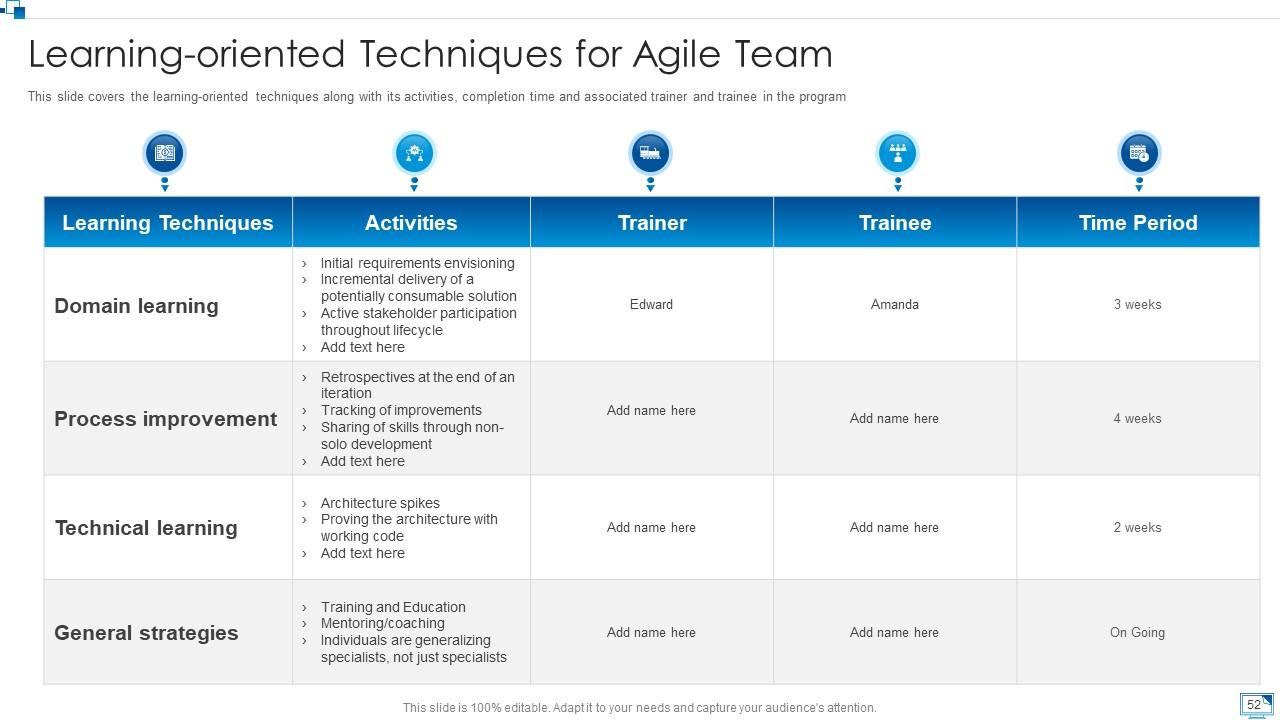
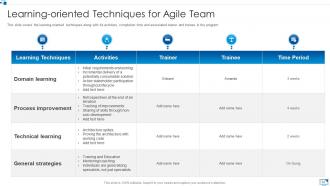
Slide 52: This slide represents Learning-oriented Techniques for Agile Team.
Slide 53: This slide shows title for topics that are to be covered next in the template.
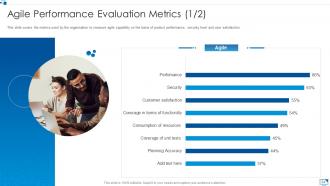
Slide 54: This slide showcases the metrics used by the organisation to measure agile capability.
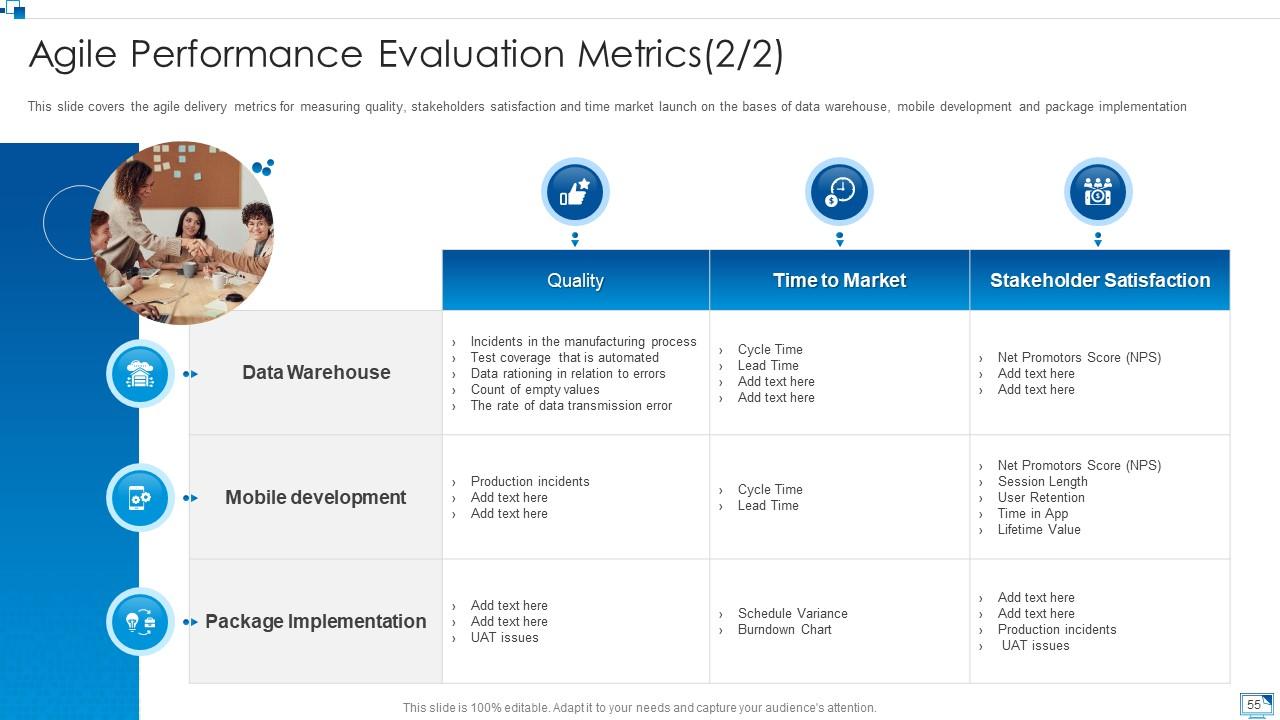
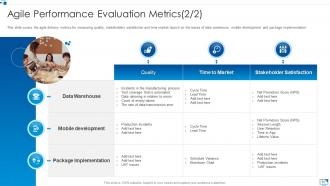
Slide 55: This slide displays the agile delivery metrics for measuring quality, stakeholders satisfaction and time market launch.
Slide 56: This slide shows title for topics that are to be covered next in the template.
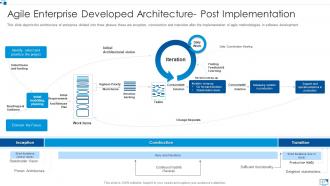
Slide 57: This slide represents Agile Enterprise Developed Architecture- Post Implementation.
Slide 58: This slide displays Agile Software Development Icons.
Slide 59: This slide is titled as Additional Slides for moving forward.
Slide 60: This slide presents Bar chart with two products comparison.
Slide 61: This is Our Mission slide with related imagery and text.
Slide 62: This is About Us slide to show company specifications etc.
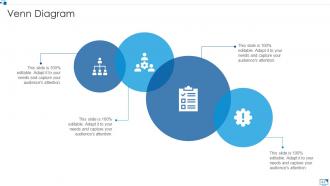
Slide 63: This slide depicts Venn diagram with text boxes.
Slide 64: This slide presents Roadmap with additional textboxes.
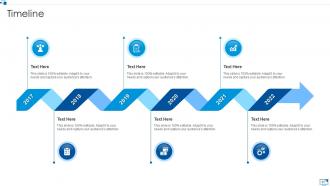
Slide 65: This is a Timeline slide. Show data related to time intervals here.
Slide 66: This is an Idea Generation slide to state a new idea or highlight information, specifications etc.
Slide 67: This is a Thank You slide with address, contact numbers and email address.
Agile software development module for it powerpoint presentation slides with all 72 slides:
Use our Agile Software Development Module For IT Powerpoint Presentation Slides to effectively help you save your valuable time. They are readymade to fit into any presentation structure.
-
Unique design & color.
-
Professional and unique presentations.
