


Amazon Investor Funding Elevator Pitch Deck Ppt Template




Try Before you Buy Download Free Sample Product
 Impress Your
 Audience
 100%
100% Editable
 Save Hours
 of Time


Un pitch deck diseñado profesionalmente en Amazon Investor Funding destaca los elementos críticos necesarios para generar fondos. La siguiente presentación destaca inicialmente los servicios esenciales proporcionados por Amazon, como el comercio electrónico, la computación en la nube, etc., junto con puntos importantes a considerar. Una vez resaltados los beneficios, se muestra el plan de marketing para amazon. La definición de la estrategia de orientación de la organización juega un papel crucial en la actividad de marketing de cualquier organización. El mazo describe varias estrategias de cómo Amazon se dirige a sus clientes. Estas estrategias son la orientación por estilo de vida, la orientación por mercado, el marketing contextual y el remarketing para clientes antiguos. Definir y comprender el público objetivo juega un papel crucial en la identificación de las actividades de marketing que debe realizar la organización. Una vez definido el público objetivo, el análisis del resultado de la campaña juega un papel fundamental. Se utilizan varios KPI o indicadores clave de rendimiento para analizar el rendimiento del producto. Comprender la demografía de los clientes juega un papel vital en la definición de la personalidad ideal del comprador, por lo tanto, en la siguiente presentación, hemos resaltado varios parámetros para ello. Obtenga acceso y descargue el pitch deck ahora.
People who downloaded this PowerPoint presentation also viewed the following :
Contenido de esta presentación de Powerpoint
Diapositiva 1 : Esta diapositiva presenta la plataforma de presentación del elevador de financiamiento de Amazon Investor. Indique el nombre de su empresa y comience.
Diapositiva 2 : esta diapositiva muestra la tabla de contenido para la presentación de anuncios de Amazon.
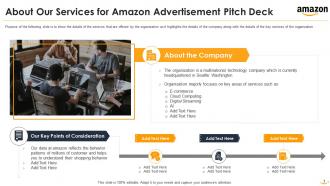
Diapositiva 3 : Esta diapositiva presenta los detalles de la empresa junto con los detalles de los servicios clave de la organización.
Diapositiva 4 : Esta diapositiva muestra cómo entregamos publicidad relevante a la audiencia adecuada.
Diapositiva 5 : Esta diapositiva muestra cómo nos dirigimos a nuestros clientes en función de varios parámetros, como; estilo de vida, análisis de mercado, marketing contextual, etc.
Diapositiva 6 : Esta diapositiva representa las principales estrategias de focalización que puede utilizar la organización, estas podrían ser; Segmento conductual, contextual, similar, etc.
Diapositiva 7 : Esta diapositiva muestra la segmentación del cliente según el estilo de vida.
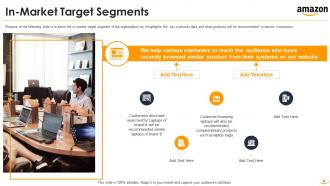
Diapositiva 8 : esta diapositiva presenta el segmento objetivo en el mercado de la organización, ya que destaca los datos clave del cliente y qué productos se recomendarán.
Diapositiva 9 : esta diapositiva muestra la segmentación de remarketing y la estrategia de orientación de la organización.
Diapositiva 10 : esta diapositiva muestra la audiencia clave a la que se le haría publicidad.
Diapositiva 11 : Esta diapositiva representa el resultado de la campaña anterior que fue administrada por la organización.
Diapositiva 12 : La siguiente diapositiva muestra la demografía del cliente, ya que destaca los puntos clave de clasificación del cliente.
Diapositiva 13 : Esta diapositiva presenta Contáctenos para Amazon Pitch Deck.
Diapositiva 14 : esta diapositiva muestra los íconos para la presentación de propuestas de Amazon Investor Funding Elevator.
Diapositiva 15 : esta diapositiva se titula Diapositivas adicionales para avanzar.
Diapositiva 16 : Esta es la diapositiva Nuestro equipo con nombres y designación.
Diapositiva 17 : Esta diapositiva muestra un gráfico de columnas apiladas con una comparación de dos productos.
Diapositiva 18 : Esta es la diapositiva Nuestra misión con imágenes y texto relacionados.
Diapositiva 19 : Esta es una diapositiva de comparación para establecer la comparación entre productos básicos, entidades, etc.
Diapositiva 20 : Esta es la diapositiva Nuestro objetivo. Indique sus objetivos aquí.
Diapositiva 21 : Esta diapositiva representa el diagrama de Venn con cuadros de texto.
Diapositiva 22 : Esta diapositiva muestra Post-It Notes. Publique sus notas importantes aquí.
Diapositiva 23 : esta es una diapositiva de la línea de tiempo. Mostrar datos relacionados con los intervalos de tiempo aquí.
Diapositiva 24 : Esta es una diapositiva financiera. Muestre sus cosas relacionadas con las finanzas aquí.
Diapositiva 25 : Esta es una diapositiva de agradecimiento con dirección, números de contacto y dirección de correo electrónico.
Amazon Investor Funding Elevator Pitch Deck Ppt Template con las 30 diapositivas:
Utilice nuestra plantilla Ppt de plataforma de lanzamiento de elevador de financiamiento de inversores de Amazon para ayudarlo de manera efectiva a ahorrar su valioso tiempo. Están listos para encajar en cualquier estructura de presentación.






























FAQs for Amazon investor funding elevator pitch
So Amazon basically just dumps money back into everything instead of caring about quick profits. Bezos was smart - he got investors used to this from the start. They look at free cash flow and figure out which markets they can totally take over. Right now they're betting big on logistics, AI, and going international. Honestly it's kind of crazy how they just reinvest everything into infrastructure and AWS expansion. But it works I guess? Just watch what sectors they're pouring money into - that's where they think the future is.
So Amazon dumps tons of money into logistics stuff - warehouses, trucks, those drone things they keep promising but never deliver (pun intended lol). They're constantly building fulfillment centers closer to people and buying more delivery trucks. Plus they're going crazy with automation to make everything faster and cheaper per package. Honestly, the drone project feels like a publicity stunt at this point. But here's what's interesting - watch how much they spend on actual buildings versus tech. That split shows you where they think they'll beat competitors. It's all about getting stuff to your door faster while spending less doing it.
So Amazon's funding game has totally changed. Back in the early 2010s they were constantly raising debt and burning through cash for growth - you know, typical startup mentality but at massive scale. Now? They're basically printing money. AWS alone generates insane cash flow, so they don't really need outside investors anymore. Instead they just funnel that internal cash into acquisitions and wild projects (hello, space rockets). Honestly if you're trying to understand their strategy now, forget about where they're getting money from. Focus on how they're spending the pile of cash they already have.
Amazon's way past the VC stage now - they're huge and public, so they just do stock offerings and reinvest their profits. Back in '96 though, Kleiner Perkins gave them early funding that was pretty critical. These days VCs are more tangentially involved, like funding random startups that sell stuff on Amazon or try to compete with AWS (good luck with that lol). If you're studying them as an investment case, definitely look at those early VC relationships instead of trying to figure out current ones.
Amazon's funding situation? They're doing fine honestly. Global uncertainty isn't hitting them like it is smaller companies - investors still see them as pretty solid. Their cash flow from AWS and retail is huge, so they're not desperately hunting for money like startups. Sure, investors are pickier now, but that actually works in Amazon's favor since they've got revenue coming from all different places. I mean, when things get sketchy, people want the "boring" stable picks. If you're thinking investment-wise, I'd watch their cloud numbers more than whatever drama is happening in the broader markets.
Honestly, investors obsessing over Amazon deals care way more about your unit economics than flashy revenue numbers. Your customer lifetime value needs to crush acquisition costs - that's like the golden rule. Strong retention rates are huge too. But here's the thing - they're really digging into whether you've actually nailed product-market fit or if you're just hoping. Conversion rates and repeat purchases tell the real story. Oh, and your path to profitability better make sense! Don't get caught up in vanity metrics that look pretty but don't mean much. Prove your unit economics work and scale - that's what separates the real deals from pipe dreams.
Yeah so Amazon's basically swimming in cash these days from AWS and retail, so they don't really need outside money like they used to. Remember when they were always fundraising? Now they just dump everything back into warehouses and tech stuff instead of paying shareholders. Honestly their free cash flow numbers are way more telling than regular profit margins if you're trying to figure out what they're actually doing. They'll only go external for huge acquisitions or when they want to keep their cash reserves intact for whatever reason.
So Amazon basically reinvests everything instead of paying dividends - which is crazy when you think about how patient their investors are. They can lose money for years in new areas because they're not focused on quarterly profits like most companies. That's how they ended up dominating cloud computing and logistics. Pretty smart strategy tbh. When you're looking at other companies, check how they balance growth spending vs immediate returns. It tells you tons about where they're headed. Most companies can't pull off Amazon's approach though - their investors would freak out.
So Amazon's whole thing is reinvesting profits instead of paying dividends - total Bezos strategy that Joshi kept going. They're betting on long-term growth over quick wins. Honestly, it's pretty smart if you think about it. Patient investors love this because they know Amazon's focused on expanding and innovating rather than just handing out quarterly checks. If you're looking at them for funding decisions, you gotta match their timeline. Short-term thinking won't work here. Their equity structure basically rewards people who can wait for that compound growth to kick in.
Yeah so Amazon's pretty focused on logistics, AI, healthcare stuff, and climate tech through their various funds - like the Alexa Fund and Industrial Innovation Fund. Robotics and autonomous vehicles are huge for them too. Honestly makes sense since they want tech that either makes their own stuff better or gives them a heads up on what might shake up retail and AWS. They do some fintech and enterprise software investments but not as much. Oh and definitely look at their Climate Pledge Fund investments - that'll show you what they're prioritizing right now.
So basically, Amazon follows the money - wherever consumers are heading, that's where they dump their cash. Like when everyone went crazy for eco-friendly stuff, boom - electric delivery vans everywhere. COVID hit and suddenly we all needed groceries delivered? They were already there waiting. Honestly, their timing is pretty impressive. Investors love this because Amazon's usually ahead of trends instead of scrambling to catch up. Pro tip: listen to their earnings calls if you want to know what they're betting on next. They're terrible at keeping secrets about their spending plans.
Look, Amazon's whole thing is reinvesting profits instead of paying dividends, so don't expect quick money. Your cash could sit there for years before you see real gains. They dump everything into new projects - some work great, others flop hard (Fire Phone, anyone?). This creates wild stock swings that'll stress you out. If one of their big bets fails, you're looking at serious losses. Honestly? Only put in money you won't need for a long time. The volatility isn't for everyone.
So Amazon's super weird compared to other tech companies - they literally reinvest everything instead of sitting on cash like Apple does. Google and Meta dump tons into R&D, but Amazon spreads it around: warehouses, logistics, AWS servers, you name it. They hate showing profits lol. Makes them grow crazy fast but their stock bounces around more than others. Oh and if you're looking at their numbers, revenue growth and free cash flow matter way more than profit margins. That's the key difference honestly.
So Amazon basically throws money at wild ideas without stressing about quick profits. They pump earnings back into R&D instead of just making shareholders happy. That's how we got AWS - it literally started as their own IT setup that they realized others might want. Bezos had this whole "Day 1" thing where you stay scrappy even when you're huge. Pretty smart honestly. They fail all the time but it doesn't matter because they're not obsessing over quarterly numbers like most companies. Patient money = room for actual innovation.
Yeah regulatory stuff can mess with Amazon's funding, but tbh they're so huge and spread out across different businesses that they usually bounce back pretty quick. New privacy laws or antitrust things might spook investors for a bit - especially with AWS and their ad business. But Amazon's gotten really good at rolling with the punches. The real threat? If regulators actually start chopping up big tech companies. That's when things get interesting for investors. I'd watch the major antitrust cases more than the smaller rule changes - those are what really shift how people feel about putting money in.
-
Editable templates with innovative design and color combination.