


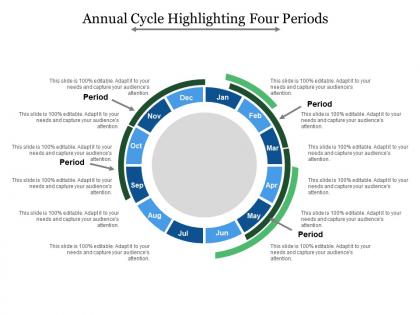
Annual cycle highlighting four periods




Try Before you Buy Download Free Sample Product
 Impress Your
 Audience
 100%
100% Editable
 Save Hours
 of Time


Complications get cleared with our Annual Cycle Highlighting Four Periods. Deal effectively with any hassles.
People who downloaded this PowerPoint presentation also viewed the following :
Annual cycle highlighting four periods with all 5 slides:
Examine avenues for investment with our Annual Cycle Highlighting Four Periods. Focus on all the finer details.

FAQs for Annual cycle
So most companies do strategic planning around October/November - that's when they can actually see how this year's gonna end up. Then comes budget setting for next year. After that you're doing quarterly check-ins and wrapping everything up with annual performance reviews. Timing shifts if your fiscal year is weird, but that's the basic flow. Honestly, the quarterly reviews are where things usually go to shit - companies treat them like paperwork instead of actually using them to make changes. Short ones work better anyway.
Look, timing is everything with marketing campaigns. People buy outdoor stuff in spring, school supplies in August, gifts during holidays - you get it. But here's the thing that's kinda interesting: people's whole vibe changes with seasons too. Summer content should feel fun and spontaneous. Fall hits different though - that's when cozy, plan-ahead messaging actually works. I'd map out your content calendar based on these cycles now. Trust me, future you will thank present you when you're not panicking about what to post next month.
You'll stop flying blind once you dig into your data patterns. Historical trends show you what's coming seasonally, plus you can catch problems before they blow up. Track maybe 4-5 metrics that actually move the needle throughout the year - way better than waiting for those painful quarterly meetings. When numbers start going sideways, you'll spot it fast and fix things. Oh, and having real data makes budget conversations so much easier (no more crossed fingers). Build simple dashboards around your key metrics first. Trust me, it beats the whole "hope and pray" approach most people use.
Dig into your last 2-3 years of sales data first - you're hunting for those seasonal patterns that pop up every year. Holidays, weather shifts, whatever makes your industry tick. Honestly, most businesses just wing it without doing this homework. Don't forget about outside stuff too, like if the economy tanks or your competitor launches something big. Here's the thing though - never bet everything on one forecast. Build out a few scenarios: worst case, best case, and somewhere in the middle. Then track how close you actually get each month. You'll get way better at this over time.
Honestly, syncing your project timeline with the annual cycle is a game changer for resource planning. Budget approvals become way smoother when your milestones match up with fiscal quarters. Trust me on this - avoid launching anything major in December because literally nobody cares about work that month. I made that mistake once, never again! Other departments will thank you too since everyone runs on those quarterly rhythms anyway. Oh, and you get way better financial visibility throughout the year. Just map your deliverables against the fiscal calendar and mark those holiday blackout periods first.
Honestly, timing is everything with employee engagement stuff. January and September are gold for onboarding since everyone's already in that "new year, new me" mindset. When spring hits, that's your sweet spot for career development and team building. Summer? Go all-in on flexible schedules and fun social events - people are just happier when the weather's nice. Fall gets tricky because you're prepping for year-end reviews, but it's actually perfect for recognition programs. Map out what you're currently doing against the calendar. I bet you'll spot some obvious gaps where you're missing easy wins.
Honestly, the big ones are seasonal demand, weather screwing with your supply chain, and holiday shopping patterns. Energy costs swing way more than people realize - that stuff adds up fast. If you're in food/drinks, agricultural cycles matter. Tourist seasons too if location's a factor. Tax season and back-to-school create those predictable spikes everyone forgets about until they hit. I'd grab your last three years of sales data and map it against these patterns. You'll see trends that help with staffing, inventory, budgeting - the whole thing. Weather's probably the trickiest since it's so unpredictable, but the seasonal stuff? Pretty easy to plan for once you see the pattern.
So basically you want to stock up before your busy seasons and cut back when things slow down. Pretty straightforward but a lot of people mess this up. Look at your past sales data first - that'll show you exactly when demand spikes and dips throughout the year. Then time your orders accordingly. Retailers do this perfectly before holidays, loading up inventory months ahead. Cash flow gets way easier when you're not sitting on dead stock during slow periods. Oh and don't forget about warehouse space - you'll need room for all that extra inventory before peak season hits.
Don't wait until the last second to talk renewals - that's when they're already shopping around. I'd start conversations like 90 days out, maybe more. Check in regularly to see how they're doing and celebrate their wins with your product. Usage data is your friend here - it'll show you who's disengaged before they ghost you. Honestly, loyalty discounts work better than people admit. The whole point is making renewal feel inevitable, not like this huge decision they need to stress about. Stay ahead of it and you'll be fine.
Dude, seasonal businesses are wild with their ups and downs. First thing - look at last year's numbers month by month to see your pattern. Save money during your busy season because those slow months will hit hard. I learned this the hard way my first year lol. Build in some extra cushion too since timing can shift unexpectedly. Way better than scrambling every month wondering if you'll make rent. Map out when you're usually swamped vs. dead, then budget around that reality instead of pretending it's steady year-round.
Your business cycles totally depend on what you're selling. Retail goes crazy during holidays, tax prep gets slammed Jan-April then dies. Construction basically stops when it gets cold (unless you're somewhere warm - so jealous). Agriculture follows the weather, schools match academic calendars. Tourism's weird - beaches boom in summer, ski towns in winter. Here's what's funny though: even boring B2B stuff has patterns. Enterprise software sales spike in Q4 because companies scramble to spend leftover budget. Figure out when your industry's busy and dead so you can plan staffing and inventory right.
Don't treat your annual plan like it's carved in stone. Build in quarterly check-ins where you can actually pivot when stuff changes - and trust me, it always does. I've watched so many teams cling to their January budget even when the world went sideways by spring. Create multiple scenarios (A, B, maybe C) so you're not scrambling later. Keep some budget unallocated for when opportunities pop up. The whole thing should feel more like a living doc that adapts with reality, not some rigid thing gathering dust on a shelf.
Timing is literally everything with product launches. Map out your industry's big dates first - like if you're doing tax software, that thing better be ready by January because nobody wants it after April. Retail stuff needs to hit way before peak season, and B2B tools? They follow budget cycles, usually Q4/Q1. Also factor in when your team's actually around - I learned this the hard way trying to get approvals during summer vacation season. Total nightmare. Work backwards from those key dates to set your development milestones and you'll save yourself so much stress.
Dude, you can't just copy-paste your strategy globally - different regions have totally different peak seasons. Chinese New Year basically shuts down manufacturing for weeks but spending goes crazy. During Ramadan, everyone shops at night instead. Australia's seasons are flipped so their summer holidays hit during our Q4, which honestly always messes with my head. Back-to-school varies by months between countries too. You've gotta map out each region's holidays, weather patterns, and cultural stuff when planning your cycles. Otherwise you'll end up launching summer campaigns right in the middle of monsoon season.
Honestly, the worst thing you can do is think everything will go to plan - it won't. Build in buffer time, especially around holidays when stuff crawls. Q4 is absolute chaos for most teams, so maybe don't launch then? Oh, and procurement takes FOREVER - like way longer than seems reasonable. Start those budget convos super early. Summer's pretty much dead time too with everyone out. Here's what works: figure out all your potential roadblocks first, then work backwards from when you actually need it done, not when you want it done.
-
Very unique and reliable designs.
-
Attractive design and informative presentation.