


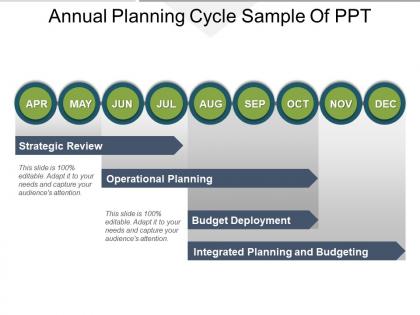
Annual planning cycle sample of ppt




Try Before you Buy Download Free Sample Product
 Impress Your
 Audience
 100%
100% Editable
 Save Hours
 of Time


Describe the annual planning process using this readily available Annual Planning Cycle Sample Of PPT template. The annual plan cycle presentation slide helps a user to demonstrate the importance of the annual plan cycle. Our professionally designed annual planning cycle slide will streamline the process along with that it allows the user to focus on the right issues. The annual marketing planning cycle PPT template design is suitable for a presenter who wants to illustrate the marketing strategies and the transition in the market over the past year. Illustrate the yearly goals of your organization and various measures to attain them using this PPT slide. A user can take the assistance of this business annual planning PowerPoint slide to highlight the prevailing business issues. Also, using this template you can share the best technological solution for the business issues.
People who downloaded this PowerPoint presentation also viewed the following :
Annual planning cycle sample of ppt with all 5 slides:
Our Annual Planning Cycle Sample Of Ppt enable effective execution. Chart out the flow of activity.

FAQs for Annual planning cycle
So basically you start with a strategic review - what bombed last year vs what actually worked. Then set your big goals and figure out the budget stuff. Resource allocation comes next, though honestly this is where most teams completely fall apart if people aren't on the same page early. After that you'll map out your implementation plan with deadlines and milestones. Oh, and definitely schedule regular check-ins throughout the year. Trust me, things will change and you'll need to pivot - they always do.
Okay so first thing - grab your long-term strategy doc and work backwards from your 3-5 year goals. What HAS to happen this year to keep you on track? Most teams (honestly, probably including mine sometimes) just wing it based on last year's numbers or whatever crisis is happening right now. Every big initiative should connect to your strategic pillars. If it doesn't? Either cut it or admit it's just keeping the lights on. Oh, and definitely build in quarterly check-ins because your perfect plan will get demolished by reality pretty fast.
Honestly, data analytics are like having a crystal ball for your annual planning. Look at last year's numbers to see what bombed and what actually worked. Then use that to set goals that aren't completely unrealistic. The best part? You're not just winging it based on whatever feels right. Pick maybe 3-5 metrics that actually matter for your business - don't go overboard here. You can also check how you stack up against competitors, which is pretty eye-opening sometimes. It beats the old "throw darts at a board" approach to budgeting.
Honestly, just nail down who's doing what right from the start. Have a proper kickoff so everyone gets the timeline and knows how decisions actually happen. Weekly check-ins are clutch - I learned this the hard way after watching projects completely derail with monthly updates. Way too much time for things to go wrong. Put everything in one shared spot so people aren't constantly asking "wait, which version are we using?" Also, you'll probably feel like you're overcommunicating at first, but that's way better than everyone panicking when deadlines suddenly appear out of nowhere.
Honestly, the worst thing you can do is get too excited about timelines - we always think stuff will happen faster than it does. Plus don't try mapping out every tiny detail upfront, you'll just end up redoing half of it anyway. Oh and definitely loop in the key people early! I've seen so many projects crash because someone's boss wasn't brought in until week 3. Build in extra time too - like seriously, double whatever you think it'll take. Start with what you absolutely need first, then add the fancy stuff once that's locked down. Way less stressful that way.
Honestly, don't stress about making the perfect plan - most of mine fall apart by March anyway. Instead of one rigid roadmap, create a few different scenarios for how things might go. Build in some buffer time because something always comes up. Focus on what you want to achieve rather than getting stuck on specific tactics. Check in every quarter to see if you need to pivot. I've started doing rolling forecasts that look 12 months ahead each time instead of those static yearly things. Way more realistic. Think of your plan as more like GPS directions - it'll recalculate when needed, but still gets you where you're going.
Track both money stuff (revenue, profit margins, budget) and day-to-day operations (project completion, customer happiness, how your team's doing). Don't fall into what I call "metrics soup" - drowning in numbers but missing the actual story. Pick 5-7 things that matter for your goals. Mix future indicators like pipeline health with backwards-looking ones like actual sales. Here's the thing though - monthly check-ins are huge. You can't just wait until December to see how you're doing. Course corrections happen way easier when you catch stuff early.
Oh man, Miro and FigJam are absolute lifesavers for this - seriously can't recommend them enough. Don't try doing those marathon 8-hour planning days virtually though, you'll lose everyone by hour three. Short focused workshops work way better. Actually had to learn this the hard way last year! Get people working on stuff between meetings too, especially if you've got different time zones to deal with. Recording sessions helps a ton since someone's always gonna miss the live one. You really need more structure than in-person planning - like, way more - so start mapping out your facilitation approach now. Document everything in shared spaces where everyone can access it later.
Honestly, I'd start with what you probably already have - Google Sheets works great for budgets and tracking resources. Asana or Monday.com are solid for managing all the actual projects that come out of your planning. Oh, and Miro is a game-changer for those messy brainstorming sessions where you're trying to figure out priorities. The visual stuff really helps when everything feels overwhelming. I know some bigger companies use fancy tools like Anaplan, but that's probably way more than you need right now. My advice? Start simple and see what breaks first - you can always upgrade later when you hit walls.
Honestly, just bake it right into your timeline from the start. Schedule surveys or focus groups before you even draft anything - I know "listening sessions" sounds corporate-y but they actually work. Pick your key stakeholders now and get those meetings on the calendar. Mid-cycle, bring them back to check if you're still headed in the right direction. The trick is making it systematic instead of just random check-ins when you remember. Don't make my mistake of waiting until everything's already written - you'll just end up redoing half of it anyway.
Think of scenario planning like having backup plans for your backup plans. You map out 3-4 different ways things could go - economy crashes, some startup disrupts your whole industry, demand goes crazy high. Then you figure out how you'd react to each one ahead of time. Honestly, most people just plan for their best-case scenario and call it a day. But when you've already thought through the "what ifs," you're not panicking when stuff inevitably goes sideways. You'll spot the warning signs early and already know your next move.
Build risk assessment into your planning from day one. Get your team in a room and brainstorm what could go wrong - market shifts, operational hiccups, money problems, new regulations. I know it sounds like a lot, but don't stress about being perfect. Use a simple probability vs impact grid to figure out what's actually worth worrying about. Write it all down and make someone responsible for watching each big risk. Oh, and this isn't a set-it-and-forget-it thing - you've got to keep checking throughout the year or it's basically useless.
Honestly, just hit them from multiple angles. Do a big kickoff meeting first to get everyone on the same page with the main goals. Then send out simple one-pagers or dashboards they can actually use - nobody's reading a novel. Keep it going with regular team updates, maybe newsletters or quick videos. Visual stuff like roadmaps really helps too, especially for the people who zone out during meetings (we all know who they are). The trick is repeating the same info in different ways so it sticks. Pick 2-3 methods that work for your team and don't overthink it.
Yeah totally! Most people do quarterly check-ins anyway to see what's actually working. Document your changes and get everyone on board with big shifts - that part's crucial. Don't just wing it though. Random pivoting every month will drive everyone crazy (learned that the hard way). Stuff changes constantly so it makes sense to adjust timelines and priorities. Just update your metrics too so you're measuring the right things. The trick is being intentional about it, not reacting to every little thing that pops up.
Look at what you actually did last year, not what you wanted to do - that's your real baseline. I'd aim for maybe 10-15% better than that. Anything crazier just pisses everyone off when they can't hit it. Break the big stuff into quarterly chunks so you're not flying blind all year. Each goal needs someone who owns it and a way to measure if it worked. Oh, and write them as "We will..." instead of fuzzy wishful thinking - forces you to get specific. Being realistic about what you can actually handle upfront saves so much drama later.
-
Helpful product design for delivering presentation.
-
Great designs, really helpful.