


Annual Employee Engagement Calendar For Year 2021




Try Before you Buy Download Free Sample Product
 Impress Your
 Audience
 100%
100% Editable
 Save Hours
 of Time


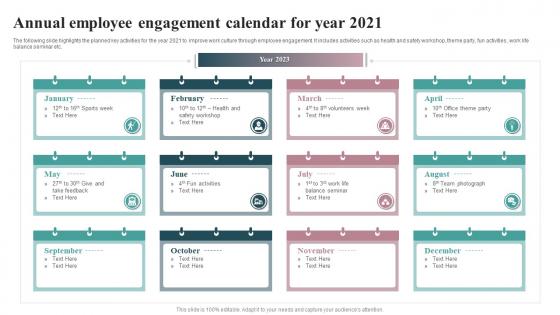
The following slide highlights the planned key activities for the year 2021 to improve work culture through employee engagement. It includes activities such as health and safety workshop, theme party, fun activities, work life balance seminar etc.
People who downloaded this PowerPoint presentation also viewed the following :
Annual Employee Engagement Calendar For Year 2021 with all 6 slides:
Use our Annual Employee Engagement Calendar For Year 2021 to effectively help you save your valuable time. They are readymade to fit into any presentation structure.





FAQs for Annual Employee Engagement Calendar
Honestly, it comes down to communication and trust. Regular check-ins matter - not just formal meetings but those random "hey how's your day" messages. Your manager can't hover over your shoulder anymore (thank god), so trust becomes everything. Recognition is massive when you're remote because good work just disappears into Slack channels otherwise. Having decent tech and a real workspace helps too, not just your kitchen table. Oh, and the team needs to feel connected to what they're actually doing. Overcommunicate rather than leaving people guessing - silence hits different when everyone's scattered.
Honestly, pulse surveys and exit interviews are your best bet for tracking this stuff. eNPS is huge - basically asks if employees would recommend working there. Super telling. Watch retention rates and productivity too, but don't sleep on the subtle signs like how many people actually show up to optional events or use all their sick days (that's usually a red flag). The key thing though? Measure before AND after you make changes. I see too many companies just taking random snapshots without context. Quarterly check-ins work well so you're not flying blind for months if something's tanking.
Good leadership totally makes or breaks engagement. I've watched amazing teams fall apart under bad managers - it's painful to see. Your leaders set the whole vibe, so they need to actually care about their people and communicate openly. Regular one-on-ones help a ton, but not just work talk. Figure out what drives each person individually. Recognition matters way more than people think. Give your team room to breathe and do their jobs without micromanaging. When leaders model the right behavior and genuinely listen to feedback, everyone else follows suit. It's honestly that simple.
Honestly, the secret is just following through on what people tell you. Do pulse surveys and regular check-ins, sure, but then you've gotta actually DO something with that feedback. I can't tell you how many places collect all this input and then... crickets. That's somehow worse than never asking at all. When you make changes, tell everyone about it - even if it's taking forever to implement. Close the loop by showing how their suggestions shaped decisions. Once people realize their voice actually matters? That's when things click. Oh, and start with just one team first - way less overwhelming.
Dude, the numbers don't lie - engaged teams are literally 20-25% more productive than checked-out ones. Your people show up more, collaborate better, and actually *want* to solve problems instead of just clocking in. The retention thing is huge too since constantly onboarding new folks gets old fast (trust me on this one). Short sentences work. But here's what really matters: engaged employees innovate more because they genuinely care about outcomes. Start by figuring out what's making your team feel disconnected from their work - that's where the real gains happen.
Honestly, creative templates are a game-changer for engagement presentations. Nobody wants to stare at boring bullet points - your audience will zone out before you even get to the good stuff. With visual elements like infographics and bright colors, you can actually make survey data interesting (who knew that was possible?). Success stories hit different when they're designed well. Leadership notices the effort too, which helps when you need buy-in for new initiatives. Employees are way more likely to participate when things don't look like they're from 2005. Just pick something that fits your company's personality and you're golden.
Start with psychological safety - that's honestly the foundation for everything else. Rotate who runs meetings so you're not just hearing from the same people every time. I've watched so many diverse teams fail because they let the loudest personalities dominate everything. Don't try forcing everyone into the same work style box. Actually celebrate the different approaches people bring. Cross-demographic mentorship helps too. Your team channels need inclusive communication, obviously. Oh, and maybe grab a quieter team member to lead your next brainstorm? Small moves like that add up fast.
Don't just slap your values on the wall - actually build them into how you run things day-to-day. Look at your recognition programs and team meetings. Do they match what you say you believe in? Like, if innovation's supposedly core but you never celebrate when someone's creative idea flops, that's backwards. Each engagement thing you do should tie back to your actual mission somehow. Oh, and here's the thing - ask your people if they see the connection too! Survey them every few months. The goal is making values feel real through how you engage, not just nice words on paper.
Honestly, recognition makes such a huge difference for keeping people engaged. Your team needs to feel like their work actually matters, you know? Money's great and all, but sometimes just saying "hey, you crushed that project" hits differently. I've seen people light up from getting called out in meetings for good stuff they did. The trick is being specific about what they did well - not just generic "good job" stuff. Also, don't wait forever to say something. If someone does great work on Tuesday, tell them Wednesday, not at their yearly review.
Honestly, start with whatever's driving you crazy first - like if communication sucks, grab Slack or Teams to stop the email madness. Recognition platforms like Bonusly are game-changers because people actually see appreciation happen instead of waiting for some boring annual review. Pulse surveys beat those awful once-a-year engagement things. Video calls are obvious for remote folks, but project management tools really help everyone stay on the same page with goals. I probably sound like a broken record, but don't try implementing everything at once - pick one tool and actually use it well first.
Look, everyone thinks engagement is just about free snacks and fun office events. Wrong. It's really about people actually caring about their work and the company's success. Companies also assume engaged workers automatically boost profits - not always true though. You need good leadership backing it up too. Oh, and here's what drives me nuts: endless surveys that go nowhere. I've watched teams get surveyed monthly while management ignores every piece of feedback. Focus on giving people meaningful work and room to grow instead. Actually listen to what they're telling you rather than just collecting data points.
Honestly, it's all about figuring out what each generation actually wants. Boomers want stability and respect for their years of experience. Gen X? They're obsessed with work-life balance and being left alone to do their thing. Millennials get so much hate but they just want meaningful work and regular feedback - like, tell them they're doing well once in a while! Gen Z cares about flexibility and moving up fast, plus they're big on mental health stuff. Survey your people first though. Then build different options instead of forcing everyone into the same box.
Mix survey stuff with actual behavior data. Run quarterly surveys - eNPS, satisfaction scores, manager ratings. Don't overdo it though, people get survey fatigue fast. Behavioral metrics are where it gets interesting: voluntary turnover, internal promotions, participation in optional events. Turnover's honestly your best indicator since people just leave when they're unhappy. Break everything down by department and how long people have been there. That way you can catch issues before they blow up. Oh, and track participation in company events - it's surprisingly telling about culture health.
Honestly, skip the agenda slide and open with a story instead. Like "So Sarah from accounting did something amazing last week..." People actually remember stories, not bullet points. Share real stuff - employee wins, challenges your team faced, someone going above and beyond. Personal anecdotes are gold. Use that classic story structure: setup, problem, how it got solved. Then connect it back to whatever engagement thing you're trying to achieve. Makes everything feel real instead of just corporate speak. Even just 2 minutes of storytelling beats diving straight into metrics every time.
Oh totally - engaged employees stick around way longer. People who actually like their jobs and feel appreciated aren't constantly browsing job boards, you know? Makes perfect sense when you think about it. The numbers back this up too - engaged teams have like 40% less turnover than the miserable ones. Honestly, I think most companies are terrible at tracking this stuff together. You should be watching both engagement scores and retention rates so you can catch problems before half your team suddenly puts in their two weeks notice.
-
Innovative and Colorful designs.
-
Very well designed and informative templates.