


Api strategies for building software applications powerpoint presentation slides




Try Before you Buy Download Free Sample Product
 Impress Your
 Audience
 100%
100% Editable
 Save Hours
 of Time


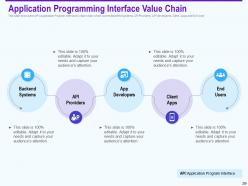
Ensure API development and implementation in relation to business long-term goals with the help of API Strategies For Building Software Applications PowerPoint Presentation Slides. Discuss major financial highlights before API implementation with the help of API integration process PPT presentation. Highlight application programming interface issues, with solutions. Our visually appealing PPT also describes the potential of a good application programming interface in business, features, required team for API development, etc. Discuss the strategies for implementing API in business. Effectively showcase benefits related to API testing and time estimate to develop an API by taking the assistance of our content-ready API integration service PPT infographics. The process of integration of application programming interface in business can also be highlighted by using Enterprise API strategy PowerPoint slides. You can also present an API roadmap with different time-intervals using our PPT slides. Highlight the monthly API roadmap with the development process with the aid of the AIP integration PPT slideshow. Cover various API testing models for business, application programming interface value chain, API architecture layers, and structure, etc. by downloading this professionally designed PPT slide deck.
People who downloaded this PowerPoint presentation also viewed the following :
Content of this Powerpoint Presentation
Slide 1: This slide introduces API Strategies For Building Software Applications. State your Company name.
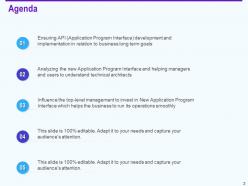
Slide 2: This slide displays Agenda
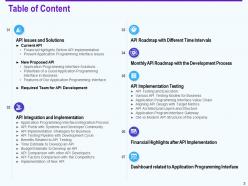
Slide 3: This slide displays Table of Content.
Slide 4: This slie showcases Table of Content
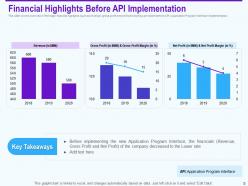
Slide 5: This slide covers overview of the major financial highlights such as revenue, gross profit net profit and earning per share before API (Application Program Interface) Implementation.
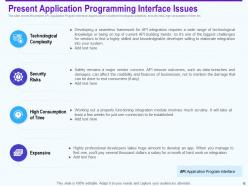
Slide 6: This slide covers the present API (Application Program Interface) issues which includes technological complexity, security risks, high consumption of time etc.
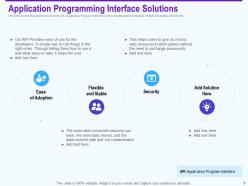
Slide 7: This slide covers the solutions for smooth API (Application Program Interface) which includes ease of adoption, flexible and stable, security etc.
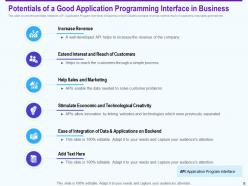
Slide 8: This slide covers the potentials related to API (Application Program Interface) in business which includes increase revenue, extend reach of customers, help sales generate etc.
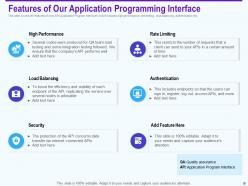
Slide 9: This slide covers the features of new API (Application Program Interface) which includes high performance, rate limiting, load balancing, authentication etc.
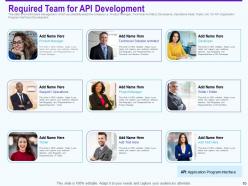
Slide 10: This slide shows the team management which successfully leads the company i.e. Product Manager, Technical Architect, Developers, Operations Head, Tester, etc. for API (Application Program Interface) Development.
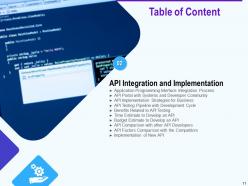
Slide 11: This slide displays Table of Contents
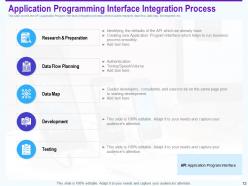
Slide 12: This slide covers the API integration process which includes research, data flow, data map, development etc.
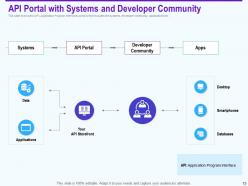
Slide 13: This slide shows the API portal which includes the systems, developer community, applications etc.
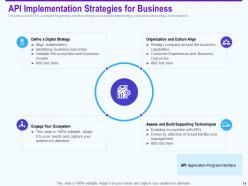
Slide 14: This slide covers the API strategy which includes digital strategy, organization culture design, technologies etc.
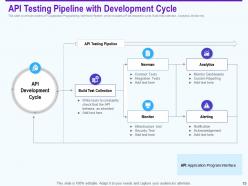
Slide 15: This slide covers shows the API (Application Programming Interface) Pipeline which includes API development cycle, Build test collection, Analytics, Monitor etc.
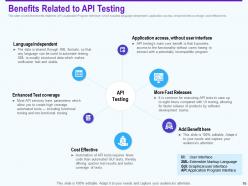
Slide 16: This slide covers the benefits related to API (Application Program Interface) which includes language independent, application access, enhanced test coverage, cost effective etc.
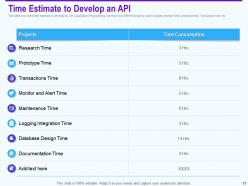
Slide 17: This slide shows the time estimate to develop an API (Application Programming Interface) by different projects which includes research time, prototype time, Transaction time etc.
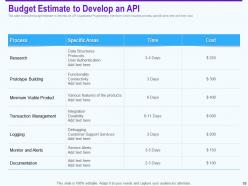
Slide 18: This slide shows the budget estimate to develop an API (Application Programming Interface) which includes process, specific area, time and their cost.
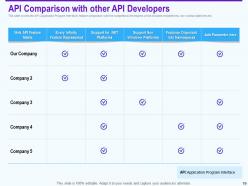
Slide 19: This slide covers the API (Application Program Interface) feature comparison with the competitors/ developers which includes net platforms, non window platforms etc.
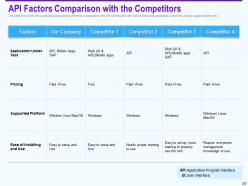
Slide 20: This slide shows the API (Application programming Interface) comparison with other developers with various factors like application under test, pricing, support platform etc.
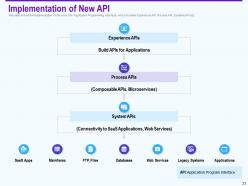
Slide 21: This slide shows the Implementation of the new API which includes Experience API, Process API, Systems API etc.
Slide 22: This slide displays Table of Contents.
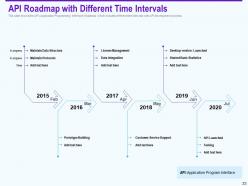
Slide 23: This slide shows the API (Application Programming Interface) Roadmap which includes different time intervals with API development process.
Slide 24: This slide showcases Table of Content.
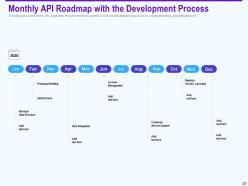
Slide 25: This slide shows the Monthly API (Application Program Interface) roadmap which includes maintain data structure, prototype building, data integration etc.
Slide 26: This slide displays Table of Contents
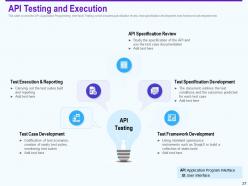
Slide 27: This slide covers the API (Application Programming Interface) Testing which includes specification review, test specification development, test framework development etc.
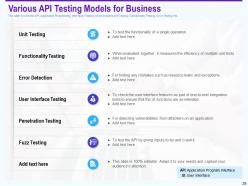
Slide 28: This slide covers the API (Application Programming Interface) Testing which includes Unit Testing, Functionality Testing, Error Testing etc.
Slide 29: This slide covers the design aligned with business needs or goals which includes API (Application Program Interface) Program Manager, API Evangelist, API Architect etc.
Slide 30: This slide covers the design aligned with business needs or goals which includes API (Application Program Interface) Program Manager, API Evangelist, API Architect etc.
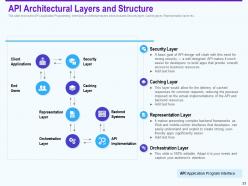
Slide 31: This slide shows the API Architecture layers which includes Security layer, Caching layer, Representation layer etc.
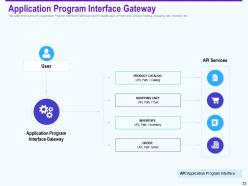
Slide 32: This slide shows the API Gateway which includes user, API services, product catalog, shopping cart, inventory etc.
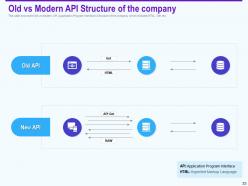
Slide 33: This slide shows the Old vs Modern API Structure of the company which includes HTML, Get etc.
Slide 34: This slide displays Table of Contents
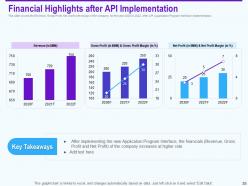
Slide 35: This slide covers the Revenue, Gross Profit, Net profit with margin of the company for the year 2020 to 2022, after API (Application Program Interface) Implementation.
Slide 36: This slide displays Table of Contents
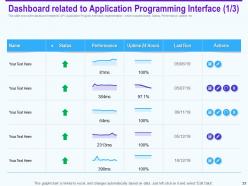
Slide 37: This slide shows the dashboard related to API (Application Program Interface) Implementation which includes Name, Status, Performance, Uptime etc.
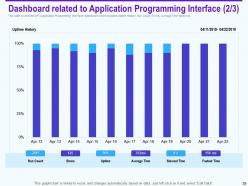
Slide 38: This slide covers the API (Application Programming Interface) dashboard which includes Uptime History, Run Count, Errors, Average Time taken etc.
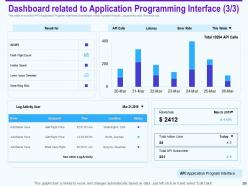
Slide 39: This slide shows the API dashboard which includes Results, Log activity user, Revenue etc.
Slide 40: This is API Strategies for Building Software Applications Icons Slide.
Slide 41: This slide is titled as Additional Slides for moving forward.
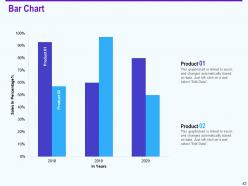
Slide 42: This slide displays Bar Chart for comparison of products.
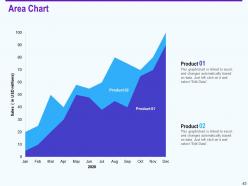
Slide 43: This slide displays Area Chart for comparison of products.
Slide 44: This slide shows Venn diagram.
Slide 45: This slide is titled as Post it Notes.
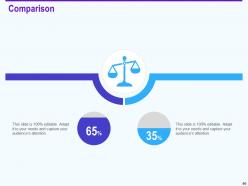
Slide 46: This slide displays Comparison in percentage.
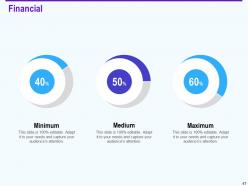
Slide 47: This slide shows financial stuff.
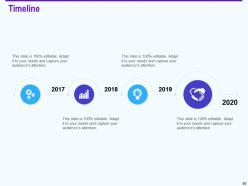
Slide 48: This slide displays Timeline process.
Slide 49: This is Thank You slide with Contact details.
Api strategies for building software applications powerpoint presentation slides with all 49 slides:
Use our API Strategies For Building Software Applications Powerpoint Presentation Slides to effectively help you save your valuable time. They are readymade to fit into any presentation structure.


FAQs for Api strategies for building software applications
Okay so first things first - figure out what you're actually trying to accomplish business-wise. Then focus on making your docs really solid because developers will hate you otherwise. Security and governance stuff is crucial too, obviously. You'll want analytics to track how things are going. Versioning from day one though - seriously, don't skip this or you'll regret it later. Think about who's using your API early on. Internal teams? Partners? Random developers? Start by mapping the user journey and nail down your most critical endpoints first. That's honestly the best way to build a foundation that won't fall apart on you.
Okay so security layers are key but don't make your API impossible to use. OAuth 2.0 and API keys for auth, obviously. Rate limiting stops people from hammering your endpoints. Role-based permissions work way better than just blocking everything - give different users different access levels. Always validate inputs and encrypt data in transit. Honestly, I've watched teams go nuts with security and end up with APIs nobody wants to touch. Monitor everything so you catch problems fast. Throw automated security tests into your CI/CD pipeline and actually review who has access to what on a regular basis.
Dude, your API docs can literally make or break everything. Developers will bail SO fast if they can't figure out how to use your stuff - doesn't matter how amazing your actual API is. I've seen brilliant APIs die because their docs were trash. You need solid examples and code snippets that actually work. Make it super logical so people go from confused newbie to working integration quickly. Oh and definitely grab someone who's never touched your API before to test your docs - you'll be shocked where they get confused. It's basically your user manual, except it actually has to be readable this time.
Start with the basics - developer signups, API calls, active integrations. Which endpoints are getting hammered? That tells you what people actually need. Revenue matters if you're charging for API access or it's driving business results. But honestly, developer experience is where most teams screw up. Track your docs usage, support tickets, and how long it takes devs to make their first successful call. I've watched APIs with solid usage numbers completely bomb on satisfaction scores. Also watch your partner ecosystem growth and how APIs speed up your main business stuff. Pick 3-4 metrics that match your goals first, then build out from there.
Dude, biggest mistake is trying to build the perfect thing right away. You'll waste months on features nobody wants. Start super basic with one thing that works well. Documentation and versioning? Do it early or you'll hate yourself later - trust me on this one. Security and rate limiting need to be there from day one too, not some afterthought when you're scrambling. Here's what actually works: pick one use case, make it rock solid, then see what people complain about. Real feedback beats guessing every time. Don't overthink it.
Honestly? It depends on what you're building. REST is super straightforward - any dev can jump in and figure it out pretty quickly. Plus caching works like a dream. GraphQL though... that's where things get interesting. Clients grab exactly what they want in one go, which mobile devs absolutely love. But (and this is a big but) GraphQL can be a pain to learn if your team's never touched it. I've seen projects where they went GraphQL just because it sounded cool, then regretted it later. Think about who's actually going to use your API and whether you really need all that flexibility.
Dude, make your docs interactive so devs can test stuff right in the browser - Stripe nailed this. Your onboarding needs to be painless, like 10 minutes max to get something working. Most APIs die because their documentation is trash, honestly. Build SDKs for the main languages people actually use. Free tier or sandbox is crucial. Oh, and don't sleep on community stuff - Discord works great for quick help. Hackathons are pretty solid for getting people hooked. The whole thing boils down to removing every possible headache from their experience.
Don't rush the deprecation - I've watched companies completely piss off their dev community by moving too fast. Give people 6-12 months heads up minimum. Run both versions at the same time during transitions, and use semantic versioning in your URLs (v1, v2, whatever). Migration guides are crucial, but honestly? If you can swing automated migration tools for the gnarly stuff, your users will love you for it. Oh, and start planning how you'll sunset the old version before you even ship the new one. Backward compatibility is your friend until it isn't.
Dude, API-first is a game changer. Your frontend and backend teams can work at the same time since you've already mapped out the API contract - saves tons of arguing later. Everything stays modular, testing becomes way easier, and adding new stuff doesn't break everything. Third-party integrations? Super smooth. But honestly, the real reason to do this is avoiding that hellish situation where you're jamming APIs into something that wasn't built for them. Trust me on this one. Just sketch out your API first, then build everything else around it.
Honestly, I'd go with tiered access - public APIs for basic stuff, then locked-down partner APIs for the sensitive data. It's like having a shop window but keeping your inventory system private, you know? First figure out what data actually matters for your competitive edge vs what could help grow your developer community. Rate limiting and API keys are your friends here. Price different tiers based on access levels. My take? Start restrictive then open up gradually. Way easier to give access later than take it away once people get used to it. Most companies I've seen do well exposing just enough to hook developers without giving away the farm.
Honestly, microservices turn your API game upside down. Instead of one big interface, you're suddenly juggling dozens or even hundreds of separate APIs. Each service needs its own contract, versioning, documentation - the whole nine yards. Without solid standards upfront, it becomes a nightmare pretty quickly. You'll be dealing with service discovery, load balancing, figuring out if teams should use REST or messaging or GraphQL federation. The complexity is no joke, but you do get way better scalability and teams can work independently. My advice? Set those API design guidelines early, before you have like 50 different teams all doing their own random thing.
Honestly, think about your API like it's a product from the start. Good documentation and clear error messages will save you so many headaches down the road. Stick to REST standards - developers already know them. Rate limiting is non-negotiable, and throw in some SDKs for the languages everyone's using. I learned this the hard way, but you'll want solid authentication too. Start with whatever integrations you think will be most common and nail those first. The whole thing falls apart if partners can't figure out how to actually use it.
Honestly, just make a free tier that's actually usable for building stuff. Developers hate paying upfront before they know if your API even works for their project. After that, keep pricing dead simple - none of those weird credit systems that take forever to figure out. Usage-based tiers work best. Instead of just limiting basic features, add cool perks like faster support or higher rate limits for paid plans. Oh and definitely make the pricing calculator super transparent. I've seen too many APIs where you can't tell what you'll spend until the bill hits.
Build your APIs thinking ahead but don't overcomplicate things. Version everything from the start so you won't break stuff later when you need changes. Rate limiting and pagination are must-haves - trust me on this one. Keep services stateless so they'll scale horizontally when traffic spikes. Cache aggressively at the gateway and for heavy operations. Honestly, monitoring is probably the most boring part but you can't fix what you can't see. I'd focus on real user patterns instead of guessing what might happen down the road.
Honestly, there's some cool stuff happening right now. GraphQL is kinda taking over from REST APIs - way more flexible for data queries. Most teams are doing API-first development now, which means designing APIs before you even touch the actual product. Event-driven architectures are everywhere, especially if you're building anything real-time. Obviously AI integration is huge (surprise, surprise). Security and governance frameworks are getting way more attention too, which is probably overdue tbh. I'd say mess around with GraphQL if you haven't yet. And definitely don't sleep on your API security - that should be priority one this year.
-
Very unique and reliable designs.
-
Out of the box and creative design.
-
Great product with highly impressive and engaging designs.
-
It saves your time and decrease your efforts in half.
-
Much better than the original! Thanks for the quick turnaround.
-
Attractive design and informative presentation.
-
Unique and attractive product design.
-
Design layout is very impressive.