


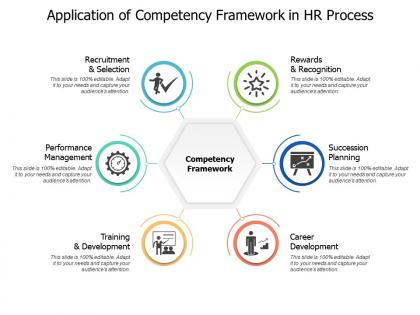
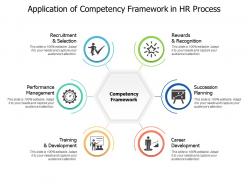
Application of competency framework in hr process




Try Before you Buy Download Free Sample Product
 Impress Your
 Audience
 100%
100% Editable
 Save Hours
 of Time


Enlighten folks on how to draw accurate inferences with our Application Of Competency Framework In Hr Process. It helps brief the investigators.
People who downloaded this PowerPoint presentation also viewed the following :
Application of competency framework in hr process with all 5 slides:
Investigators find our Application Of Competency Framework In Hr Process a great help. It enables them to draw factual inferences.



FAQs for Application of competency framework
Key components of an effective competency framework include core competencies, functional competencies, leadership competencies, behavioral indicators, and proficiency levels. These elements work together by defining clear performance expectations, enabling targeted skill development, and supporting strategic talent decisions, with many organizations finding that well-structured frameworks ultimately enhance employee performance and organizational capability.
Organizations tailor competency frameworks by conducting thorough skills gap analyses, incorporating industry-specific requirements, integrating company values into behavioral indicators, and customizing assessment methods to match organizational culture. Through stakeholder engagement and pilot testing, companies like tech startups and manufacturing firms successfully align frameworks with strategic objectives, ultimately enhancing performance management and employee development initiatives.
Employee feedback plays a crucial role in developing competency frameworks by providing real-world insights into skill gaps, role requirements, and performance expectations across different departments and levels. This input enables organizations to create more accurate, relevant frameworks that reflect actual job demands, while continuous feedback helps refine competencies over time, ultimately delivering better alignment between employee capabilities and organizational goals.
Technology facilitates competency framework implementation through learning management systems, performance tracking tools, automated assessments, skill gap analysis software, and digital development platforms. These solutions streamline competency mapping, enable real-time progress monitoring, and deliver personalized learning pathways, with many organizations finding that automated systems reduce administrative burden while enhancing employee development outcomes and strategic workforce planning.
A competency framework enhances employee performance by providing clear expectations, targeted training opportunities, objective performance assessments, and structured career pathways that align individual skills with organizational goals. Through strategic competency mapping, organizations streamline talent development, accelerate skill acquisition, and improve succession planning, with many companies finding that employees demonstrate increased engagement and productivity when career advancement requirements are transparently defined.
A well-structured competency framework enhances succession planning by clearly defining required skills, behaviors, and knowledge for leadership roles, enabling systematic identification and development of high-potential employees. Through competency mapping and gap analysis, organizations streamline talent pipeline development, accelerate leadership readiness assessments, and ensure continuity, with many companies finding significantly reduced succession risks and faster internal promotions.
Organizations should measure competency framework effectiveness through performance improvement rates, skill gap closure percentages, employee engagement scores, training ROI, and promotion readiness metrics. These measurements enable companies to track workforce development progress, optimize talent allocation, and enhance operational efficiency, with many finding that systematic competency tracking delivers stronger business outcomes and competitive advantage.
Competency frameworks support diversity and inclusion by establishing objective, skill-based evaluation criteria that reduce unconscious bias, creating equitable development pathways for all employees, and identifying specific competencies like cultural awareness and inclusive leadership. These frameworks enable organizations to systematically track representation across levels, design targeted mentorship programs, and ensure fair promotion processes, ultimately fostering more inclusive workplace cultures.
Organizations commonly face challenges including resistance to change from employees, difficulty mapping existing skills to new competency definitions, inconsistent assessment standards across departments, inadequate manager training for evaluations, and alignment issues between competencies and business objectives. These implementation hurdles often stem from insufficient stakeholder buy-in and unclear communication, with many companies finding that phased rollouts and comprehensive training programs significantly enhance adoption rates and ultimately deliver more consistent performance management outcomes.
Competency frameworks integrate into performance appraisal systems by establishing clear behavioral indicators, creating structured evaluation criteria, and aligning individual assessments with organizational goals. Through competency-based appraisals, organizations streamline feedback processes, enhance objectivity in ratings, and deliver more targeted development plans, with many HR departments finding that this strategic combination ultimately improves employee engagement and performance outcomes.
Best practices for securing stakeholder buy-in include early engagement through surveys and interviews, collaborative workshops for co-creation, transparent communication about benefits and timelines, and phased implementation with regular feedback loops. Organizations across industries find that involving department heads, HR leaders, and employees in design sessions, while demonstrating clear connections to performance management and career development, ultimately delivers stronger adoption rates and sustained organizational commitment.
Competency frameworks streamline recruitment by defining specific skills, behaviors, and knowledge required for roles, enabling targeted job descriptions, structured interviews, and objective candidate assessments. Through competency-based interviewing techniques, organizations can evaluate candidates against predetermined criteria, reducing hiring bias while ensuring better job-person fit, ultimately delivering more effective recruitment outcomes and stronger team performance.
Competency frameworks and job analysis share a symbiotic relationship, with job analysis providing the foundational data that informs competency identification, while frameworks structure these insights into actionable skill requirements and performance standards. Through systematic job analysis, organizations extract specific competencies needed for roles, enabling HR teams to develop comprehensive frameworks that streamline recruitment, training, and performance management across departments.
Organizations maintain competency framework relevance through regular reviews, stakeholder feedback, industry benchmarking, and alignment with strategic objectives. By conducting annual assessments, gathering input from employees and managers, and monitoring industry trends, companies ensure their frameworks evolve with changing business needs, ultimately delivering enhanced performance management and competitive advantage in dynamic markets.
Industry standards serve as foundational benchmarks for competency frameworks, ensuring alignment with regulatory requirements, professional certifications, and best practices across sectors. These standards enable organizations to maintain consistency, credibility, and compliance while developing talent strategies, with many companies finding that frameworks built on recognized standards enhance employee mobility, career progression, and ultimately deliver stronger competitive positioning in their respective markets.
No Reviews