


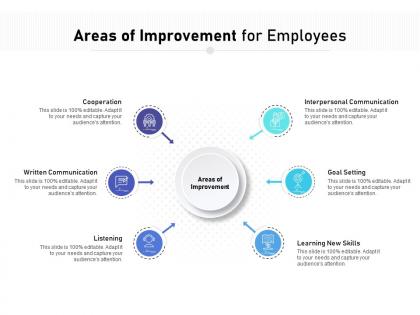
Areas of improvement for employees




Try Before you Buy Download Free Sample Product
 Impress Your
 Audience
 100%
100% Editable
 Save Hours
 of Time


Our Areas Of Improvement For Employees encourage convivial feelings. They help broaden consensus.
People who downloaded this PowerPoint presentation also viewed the following :
Areas of improvement for employees with all 2 slides:
Consensus builds on account of our Areas Of Improvement For Employees. Convivial feelings begin to grow.
FAQs for Areas of
Honestly, the biggest thing is people actually stay when you invest in them - retention goes way up. Plus they work harder because they feel like you give a damn about their growth. I mean, think about it - would you rather work somewhere that's developing your skills or just treating you like a cog? Building talent internally beats constantly hiring new people anyway. Way cheaper. Your whole team gets more skilled over time, which obviously makes you more competitive. Start simple though - maybe some mentorship stuff or workshops. You'll see results pretty fast, and it doesn't have to be some huge corporate initiative right off the bat.
Honestly, just ask your people what they want to work on - they usually know their weak spots better than we do. Performance reviews help, but don't wait for the annual one. Regular check-ins work way better. Look at actual performance data for patterns, and get 360 feedback from their teammates too. That stuff reveals blind spots nobody wants to admit. Oh, and compare their current skills against what they'll need for future roles - that's where you find the real gaps. The trick is making it ongoing instead of some big formal process. Way more actionable that way.
Honestly? Get good mentors first, worry about fancy training later. People need someone who actually gets their situation and can give real feedback - not just generic advice from some online module. The best part is mentors become your advocates too, making introductions and opening doors you didn't even know existed. I've watched companies struggle with retention until they started pairing people up properly. There's something about having someone in your corner that just clicks, you know? Way more powerful than throwing money at workshops that half the team will skip anyway.
Tech is honestly a game-changer for training programs. Personalized learning platforms adapt to how fast someone learns, and VR simulations are way cooler than boring PowerPoints. AI assessments figure out what skills need work. The analytics show you who's crushing it and who needs help. Mobile apps are clutch too - people can learn during their commute or whenever. Oh, and video calls mean you can connect mentors from anywhere, which is huge. My advice? Look at your current setup first. Find one training headache that tech could actually fix and start there.
Track the obvious stuff first - completion rates, test scores, whether people actually use what they learned. But honestly? Employee engagement and retention numbers tell you way more than any formal assessment ever will. Also watch promotion rates and internal moves. The real magic happens when you get honest feedback from both participants and their managers. What's actually clicking? What's falling flat? I'd set up quarterly reviews to dig into all this data together. Oh, and don't just collect metrics for the sake of it - use them to tweak your programs. That's where you'll see the biggest impact.
Honestly, you've got to make learning feel normal, not like some burden on top of everything else. Give people real time for it - dedicated hours each week or whatever works. Your managers need to actually model this behavior too, because nobody's going to prioritize development if their boss treats it like a time-waster. Set up spaces where people can share what they learned - lunch sessions, quick team check-ins, stuff like that. Here's the thing though: celebrate when someone tries something new, even if they mess up. Budget actual time and money for growth, then make it clear it's part of everyone's job description.
Oh man, this is something I've learned the hard way! First thing - get them to self-assess before you jump in with feedback. Makes the whole thing way less awkward. Skip the vague stuff like "be better at communication" and give actual examples instead. I usually stick to 2-3 solid goals because honestly, more than that and people just tune out. Ask what they actually need from you to improve - sometimes it's training, sometimes it's just more feedback. The key part though? Don't do it once and disappear. Check in every few weeks or it'll just fizzle out.
Think of leadership programs as your backup plan for when people inevitably leave. You're basically grooming your current team instead of panicking and hiring strangers later. Honestly, external hires never know your culture the way internal people do. Start by figuring out what roles you'll need filled in the next few years, then create development tracks for your high-potential folks. It's a win-win since employees eat up growth opportunities. Plus you get to spot future leaders early and actually prepare them. Way smarter than the usual scramble.
Development programs are seriously game-changers for keeping people around. Your employees stick around longer when they see actual career growth happening - like, retention jumps by 40% in places that do this right. People get way more engaged too because they feel like you actually care about their future. The trick though? Don't just throw random training at them. Ask what they want to learn and where they're headed. I mean, nobody wants mandatory Excel workshops when they're dreaming of leadership roles. When development matches their goals, that's when you'll see people really invest in staying.
Start with figuring out what's actually blocking people right now - learning styles, weird schedules, disabilities, crappy wifi at home. Most companies are terrible at this honestly. Then mix up your formats: captioned videos, stuff people can do on their own time, remote options. Oh and make sure your content isn't just the same three white dudes giving examples about golf or whatever. Survey people regularly about what's working. But here's the thing - just ask employees directly what they need instead of playing guessing games. They'll straight up tell you where you're failing.
Honestly, the trick is actually giving people time and money for learning - not just lip service. Google's 20% time thing works because it's real dedicated hours. Set up learning stipends, get managers to actually back people taking courses or conferences. Survey your team first about what they want to learn (might surprise you!). Internal knowledge-sharing sessions are gold too. Cross-departmental projects naturally teach new skills without feeling forced. Mentorship programs help a ton. The whole "go learn stuff" approach without removing actual barriers? Total waste of time.
Honestly, cross-department stuff is where the real learning happens. Your team gets exposed to totally different skills and ways of thinking when marketing sits with engineering or sales works with product people. Way more interesting than another boring training session, right? People naturally pick up knowledge they'd never see stuck in their own departments. Problem-solving gets stronger too since they're attacking challenges from different angles. I'd try short project rotations or maybe pair people up for mentoring across teams. It's pretty simple but works - they just start learning from each other without it feeling forced.
Honestly, the worst part is always the budget fights and convincing executives to spend money on stuff that won't boost quarterly numbers immediately. People say they want professional development but then suddenly nobody has time when you actually schedule it. Classic "let's do this next month" that turns into never. Most programs end up being super generic too - like trying to fit everyone into the same box when people learn totally differently. Oh, and measuring if it actually worked? Way harder than just counting who showed up. I'd start with small pilot stuff first. Connect everything to business goals somehow, and track real results from the beginning. Makes the whole sell way easier.
Honestly, just build feedback into your regular planning instead of treating it like some big formal thing. Quarterly manager check-ins work great, plus peer feedback and 360 reviews give you the full picture. Anonymous surveys are where you'll get the real tea though - people actually tell the truth when they're not worried about it coming back to bite them. But here's the thing that most places mess up: you've got to actually USE that feedback to tweak development goals and training. Otherwise people catch on that you're just going through the motions. Always circle back to show how their input changed things.
AI personalization is getting really good for learning paths - way better than the generic stuff we used to do. Microlearning's huge too, plus skills-based training instead of just role-based. Remote learning isn't going anywhere, obviously. Companies are finally figuring out that internal mobility programs actually help keep people around. Oh, and continuous feedback is replacing those awful annual reviews (thank god). Mental health support is basically expected now, not optional. I'd say pick one or two of these to test out this quarter - don't try to overhaul everything at once.
No Reviews