


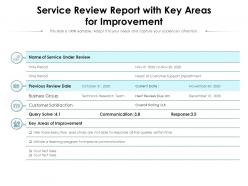
Service review report with key areas for improvement





Try Before you Buy Download Free Sample Product
 Impress Your
 Audience
 100%
100% Editable
 Save Hours
 of Time


Our Service Review Report With Key Areas For Improvement are topically designed to provide an attractive backdrop to any subject. Use them to look like a presentation pro.
People who downloaded this PowerPoint presentation also viewed the following :
Service review report with key areas for improvement with all 2 slides:
Use our Service Review Report With Key Areas For Improvement to effectively help you save your valuable time. They are readymade to fit into any presentation structure.
FAQs for Service review report with key
Track customer satisfaction, response times, and first-call resolution - those are your bread and butter. Don't sleep on employee happiness either, because miserable staff = miserable customers every time. Also watch complaint patterns and retention rates since it costs way more to find new customers than keep existing ones. Honestly, most companies go overboard and track like 20 different things. Pick maybe 3-5 that actually move the needle for your business. Once you're measuring consistently, the data will show you exactly where things are breaking down so you can fix the biggest issues first.
Honestly, most people just collect feedback and let it sit there - that's your first mistake. You've got to actually dig into the patterns across all your channels (surveys, social, conversations, whatever). Find what keeps coming up repeatedly. Pick your top 3 pain points that are actually hurting retention or growth. Make real action plans with deadlines. Here's the part everyone skips though: tell your customers what you're changing based on what they said. People want to know you listened. Start small with those 3 issues and you'll see way better results than trying to fix everything at once.
Training your staff is huge for better service - it's basically everything. When people actually know what they're doing, they handle customers way better and solve problems faster. I've seen this play out so many times. Confident employees just give off better energy, and customers totally feel that difference. Don't make it a one-and-done thing though. Keep it going regularly. Figure out where your service is weakest first, then focus your training there. Also, when your team really understands the products, they can actually help instead of just... existing.
Start with chatbots and self-service portals - they'll handle the basic stuff so your team can focus on harder problems. AI analytics are actually pretty good at catching issues before they blow up. Mobile apps plus solid CRM systems make everything flow better, and honestly, people just expect that now. Digital workflows cut out all those annoying manual steps that slow everything down. Oh, and don't try to fix everything at once - that's a recipe for disaster. Map out what's broken first, then test one solution at a time.
Okay so first thing - get your baseline numbers with customer surveys, NPS scores, and support ticket times. Then track those same metrics for like 3-6 months after you make changes. Don't forget to check social media and review sites too, people complain there way before they'll fill out your survey (trust me on this one). Focus groups are solid for understanding the deeper stuff behind the numbers. Oh and here's what I learned the hard way - only test one improvement at a time or you'll never know what actually moved the needle. Makes it way easier to figure out what's working.
Honestly, your culture and leadership will make or break this whole thing. Leaders need to actually show they care about changes, not just send emails about it. Without that, people just go through the motions. The best leaders I've seen create spaces where teams can mess up without getting in trouble. Your culture has to reward trying new stuff instead of the usual "we've always done it this way" mindset - which drives me crazy, by the way. You'll want people focused on customers and learning, not just checking boxes. Start by figuring out how ready your team actually is for change.
Honestly, just start by actually listening to what your customers are saying - surveys, reviews, whatever feedback you can get. Figure out what's bugging them most. I'd hit the stuff that's affecting tons of people first, then maybe focus on your big spenders. Look for patterns in where people are bailing out or constantly griping about the same thing. That's usually gold. Back it up with real data though, not just gut feelings. Oh and don't just wing it - create some basic scoring system that weighs how many customers it'll help vs how hard it'll be to fix. Then just work down that list methodically.
Honestly, resistance to change is gonna be your biggest headache - people just hate when you mess with their routine. Plus unclear goals and getting stakeholders on board? Good luck with that. Start by involving everyone early so they don't feel blindsided. Be super transparent about why stuff needs to change. Crystal clear, measurable objectives from the start - can't stress this enough. Keep communicating regularly, even when nothing's happening (I know, sounds dumb but trust me). Always have a backup plan ready because things will go sideways. Oh, and test with small pilot programs first before going all-in company-wide.
Benchmarking is basically spying on your competitors, but legally lol. You'll see exactly where you're falling behind - maybe they have 24/7 chat while you're stuck with email support. Compare the stuff that actually matters to customers: response times, pricing, features, satisfaction scores. It's pretty eye-opening, honestly a bit depressing sometimes. Look at both direct competitors and the big players in your industry. That way you know what decent looks like versus what amazing looks like. Pick 3-5 key metrics and just go down the list systematically.
Check out what other industries do well and steal their moves. Tech companies use data to spot problems before customers even notice them. Retail nailed the whole online-to-store thing - like, seriously impressive how smooth they make it look. Manufacturing's lean approach works great for cutting out service delays too. Plus hospitality knows how to make people feel special in every interaction. I'd probably start with whatever industry you think does customer service best and just study how they tackle the same headaches you're dealing with. Works better than reinventing everything from scratch.
Honestly, performance audits are a game-changer for figuring out what's actually broken vs. what you think is broken. You'll get real data instead of just guessing all the time. I remember this one team that was totally convinced they were killing it - then the audit came back with completely different feedback from users. Oops! The trick is actually doing something with what you find, not just shoving the report in a drawer somewhere. Try doing them quarterly if you can swing it. They'll catch problems before customers start complaining, plus you'll have solid proof when you need to convince higher-ups to fund improvements.
Honestly, real-time analytics is a game changer - you'll catch service issues as they happen instead of learning about them from furious customers later. Response times tanking? You'll know immediately. Customer satisfaction nosediving? Same thing. But here's what's actually cool: it shows you the good stuff too. Like when users are obsessed with some random feature you didn't expect, or there's weird demand from a market you've been ignoring. I literally check my dashboards every morning with coffee (okay, sometimes I forget weekends). Trust me, fixing problems before they blow up beats damage control every single time.
Your customers are basically giving you free consulting if you just listen to them. They're using your stuff every day, so they know exactly what sucks about it. Set up easy ways for them to complain - I know that sounds weird, but complaints are gold. You'll start seeing the same issues pop up over and over, which tells you what to fix first. The trick is actually doing something with their feedback, not just collecting it. Regular check-ins work great, but honestly? Sometimes the angry emails teach you more than formal surveys ever will.
Start small and grab some quick wins - your team won't buy in until they see actual results. Map out what you're doing now, then tackle the biggest headaches you can realistically fix. Those fancy frameworks look great on paper but honestly, most crash and burn when leadership gets distracted by the next shiny thing. Give someone clear ownership of each change. Celebrate wins publicly. Teach your people basic stuff like root cause analysis. Oh and don't treat improvements like separate side projects - build them right into your regular work or they'll disappear when priorities shift.
Honestly, the trick is making improvement feel rewarding instead of like another task on their plate. Celebrate when people spot issues or try new ideas - even the ones that flop. Weekly 15-minute huddles work way better than those marathon retrospective meetings (though you still need those sometimes). Focus on "how do we fix this" not "who screwed up." But here's the thing - if leadership doesn't actually act on suggestions, people will stop sharing them real quick. Make improvement everyone's job, not just something managers worry about. Small wins add up fast.
-
Qualitative and comprehensive slides.
-
Unique and attractive product design.
-
Use of icon with content is very relateable, informative and appealing.
-
Really like the color and design of the presentation.
-
Very unique, user-friendly presentation interface.