


Autonomous Mobile Robots Architecture Powerpoint Presentation Slides
This PowerPoint presentation briefly explains autonomous mobile robots, and the advantages and disadvantages of working with AMRs. In this Autonomous Mobile Robots Architecture PowerPoint Presentation, we have covered the reasons to adopt autonomous robots, its architecture section, functional and operational software, and the operating system of autonomous mobile robots. In addition, this Autonomous Mobile Robots Types PPT contains the crucial system components of autonomous mobile systems, types of AMRs, including goods-to-person, collaborative, autonomous forklifts, enhanced sortation solutions, automated storage, and retrieval system, and so on. Also, the Types of Autonomous Robotic System PPT presentation includes programmable, non-programmable, adaptive, and intelligent types of systems. Furthermore, this Autonomous Mobile Robots Architecture template caters to technological software and hardware advances impacting autonomous mobile robots. It also includes the safety of AMRs and a fleet manager overview. Moreover, this Autonomous Mobile Robots deck comprises applications of AMRs in various industries, the difference between AMR and AGVs, and pricing for AMRs building. You can also utilize the slides that depict a timeline, a roadmap for AMR development, and a dashboard to track the performance of autonomous mobile robots. Download our 100 percent editable and customizable template, which is also compatible with Google Slides.
This PowerPoint presentation briefly explains autonomous mobile robots, and the advantages and disadvantages of working wit..























-

- Google Slides is a new FREE Presentation software from Google.
- All our content is 100% compatible with Google Slides.
- Just download our designs, and upload them to Google Slides and they will work automatically.
- Amaze your audience with SlideTeam and Google Slides.
-

Want Changes to This PPT Slide? Check out our Presentation Design Services
-

- WideScreen Aspect ratio is becoming a very popular format. When you download this product, the downloaded ZIP will contain this product in both standard and widescreen format.
-

- Some older products that we have may only be in standard format, but they can easily be converted to widescreen.
- To do this, please open the SlideTeam product in Powerpoint, and go to
- Design ( On the top bar) -> Page Setup -> and select "On-screen Show (16:9)” in the drop down for "Slides Sized for".
- The slide or theme will change to widescreen, and all graphics will adjust automatically. You can similarly convert our content to any other desired screen aspect ratio.
Compatible With Google Slides

Get This In WideScreen
You must be logged in to download this presentation.


Do you want to remove this product from your favourites?
PowerPoint presentation slides
Enthrall your audience with this Autonomous Mobile Robots Architecture Powerpoint Presentation Slides. Increase your presentation threshold by deploying this well-crafted template. It acts as a great communication tool due to its well-researched content. It also contains stylized icons, graphics, visuals etc, which make it an immediate attention-grabber. Comprising seventy one slides, this complete deck is all you need to get noticed. All the slides and their content can be altered to suit your unique business setting. Not only that, other components and graphics can also be modified to add personal touches to this prefabricated set.

People who downloaded this PowerPoint presentation also viewed the following :
Content of this Powerpoint Presentation
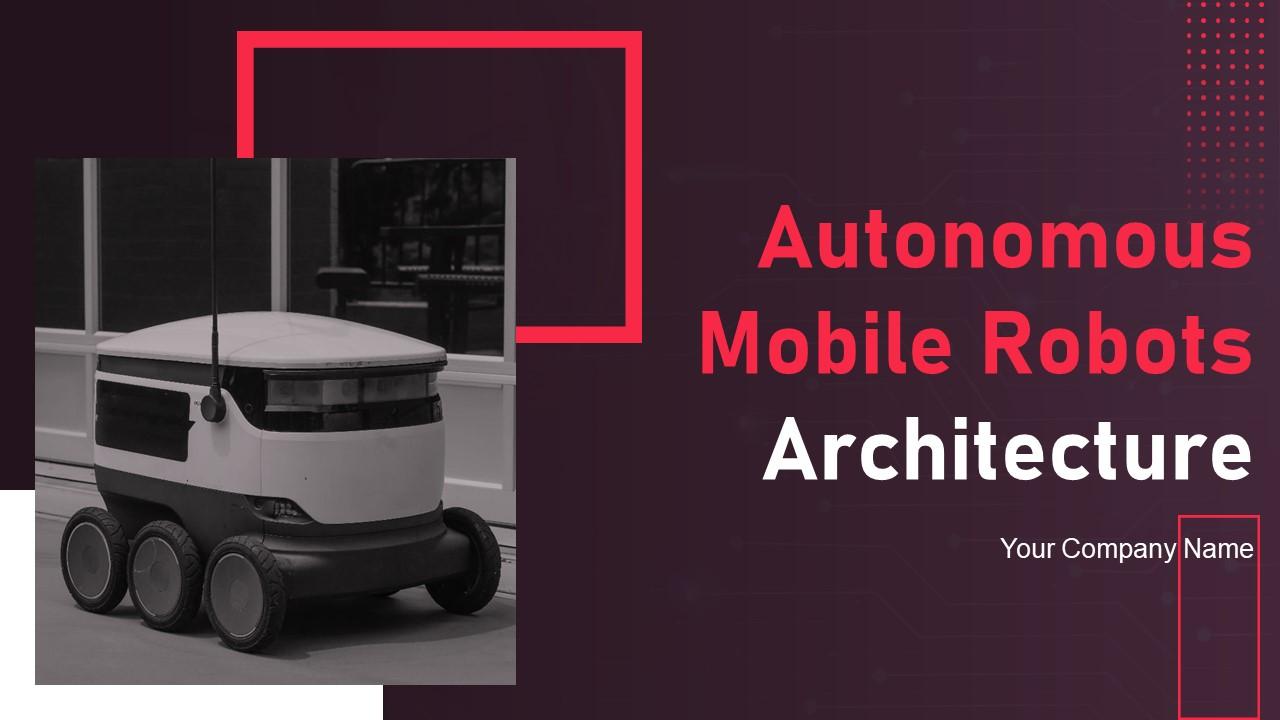
Slide 1: This slide displays the title Autonomous Mobile Robots Architecture.
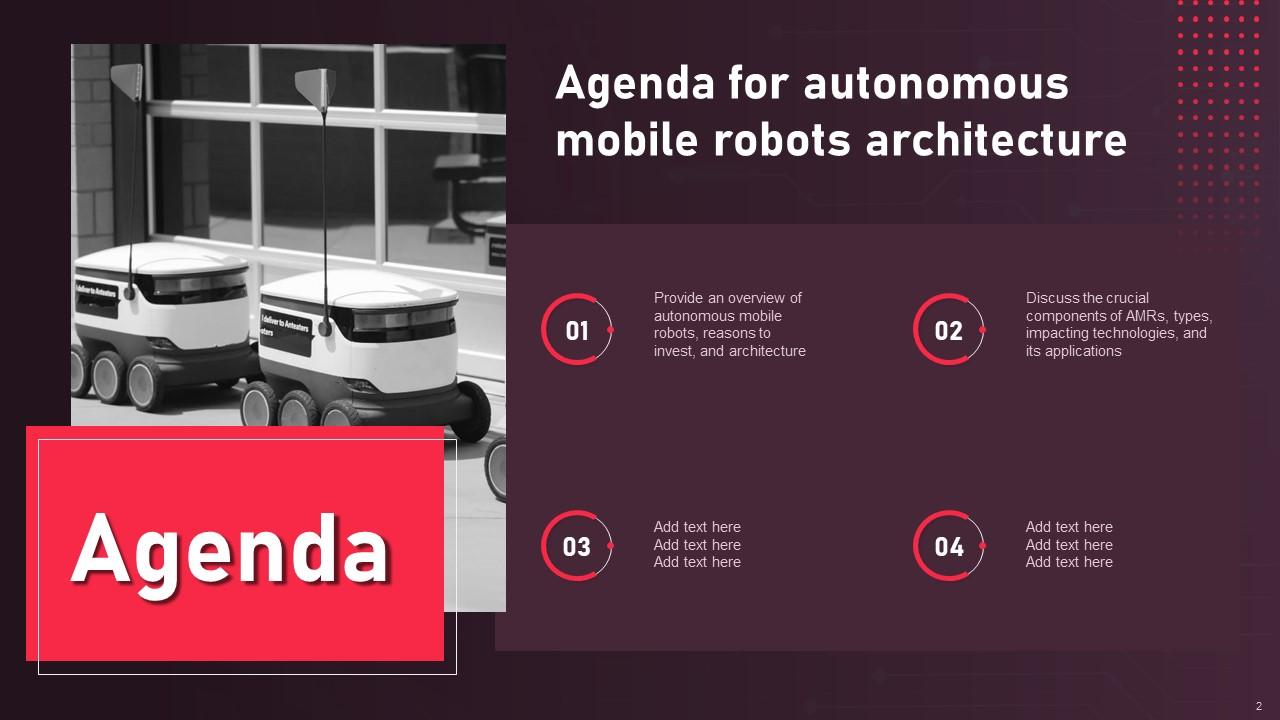
Slide 2: This slide displays the title Agenda for autonomous mobile robots.
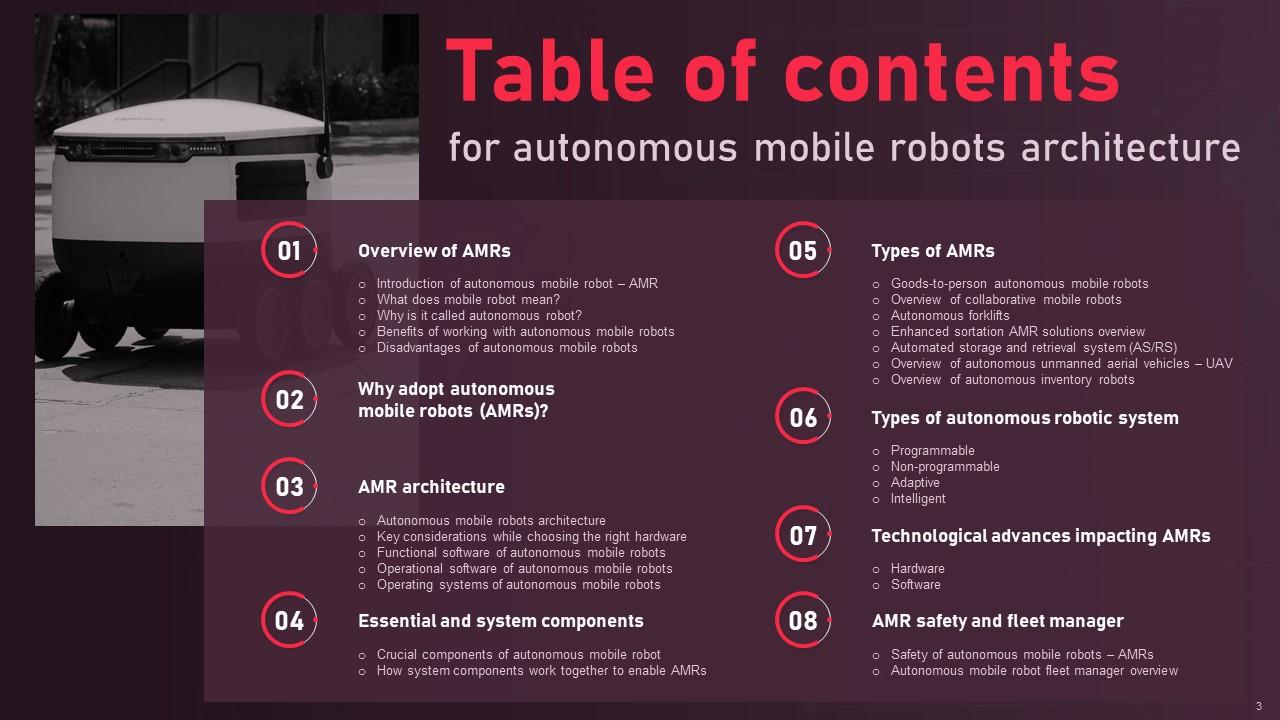
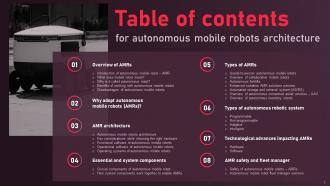
Slide 3: This slide exhibit table of content.
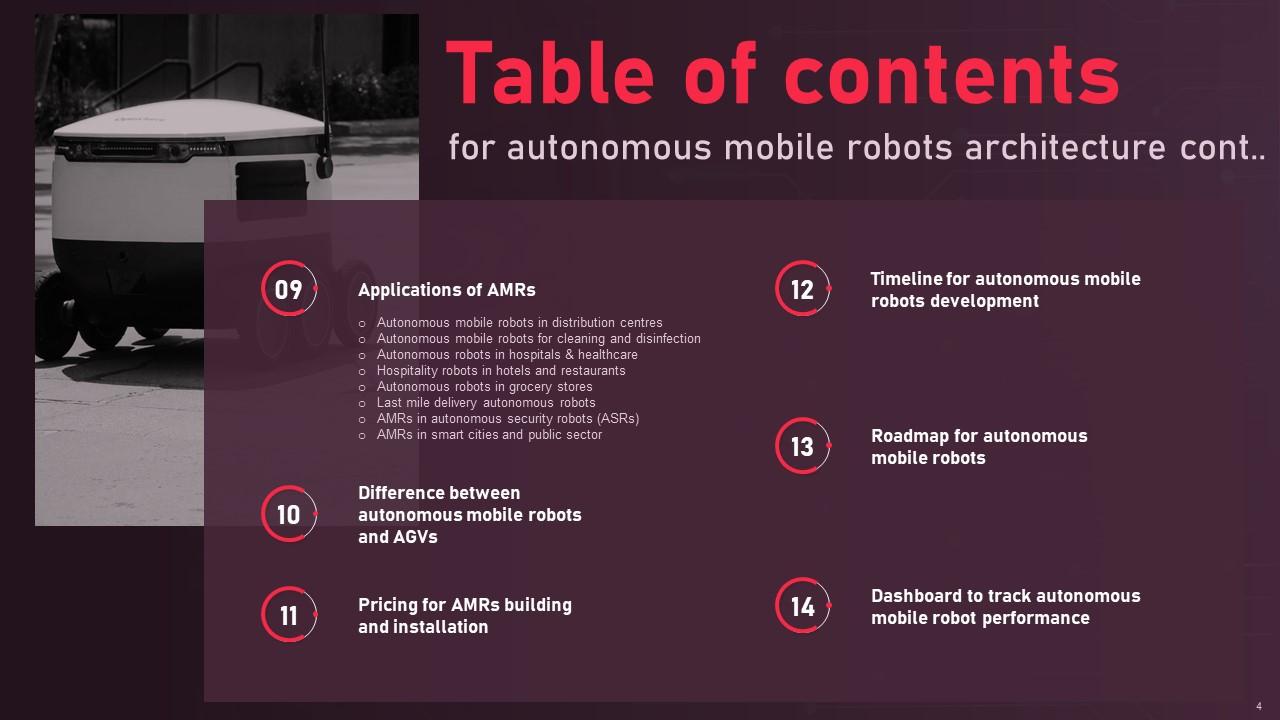
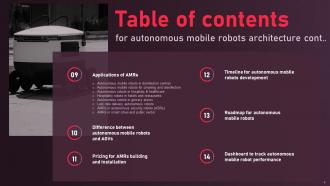
Slide 4: This slide exhibit table of content.
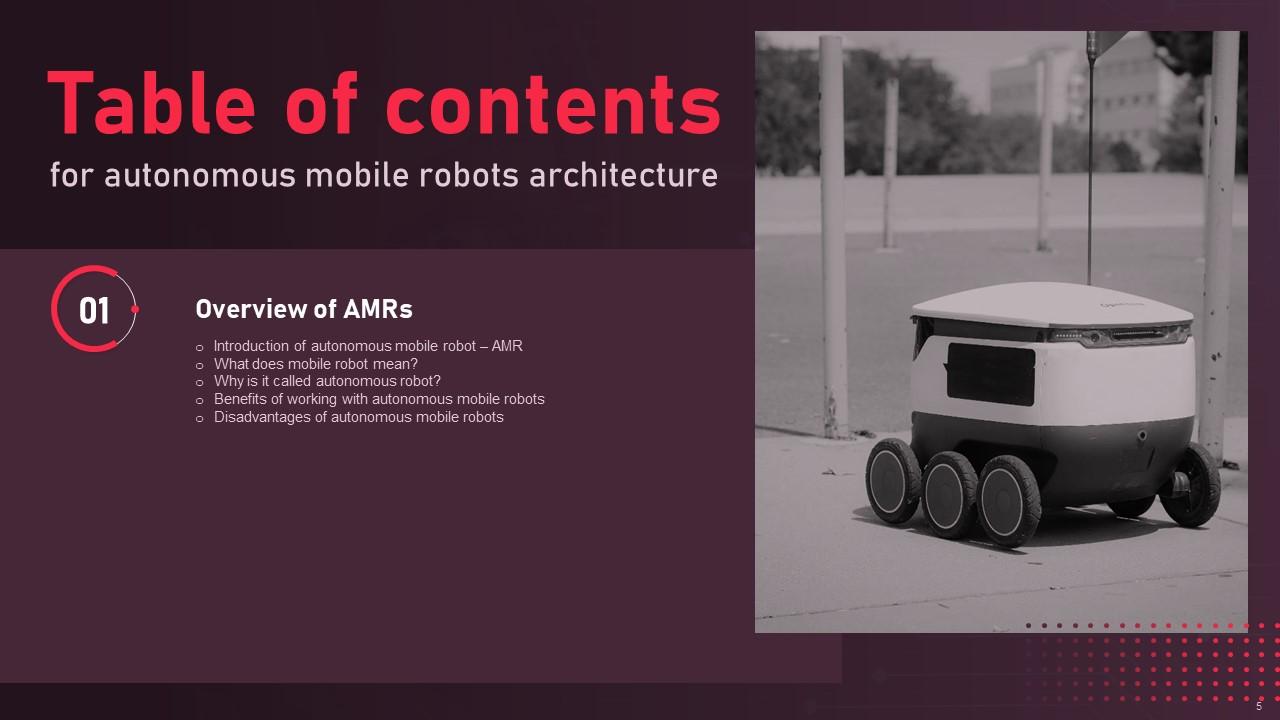
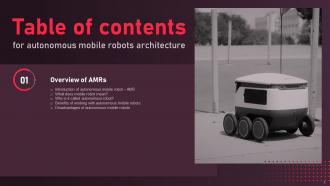
Slide 5: This slide exhibit table of content- Overview of AMRs
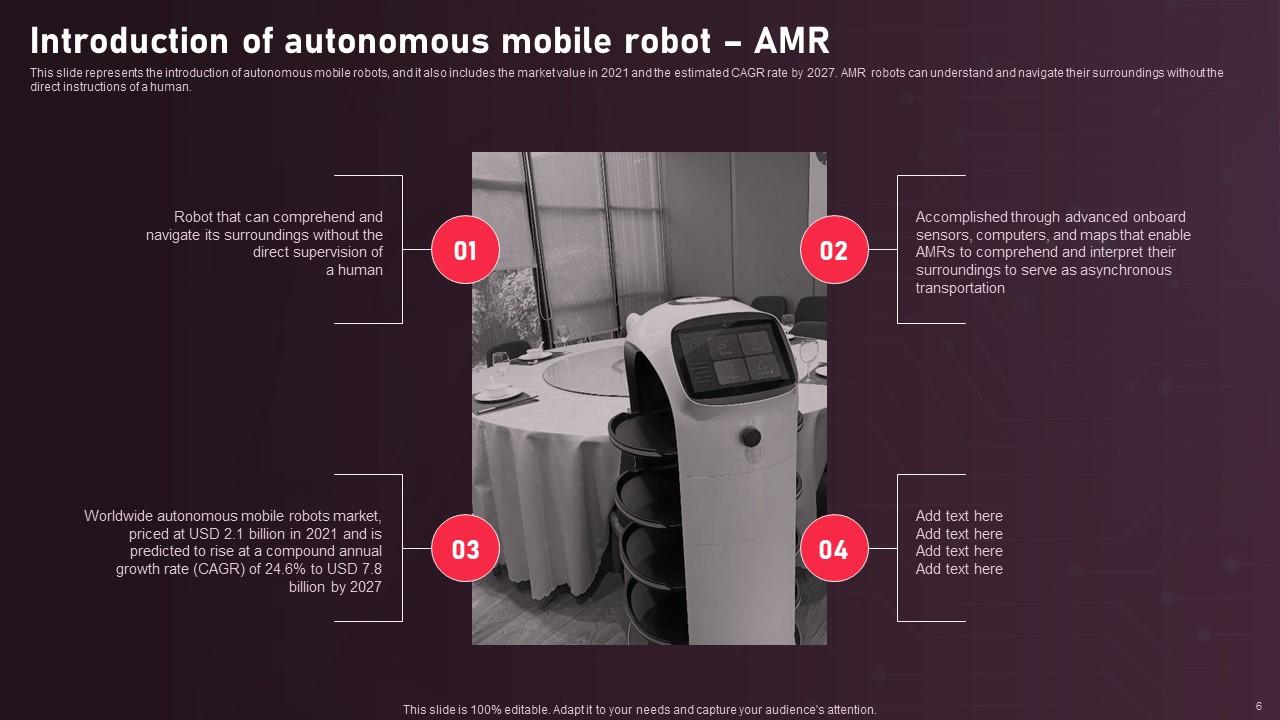
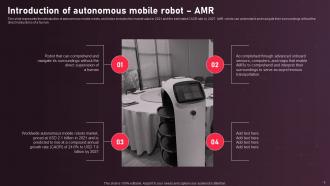
Slide 6: This slide represents the introduction of autonomous mobile robots, and it also includes the market value in 2021 and the estimated CAGR rate by 2027.
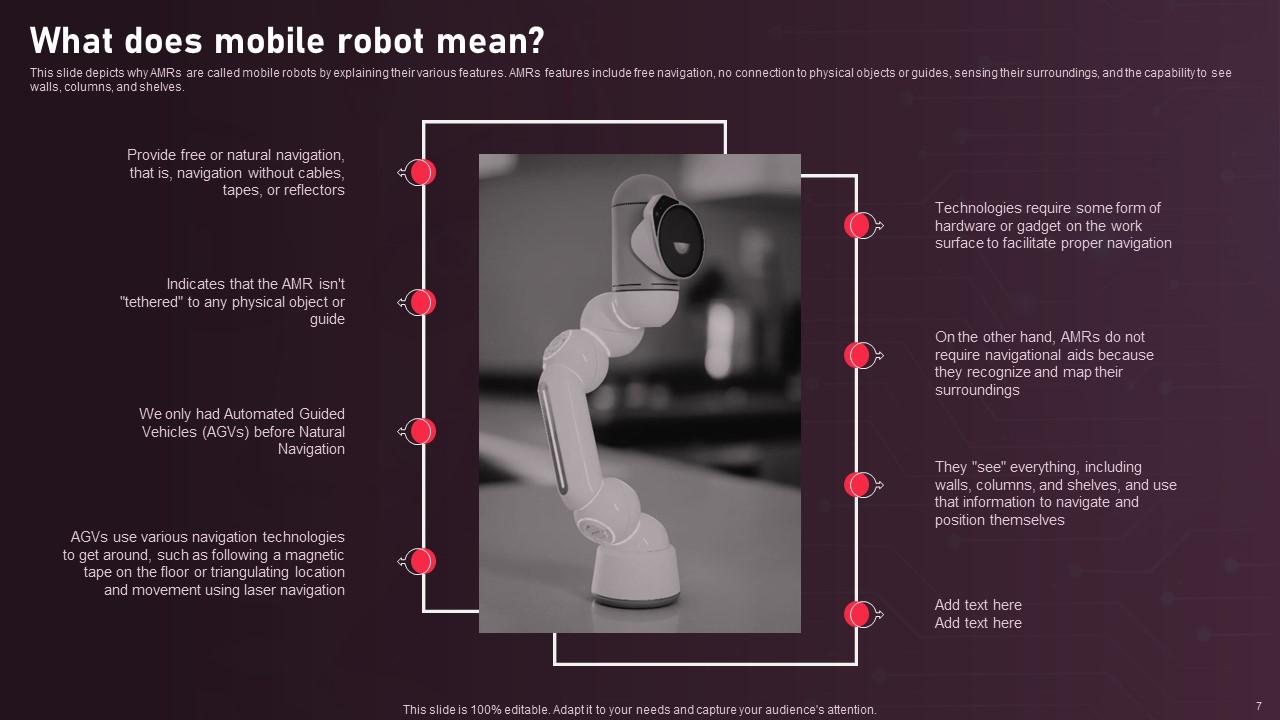
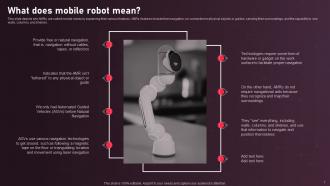
Slide 7: This slide depicts why AMRs are called mobile robots by explaining their various features.
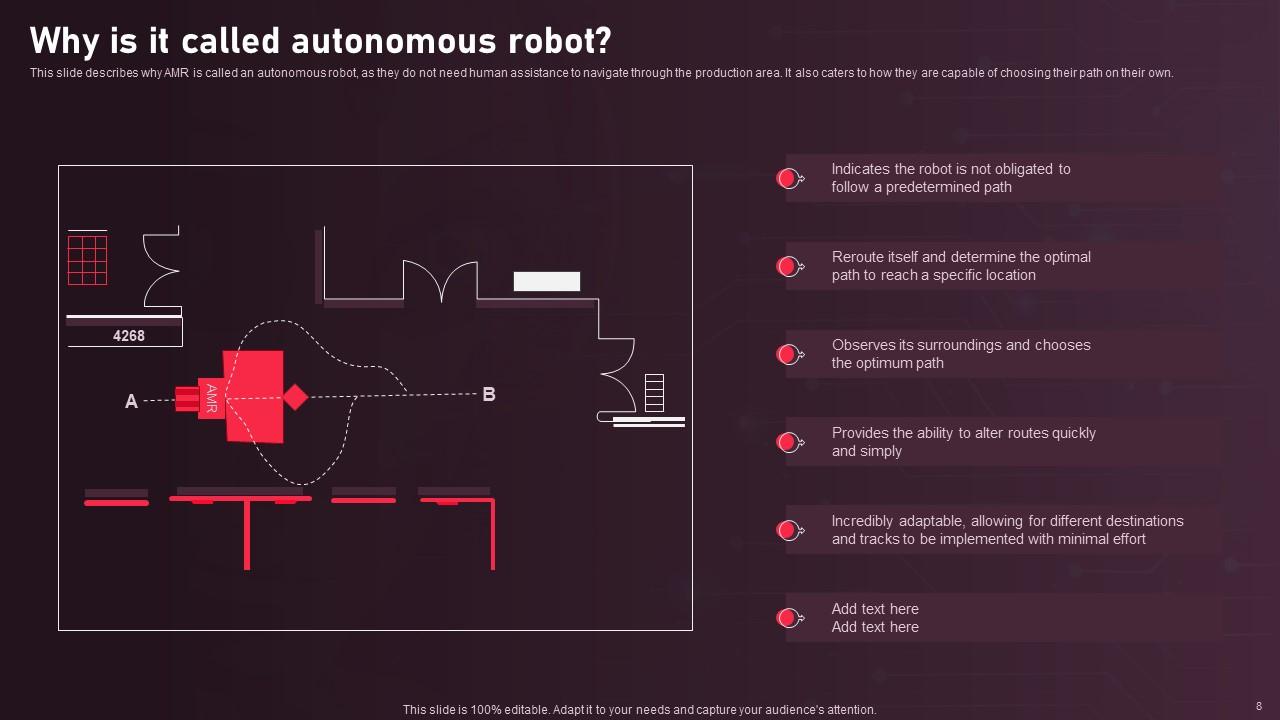
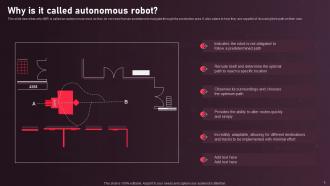
Slide 8: This slide describes why AMR is called an autonomous robot, as they do not need human assistance to navigate through the production area.
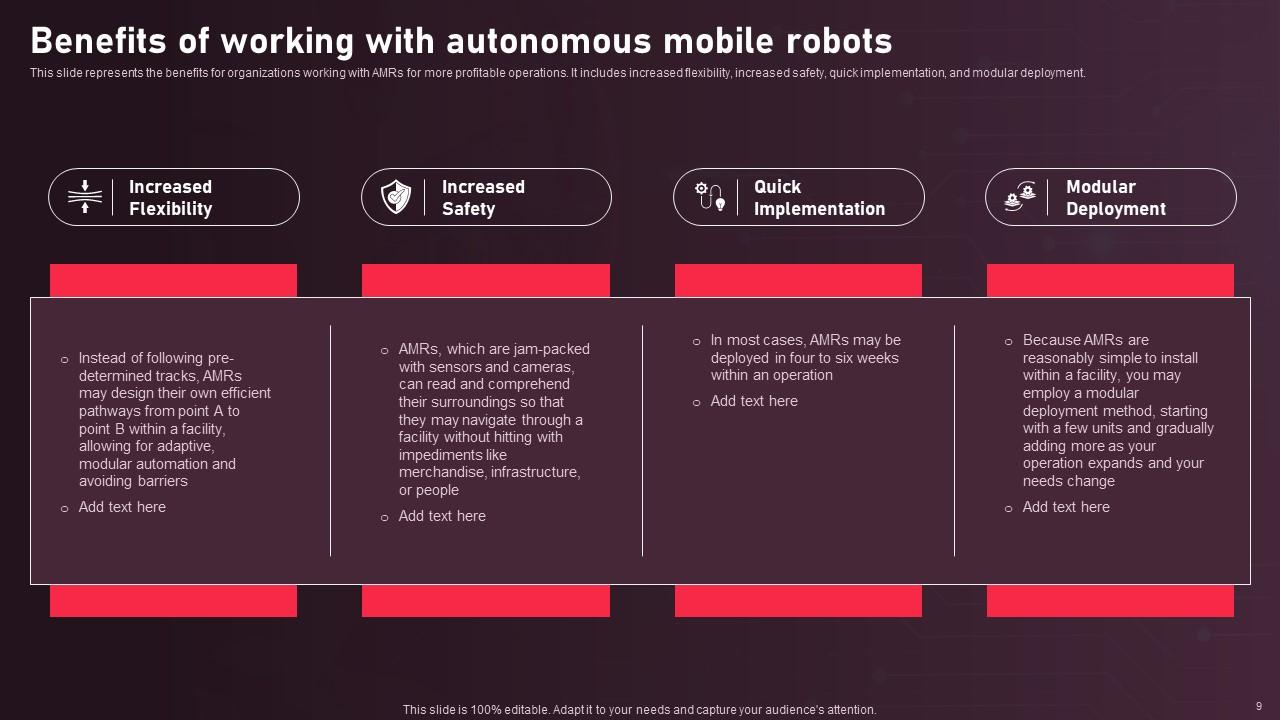
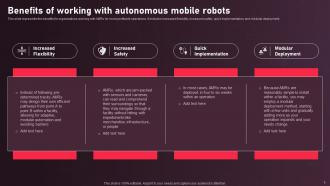
Slide 9: This slide represents the benefits for organizations working with AMRs for more profitable operations.
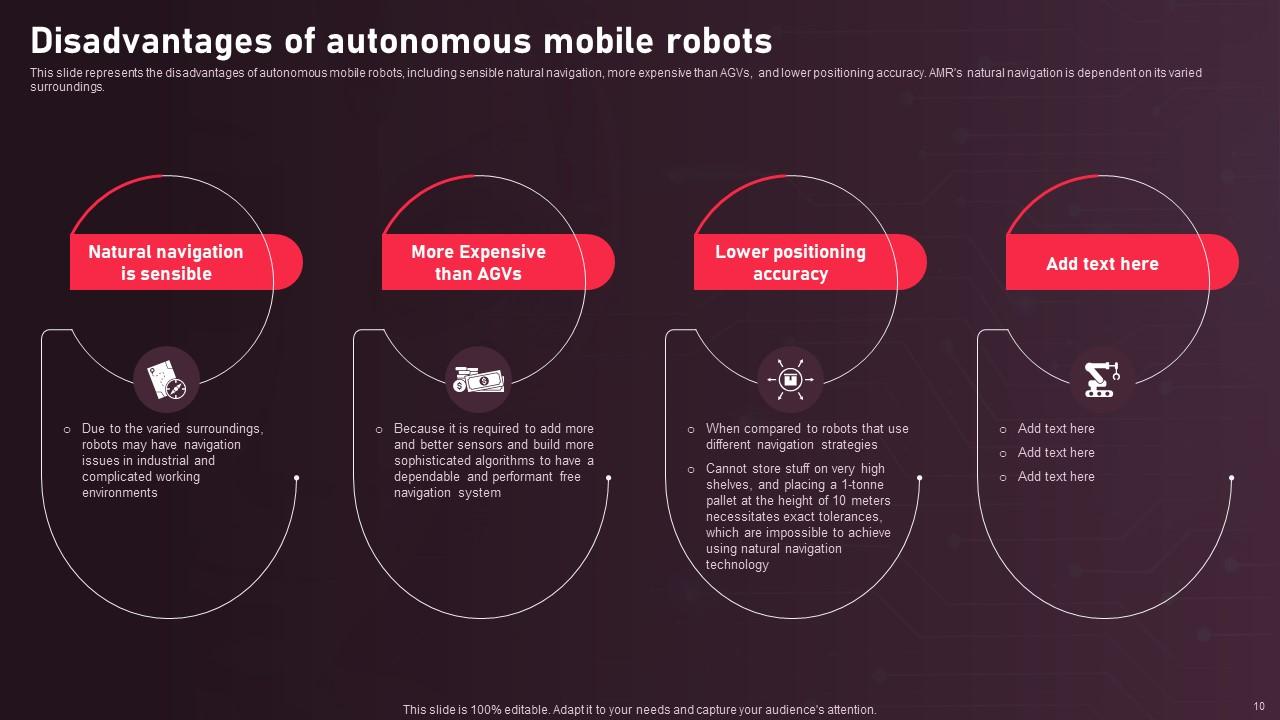
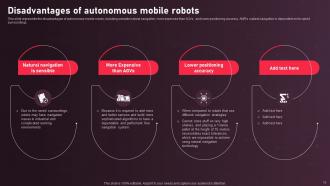
Slide 10: This slide represents the disadvantages of autonomous mobile robots, including sensible natural navigation, more expensive than AGVs, and lower positioning accuracy.
Slide 11: This slide exhibit table of content- Why adopt autonomous mobile robots (AMRs)?
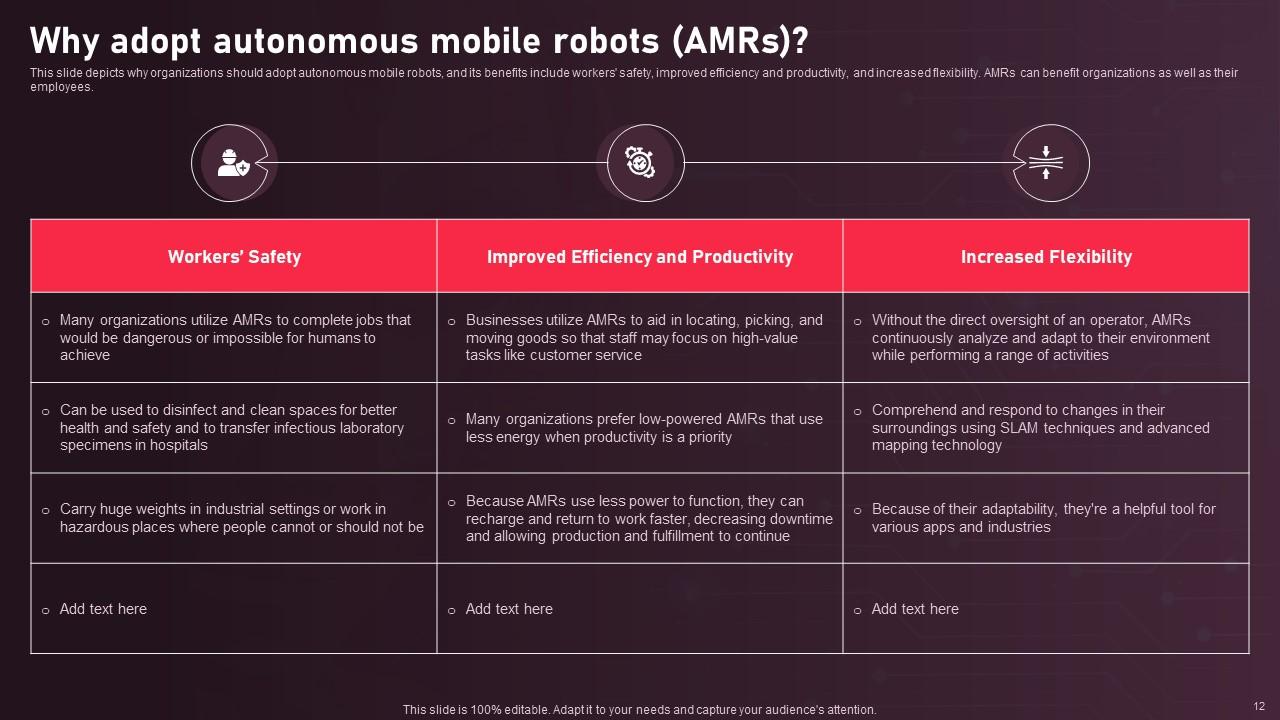
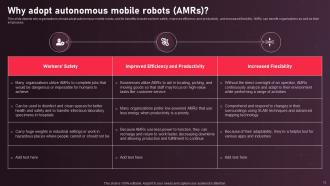
Slide 12: This slide depicts why organizations should adopt autonomous mobile robots, and its benefits.
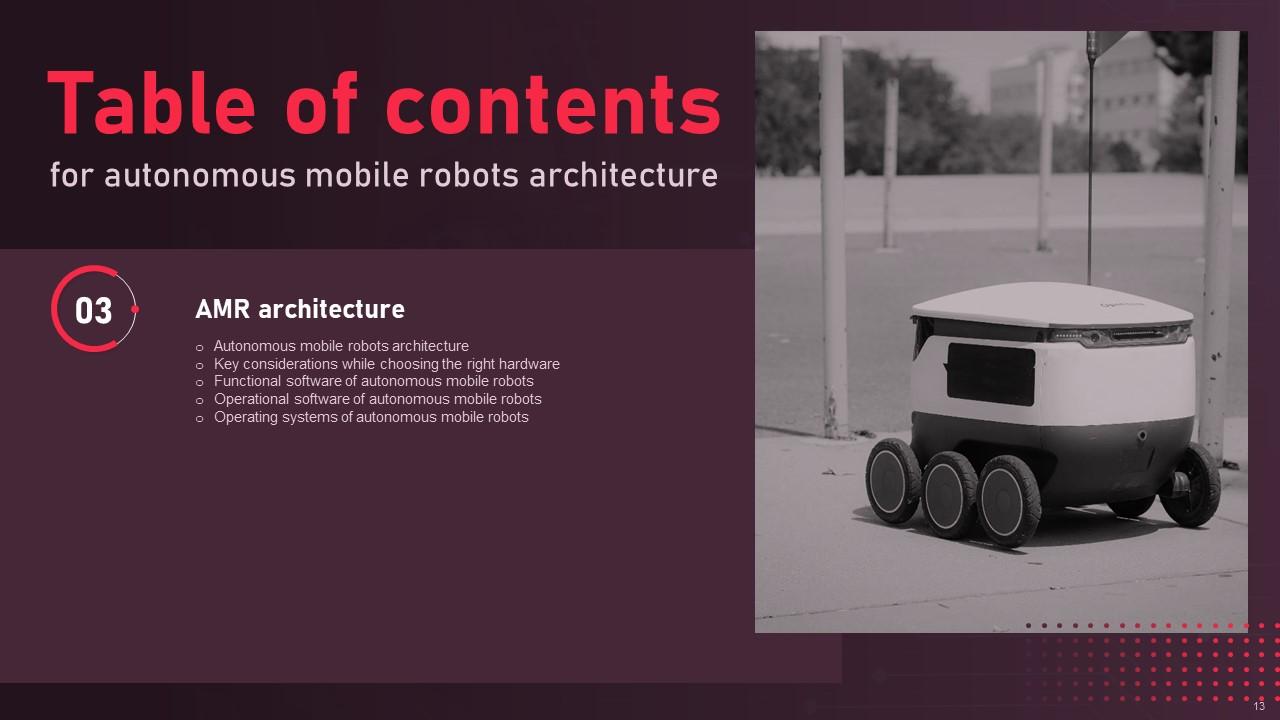
Slide 13: This slide exhibit table of content- AMR architecture.
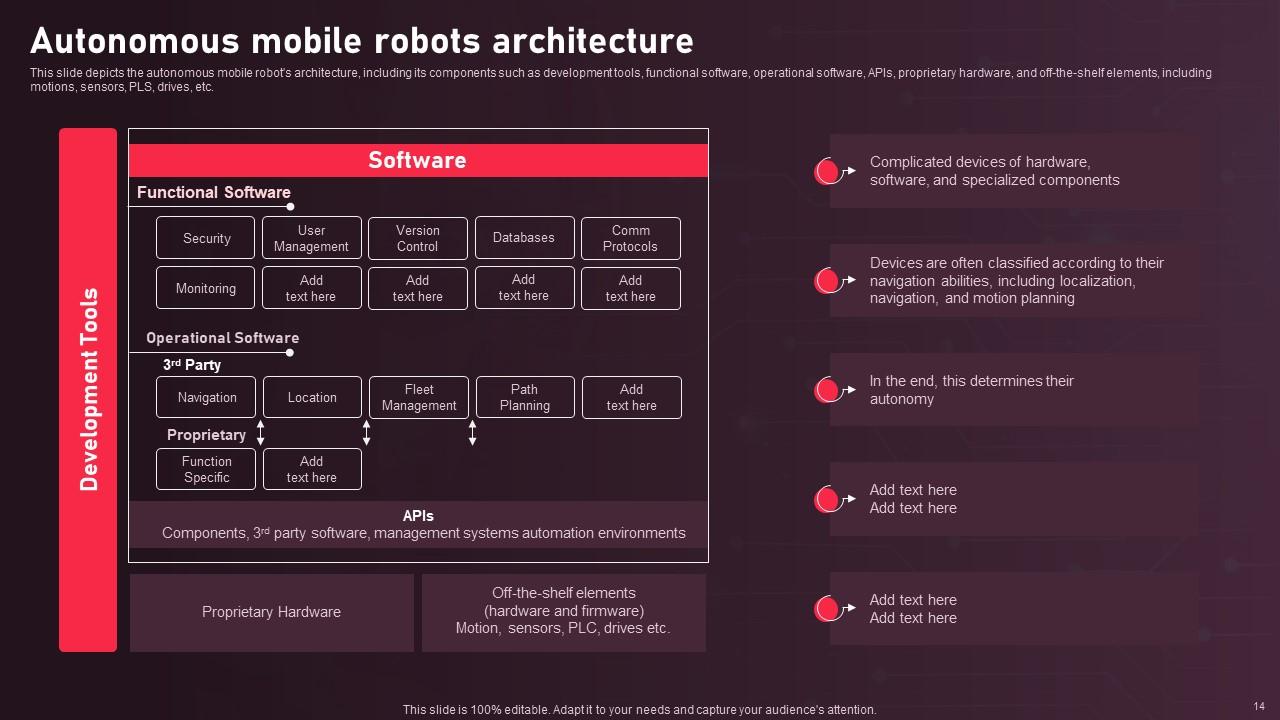
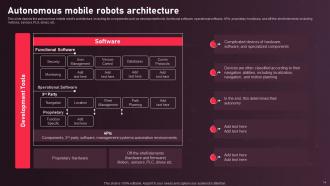
Slide 14: This slide depicts the autonomous mobile robot's architecture.
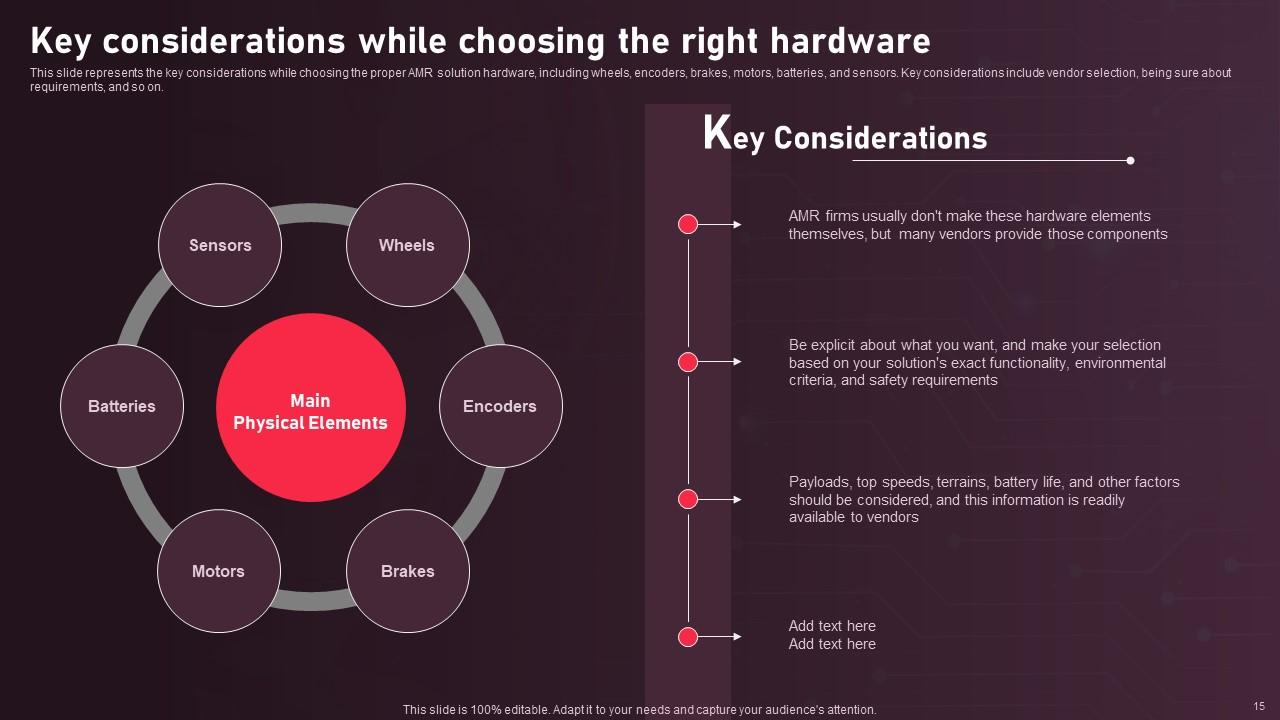
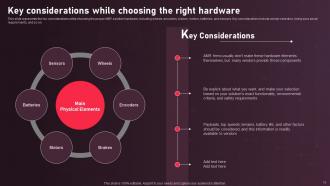
Slide 15: This slide represents the key considerations while choosing the proper AMR solution hardware.
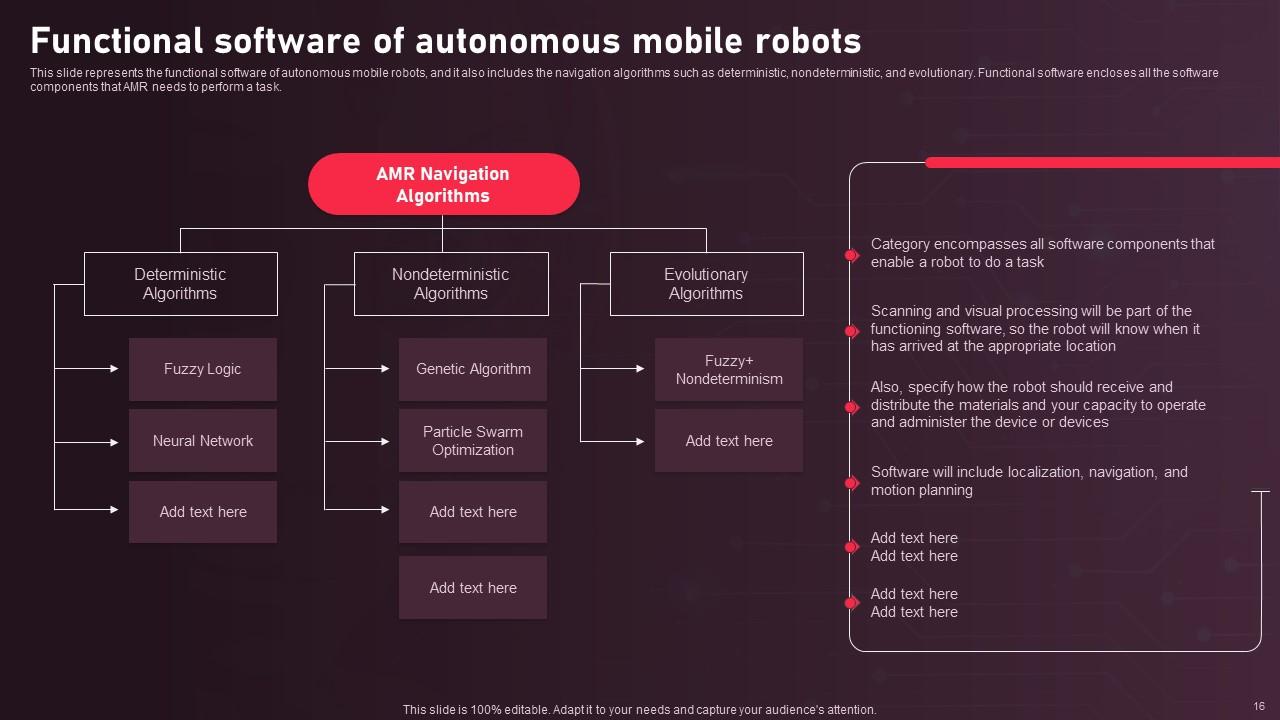
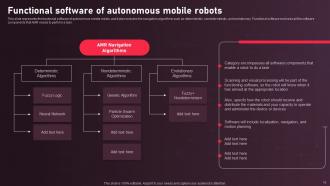
Slide 16: This slide represents the functional software of autonomous mobile robots.
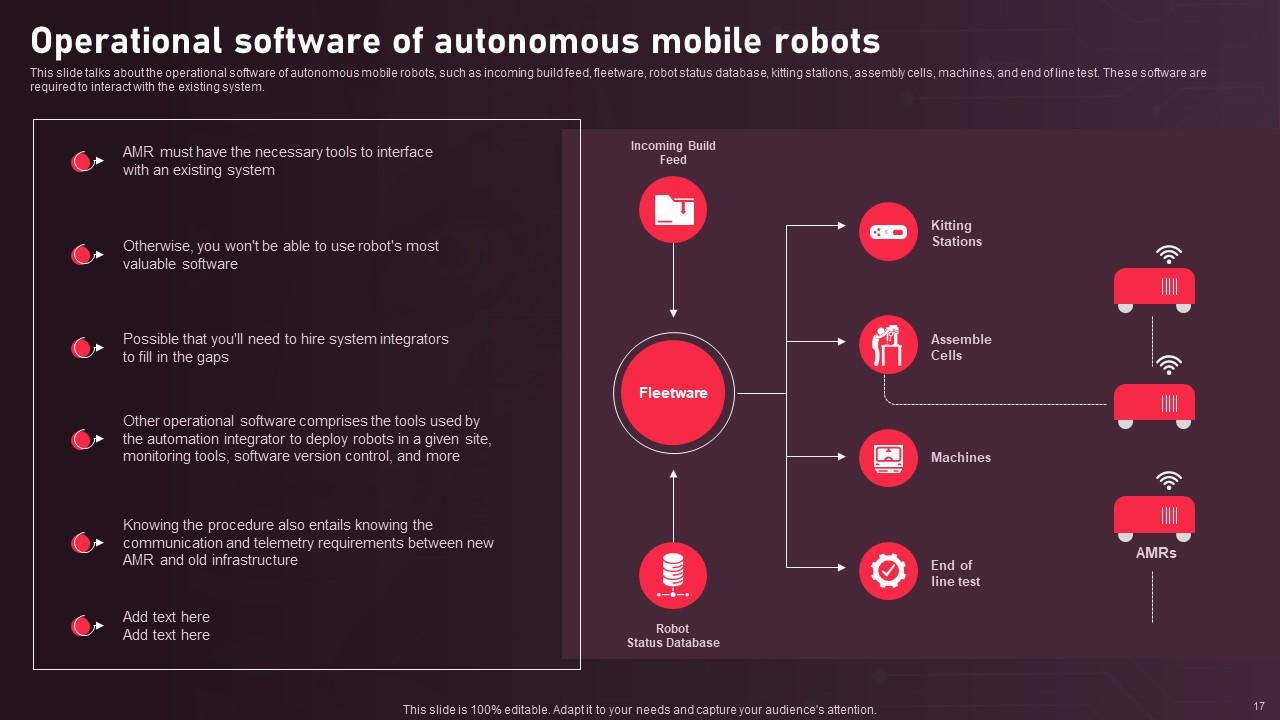
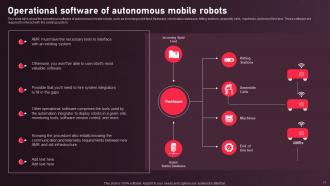
Slide 17: This slide talks about the operational software of autonomous mobile robots.
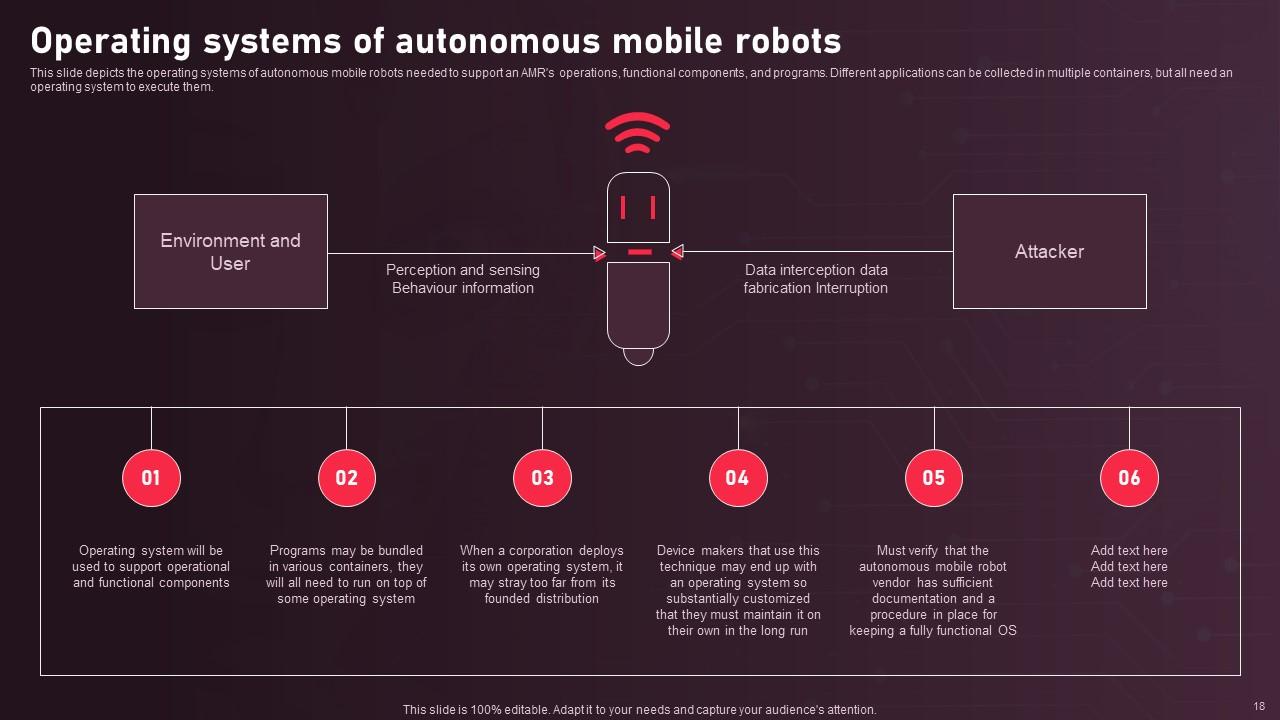
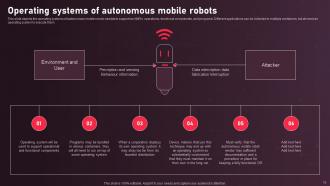
Slide 18: This slide depicts the operating systems of autonomous mobile robots needed to support an AMR's operations, functional components, and programs.
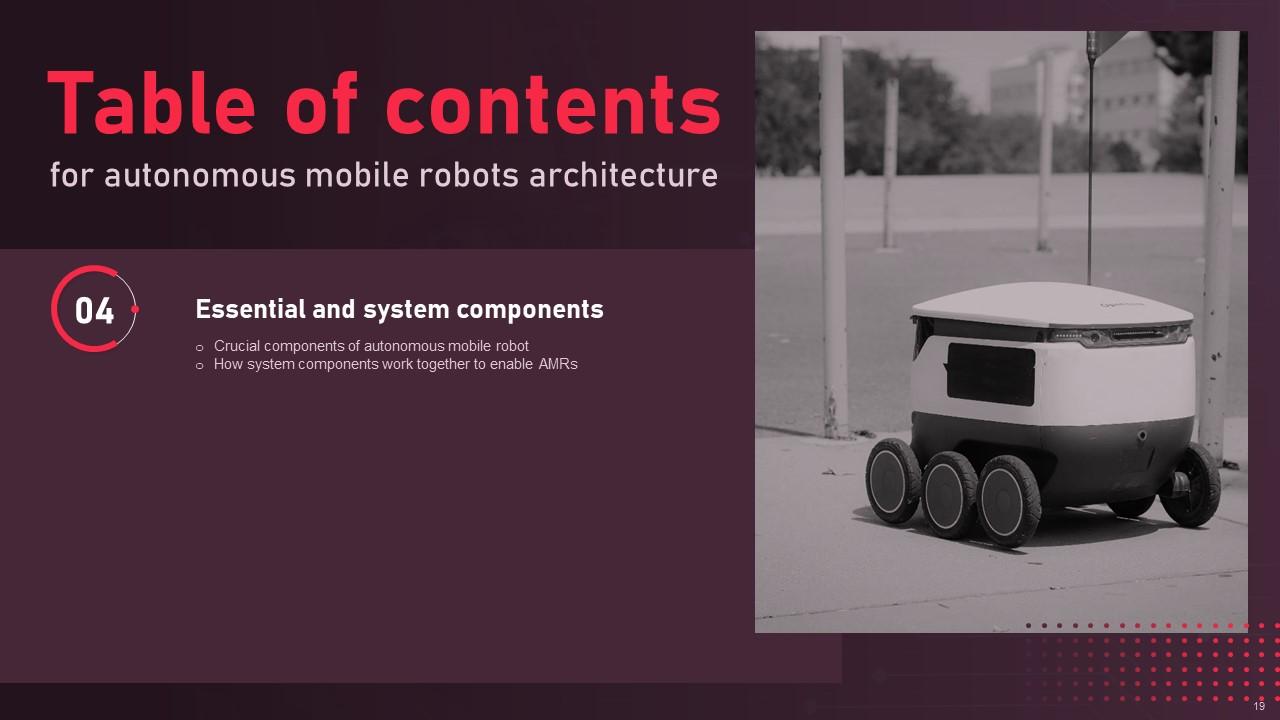
Slide 19: This slide exhibit table of content- Essential and system components.
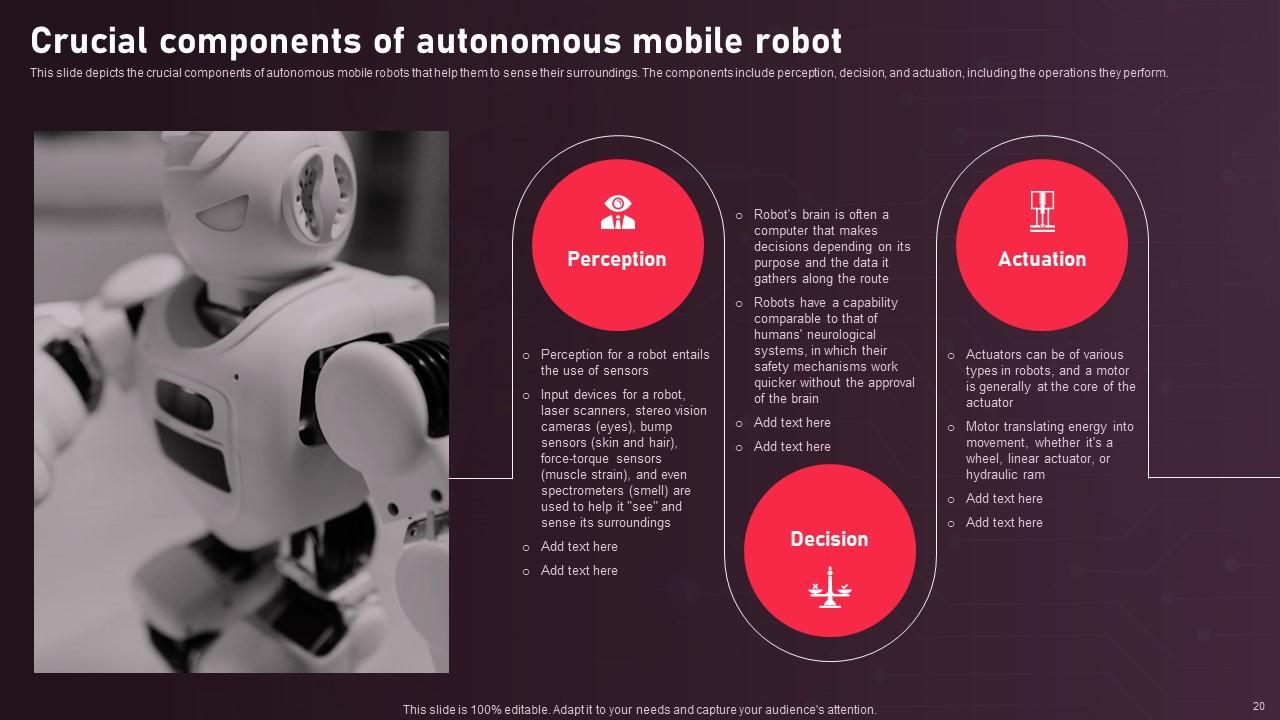
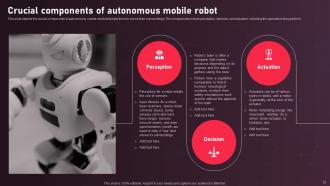
Slide 20: This slide depicts the crucial components of autonomous mobile robots that help them to sense their surroundings.
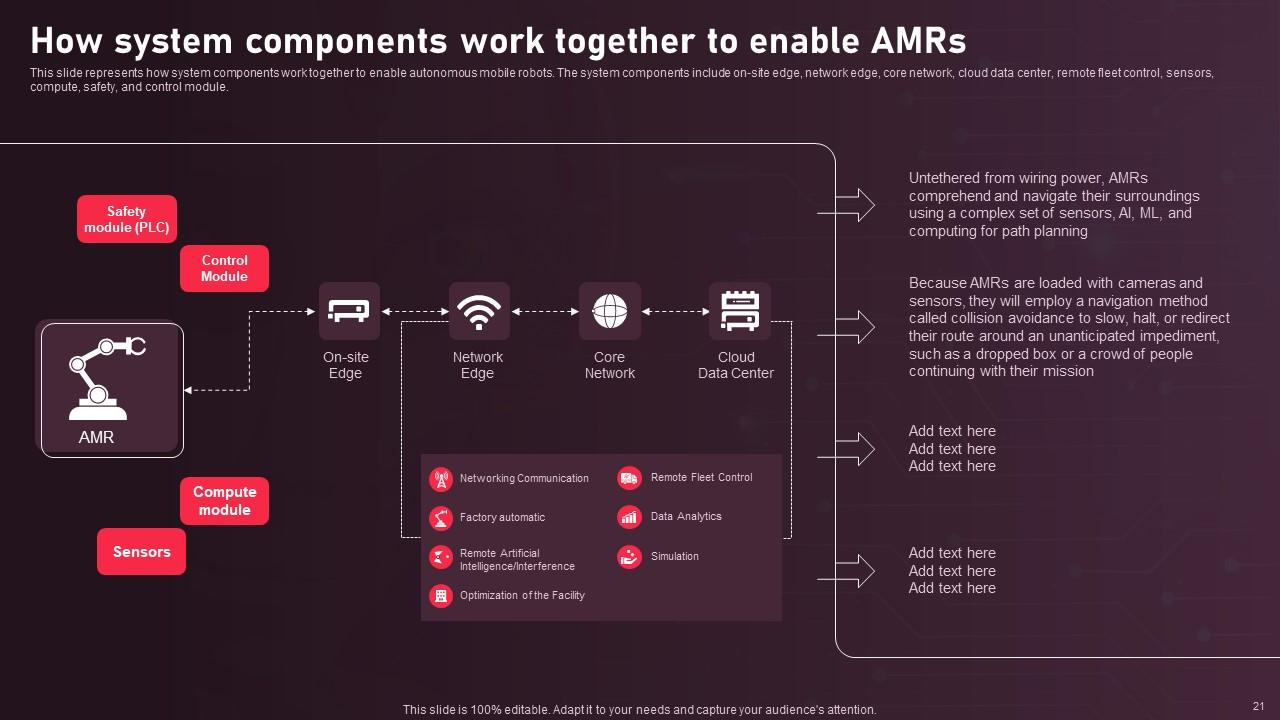
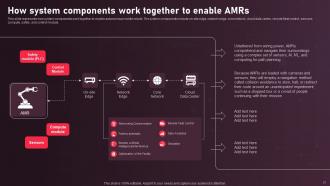
Slide 21: This slide represents how system components work together to enable autonomous mobile robots.
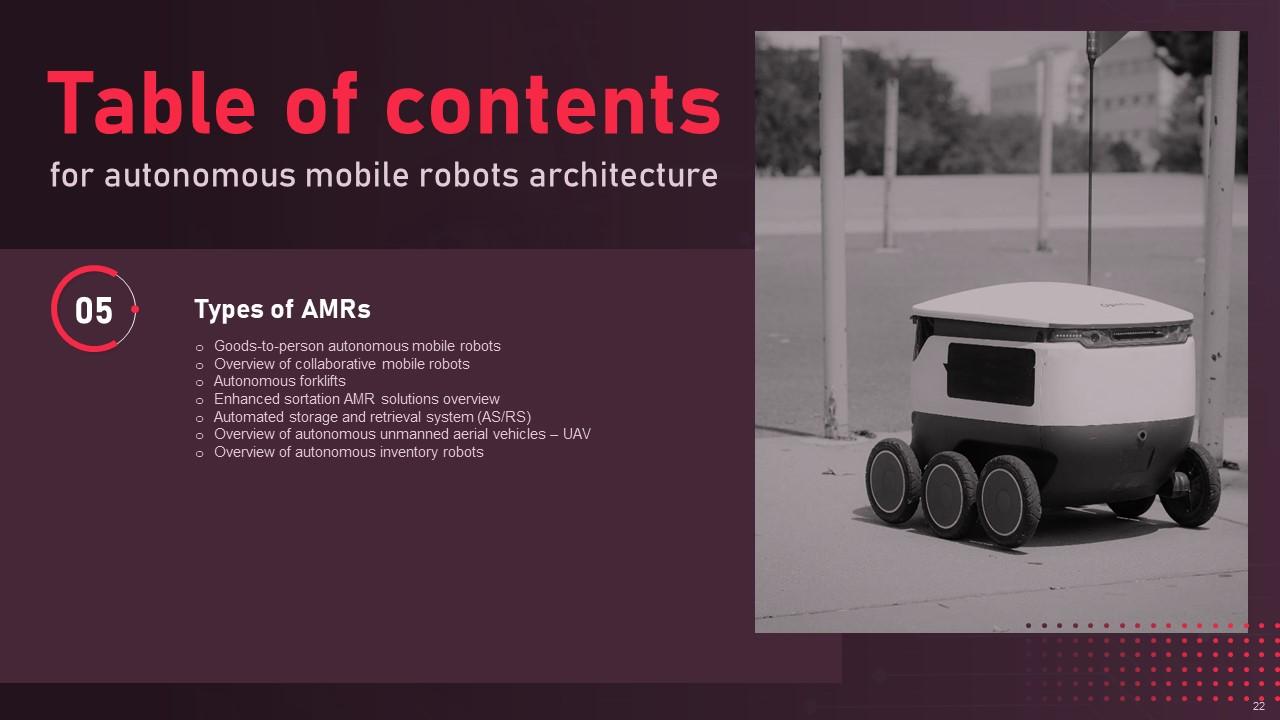
Slide 22: This slide exhibit table of content- Types of AMRs.
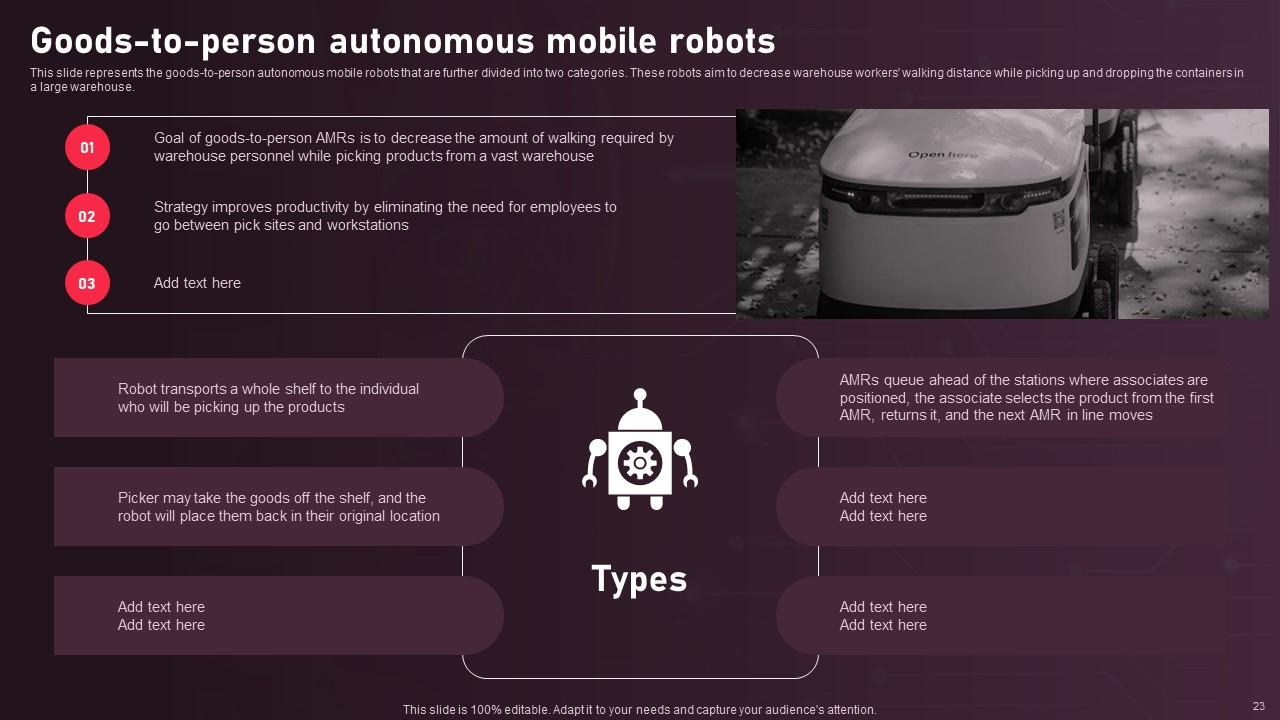
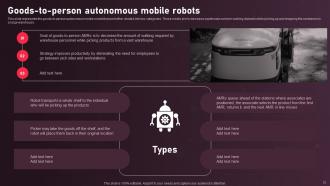
Slide 23: This slide represents the goods-to-person autonomous mobile robots that are further divided into two categories.
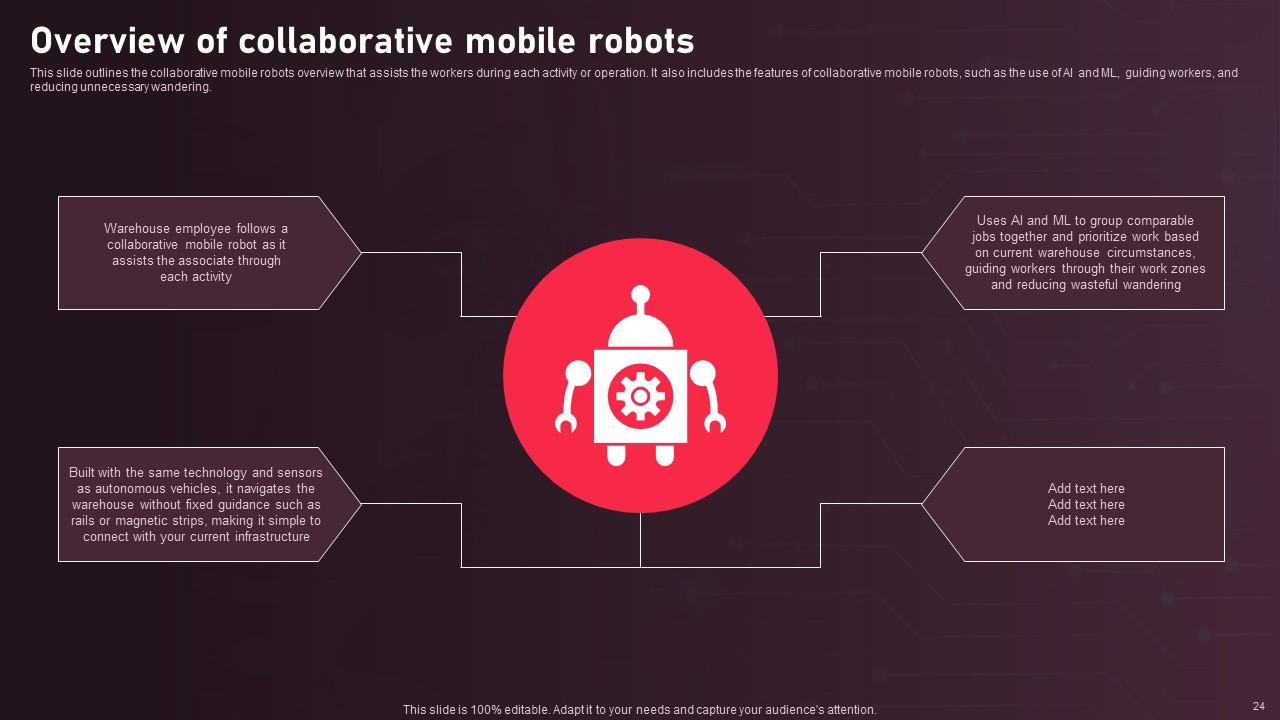
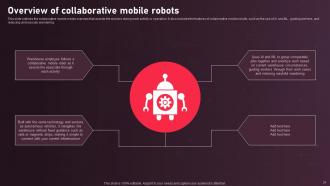
Slide 24: This slide outlines the collaborative mobile robots overview that assists the workers during each activity or operation.
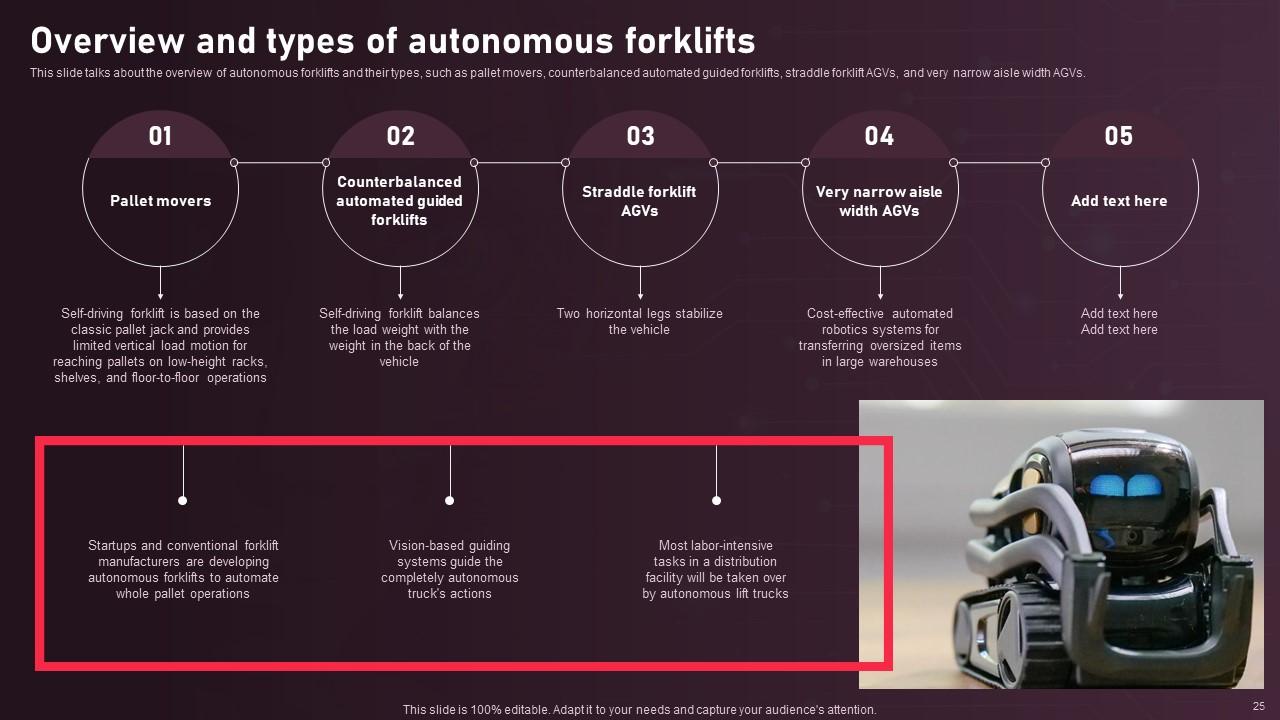
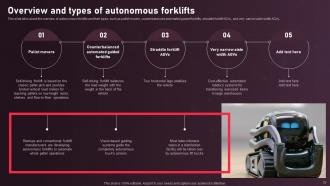
Slide 25: This slide talks about the overview of autonomous forklifts and their types.
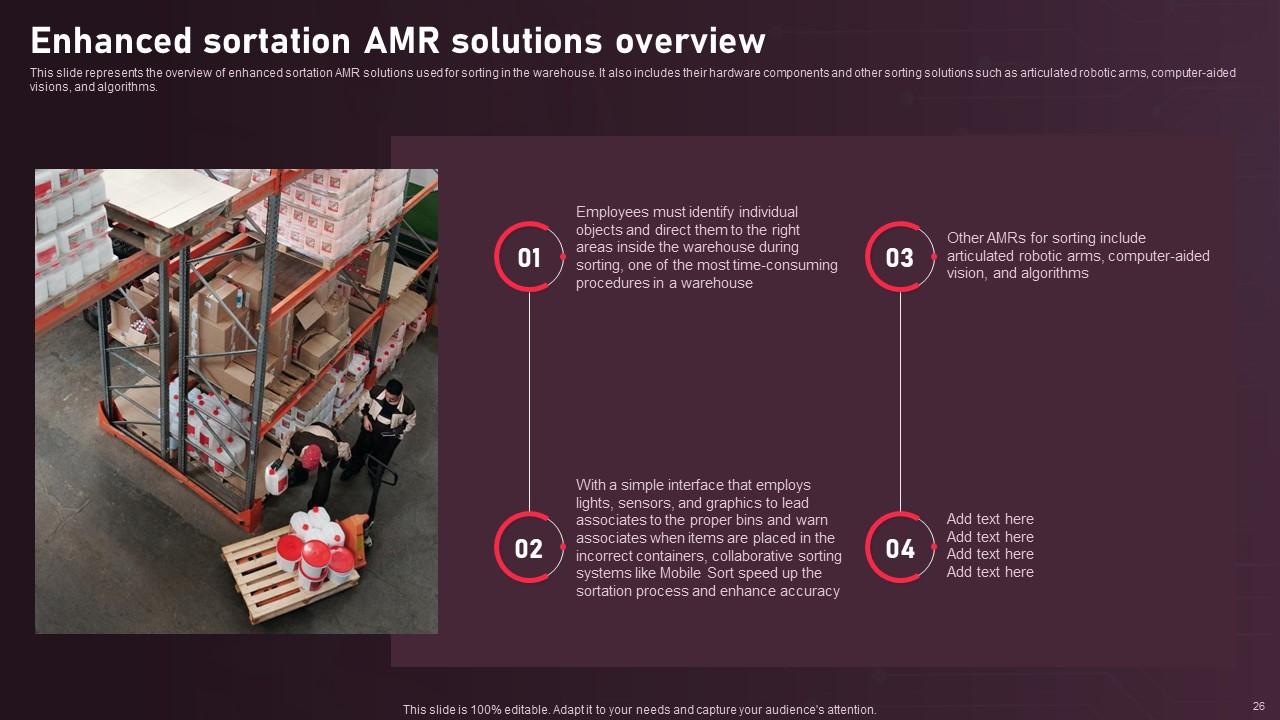
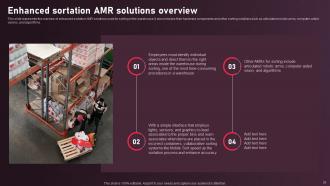
Slide 26: This slide represents the overview of enhanced sortation AMR solutions used for sorting in the warehouse.
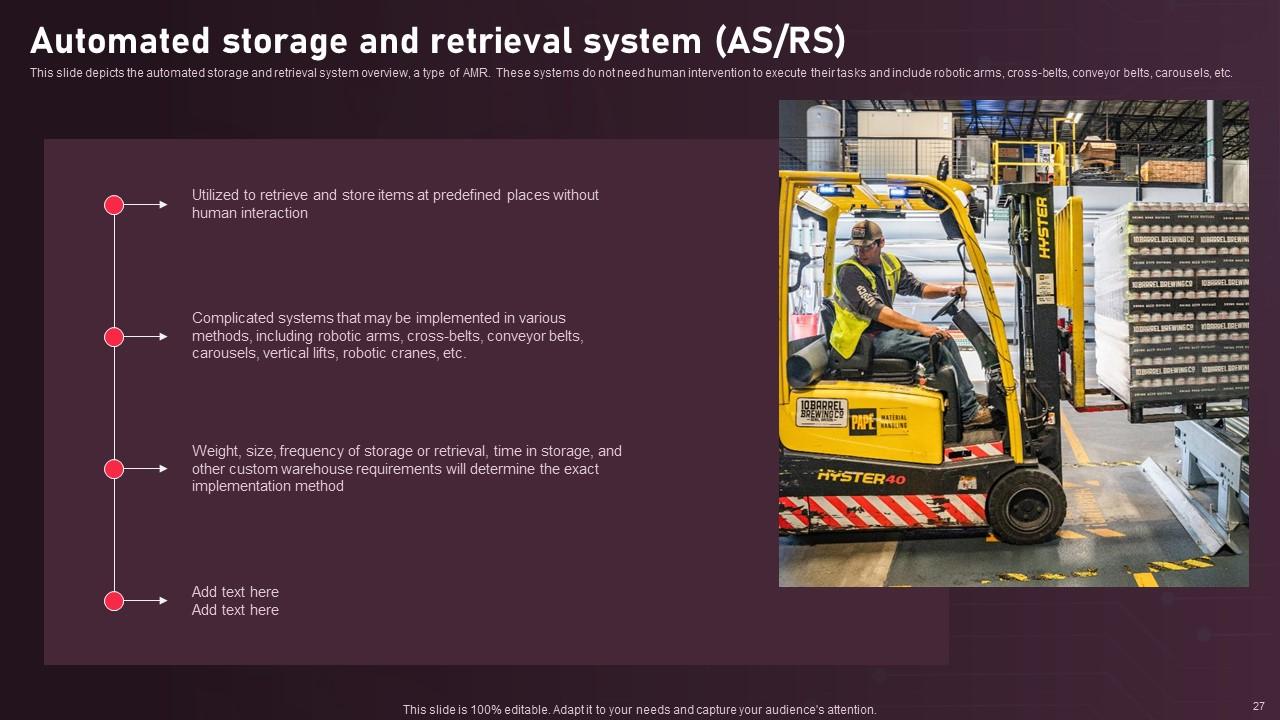
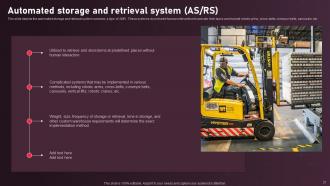
Slide 27: This slide depicts the automated storage and retrieval system overview, a type of AMR.
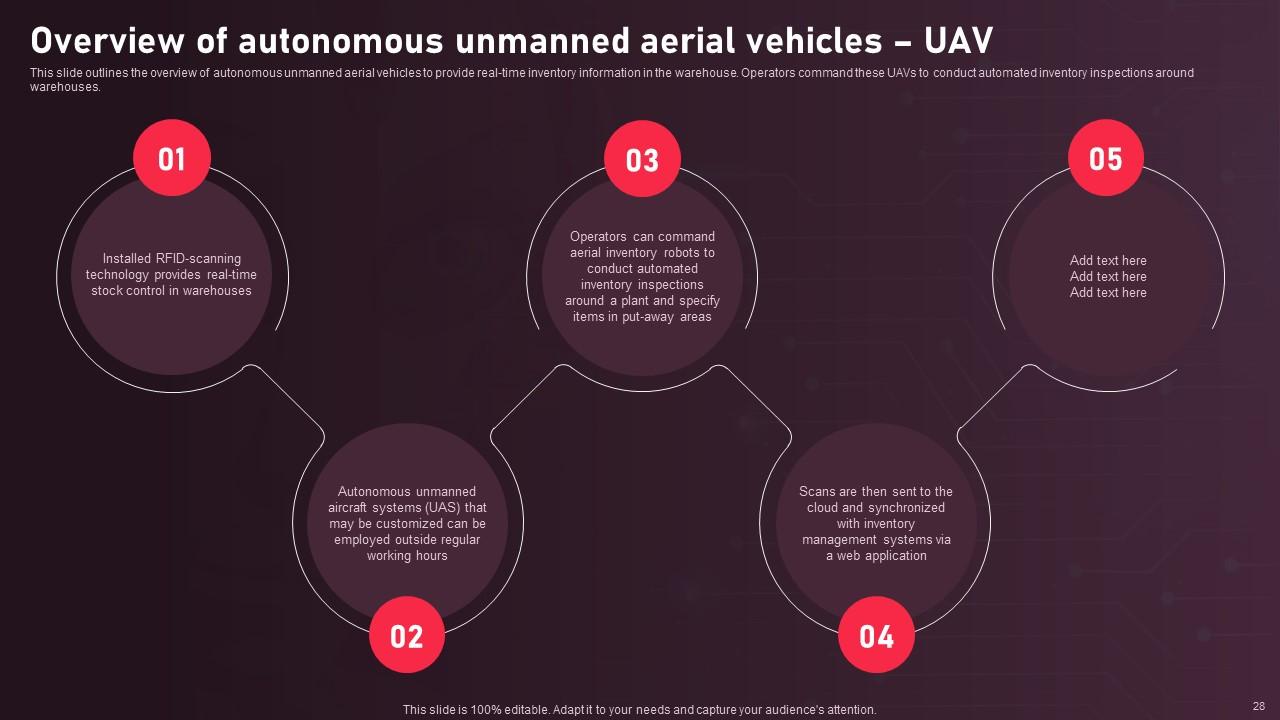
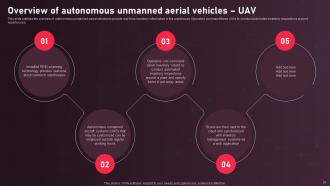
Slide 28: This slide outlines the overview of autonomous unmanned aerial vehicles to provide real-time inventory information in the warehouse.
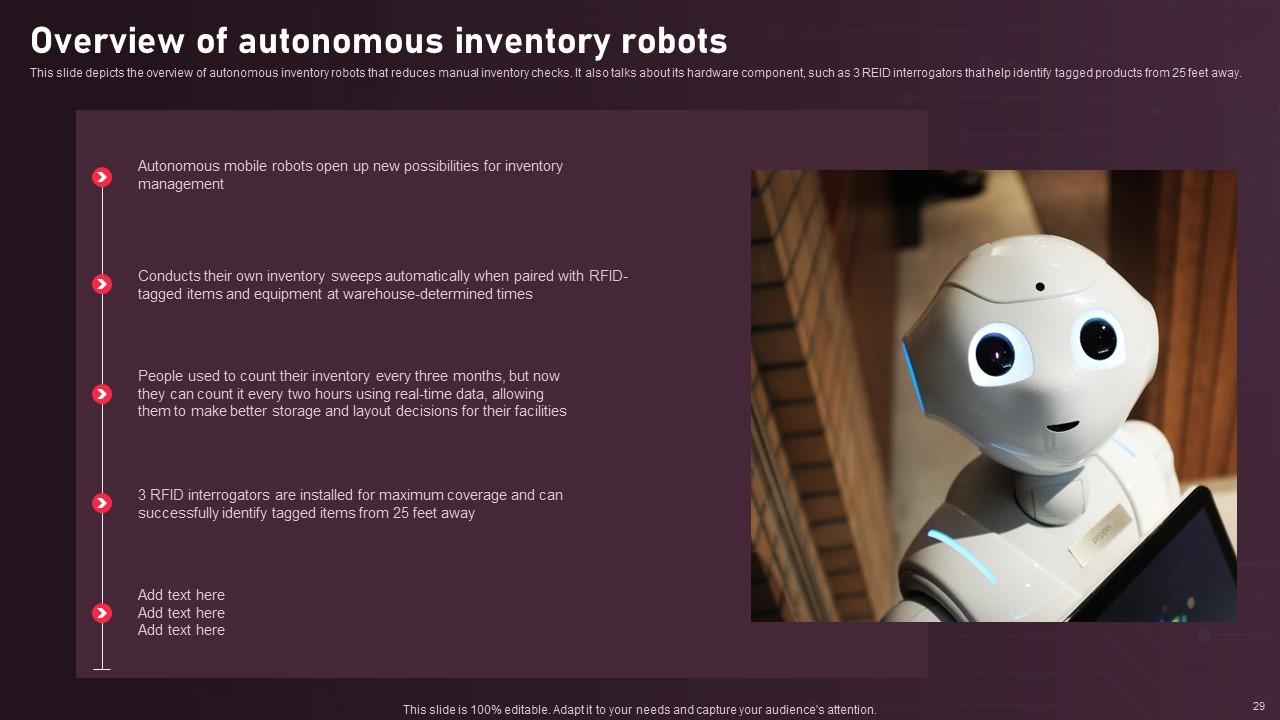
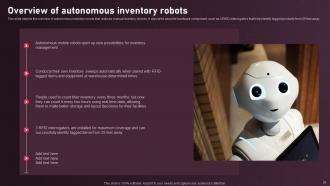
Slide 29: This slide depicts the overview of autonomous inventory robots that reduces manual inventory checks.
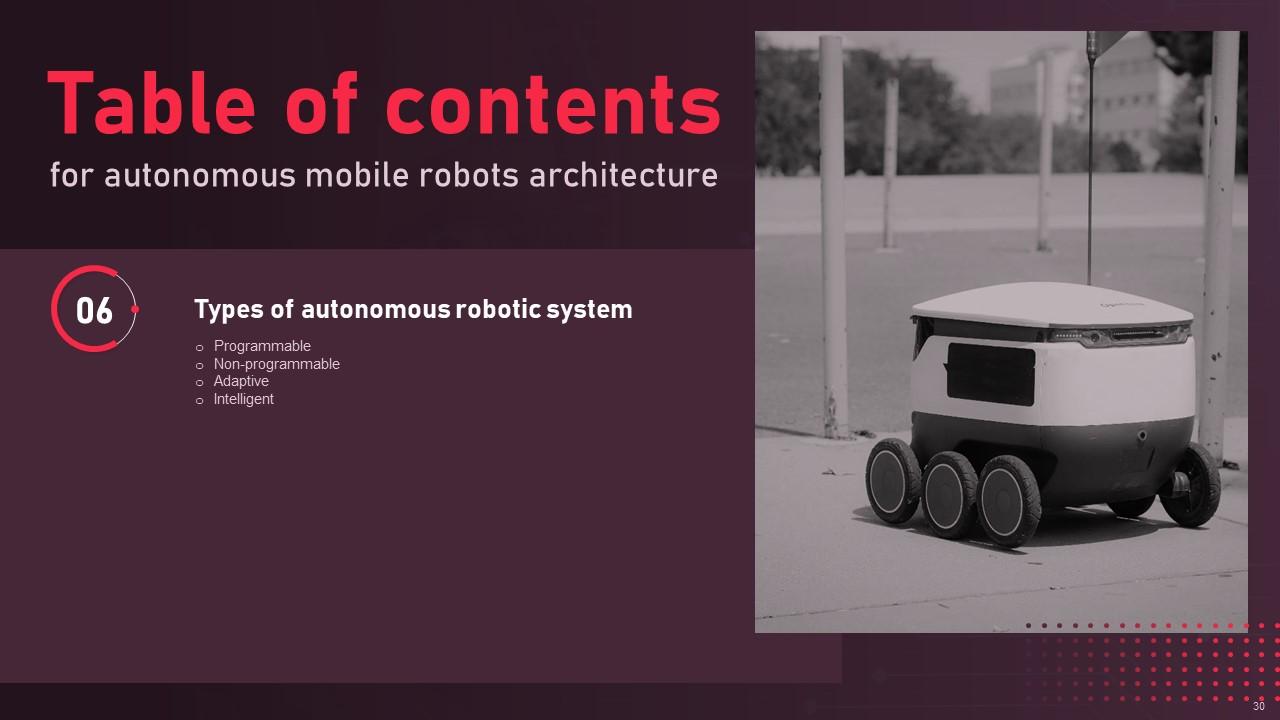
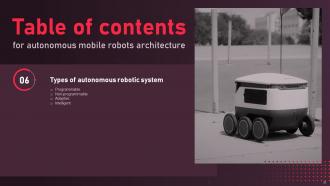
Slide 30: This slide exhibit table of content- Types of autonomous robotic system.
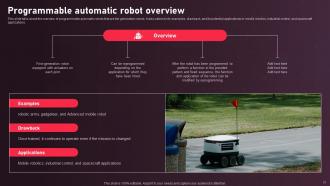
Slide 31: This slide talks about the overview of programmable automatic robots that are fist generation robots.
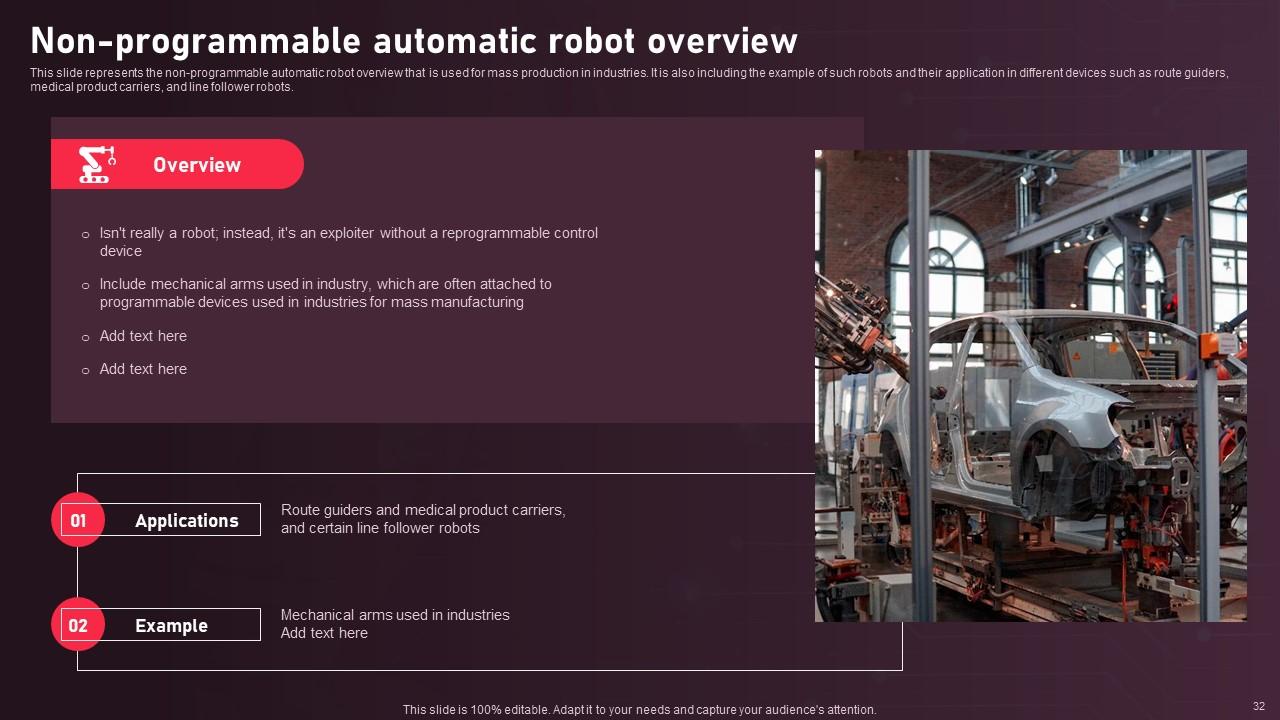
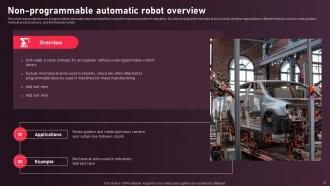
Slide 32: This slide represents the non-programmable automatic robot overview that is used for mass production in industries.
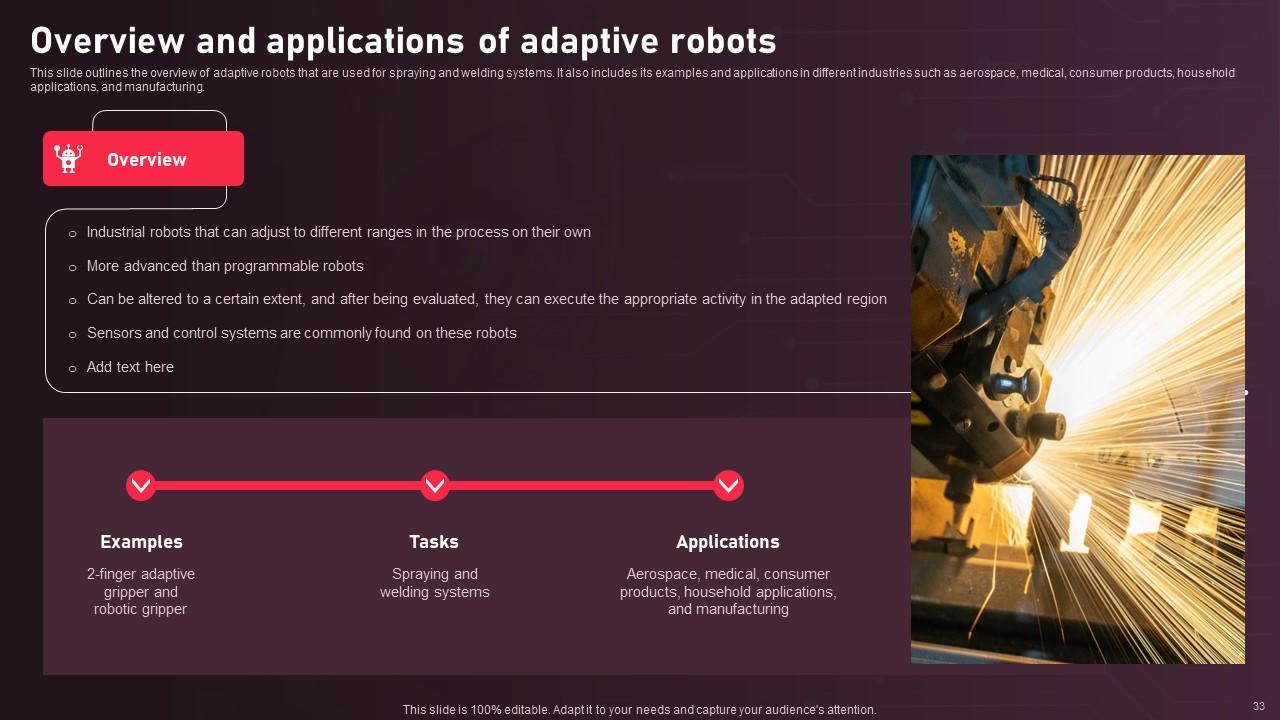
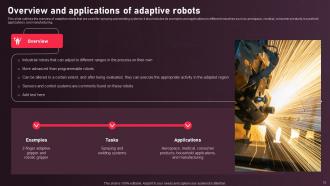
Slide 33: This slide outlines the overview of adaptive robots that are used for spraying and welding systems.
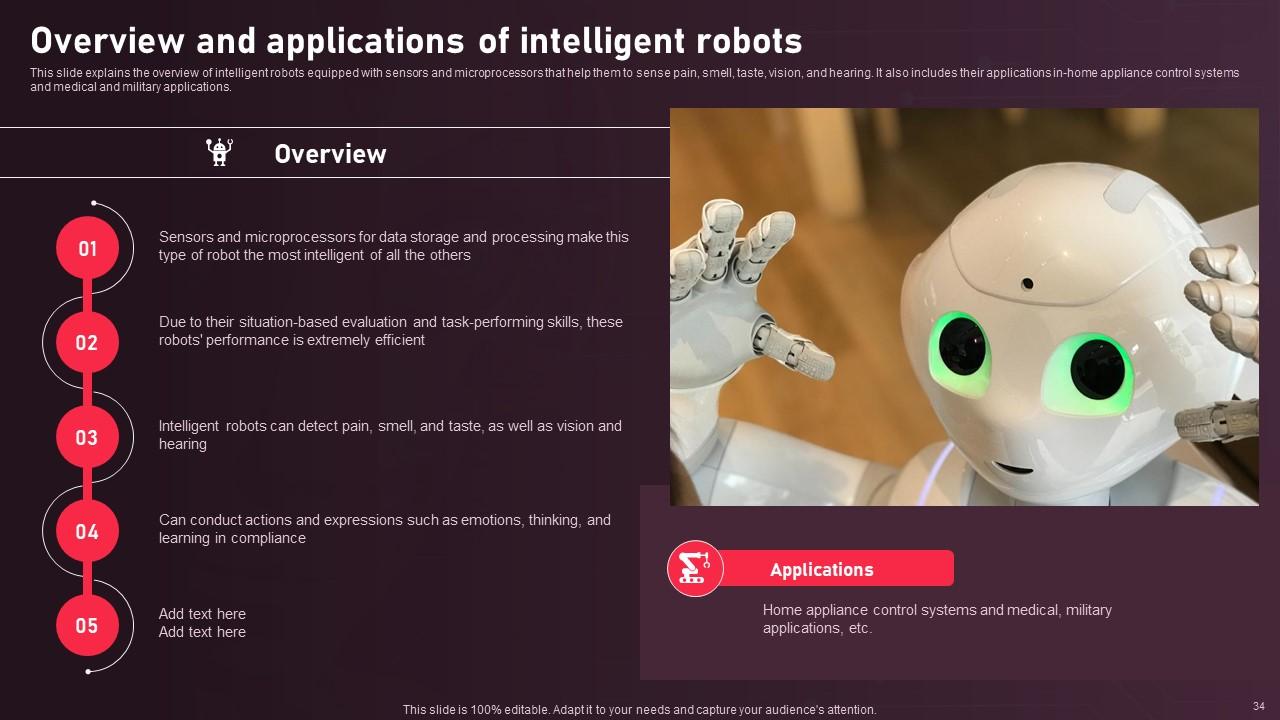
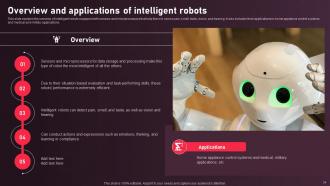
Slide 34: This slide explains the overview of intelligent robots equipped with sensors and microprocessors.
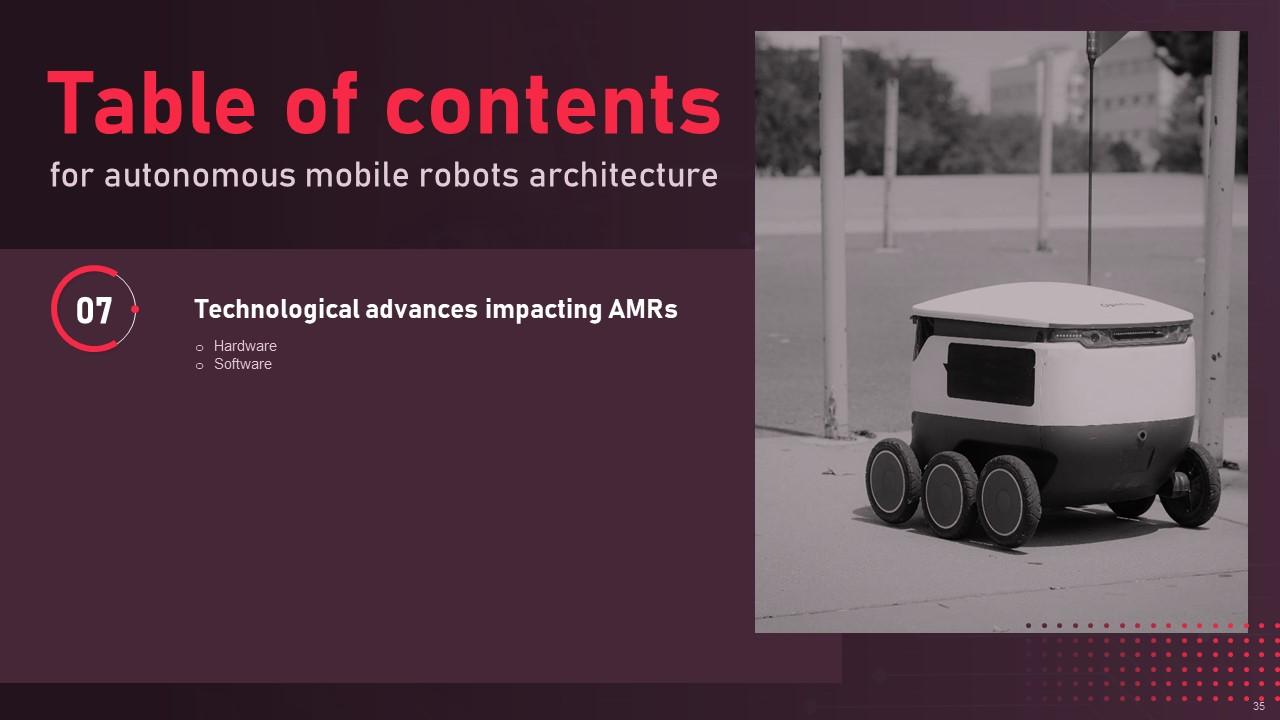
Slide 35: This slide exhibit table of content- Technological advances impacting AMRs.
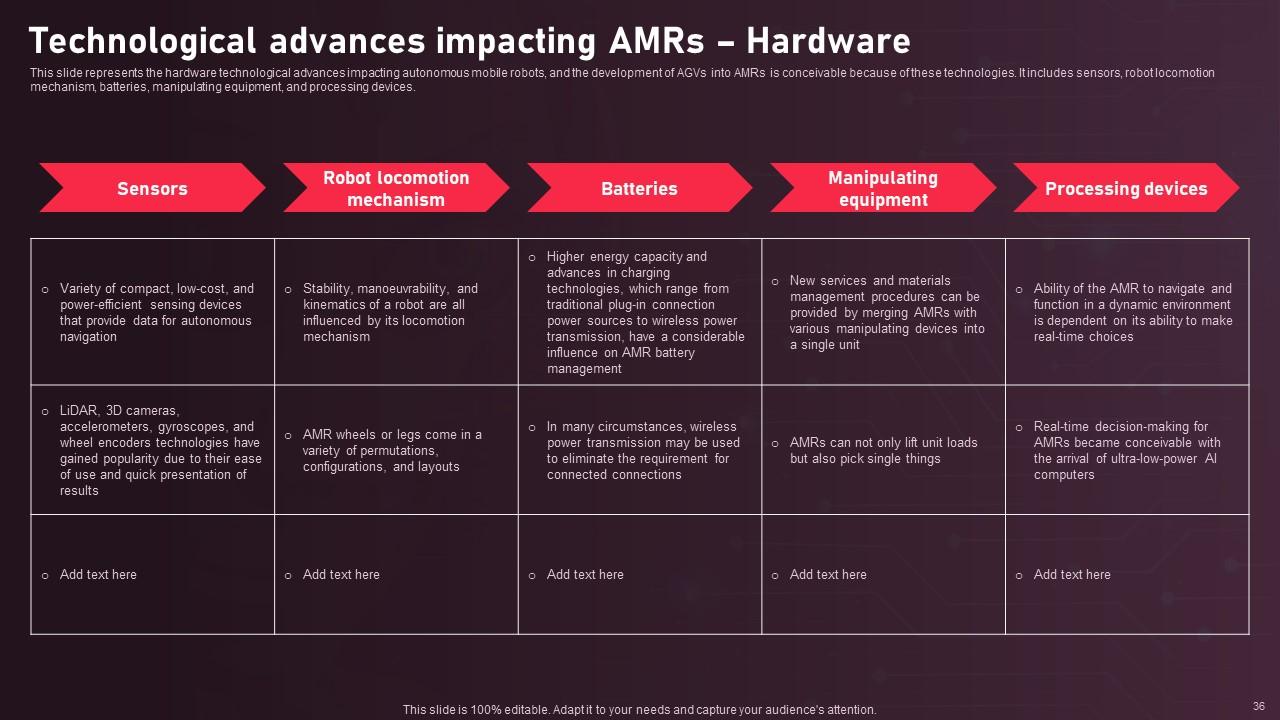
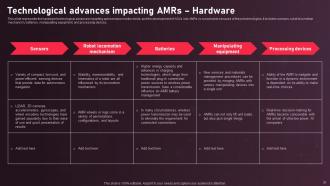
Slide 36: This slide represents the hardware technological advances impacting autonomous mobile robots.
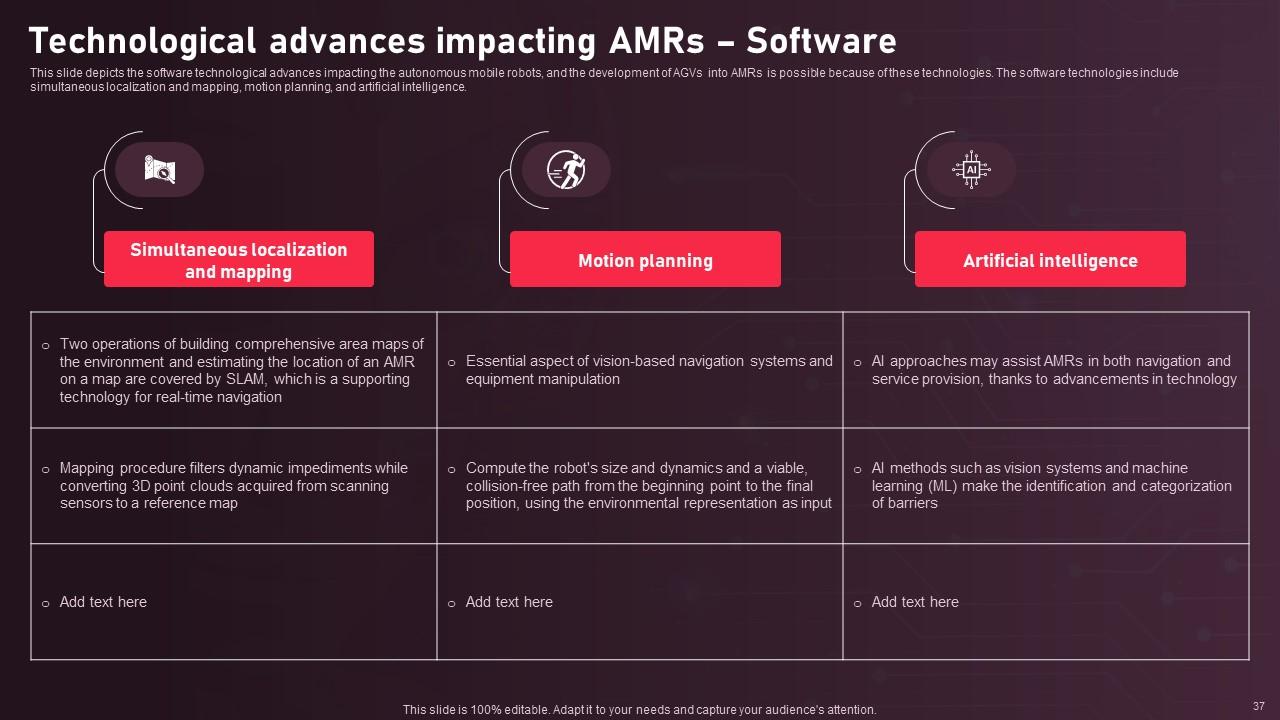
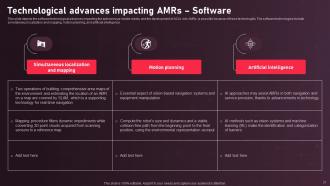
Slide 37: This slide depicts the software technological advances impacting the autonomous mobile robots.
Slide 38: This slide exhibit table of content- AMR safety and fleet manager.
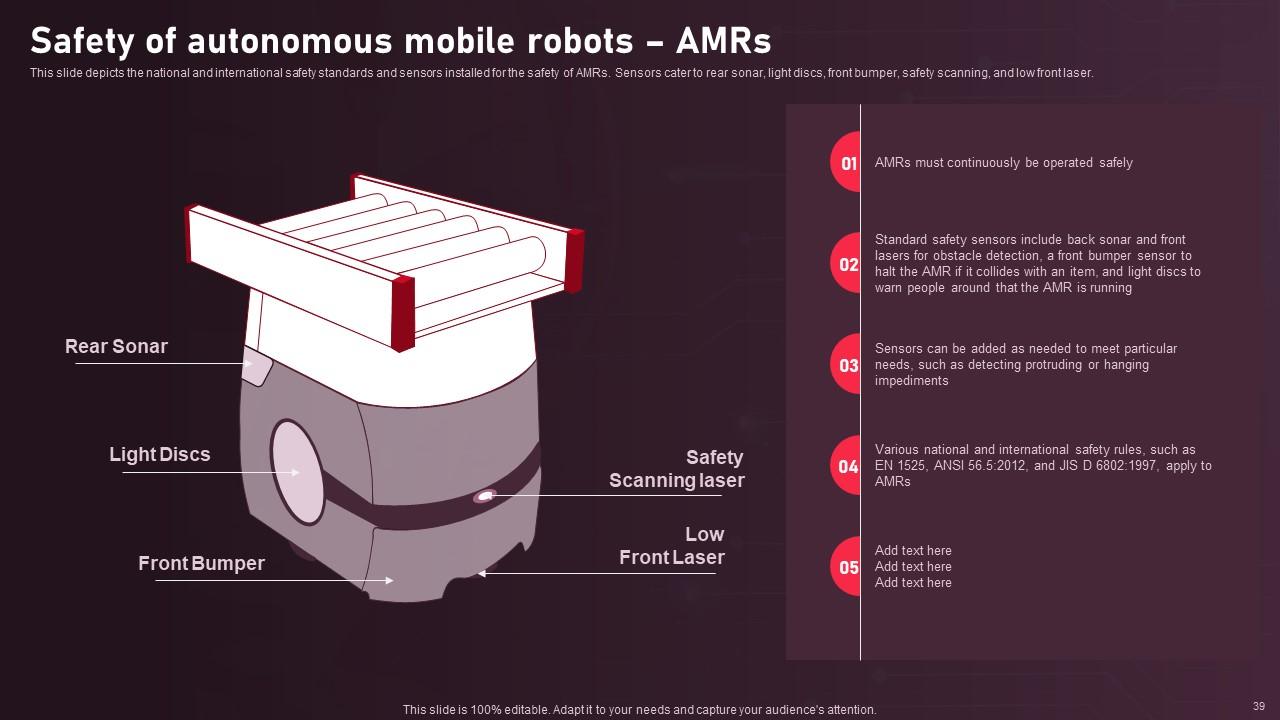
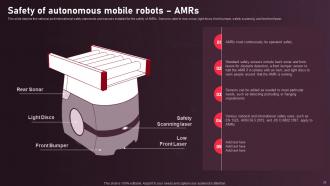
Slide 39: This slide depicts the national and international safety standards and sensors installed for the safety of AMRs.
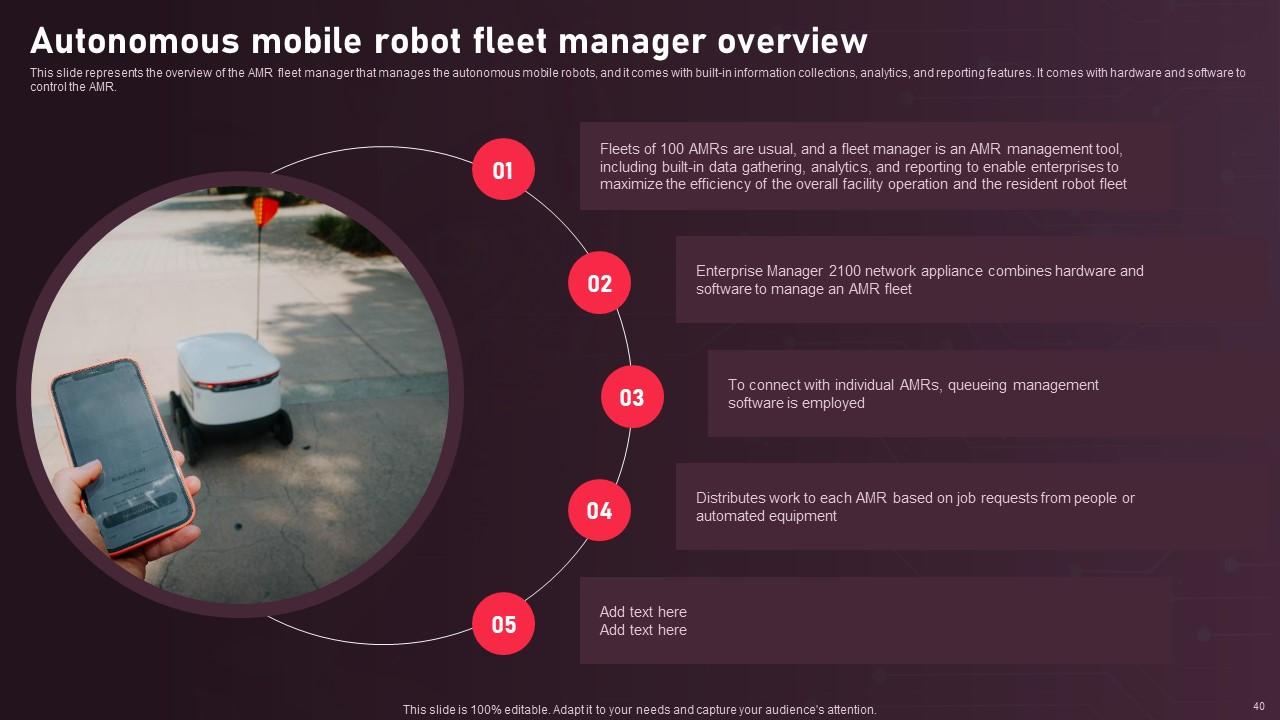
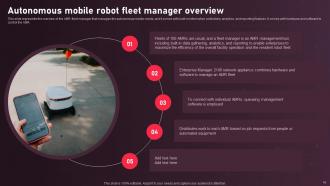
Slide 40: This slide represents the overview of the AMR fleet manager that manages the autonomous mobile robots.
Slide 41: This slide exhibit table of content- Applications of AMRs.
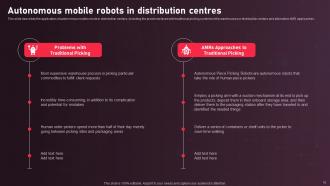
Slide 42: This slide describes the application of autonomous mobile robots in distribution centers.
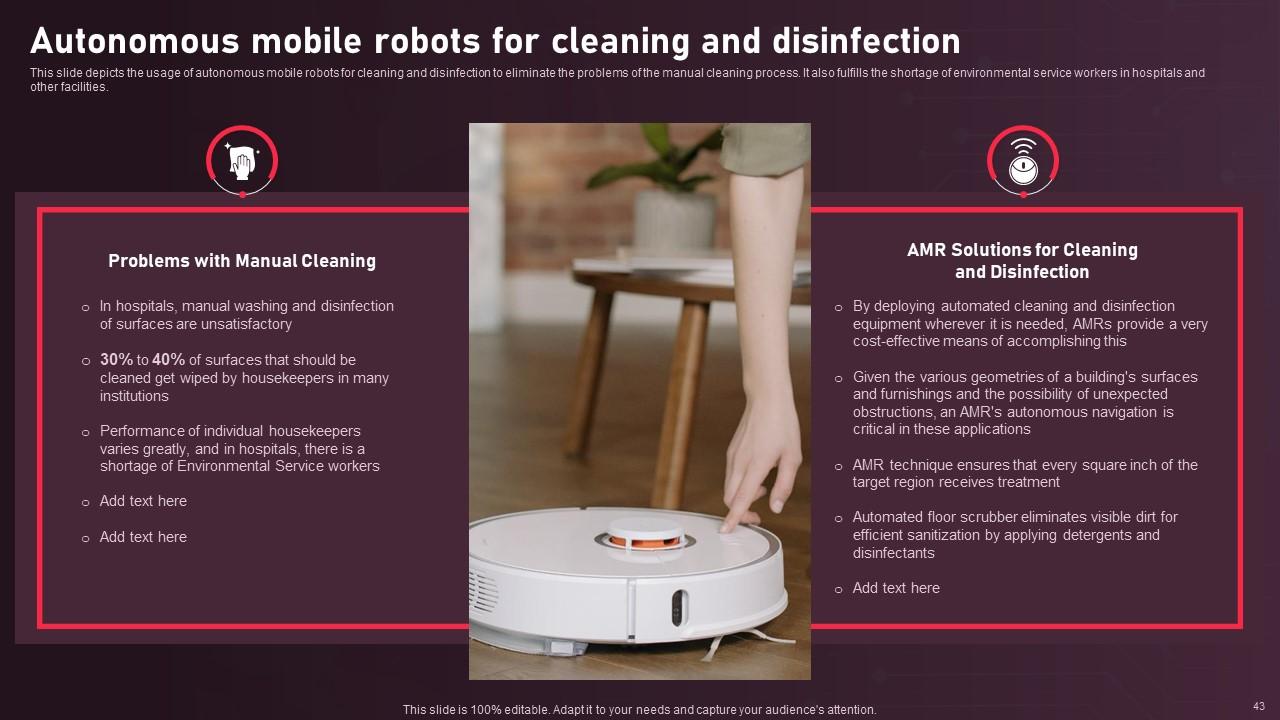
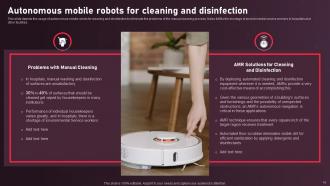
Slide 43: This slide depicts the usage of autonomous mobile robots for cleaning and disinfection to eliminate the problems of the manual cleaning process.
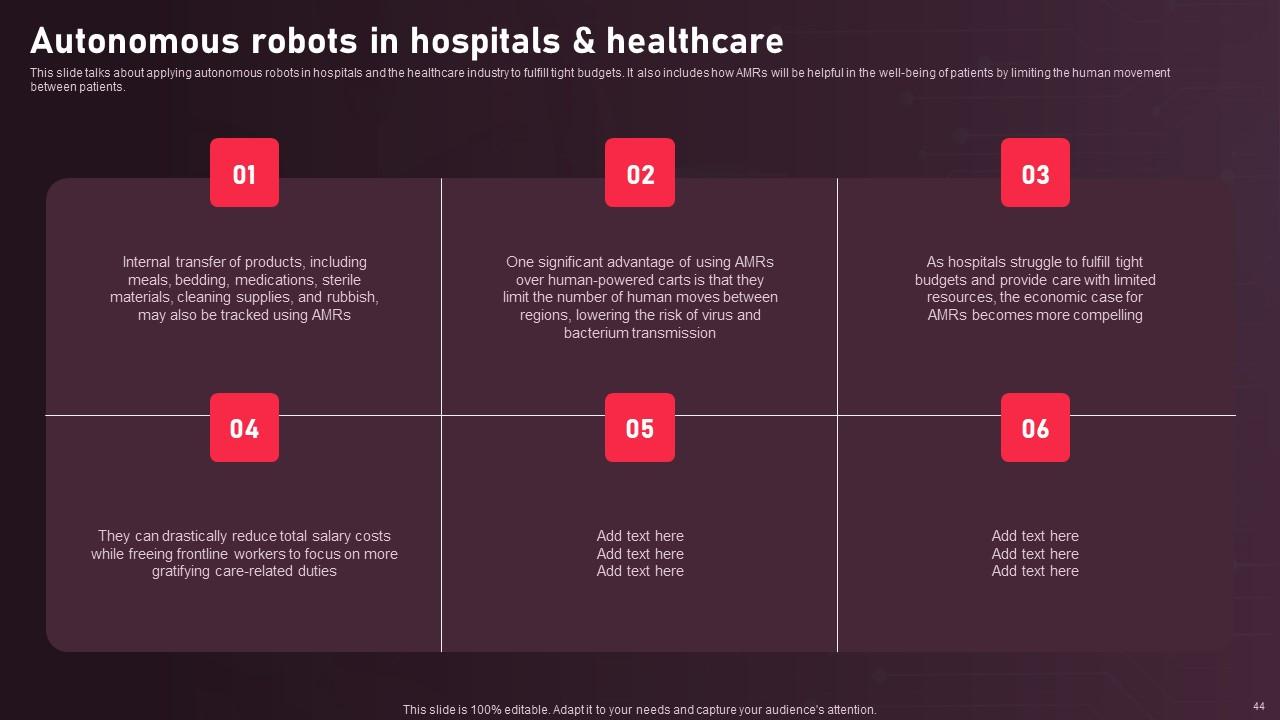
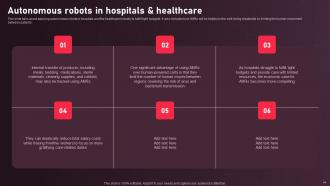
Slide 44: This slide talks about applying autonomous robots in hospitals and the healthcare industry to fulfill tight budgets.
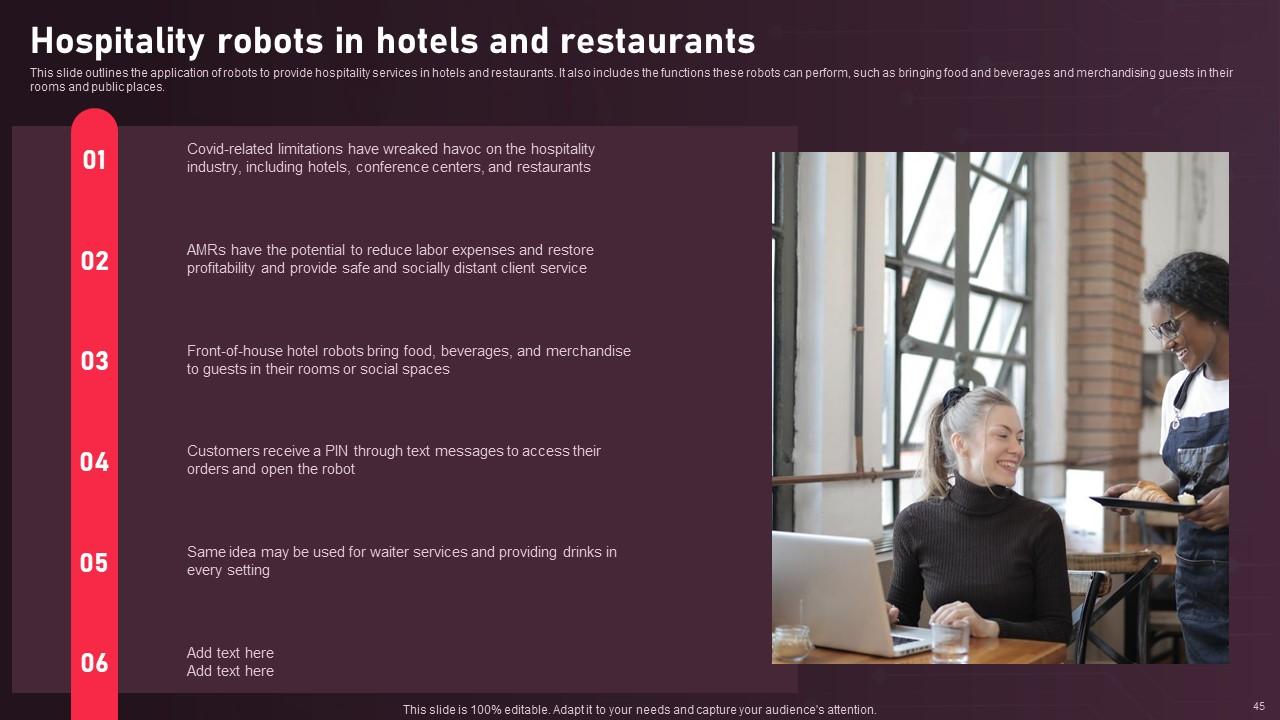
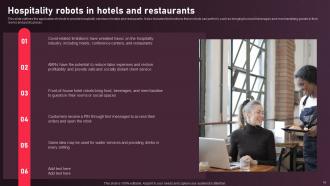
Slide 45: This slide outlines the application of robots to provide hospitality services in hotels and restaurants.
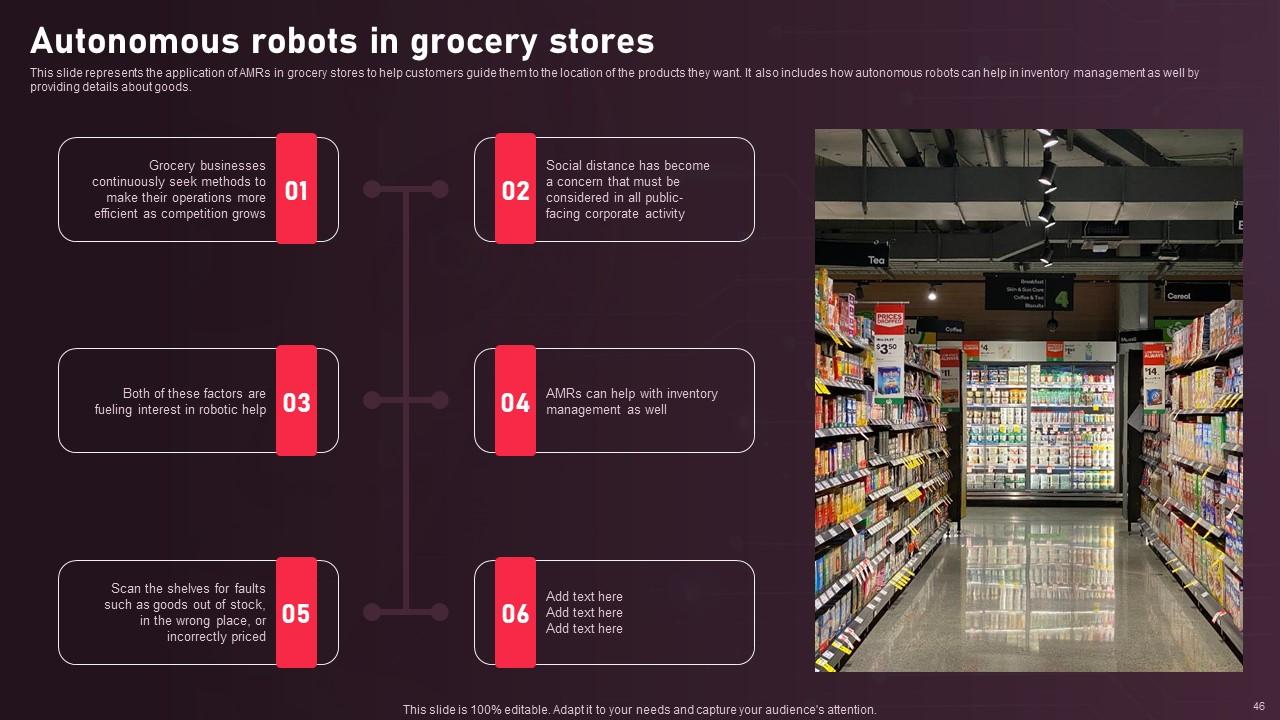
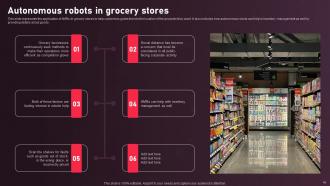
Slide 46: This slide represents the application of AMRs in grocery stores to help customers guide them to the location of the products they want.
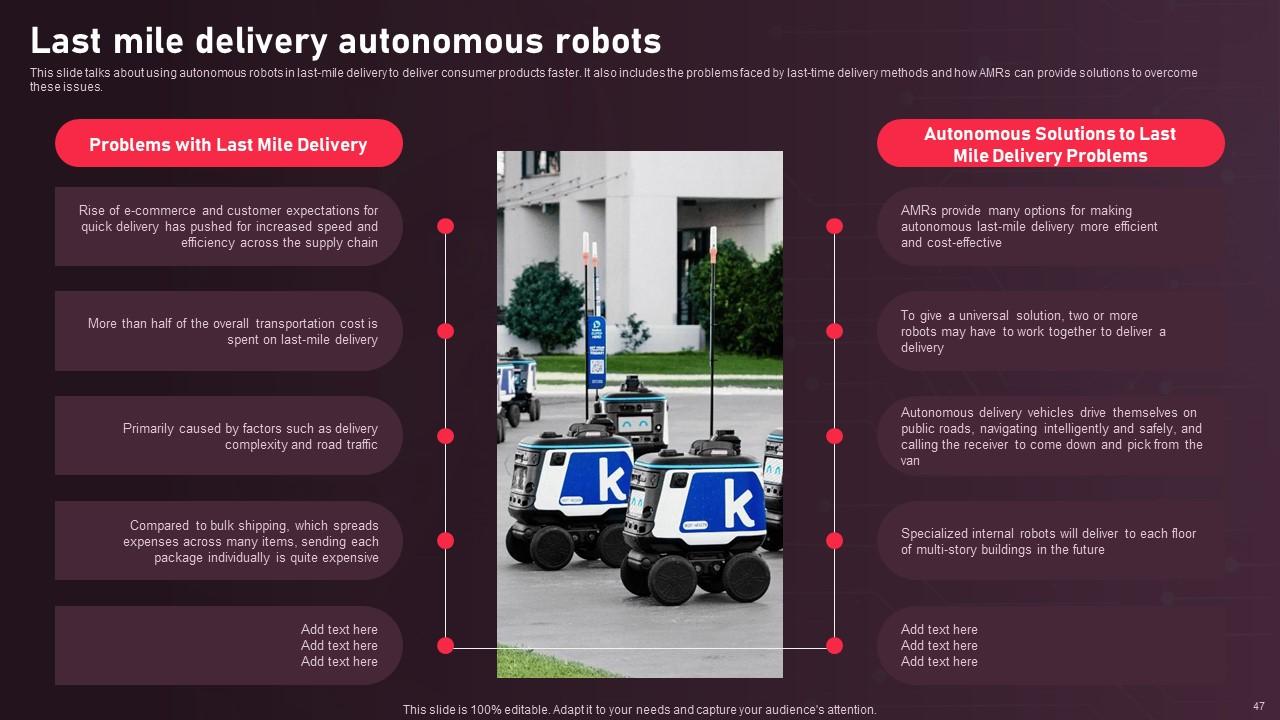
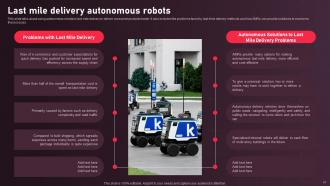
Slide 47: This slide talks about using autonomous robots in last-mile delivery to deliver consumer products faster.
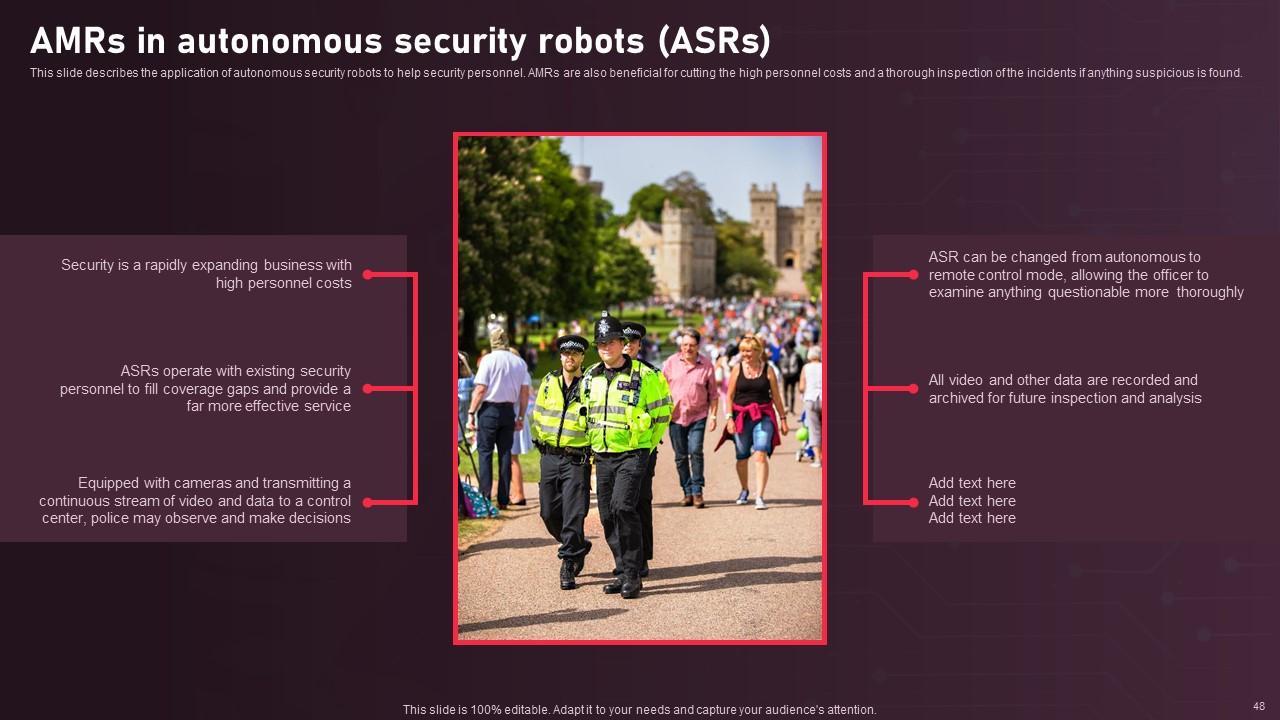
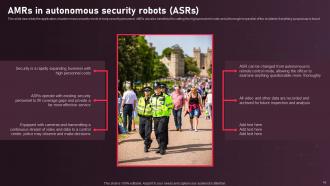
Slide 48: This slide describes the application of autonomous security robots to help security personnel.
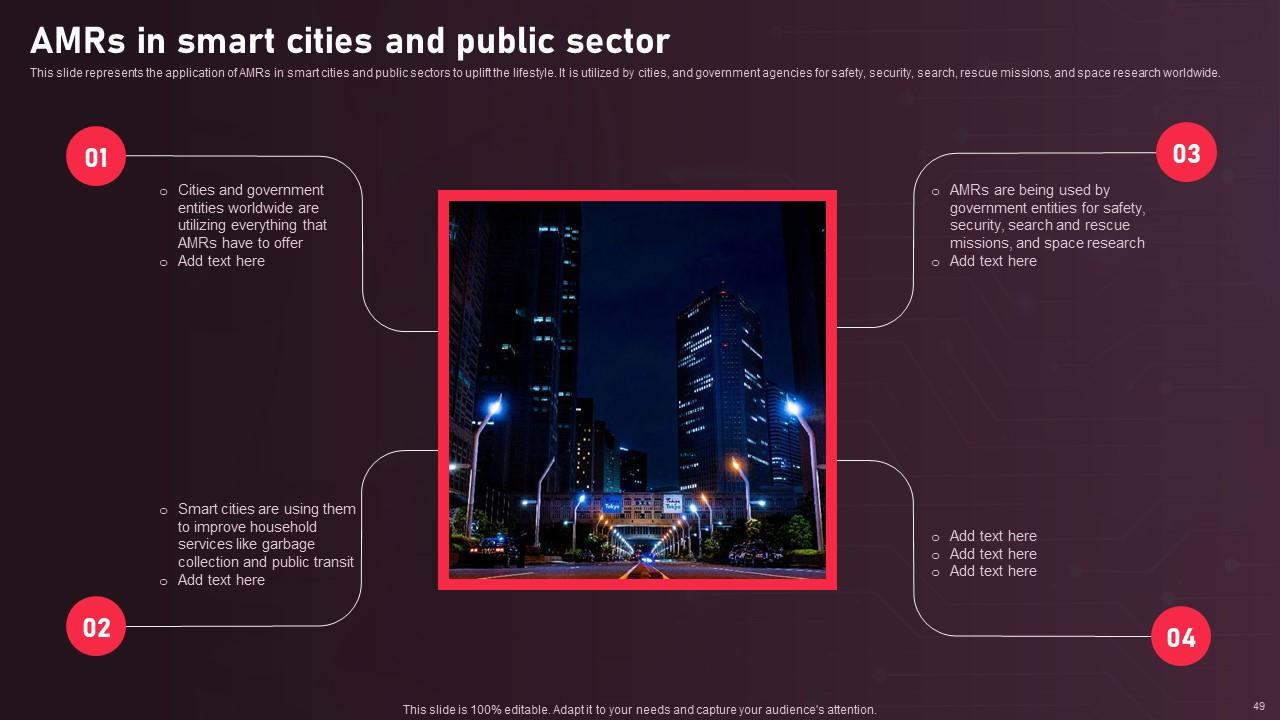
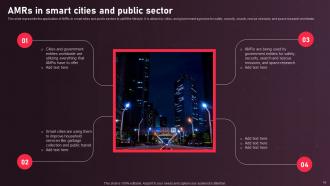
Slide 49: This slide represents the application of AMRs in smart cities and public sectors to uplift the lifestyle.
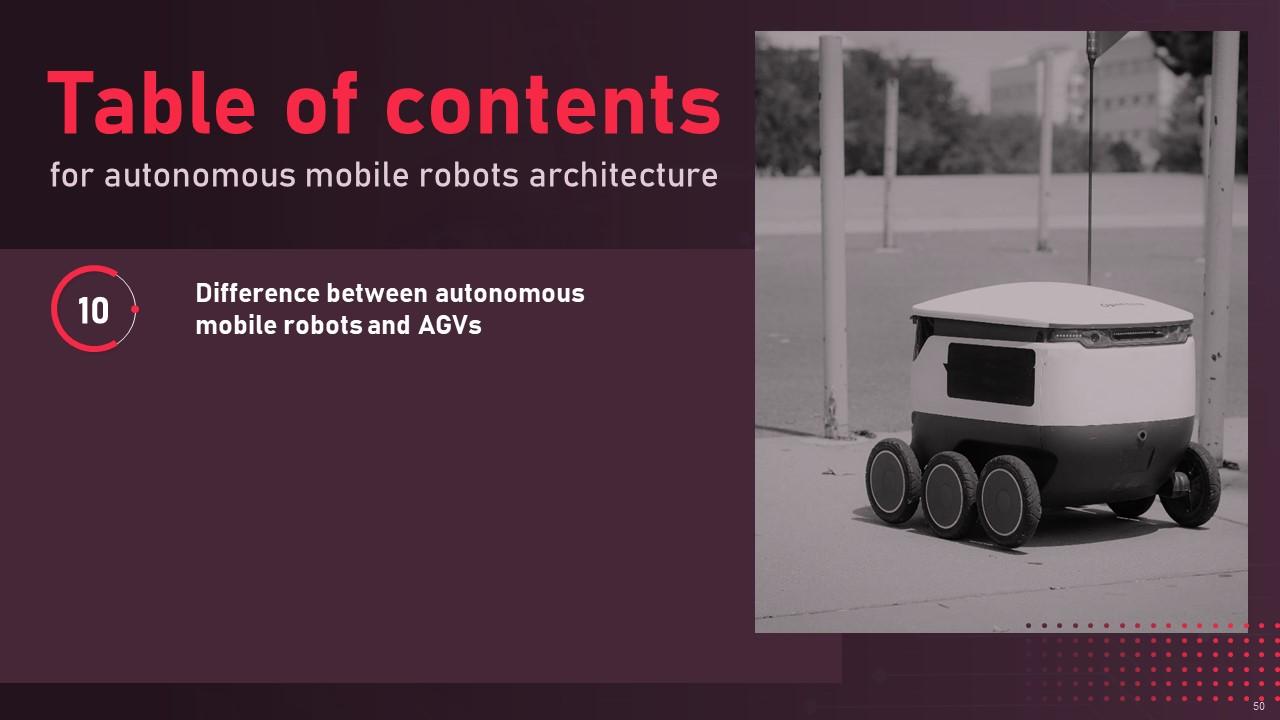
Slide 50: This slide exhibit table of content- Difference between autonomous mobile robots and AGVs.
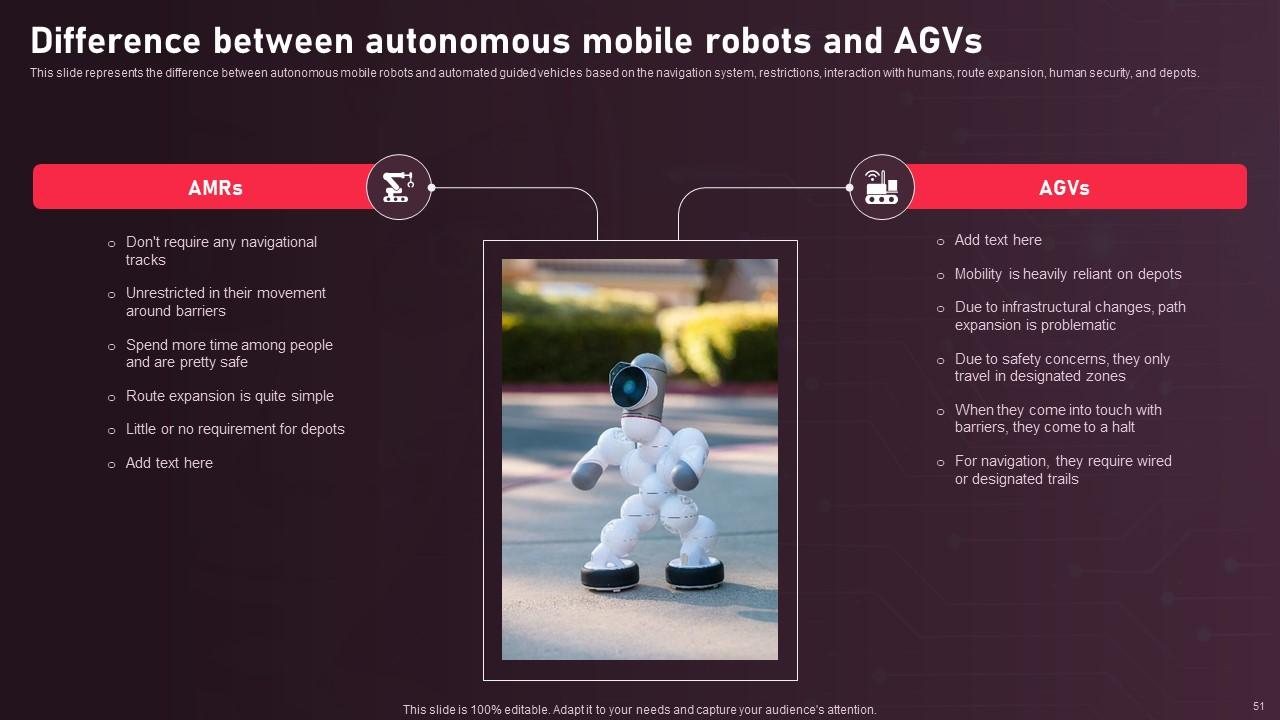
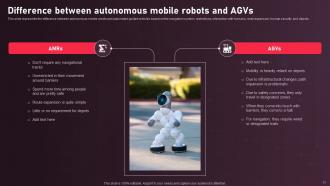
Slide 51: This slide represents the difference between autonomous mobile robots and automated guided vehicles.
Slide 52: This slide exhibit table of content- Pricing for AMRs building and installation.
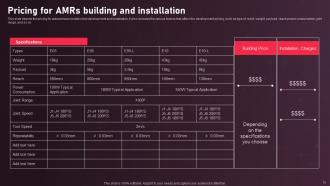
Slide 53: This slide depicts the pricing for autonomous mobile robot development and installation.
Slide 54: This slide exhibit table of content- Timeline for autonomous mobile robots development.
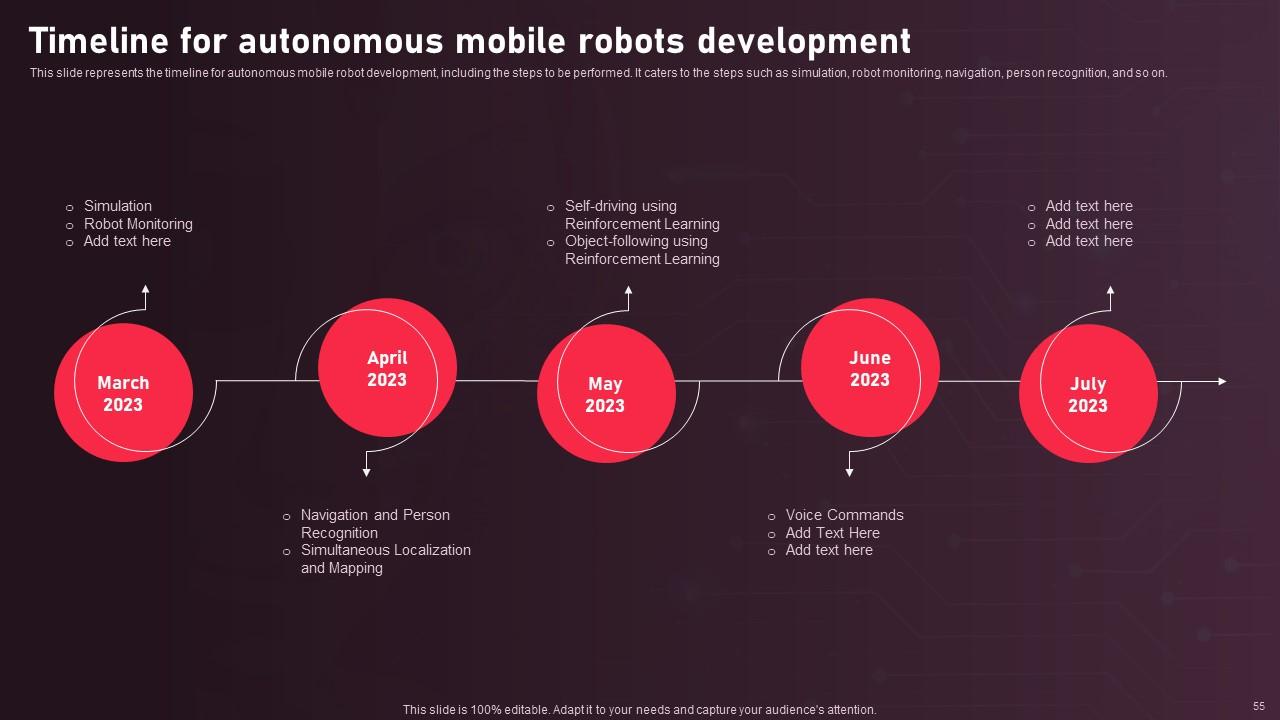
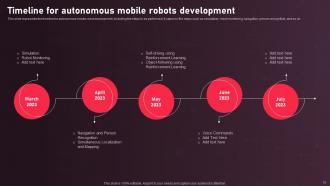
Slide 55: This slide represents the timeline for autonomous mobile robot development, including the steps to be performed.
Slide 56: This slide exhibit table of content- Roadmap for autonomous mobile robots.
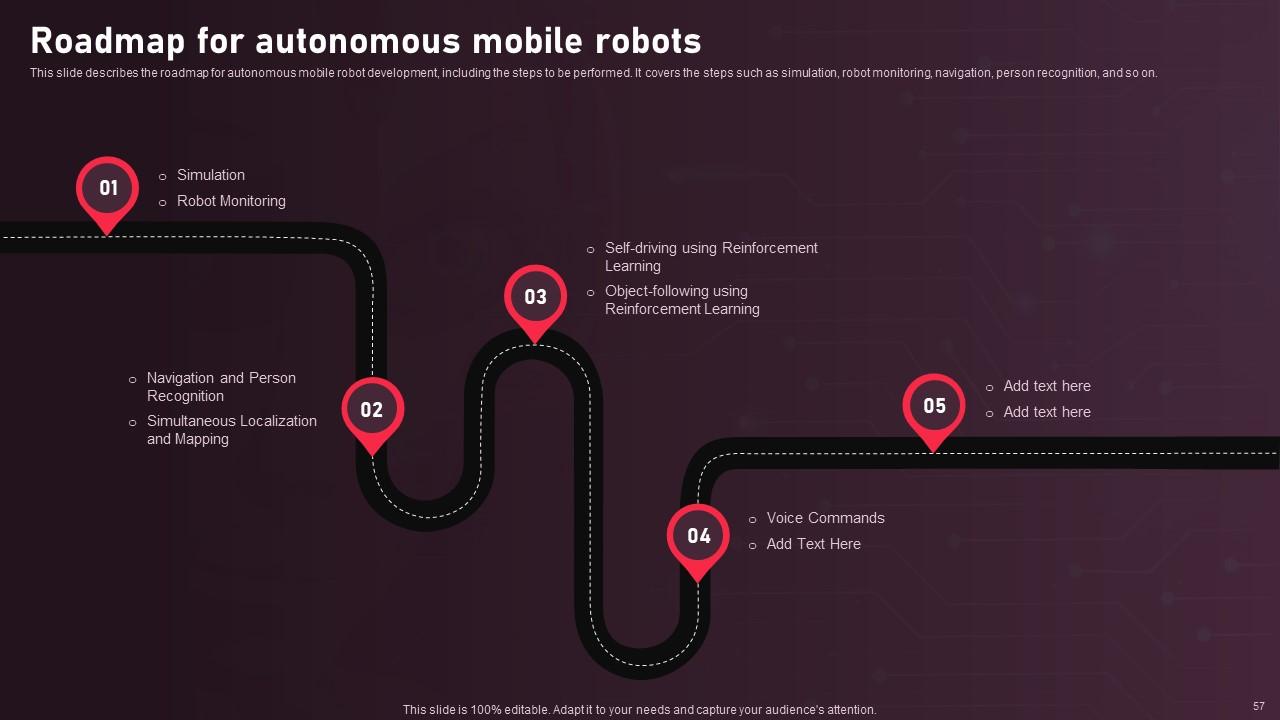
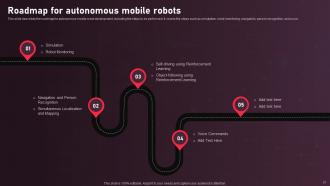
Slide 57: This slide describes the roadmap for autonomous mobile robot development, including the steps to be performed.
Slide 58: This slide exhibit table of content- Dashboard to track autonomous mobile robot performance.
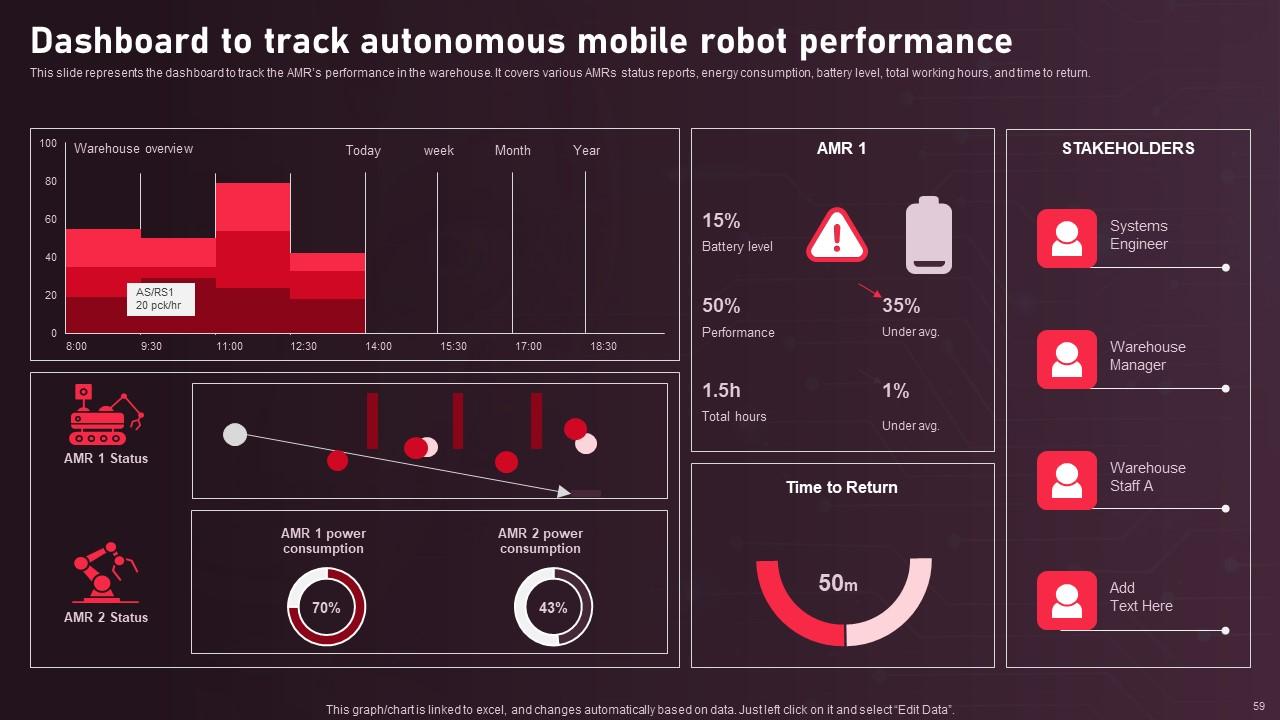
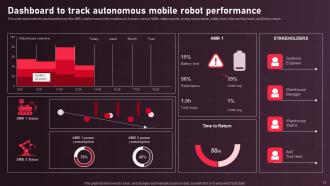
Slide 59: This slide represents the dashboard to track the AMR’s performance in the warehouse.
Slide 60: This slide presents title for additional slides.
Slide 61: This is the icons slide.
Slide 62: This slide display Venn.
Slide 63: This slide shows puzzle for displaying elements of company.
Slide 64: This slide display Mind map.
Slide 65: This slide exhibits ideas generated.
Slide 66: This slide display Magnifying glass.
Slide 67: This slide display Target.
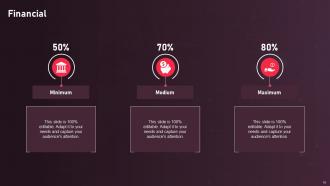
Slide 68: This slide display Financial.
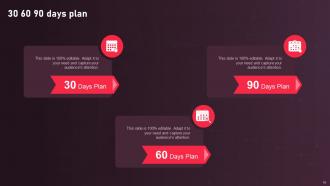
Slide 69: This slide depicts 30-60-90 days plan for projects.
Slide 70: This slide depicts posts for past experiences of clients.
Slide 71: This is thank you slide & contains contact details of company like office address, phone no., etc.
Autonomous Mobile Robots Architecture Powerpoint Presentation Slides with all 80 slides:
Use our Autonomous Mobile Robots Architecture Powerpoint Presentation Slides to effectively help you save your valuable time. They are readymade to fit into any presentation structure.
-
Professional and unique presentations.
-
The best part about SlideTeam is their meticulously prepared presentations (complete-decks and single-slides both), infused with high-quality graphics and easy to edit. All-in-all worthy products.
