


Smart Automation Robotics Technology Transforming Industry With Precision RB




Try Before you Buy Download Free Sample Product
 Impress Your
 Audience
 100%
100% Editable
 Save Hours
 of Time


See the future of industry transformation through our all-encompassing PowerPoint presentation titled Smart Automation Robotics Technology Transforming Industry with Precision. Uncover the historical evolution of robotics technology, tracing its transformative path over time. Gain valuable insights into the market outlook by analyzing the global robotics technology market size, segmentation, growth drivers, and industry innovations reshaping business operations. Moreover, the AI Robotics PPT template delves into the fundamental aspects of robotics technology, exploring types, components, and working mechanisms to offer a holistic understanding of its diverse applications in various sectors. Explore strategies for seamlessly integrating robotics technology in business, addressing key considerations, challenges, and practical solutions. Discover real-world use cases in farming, healthcare, warehousing, manufacturing, and intelligent cities, showcasing the versatility of robotics. Assess the broader impact of robotics technology across industries with a comprehensive ROI analysis. Additionally, the Collaborative Robots Technology PPT templates also spotlight future trends, advancements in AI applications, soft robotics, swarm robotics, and the potential of bio-inspired technologies. Explore case studies demonstrating seamless robotic automation, the convergence of large-scale robotics and digital technologies, and safe human-robot interaction in medical robotics.
People who downloaded this PowerPoint presentation also viewed the following :
Content of this Powerpoint Presentation
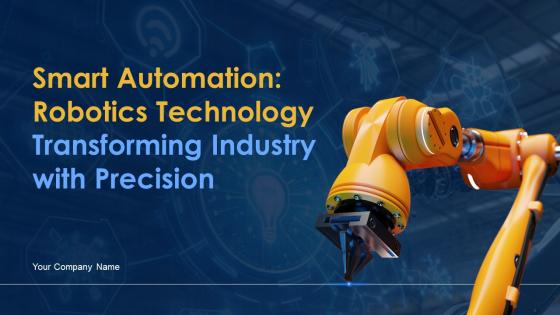
Slide 1: This slide introduces Smart Automation: Robotics Technology Transforming Industry with Precision. State your company name and begin.
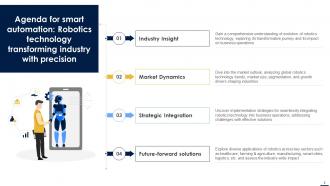
Slide 2: This is an Agenda slide. State your agendas here.
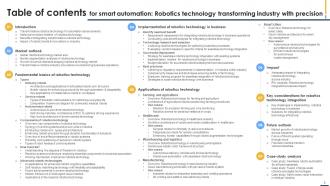
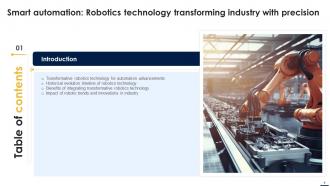
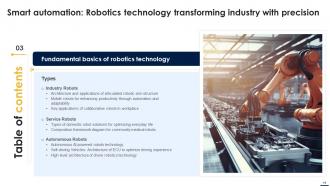
Slide 3: This slide shows Table of Content for the presentation.
Slide 4: This slide shows title for topics that are to be covered next in the template.
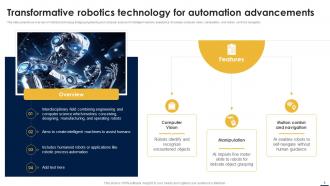
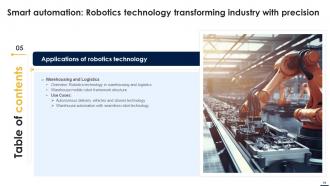
Slide 5: This slide presents an overview of robotics technology bridging engineering and computer science for intelligent machine assistance.
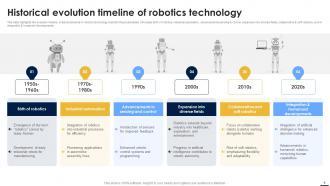
Slide 6: This slide highlights the evolution timeline of advancements in robotics technology transforming businesses. It includes birth of robotics, industrial automation etc.
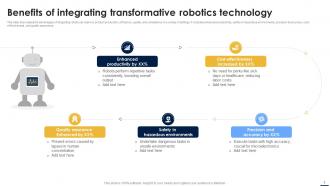
Slide 7: This slide showcases the advantages of integrating robots can improve product production, efficiency, quality, and consistency in a variety of settings.
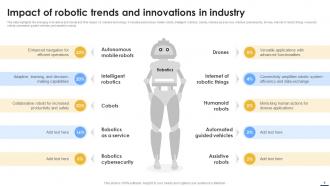
Slide 8: This slide highlights the emerging innovations and trends and their impact on robotics technology. It includes autonomous mobile robots, intelligent robotics, cobots etc.
Slide 9: This slide shows title for topics that are to be covered next in the template.
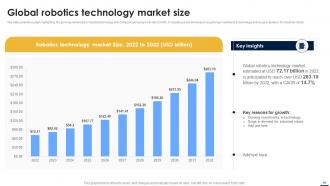
Slide 10: This slide presents a graph highlighting the growing market size of robotics technology with compound annual growth rate (CAGR).
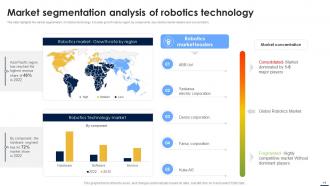
Slide 11: This slide highlights the market segmentation of robotics technology. It include growth rate by region, by components, key robotics market leaders and concentration.
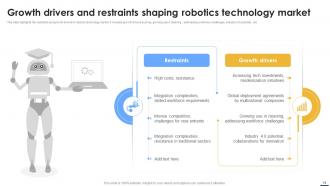
Slide 12: This slide presents the restraints and growth drivers in robotics technology market. It includes growth drivers such as, growing use in cleaning etc.
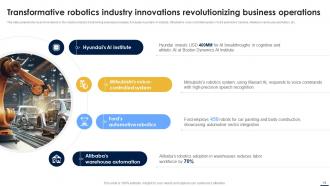
Slide 13: This slide displays the recent innovations in the robotics industry transforming business processes. It includes Hyundai’s AI institute, Mitsubishi’s voice-controlled system etc.
Slide 14: This slide shows title for topics that are to be covered next in the template.
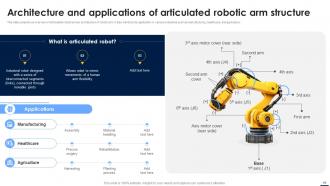
Slide 15: This slide presents an overview of articulated robots and an architecture of robotic arm. It also mentions its application in various industries such as manufacturing etc.
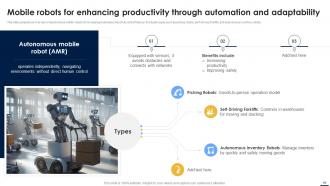
Slide 16: This slide displays an overview of autonomous mobile robots for increasing business productivity and efficiency. It includes types such as picking robots etc.
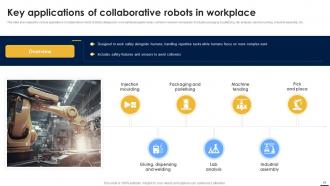
Slide 17: This slide showcases the various applications of collaborative robots (Cobots) designed to work safely alongside human workers in shared workspaces.
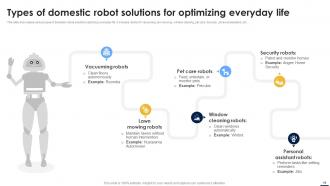
Slide 18: This slide displays various types of domestic robots solutions optimizing everyday life. It includes robots for vacuuming, law mowing, window cleaning, pet care.
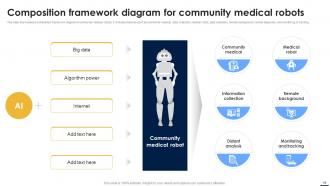
Slide 19: This slide showcases a composition framework diagram of community medical robots. It includes features such as community medical, data collection, medical robot etc.
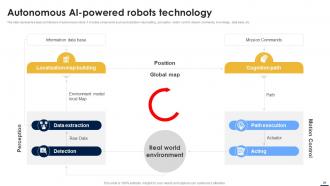
Slide 20: This slide represents a basic architecture of autonomous robots. It includes components such as localization map building, perception, motion control, mission commands etc.
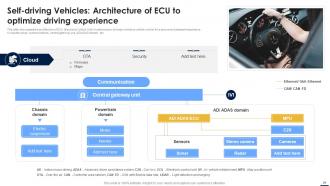
Slide 21: This slide showcases the architecture of ECU (Electronic Control Unit) in autonomous driving to enhance vehicle control for a secure and pleasant experience.
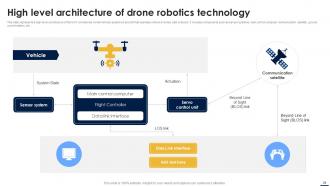
Slide 22: This slide represents a high-level architecture of the UAV (Unmanned Aerial Vehicle) system an aircraft that operates without a human pilot onboard.
Slide 23: This slide shows title for topics that are to be covered next in the template.
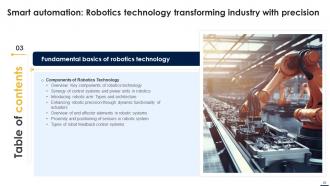
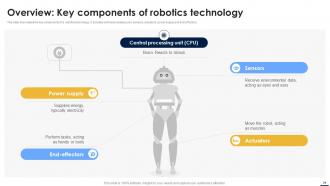
Slide 24: This slide showcases the key components of a robotics technology. It includes central processing unit, sensors, actuators, power supply and end-effectors.
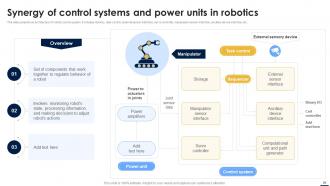
Slide 25: This slide presents an architecture of robotic control system. It includes memory, task control, external sensor interface, servo controller etc.
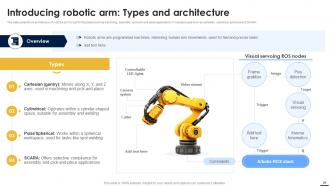
Slide 26: This slide presents an architecture of robotics arm for performing tasks such as machining, assembly, and pick-and-place applications.
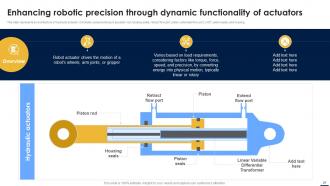
Slide 27: This slide represents an architecture of hydraulic actuator. It includes components such as piston rod, housing seals, retract flow port, piston etc.
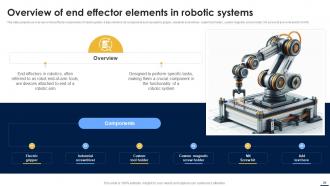
Slide 28: This slide presents an overview of end effector components of robotic system. It also mentions its components such as electric gripper, industrial screwdriver etc.
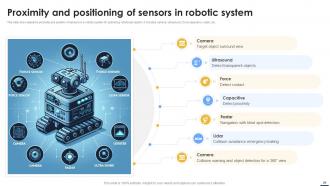
Slide 29: This slide showcases the proximity and position of sensors in a robotic system for optimizing robots perception. It includes camera, ultrasound, force capacitive etc.
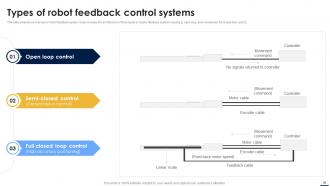
Slide 30: This slide presents an overview of robot feedback system. It also includes the architecture of three types of robotic feedback system including g, open loop etc.
Slide 31: This slide shows title for topics that are to be covered next in the template.
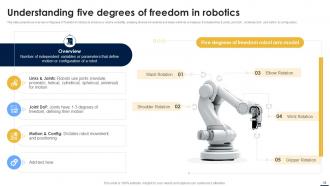
Slide 32: This slide presents an overview of degrees of freedom in robotics to enhance a robot's versatility, enabling diverse movements and tasks within its workspace.
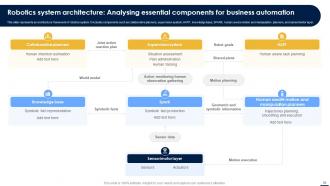
Slide 33: This slide represents an architecture framework of robotics system. It includes components such as collaborative planners, supervision system, HATP etc.
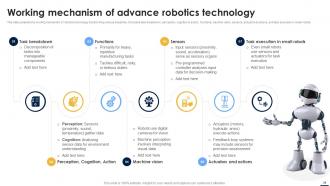
Slide 34: This slide presents the working mechanism of robotics technology transforming various industries. It includes task breakdown, perception, cognition & action etc.
Slide 35: This slide shows title for topics that are to be covered next in the template.
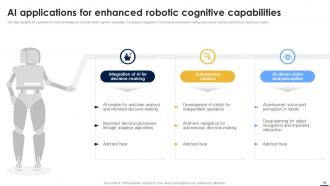
Slide 36: This slide highlights the applications of artificial intelligence to boost robotic cognitive capabilities.
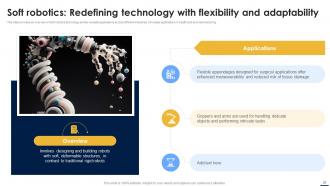
Slide 37: This slide provides an overview of soft robotics technology and its versatile applications across different industries.
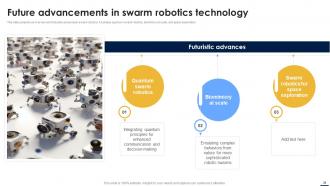
Slide 38: This slide presents an overview and futuristic advances in swarm robotics. It includes quantum swarm robotics, biomimicry at scale, and space exploration.
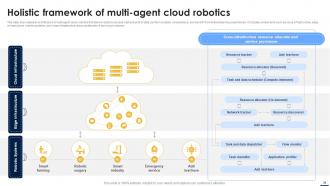
Slide 39: This slide showcases an architecture of multi-agent cloud robotics that allows robots to access vast amounts of data, perform complex computations etc.
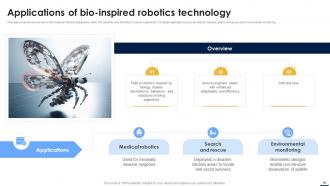
Slide 40: This slide presents an overview of bio-inspired robotics designed to mimic the dexterity and flexibility of natural organisms.
Slide 41: This slide shows title for topics that are to be covered next in the template.
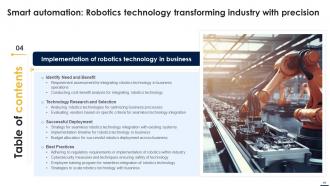
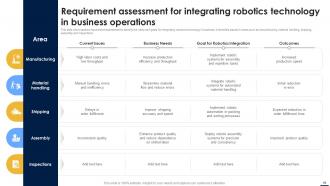
Slide 42: This slide showcases a requirement assessment to identify the need and goals for integrating robotics technology in business.
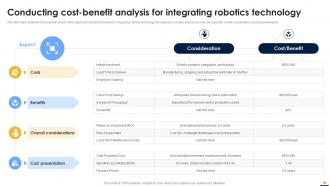
Slide 43: This slide helps understand the potential scope of the project and cost benefit analysis of integrating robotics technology into business.
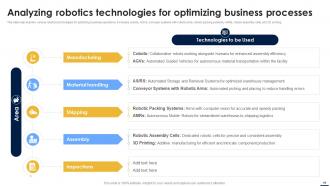
Slide 44: This slide help examine various robotics technologies for optimizing business operations. It includes cobots, AGVs, conveyor systems with robotic arms etc.
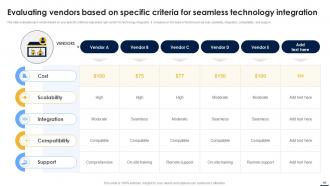
Slide 45: This slide evaluates each vendor based on your specific criteria to help select right vendor for technology integration.
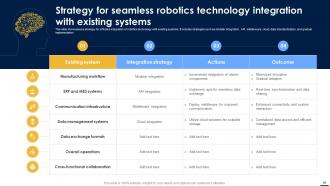
Slide 46: This slide showcases a strategy for effective integration of robotics technology with existing systems. It includes strategies such as modular integration, API, middleware etc.
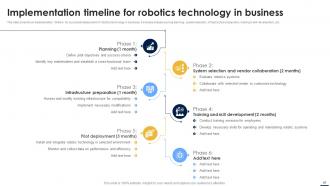
Slide 47: This slide presents an implementation timeline for successful deployment of robotics technology in business. It includes phases such as planning, system selection etc.
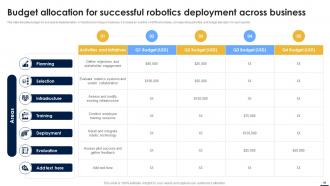
Slide 48: This slide allocates budget for successful implementation of robotics technology in business. it includes an ooutline of different phases, corresponding activities etc.
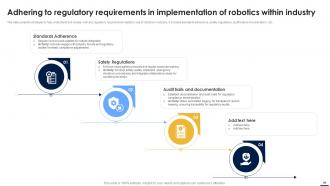
Slide 49: This slide presents strategies to help understand and comply with any regulatory requirements related to use of robotics in industry.
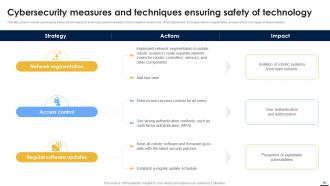
Slide 50: This slide displays various cybersecurity measures techniques for ensuring to ensure the safety of technologies involved in the robotic deployment.
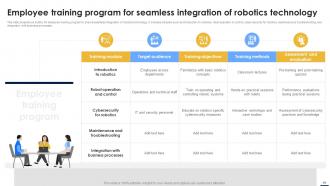
Slide 51: This slide presents an outline for employee training program to ensure seamless integration of robotics technology.
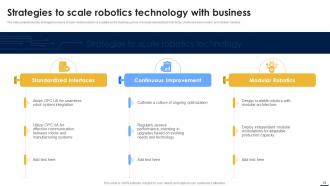
Slide 52: This slide displays the key strategies to ensure chosen robotics solution is scalable as the business grows. It includes standardized interfaces, continuous improvement etc.
Slide 53: This slide shows title for topics that are to be covered next in the template.
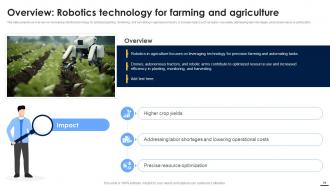
Slide 54: This slide presents an overview on harnessing robotics technology for optimized planting, monitoring, and harvesting in agriculture industry.
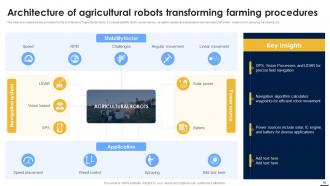
Slide 55: This slide showcases the key principles for the architecture of agricultural robots. It includes stability factor, power source, navigation system etc.
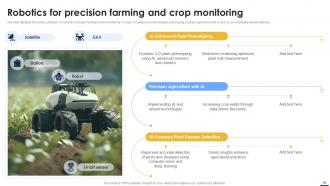
Slide 56: This slide highlights the primary utilization of robotics in precision farming and the monitoring of crops. It includes AI-enhanced plant phenotyping etc.
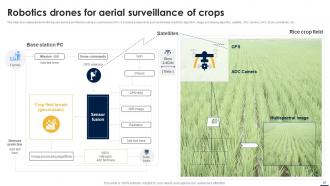
Slide 57: This slide showcases aerial monitoring and sensing architecture using an autonomous UAV. It includes components such as biomass prediction algorithm etc.
Slide 58: This slide shows title for topics that are to be covered next in the template.
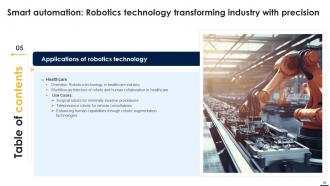
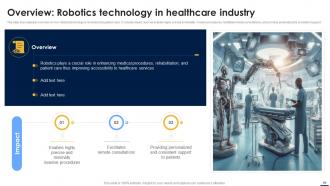
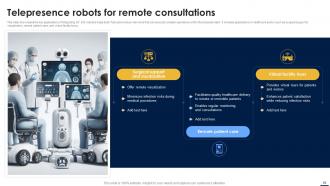
Slide 59: This slide showcases an overview on how robotics technology is revolutionizing patient care. It includes impact such as enables highly precise & minimally invasive procedures etc.
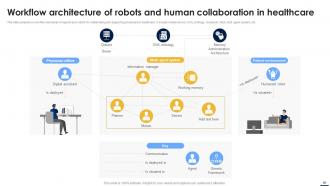
Slide 60: This slide presents a workflow mechanism of agents and robots for collaborating and supporting physicians in healthcare. It include remote server, OWL ontology etc.
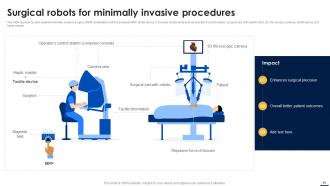
Slide 61: This slide represents robot-assisted minimally invasive surgery (RMIS) schematics with the proposed MRP tactile device.
Slide 62: This slide showcases the key applications of Integrating IoT into robotics helps build fully autonomous networks that can execute complex operations within the physical realm.
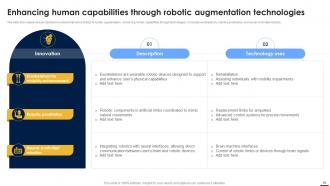
Slide 63: This slide displays various robotics innovations that will contribute to human augmentation, enhancing human capabilities through technologies.
Slide 64: This slide shows title for topics that are to be covered next in the template.
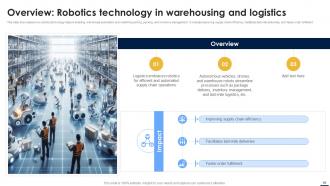
Slide 65: This slide showcases how robotics technology helps in enabling warehouse automation and redefining sorting, packing, and inventory management.
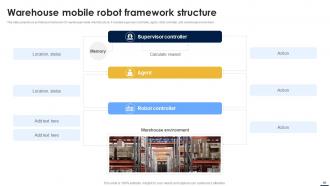
Slide 66: This slide presents an architecture framework for warehouse mobile robot structure. It includes supervisor controller, agent, robot controller, and warehouse environment.
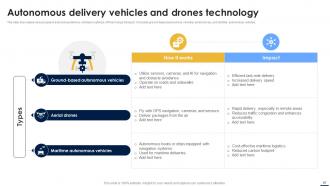
Slide 67: This slide showcases various types of autonomous delivery vehicles to optimize efficient cargo transport. It includes ground-based autonomous vehicles, aerial drones etc.
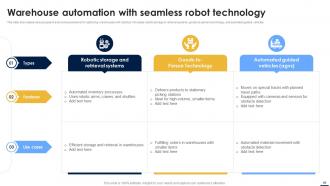
Slide 68: This slide displays various types of autonomous solutions for optimizing warehouses with robotics. It includes robotic storage & retrieval systems, goods-to-person technology etc.
Slide 69: This slide shows title for topics that are to be covered next in the template.
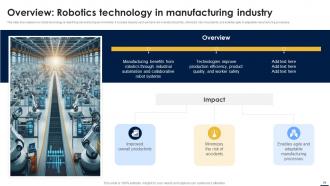
Slide 70: This slide showcases how robots technology is redefining manufacturing environments. It includes impacts such as improved overall productivity, minimized risk of accidents etc.
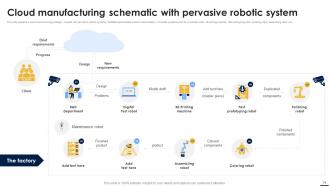
Slide 71: This slide presents a cloud manufacturing paradigm, coupled with pervasive robotic systems, facilitates personalized product customization.
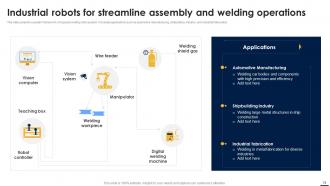
Slide 72: This slide displays a system framework of a typical welding robot system. It includes applications such as automotive manufacturing, shipbuilding industry etc.
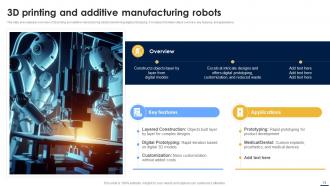
Slide 73: This slide showcases an overview of 3D printing and additive manufacturing robots transforming digital prototyping. It includes information about overview, key features etc.
Slide 74: This slide shows title for topics that are to be covered next in the template.
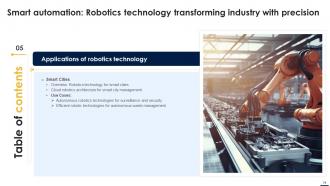
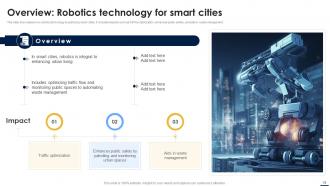
Slide 75: This slide showcases how robotics technology is optimizing smart cities. It includes impacts such as traffics optimization, enhances public safety etc.
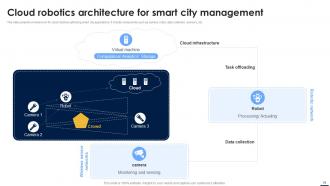
Slide 76: This slide presents a framework for cloud robotics optimizing smart city applications. It include components such as camera, robot, data collection, sensors, etc.
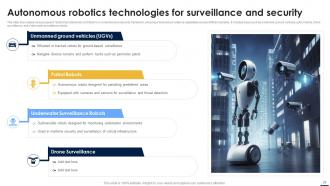
Slide 77: This slide showcases various types of robots that collectively contribute to a comprehensive security framework etc.
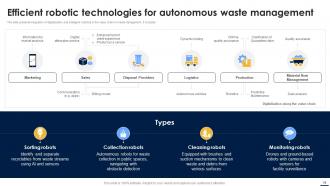
Slide 78: This slide presents integration of digitalization and intelligent robotics in the value chain of waste management.
Slide 79: This slide shows title for topics that are to be covered next in the template.
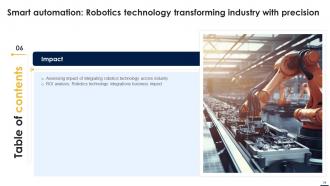
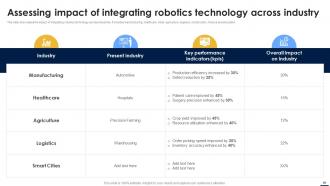
Slide 80: This slide showcases the impact of integrating robotics technology across industries. It includes manufacturing, healthcare, retail, agriculture, logistics etc.
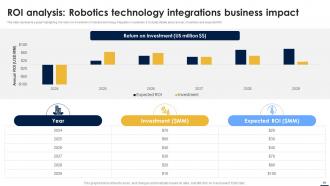
Slide 81: This slide represents a graph highlighting the return on investment of robotics technology integration in business. It includes details about annual etc.
Slide 82: This slide shows title for topics that are to be covered next in the template.
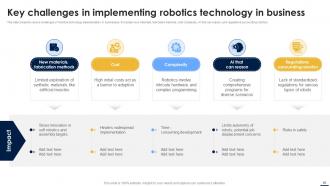
Slide 83: This slide presents various challenges of robotics technology implementation in businesses. It includes new materials, fabrication methods, cost complexity etc.
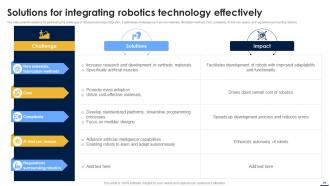
Slide 84: This slide presents solutions for addressing the challenges of robotics technology integration. It addresses challenges such as new materials, fabrication methods etc.
Slide 85: This slide shows title for topics that are to be covered next in the template.
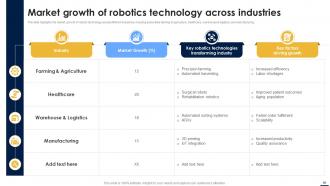
Slide 86: This slide highlights the market growth of robotic technology across different industries, including sectors like farming & agriculture, healthcare etc.
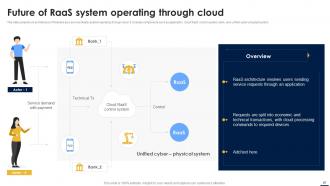
Slide 87: This slide presents an architecture of Robotics as a service (RaaS) system operating through cloud. It includes components such as application etc.
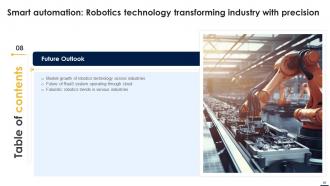
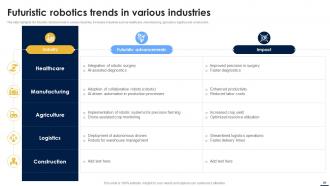
Slide 88: This slide highlights the futuristic robotics trends in various industries. It includes industries such as healthcare, manufacturing, agriculture etc.
Slide 89: This slide shows title for topics that are to be covered next in the template.
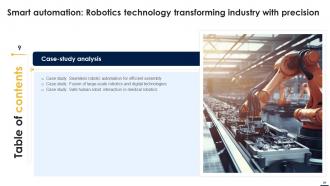
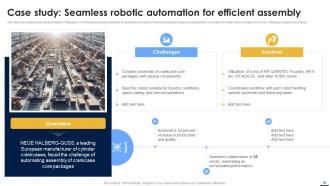
Slide 90: This slide showcases a case-study analysis of integration of robotically automated assembly for seamless and highly efficient automated process across assembly.
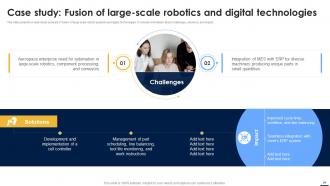
Slide 91: This slide presents a case-study analysis of fusion of large scale robotic systems and digital technologies. It includes information about challenges, solutions, and impact.
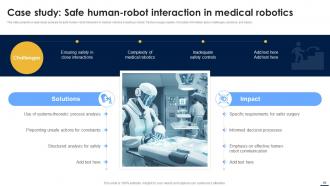
Slide 92: This slide presents a case-study analysis for safe human–robot interaction in medical robotics including a robotic fracture surgery system.
Slide 93: This slide shows all the icons included in the presentation.
Slide 94: This is a Thank You slide with address, contact numbers and email address.
Smart Automation Robotics Technology Transforming Industry With Precision RB with all 102 slides:
Use our Smart Automation Robotics Technology Transforming Industry With Precision RB to effectively help you save your valuable time. They are readymade to fit into any presentation structure.









FAQs for Smart Automation Robotics Technology Transforming Industry
So there's basically four main things you need - sensors, actuators, control systems, and AI/machine learning stuff. Sensors pick up what's happening around the robot. Actuators are like the muscles that actually move things. Control systems process all that info and decide what to do next. The AI part is honestly where it gets cool though - instead of just doing the same programmed tasks over and over, your robots can actually learn and adapt. It's like having a smart assistant instead of just a fancy timer. Oh, and make sure whatever system you pick plays nice with your current setup.
So robots are crazy good at repetitive stuff - way faster and more precise than we'll ever be. They don't need coffee breaks or call in sick either, which is honestly kind of unfair lol. Assembly lines, welding, packaging - that's where they really shine. Your workers can do the interesting problem-solving instead of mindless repetitive motions all day. Look at your most boring, error-heavy processes first. Those are goldmines for automation. Plus you get consistent quality 24/7, which your customers will definitely notice.
So basically AI is what makes robots actually smart instead of just doing the same programmed tasks over and over. It handles the tricky stuff - computer vision for getting around, machine learning so they adapt to new situations, language processing so you can talk to them. Pretty crazy how different they are from those old factory arms, honestly. The AI part lets them make decisions on the spot, predict when they'll break down, work next to people safely. Oh and if you're shopping around for automation stuff, definitely grill vendors about their AI features. That's where you'll see huge differences in what they can actually do.
Honestly, just pick one annoying task that's eating up your time and automate that first. Maybe it's customer service chatbots or something boring like inventory tracking. I'd probably start with automated scheduling - that stuff adds up fast. Email marketing automation is pretty clutch too, you'll be shocked how many hours you get back. Don't go crazy trying to automate everything right away though. Focus on whatever's driving you nuts daily, see how it works, then move to the next thing. Even basic robotic process automation for accounting can be a game changer without breaking the bank.
Honestly, workplace robots bring up some messy issues you should think through. Job displacement is the big one - like, who gets replaced first and does it hit certain groups harder? Privacy gets sketchy too since these things are basically data vacuum cleaners tracking everything employees do. When robots screw up, who's actually responsible? Also there's the whole fairness question around implementation. My advice? Get your teams involved from the start - don't just spring automation on people. Be upfront about data collection because that trust thing matters way more than companies realize.
So cameras are probably the biggest thing right now - they're like the robot's eyes for recognizing stuff and getting around. You've also got proximity sensors, force/torque ones, and encoders that track position. Distance measuring uses ultrasonic or LiDAR (LiDAR's pretty cool actually). Then there's accelerometers and gyroscopes for keeping balance. Temperature sensors show up in manufacturing a lot. Honestly though, it really comes down to what your robot actually needs to do. Vision cameras are becoming standard everywhere now. I'd say figure out your robot's main tasks first, then work backwards to pick the right sensors.
So these robots basically use sensors and AI to work next to people without being dangerous about it. They handle the boring repetitive stuff while you do the thinking parts. What's wild is they can actually tell when you're close by and will slow down or stop completely. Visual sensors, proximity detection - the whole nine yards. Over time they'll even pick up on how you work, which is kinda creepy but useful I guess. I'd start by figuring out what repetitive tasks you're sick of doing - that's where they shine. The safety protocols are pretty solid these days too.
Honestly? It's mostly about money and how complicated everything gets. The upfront costs are brutal, and you'll need people who actually know what they're doing to keep things running. Robots are great at doing the same thing over and over, but throw them a curveball and they just... freeze up. Getting them to play nice with whatever systems you already have is such a pain - I've seen companies spend months just on that part. Safety rules are all over the place too. My advice? Pick something simple and repetitive first. Don't go crazy trying to automate everything at once.
Manufacturing got hit first - robots are just perfect for doing the same thing over and over. Healthcare's been massive too, especially surgical bots and those automated pharmacy setups. But honestly? Logistics is where things got crazy recently. Amazon warehouses are like something out of sci-fi now. Car assembly lines don't even look like the same industry anymore. Agriculture and retail are starting to catch up fast. Oh, and if you're thinking about where to jump in, focus on high-volume repetitive stuff or anything needing super precise work - that's where you'll actually see the money back.
Smart robots are honestly game-changers for sustainability. They handle materials with crazy precision, so you're not wasting resources like humans do. Quality control gets way better too - fewer defective products means less trash. The energy efficiency is solid, and they help with recycling by sorting stuff automatically. Plus predictive maintenance keeps equipment running longer instead of breaking down. I'd say look at where you're losing the most materials first - that's probably where robotic precision would pay off the most. Though I still feel weird about robots being better at everything than us.
Honestly, you're gonna want to pick up some basic programming - even simple stuff makes you stand out. Data analysis is where it's at though, since all these automated systems pump out data that someone has to make sense of. Critical thinking beats memorizing steps every time now. Oh, and don't sleep on communication skills because you'll be the bridge between tech people and business folks. Most of this you can learn online anyway - Coursera, YouTube, whatever works. I'd just pick one thing that doesn't make you want to cry and start there.
So IoT basically makes your robots talk to each other instead of working blind. Real-time data flows between everything - sensors, other bots, your whole system. Robots get way smarter when they can actually see what's happening around them. You'll get better maintenance alerts before stuff breaks, plus they can coordinate workflows automatically. Remote monitoring becomes super easy too. Honestly, the learning aspect is probably the coolest part - they pick up on patterns across your entire setup. My advice? Just start small. Connect a few sensors first and you'll see the efficiency gains right away.
Amazon's warehouse bots slashed fulfillment time by 50% and cut costs 20% - honestly pretty wild numbers. Tesla's using AI robots in their gigafactories for super precise assembly, which boosted both speed and quality. The da Vinci surgical robot lets doctors do way less invasive procedures with better outcomes for patients. Domino's even tried delivery robots in some cities (though I'm not sure how that went). What's smart about all these companies? They didn't try automating everything at once. Instead, they picked one specific problem and nailed it first.
So basically these robots use layered AI that processes tons of data streams at once. Machine learning helps them weigh variables, predict what'll happen, and pick the best move based on their training plus real-time info. It's kinda like having a bunch of expert advisors all talking to one decision-maker - but everything happens in milliseconds, which is pretty wild. The bots actually get smarter over time by adapting their decision trees when they hit new situations. For your setup, I'd start with clear decision parameters first, then gradually let it tackle more complex stuff.
The big thing right now is robots getting way smarter through AI - they're actually learning and adapting instead of just running basic programs. Cobots are getting really good too, working with humans without being clunky about it. Oh, and 5G plus edge computing means robots can make decisions instantly without waiting for the cloud to respond. Computer vision and natural language processing are honestly where most of the cool stuff is happening - worth keeping an eye on those. Everything's moving so fast it's kinda wild.
-
It’s really cool, and you can find pretty much everything you could need for your work or school.
-
Innovative and creative templates with high-quality designs. Helped me with my presentation as the slides were easy to edit.